 5-star Wellness Resort
 5-star Wellness Resort
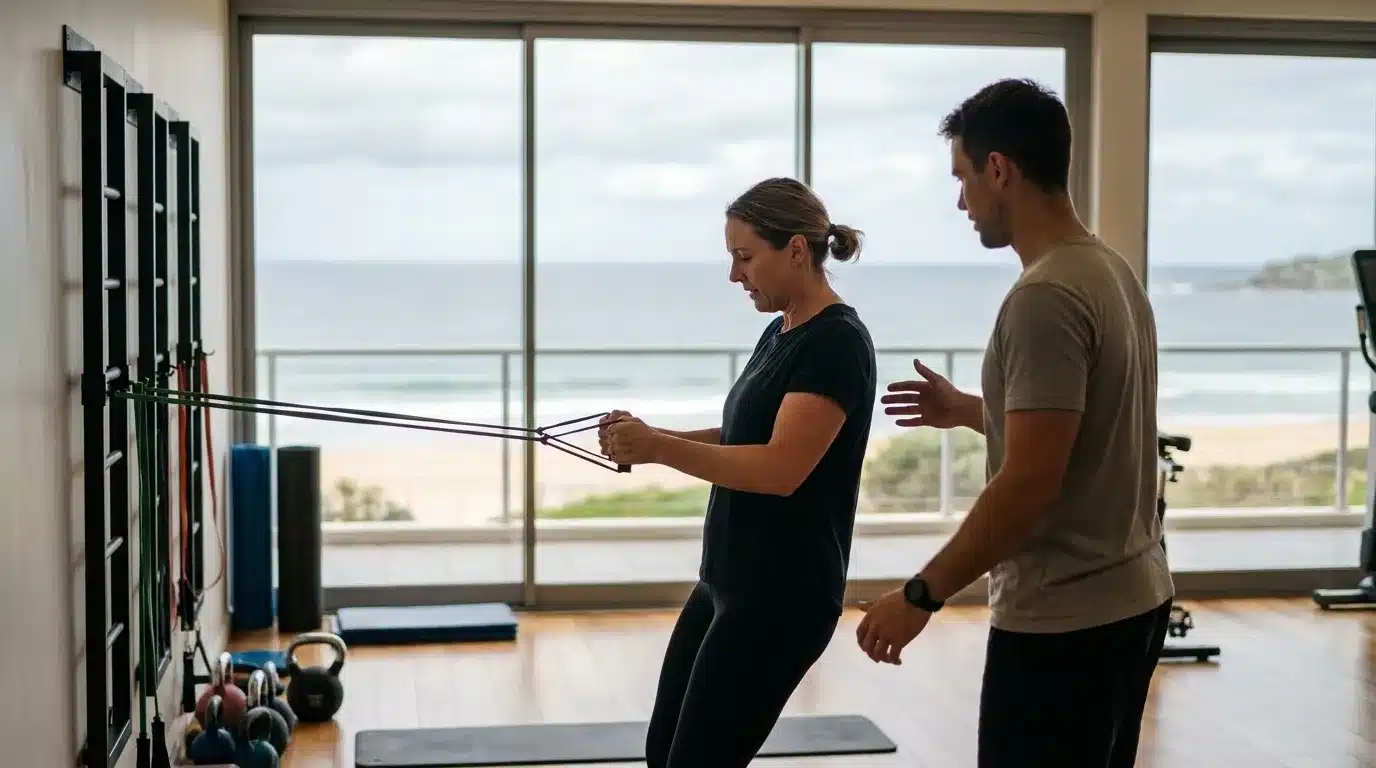
Written by: Chris Butt, Certified Personal Trainer & Weight Loss Coach, Premier Fitness Camp
The fat-loss mechanism behind low-impact exercise is simple and well documented. A dose-response meta-analysis of 116 randomized trials in JAMA Network Open found that each additional 30 minutes per week of supervised aerobic exercise was associated with 0.52 kg less body weight, 0.56 cm less waist circumference, and 0.37 percentage points less body fat. Those reductions accumulated in a straight line up to 300 minutes per week. The activity does not need to involve jumping or running to count.
The CDC recommends at least 150 minutes per week of moderate-intensity aerobic activity plus muscle-strengthening activity on at least two days per week. That aerobic target is what drives fat loss. Low-impact options such as swimming, cycling, elliptical, and incline walking reach that target without the ground-reaction forces that irritate inflamed joints.
Strength work completes the picture. A meta-analysis of 58 randomized controlled trials found that adding resistance training to caloric restriction preserved an average of 93% of lean mass, compared with 78% in diet-only groups. Muscle absorbs load before it reaches cartilage and keeps resting metabolic rate higher, which helps you maintain weight loss. Most people who rely only on low-impact cardio plateau because they skip this strength piece.
Many adults now lose weight while taking GLP-1 medications. Semaglutide 2.4 mg can produce roughly 40% of total weight lost as lean mass when no structured resistance exercise is present, but a resistance training program of two to three sessions per week can reduce lean mass loss to under 20% of total weight lost. Joint-friendly strength work is protective in that context.
Swimming and water aerobics burn approximately 400–500 calories per hour while supporting body weight, making them among the most joint-friendly cardiovascular options available. Start with 20 minutes of continuous easy swimming or a structured water aerobics class. Add five minutes per session before you increase stroke intensity or resistance.
Set the bike seat high enough to allow near-full knee extension and reduce patellofemoral compression. Stationary or outdoor cycling burns 300–500 calories per hour with minimal joint impact. Begin with 15–20 minutes at low resistance. Add five minutes before you increase the resistance level.
Low-impact modalities such as cycling, swimming, and elliptical training reduce joint loading by 50% to 75% compared with walking. The elliptical’s fixed foot path removes heel strike entirely. Start with 15 minutes at a pace that allows conversation. Add three to five minutes per week before you adjust resistance or incline.
Walking on an incline recruits the glutes, raises calorie burn, and reduces the compressive knee load seen with running. For a 154-pound person, walking at 3.5 mph burns approximately 140 calories per 30 minutes, and that number rises with body weight and grade. Start with 10–15 minutes at a 3–5% incline. Add five minutes before you increase the grade.
Seated marching, seated boxing, and arm-driven cardio circuits provide real cardiovascular stimulus with zero lower-limb loading. This is the right starting point when knee, hip, or back pain limits standing exercise. Begin with 10 minutes. Add two to three minutes per session until you reach 20–30 minutes, then transition to standing options if joints allow.
The CDC recommends muscle-strengthening activity on at least two days per week. The movements below meet that standard and work in a living room with a band, a chair, and a wall.
Lie on your back with feet flat and drive the hips toward the ceiling. This movement strengthens the glutes and hamstrings, which stabilize the knee and hip, without compressing the knee. Start with 2 sets of 10–15 reps. If floor work is difficult, perform seated hip extensions in a sturdy chair.
Anchor a band at chest height and pull toward your torso. This builds the upper back and improves posture without loading the spine. Start with 2 sets of 12–15 reps. Perform the movement seated with feet braced against a wall if standing balance feels unsteady.
Anchor a band behind you and press forward at chest height. This standing or seated chest press avoids floor-based positions. Start with 2 sets of 12–15 reps. Use wall push-ups if you prefer no equipment.
Slide your back down a wall to a comfortable knee angle. A range of 30 to 45 degrees works for most beginners. Patients with existing knee osteoarthritis should favor non-weight-bearing activities until quadriceps strength improves, so begin with short holds and progress slowly. Start with 3 holds of 15–20 seconds. Substitute a seated leg press machine or seated leg extensions if needed.
Sit in a chair, slowly straighten one leg, and lower it with control. This builds quadriceps strength, which offloads knee cartilage, without compressive load. Start with 2 sets of 12–15 reps per leg. Use straight-leg raises, lying or seated, if you have anterior knee pain.
Place your hands on the wall, keep your body in a straight line, lower your chest toward the wall, and press back. This builds chest, shoulder, and triceps strength without the wrist and shoulder compression of floor push-ups. Start with 2 sets of 10–15 reps. Progress to incline push-ups on a countertop as a bridge toward floor work.
The plan follows one core rule: Add Time Before Intensity, And Never Increase Volume And Intensity In The Same Week. The ACSM recommends beginning aerobic training at 50% of the weekly target and increasing volume by 10% to 20% per week to reduce musculoskeletal injury risk.
You can complete all four weeks at home with resistance bands, a sturdy chair, and a wall.
Week 1 — Establish The Baseline
Week 2 — Add Time, Not Intensity
Week 3 — Add A Third Cardio Session And One Extra Set
Week 4 — Introduce Gentle Intensity (Joints Permitting)
Bad knees respond best to a short, specific list of friendly movements. Lower-impact activities such as walking, swimming, cycling, and water aerobics may be easier on affected joints. Prioritize swimming, stationary cycling with a high seat, chair cardio, glute bridges, resistance band work, and seated leg extensions. When a movement causes knee pain, reduce joint demand instead of stopping completely. A standing squat that hurts becomes a shallower wall sit. If the wall sit still hurts, seated leg extensions remove the load. If flat walking triggers pain, the pool or the bike keeps you moving without impact.
Hip pain often improves with non-weight-bearing and supported movement. Water exercise removes hip compression entirely. Recumbent cycling keeps the hip supported in a neutral position. Banded hip abduction, performed lying on your side and lifting the top leg against a band, builds the gluteus medius, which stabilizes the hip, without axial load. If your hip hurts during standing cardio, use recumbent cycling or water aerobics. If banded side-lying work causes groin pain, shrink the range of motion to the pain-free zone.
The lower back reacts poorly to loaded spinal flexion, so avoid exercises that round the spine under resistance, such as weighted crunches or bent-over rows with a rounded back. Walking, swimming, and elliptical training work well because they keep the spine neutral. Dead-bug-style core work, lying on your back and extending opposite arm and leg while pressing the lumbar spine to the floor, builds deep core stability without loading the spine. If your lower back hurts during standing cardio, switch to swimming or chair cardio. If seated rowing causes pain, shorten the range of motion or use standing band pulls at chest height.
Normal delayed onset muscle soreness feels achy or tender, shows up on both sides of the body or throughout the worked muscle group, feels worse on first moving, improves as muscles warm up, and fades over several days. Joint pain feels different in both character and location.
During a flare-up it remains important to exercise, and it is appropriate to modify or cut back on the typical routine, but stopping completely is not recommended. Use this simple sequence.
Following this plan on your own is possible, yet many people stall when they reach the modification and progression stages. Supervised coaching can keep you moving forward safely.
Premier Fitness Camp (PFC) in Carlsbad, California, delivers this joint-friendly approach in a structured, immersive setting. Adults with joint pain follow low-impact cardio and strength plans with expert supervision, personalized modifications, and clear accountability.
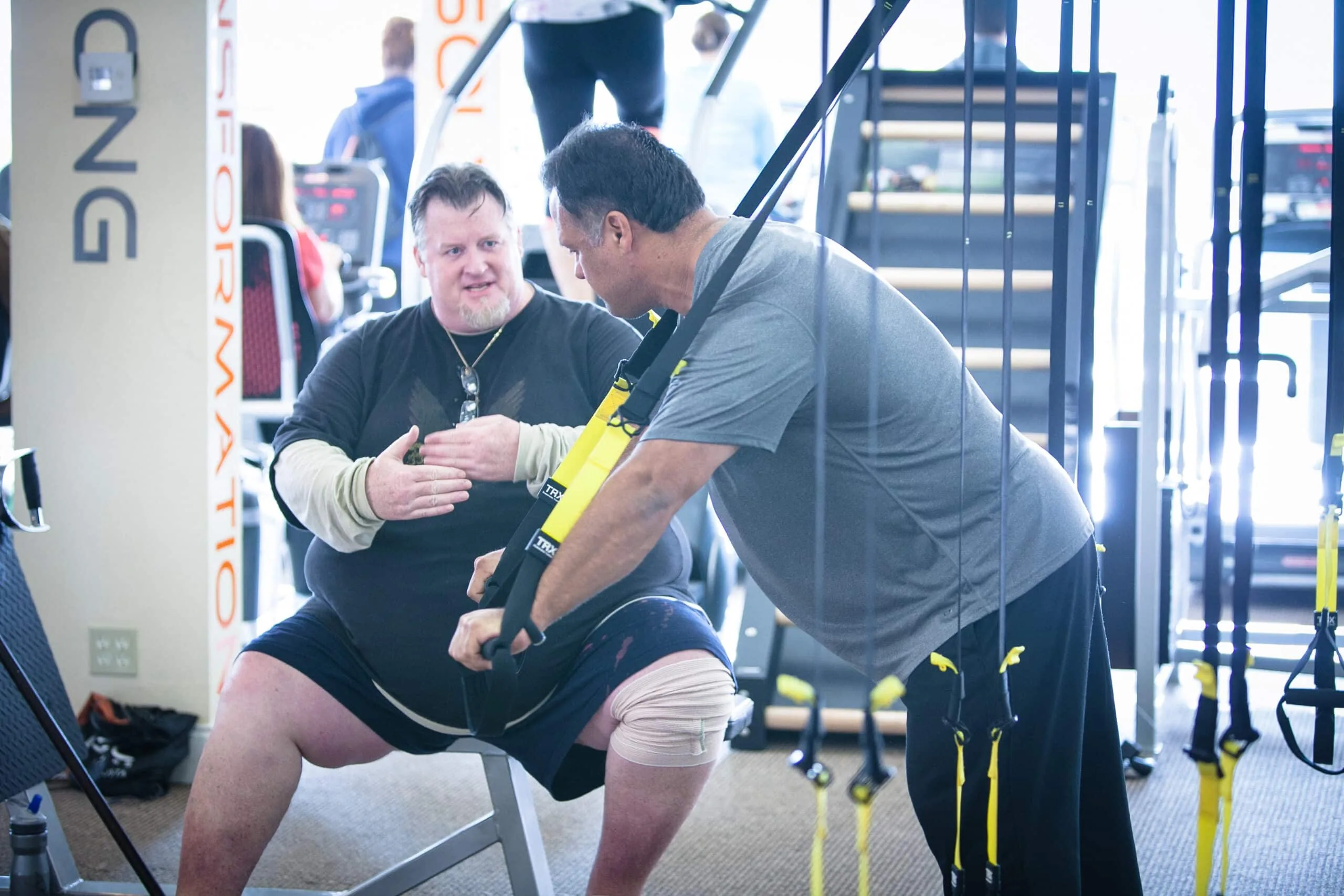
Classes welcome every fitness level, from clients who can only walk 250 feet to seasoned athletes. Low-impact options appear in every session, and a client-to-trainer ratio of about 3–4:1 allows real-time form checks and joint-specific tweaks. Training runs four to five hours per day Monday through Friday, plus a half day Saturday, which creates results that home programs rarely match.
A UCSD case study of PFC participants who stayed four or more weeks found that 94% of client weight loss came from fat while lean muscle was preserved or increased. That outcome matches the joint-protecting, metabolism-preserving goal of this guide. PFC also tracks 17 data points weekly in a personalized report card, including weight, body fat, body measurements, blood pressure, blood markers, mile time, plank hold, and push-up count, so progress shows up far beyond the scale.

PFC’s results appear in its 1,200+ reviews, 90%+ five-star rating, and the fact that half of its annual revenue comes from returning alumni. The program’s “Think, Eat, Move” philosophy brings licensed psychologists, registered dietitians, wellness chefs, and certified trainers together under one roof.
Yes. Aerobic exercise training reduces body weight, BMI, body fat percentage, fat mass, and waist circumference in adults with overweight or obesity, and the research includes low-impact options such as walking, cycling, and aquatic exercise. As noted earlier, low-impact options can cut joint loading by 50% to 75% compared with walking, which makes them strong first choices for painful joints. Consistency and progressive volume matter more than impact level. Adding joint-friendly strength training two days per week preserves the lean muscle that protects joints and keeps resting metabolic rate higher, which makes weight loss more sustainable.
Each pound of weight lost reduces the load on the knee joint by approximately four pounds per step during walking, which creates a 4:1 return on effort. A 5% reduction in body weight reduces knee osteoarthritis symptoms measurably, and a 10% reduction can match the effect of some medications. The landmark IDEA trial found that overweight adults with knee osteoarthritis who lost just 10% of their body weight experienced a 50% reduction in pain and significant improvements in function and walking speed. Even early losses of five to ten pounds meaningfully reduce cumulative joint load across thousands of daily steps.
Use a few simple rules when you adjust strength work for sore joints. Reduce range of motion to the pain-free zone, slow the lowering phase of each movement, widen your stance or use a support surface, choose more favorable leverage such as wall push-ups instead of floor push-ups, and add rest between sets. Change only one variable at a time, and avoid increasing range of motion, load, and volume in the same session. When a movement causes joint pain during or after the session, switch to a version with less joint demand. For knees, that usually means moving from standing to seated or supine options. For the lower back, it means avoiding loaded spinal flexion and favoring neutral-spine positions.
Ignoring knee pain and continuing to push through it is the most damaging pattern. Untreated osteoarthritis-related inflammation can progress, and cartilage does not regenerate on its own. The urge to “work through the pain” is understandable yet counterproductive because it allows the condition to advance and narrows future treatment options. The opposite extreme, complete inactivity, weakens the quadriceps that offload pressure from the knee, reduces circulation to joint tissue, and speeds stiffness. The evidence-based middle path is to back off to a pain-free movement version, keep moving gently, and return to the previous week’s volume once symptoms settle, following the flare-up protocol in this guide.
This plan centers on joint-friendly cardio built on swimming, cycling, elliptical, incline walking, or chair options, plus strength work for glutes, quads, and upper back. You progress by adding time before intensity and use a clear protocol to tell soreness from injury and to manage flare-ups without stopping entirely. This plan works at home and adapts to joints that are still healing, and it asks only that you respect them.
Adults who want expert supervision, nutrition education, behavioral health support, and 17-point weekly data tracking can follow this same approach at Premier Fitness Camp. The 94% fat-loss result and 1,200+ reviews mentioned earlier show how powerful a structured, joint-friendly program can be. Your joints can stay protected while you lose weight and regain confidence in movement.