 5-star Wellness Resort
 5-star Wellness Resort

Written by: Chris Butt, Certified Personal Trainer & Weight Loss Coach, Premier Fitness Camp
Certain foods reliably amplify systemic inflammation and raise cytokines such as TNF-α, IL-6, and CRP that drive joint pain and swelling. Mass General Brigham dietitian Nancy Oliveira, MS, RD, LDN, CDCES, advises minimizing these categories to lower inflammation and support weight management:
Eliminating these five categories is the first nutritional step registered dietitians take with every new client. The “Eat” pillar replaces these foods with gourmet, calorie-controlled meals prepared on-site by wellness chefs, so the daily food decisions are handled from day one.
The biomechanical effect of weight loss on knee pain is clear. Every 1 kg of body weight lost reduces knee joint compressive load by approximately 4 kg with each step. A 10 kg (22 lb) loss therefore removes roughly 40 kg of force from the knee joint on every stride. This structural change occurs independently of any anti-inflammatory dietary effect.
Biological evidence supports this mechanical benefit. A 2004 randomized controlled trial by Nicklas et al. in The American Journal of Clinical Nutrition, involving 316 overweight or obese adults aged 60 and older with knee osteoarthritis, found that a dietary weight-loss intervention produced significantly greater reductions in CRP (p=0.01), IL-6, and soluble TNF receptor 1 compared with no weight-loss treatment. These inflammatory proteins sensitize joint tissue and amplify pain signals.
Population-level data show similar patterns. A 2020 systematic review and meta-analysis by Robson et al., covering 22 trials and 3,602 participants, found that weight-loss interventions produced a moderate effect on pain intensity (SMD −0.54) and a small effect on disability (SMD −0.32) compared with minimal care in people with knee or hip osteoarthritis. NICE NG226 guidance further states that losing 10% of body weight is likely to provide greater symptom benefit than losing 5% for adults with osteoarthritis who are overweight or obese.
The quality of weight loss matters as much as the quantity. A UCSD case study of participants who stayed four or more weeks found that 94% of total weight loss was purely fat, compared with the 60/40 fat-to-muscle ratio typical of standard dieting. Clients tracked across 17 weekly data points, including CRP-adjacent blood markers, body composition, and functional fitness measures, can see the full picture of their progress rather than focusing only on the scale.
To see what this kind of data-driven, joint-friendly transformation could look like for you, schedule your personalized assessment or call (888) 488-8936 to speak with the team directly.
Nancy Oliveira of Mass General Brigham notes that “it is not about eating single foods or nutrients, it is more about your overall dietary pattern.” The Mediterranean pattern consistently emerges as the most evidence-supported framework for reducing inflammation while supporting sustainable fat loss.
A 2024 narrative review by Veronese et al. in Aging Clinical and Experimental Research concluded that Mediterranean-diet interventions are associated with improvements in pain, function, and quality of life among osteoarthritis patients. Registered dietitians design every meal around these principles as the foundation of a lifelong eating pattern that clients can replicate at home.
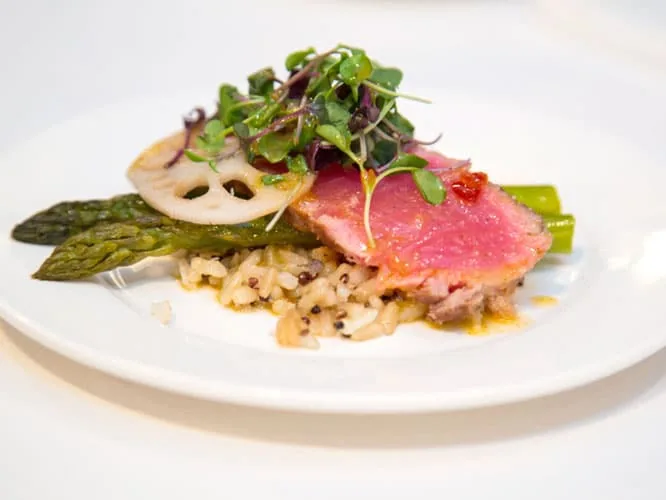
This one-day plan suits adults with limited mobility. It keeps standing time low, uses anti-inflammatory ingredients, and maintains a calorie-controlled balance that supports a moderate deficit while protecting muscle with adequate protein.
Daily totals (approximate): 1,740 kcal | 120 g protein | High fiber | Anti-inflammatory throughout.
At the program, wellness chefs and registered dietitians handle this level of nutritional precision. Clients attend cooking demonstrations that translate these principles into practical home skills, so the knowledge travels with them long after they leave Carlsbad.
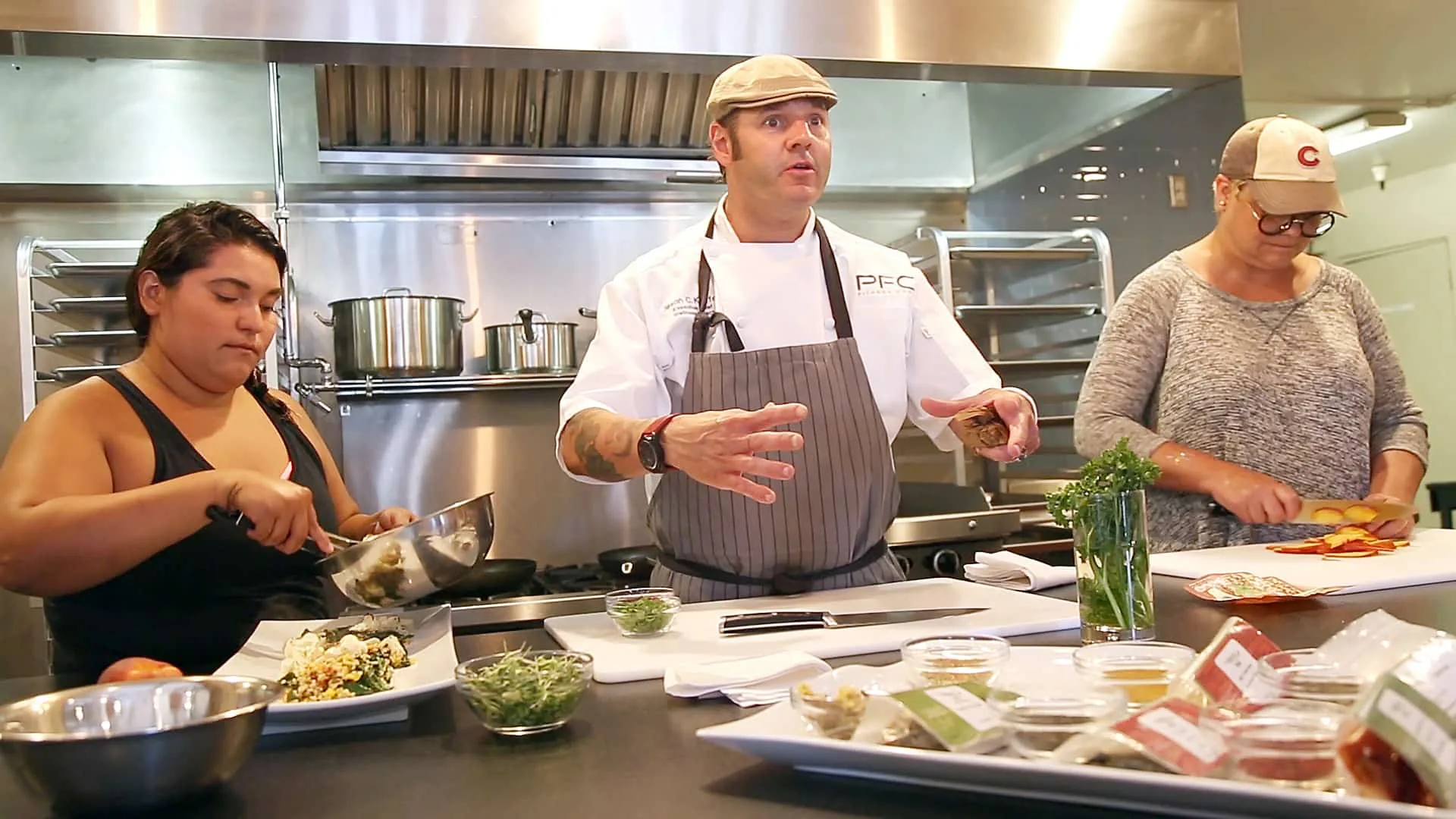
Knowing which foods to eat differs from consistently changing decades of habits while managing joint pain, emotional eating, and social fears. Many adults in the 40–60 age range have tried restrictive diets that increased pain, left them isolated, and ultimately failed. These attempts often fail not because of a lack of willpower, but because the program lacked the behavioral and physical support structure that sustainable change requires.
The European Association for the Study of Obesity’s 2025 position statement recommends a multimodal management approach that includes moderate energy restriction combined with adequate protein intake, structured multicomponent exercise, and behavioral support. This model aligns with the approach refined over years of working with adults who have significant weight to lose and real physical limitations.
The “Think, Eat, Move” philosophy addresses all three dimensions simultaneously and treats them as interconnected.

The UCSD case study result, with 94% of weight loss from pure fat and lean muscle preserved or increased, reflects this integrated model. Generic diets rarely match this outcome because they address only one variable. This program addresses all of them within a luxury resort environment that has over 1,200 reviews, a 90%+ five-star rating, and a 50% alumni return rate that signals genuine, lasting transformation.
If previous diets have left you in more pain than when you started, or if you feel unsure how to create a safe calorie deficit that protects your muscle and your joints, the next step is a conversation, not a commitment. Start with a no-obligation conversation about your specific challenges, or call (888) 488-8936 to speak with the team directly.
Yes. Most weight loss comes from a calorie-controlled diet rather than high exercise volume. For adults with knee or hip pain, a moderate calorie deficit, typically 300–500 calories below daily energy expenditure, combined with low-impact movement such as cycling, swimming, water aerobics, and resistance training is both safe and effective. The key nutritional priority is maintaining adequate protein intake, around 1.2–1.5 g per kg of body weight daily, to preserve the muscle mass that supports and stabilizes your joints. At the program, every fitness session includes low-impact modifications and a 3–4:1 trainer-to-client ratio, so clients with knee pain, hip pain, or significant mobility limitations participate fully and safely from day one.
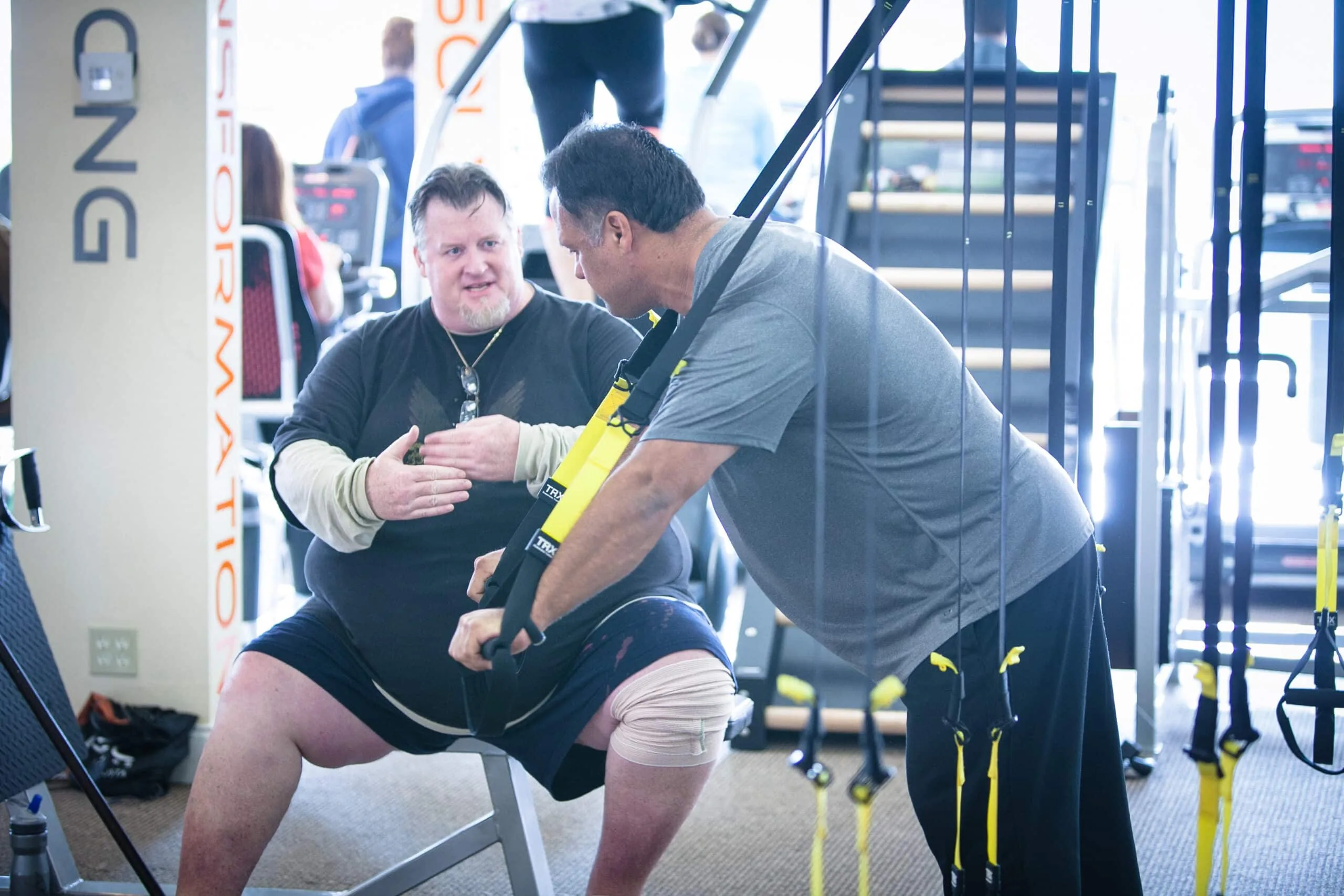
Clinical guidelines suggest that losing 10% of body weight is likely to produce greater symptom benefit than losing 5% for adults with knee or hip osteoarthritis who are overweight or obese. The biomechanical principle described earlier, where each kilogram lost multiplies into significantly reduced joint load, explains why even modest weight loss produces noticeable relief. Many PFC clients report improvements in mobility, stiffness, and daily comfort well before reaching their final goal weight, particularly as inflammation markers begin to decline alongside fat loss.
The Mediterranean eating pattern works well for people with low energy because it relies on minimally processed whole foods that require little preparation, such as canned salmon, pre-washed leafy greens, walnuts, olive oil, canned legumes, and fresh fruit. A joint-friendly meal can be assembled in under five minutes. The bigger challenge for most adults involves behavioral patterns around food, including emotional eating, portion distortion, and the habit of reaching for ultra-processed convenience foods. The program addresses both nutrition and behavior. Wellness chefs prepare all meals on-site, removing the daily decision burden, while cooking demonstrations teach clients how to replicate anti-inflammatory meals at home with minimal standing time and simple techniques.
Muscle loss during calorie restriction is a real risk, particularly for adults over 40 who already experience age-related declines in muscle protein synthesis. The primary strategies to prevent muscle loss are maintaining the protein targets outlined earlier, distributing that intake across three to five meals rather than concentrating it in one sitting, and incorporating resistance training even in low-impact forms. The body composition outcomes described earlier, where nearly all weight loss came from fat rather than muscle, result directly from the combination of precision nutrition, adequate protein, and structured low-impact resistance training.
The nutritional science behind an anti-inflammatory, calorie-controlled Mediterranean diet is well-documented and publicly available. The gap lies in implementation. Behavioral research consistently shows that sustainable habit change requires structured environments, social accountability, expert feedback, and the removal of competing stressors. At home, adults managing joint pain also manage work, family, food shopping, meal preparation, and the emotional weight of past failed attempts. An immersive program removes those variables for the duration of the stay, allowing the nervous system to reset and new habits to form without interference. The program adds licensed psychologists, registered dietitians, wellness chefs, and degree-holding trainers to that environment, plus 17-point weekly tracking that makes progress visible across body composition, blood markers, and functional fitness, creating conditions that a home diet cannot replicate.
Discuss your goals and joint health with the team to see what a personalized program at the Omni La Costa Resort could look like for you, or call (888) 488-8936 for a free, low-pressure consultation tailored to your situation.