5-star Wellness Resort
Exercises To Lower Blood Pressure Naturally: Science-Backed

Exercises To Lower Blood Pressure Naturally: Science-Backed

12 min read

Written by: Chris Butt, Certified Personal Trainer & Weight Loss Coach, Premier Fitness Camp

Key Takeaways

  • Isometric exercises like wall sits and handgrip training deliver strong reductions in office blood pressure, with some protocols showing systolic drops near 10 mmHg.
  • Aerobic activities such as brisk walking, cycling, and swimming provide reliable 24-hour blood pressure control, lowering systolic readings by about 4.7 mmHg.
  • Combining isometric, aerobic, resistance, and mind-body exercises creates a weekly plan that supports both immediate and long-term blood pressure management.
  • Safety protocols, including medical clearance for readings above 140/90 mmHg and continuous breathing during exertion, are essential before starting any new routine.
  • Premier Fitness Camp delivers expert-guided, data-tracked programs that pair these exercises with nutrition and stress management for sustainable blood pressure results.

Start Your Personalized Blood Pressure Consult

The 7 Best Exercises To Lower Blood Pressure Naturally

Isometric Exercises For Office Reading Improvements

  1. Isometric Handgrip. Squeeze a handgrip device or rolled towel at about 30% of maximum effort for 2 minutes, rest for 1–3 minutes, and repeat for 4 sets. Perform 3 sessions per week with at least 48 hours between sessions. A 2026 Meta-Analysis In BMC Public Health covering 20 trials and 626 participants found this protocol reduced systolic blood pressure by 4.05 mmHg and diastolic blood pressure by 2.26 mmHg compared with control groups. Benefits were largest in people with high-normal baseline readings. Because the effort is sustained, breathing continuously throughout each hold matters. Never hold your breath.
  2. Wall Sit. Stand with your back flat against a wall, slide down until your thighs are roughly parallel to the floor, and hold for 30 seconds to 2 minutes. Rest for 2 minutes and repeat for 3–5 rounds, 3 times per week. A 2026 Meta-Analysis In Frontiers In Public Health reported an exploratory subgroup estimate: wall-squat isometric training produced a systolic reduction of about 10.29 mmHg, the largest among the isometric modalities studied. In a similar exploratory subgroup analysis, the same meta-analysis reported a diastolic reduction of about 5.26 mmHg. The authors cautioned that subgroup findings are exploratory. Beginners should start with a higher knee angle and progress gradually. If knee pain develops, raise the seat position rather than stopping entirely.
  3. Plank. Hold a forearm or straight-arm plank for 20–60 seconds, building toward 2 minutes as strength improves. Perform 3–5 holds per session, 3 times per week. The plank engages large muscle groups isometrically and stimulates vasodilatory mechanisms such as improved nitric oxide bioavailability and reduced peripheral vascular resistance. These mechanisms underpin the blood pressure benefits of wall sits and handgrip training. Keep the core braced and breathe steadily. A sagging lower back increases spinal load without adding cardiovascular benefit.

Aerobic Exercise For 24-Hour Control

  1. Brisk Walking. Aim for 150 minutes per week of moderate-intensity walking, roughly 30 minutes on 5 days, as recommended by the American Heart Association. A 2026 Network Meta-Analysis In The British Journal Of Sports Medicine found aerobic training reduces 24-hour systolic blood pressure by 4.7 mmHg, a clinically meaningful figure because 24-hour ambulatory readings predict cardiovascular events better than office measurements alone. Moderate intensity means you can hold a conversation but not sing comfortably.
  2. Cycling Or Swimming. Cycling and swimming are low-impact options that protect joints while delivering a similar aerobic stimulus. Target the same 150-minute weekly goal, split across sessions of any convenient length. A single 30-minute moderate-intensity cycling session has been shown to reduce 24-hour ambulatory systolic blood pressure by approximately 2 mmHg in a single bout, with effects persisting across both waking and sleep periods. For outdoor cycling, choose flat or gently rolling terrain when starting to avoid sustained high-intensity climbs.

Dynamic Resistance Training For Safe Strength

  1. Light Weightlifting Or Resistance Bands. Perform 2 full-body resistance sessions per week, targeting major muscle groups with sets of 8–12 repetitions at a moderate load. Resistance bands are an accessible starting point that requires no gym membership, and the same breathing pattern applies regardless of equipment. Exhale on the exertion phase of every repetition. Breath-holding during a lift, known as the Valsalva maneuver, causes a sharp, transient spike in blood pressure and should be avoided. Single-repetition maximal efforts are inappropriate for people managing hypertension. Controlled, multi-rep sets are safer and more effective for blood pressure reduction.

Mind-Body Exercise For Stress Relief

  1. Slow Breathing And Yoga. Chronic stress elevates cortisol and sympathetic nervous system activity, which both raise blood pressure. Slow, controlled breathing directly counters this response. The 4-7-8 technique uses an inhale for 4 counts, a 7-count hold, and an 8-count exhale. This pattern activates the parasympathetic nervous system and can produce a measurable acute reduction in blood pressure within minutes. Practice for 5–10 minutes daily. Yoga and meditation extend these calming effects over time. For a deeper look at the stress and blood pressure connection, see Stress Reduction Techniques To Lower Blood Pressure. Hot yoga in high-temperature studios is not recommended for people with uncontrolled hypertension.

Isometric And Aerobic Training: How To Choose

Isometric and aerobic training support blood pressure in different ways, and that distinction matters clinically.

Isometric exercise, particularly wall sits and handgrip training, has strong evidence for lowering office blood pressure. The 2026 Frontiers In Public Health Meta-Analysis found overall systolic reductions of 6.62 mmHg from isometric training across 39 trials, with wall-squat protocols producing reductions that rival some first-line antihypertensive medications. The mechanism involves repeated cycles of muscle ischemia and reperfusion during sustained contractions. These cycles stimulate flow-mediated dilation and nitric oxide release, which gradually reduce peripheral vascular resistance.

Office blood pressure, however, is a single snapshot taken under controlled conditions. The 2026 Network Meta-Analysis In The British Journal Of Sports Medicine, which compared multiple exercise modalities using 24-hour ambulatory monitoring, found that isometric exercise did not produce statistically significant reductions in 24-hour ambulatory blood pressure, despite its strong office-reading results. Aerobic training’s 4.7 mmHg 24-hour reduction, cited above, held up, and adding resistance training pushed the reduction to 6.2 mmHg. Because 24-hour ambulatory readings reflect blood pressure during daily life and predict cardiovascular events and mortality more accurately, these findings carry significant clinical weight.

The practical takeaway is straightforward. Isometric training works well for improving office readings and suits people with limited mobility or time. Aerobic and combined training provide the strongest evidence for around-the-clock blood pressure control. A well-rounded program includes both types of exercise. Premier Fitness Camp’s (PFC) “Move” philosophy reflects this by incorporating varied training styles rather than prescribing a single modality. To understand more about the magnitude of these effects, see How Much Can Exercise Lower Your Blood Pressure?

Safety First: When To Consult A Doctor And What To Avoid

Knowing where your blood pressure falls on the clinical spectrum helps you start safely. The following triage framework reflects current guidelines.

  • BP Above 180/120 mmHg: Do not exercise. This reading may indicate a hypertensive crisis. Sit quietly, wait five minutes, and measure again. If the reading remains at or above 180/120 mmHg, contact a healthcare provider or urgent care the same day. If accompanied by chest pain, sudden severe headache, shortness of breath, vision changes, or weakness on one side of the body, call emergency services immediately.
  • BP 140/90 To 180/120 mmHg: Consult a doctor before starting a new exercise program. The 2025 AHA/ACC Hypertension Guideline recommends that all adults with average blood pressure at or above 140/90 mmHg receive lifestyle counseling and antihypertensive medication, regardless of predicted cardiovascular risk. Exercise is strongly encouraged, and a healthcare provider can help set the right starting intensity and modality.
  • BP Below 140/90 mmHg: Moderate exercise is generally safe for most adults. A brief conversation with a healthcare provider still helps, especially for anyone who has been sedentary, is over 60, or has other cardiovascular risk factors.

Specific exercises to avoid or modify with high blood pressure include:

  • Heavy Weightlifting With Maximal Loads: Single-repetition maximum efforts cause acute blood pressure surges that are inappropriate for people with uncontrolled hypertension. Controlled sets of 8–12 repetitions at moderate loads are safe for most people with controlled readings.
  • The Valsalva Maneuver: Holding the breath during any exercise, including lifting, isometric holds, or yoga inversions, creates a sharp pressure spike. Continuous breathing throughout every exercise remains essential.
  • Unsupervised High-Intensity Interval Training (HIIT): HIIT can reduce blood pressure, but its acute cardiovascular demands require medical clearance and ideally professional supervision, particularly for beginners or those with elevated readings.

Your 7-Day Sample Plan To Get Started

With those safety boundaries in place, this plan shows how the four exercise categories fit into a manageable week. Treat it as a starting point and adjust based on your fitness level and your healthcare provider’s guidance.

  • Day 1: 30-minute brisk walk plus 5 minutes of 4-7-8 breathing.
  • Day 2: Isometric circuit with wall sit, plank, and handgrip, about 15 minutes total.
  • Day 3: 30-minute cycling or swimming session.
  • Day 4: Full-body resistance training with light weights or resistance bands, about 20 minutes.
  • Day 5: 30-minute brisk walk plus 10 minutes of yoga or gentle stretching.
  • Day 6: Isometric circuit plus 10 minutes of slow breathing practice.
  • Day 7: Rest or light activity such as a leisurely walk.

Across Days 1, 3, and 5, this plan includes roughly 90 minutes of aerobic activity, which forms a solid base as you build toward the 150-minute target. As fitness improves, increase session duration or intensity gradually.

How Premier Fitness Camp Helps You Follow This Plan Safely

The 7-day plan looks simple on paper. Following it safely, consistently, and with the right modifications for your health profile usually requires support, which is where Premier Fitness Camp (PFC) adds value beyond any article.

PFC’s foundational “Think, Eat, Move” philosophy addresses three pillars that research consistently links to blood pressure management: exercise, nutrition, and behavioral health. The program tackles stress, dietary habits, and sedentary patterns together through integrated coaching.
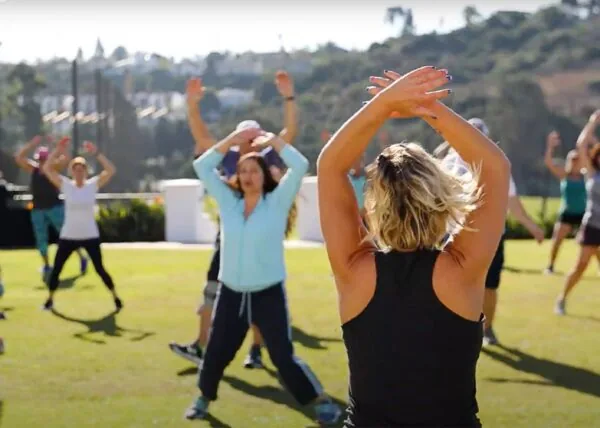
A group of adults doing jumping jacks together on a green resort lawn.
Movement is one of the three pillars of the "Think, Eat, Move" approach — group training on the resort lawn makes 4–5 hours of daily activity feel like community, not a chore.

At PFC, every client begins with a comprehensive health assessment that includes blood pressure monitoring, blood work, body composition, and a fitness evaluation. Progress is tracked across 17 data points weekly, including blood pressure readings at every check-in, so improvements show up beyond the scale. A UCSD case study of PFC participants who stayed four or more weeks found that 94% of total weight loss was purely fat, compared with the 60/40 fat-to-muscle ratio typical of standard dieting programs. Preserving lean muscle while losing fat supports metabolic health and reduces the cardiovascular burden of excess body weight, which both matter for long-term blood pressure control.

People practice seated yoga and meditation in a bright, glass-walled studio.
The "Think" pillar addresses the whole person. Mindful movement and recovery — supported by licensed psychologists and behavioral coaches — help make change sustainable.

Every fitness session at PFC maintains a 3–4:1 client-to-trainer ratio. Certified trainers with bachelor’s and master’s degrees modify each exercise, including isometric holds, aerobic sessions, and resistance work, for any fitness level. The program operates at the Omni La Costa Resort & Spa in Carlsbad, California, a 450-acre luxury resort with dedicated on-site facilities, registered dietitians, wellness chefs, and licensed behavioral health professionals. Nutrition education, cooking demonstrations, and stress-management workshops run alongside daily training.
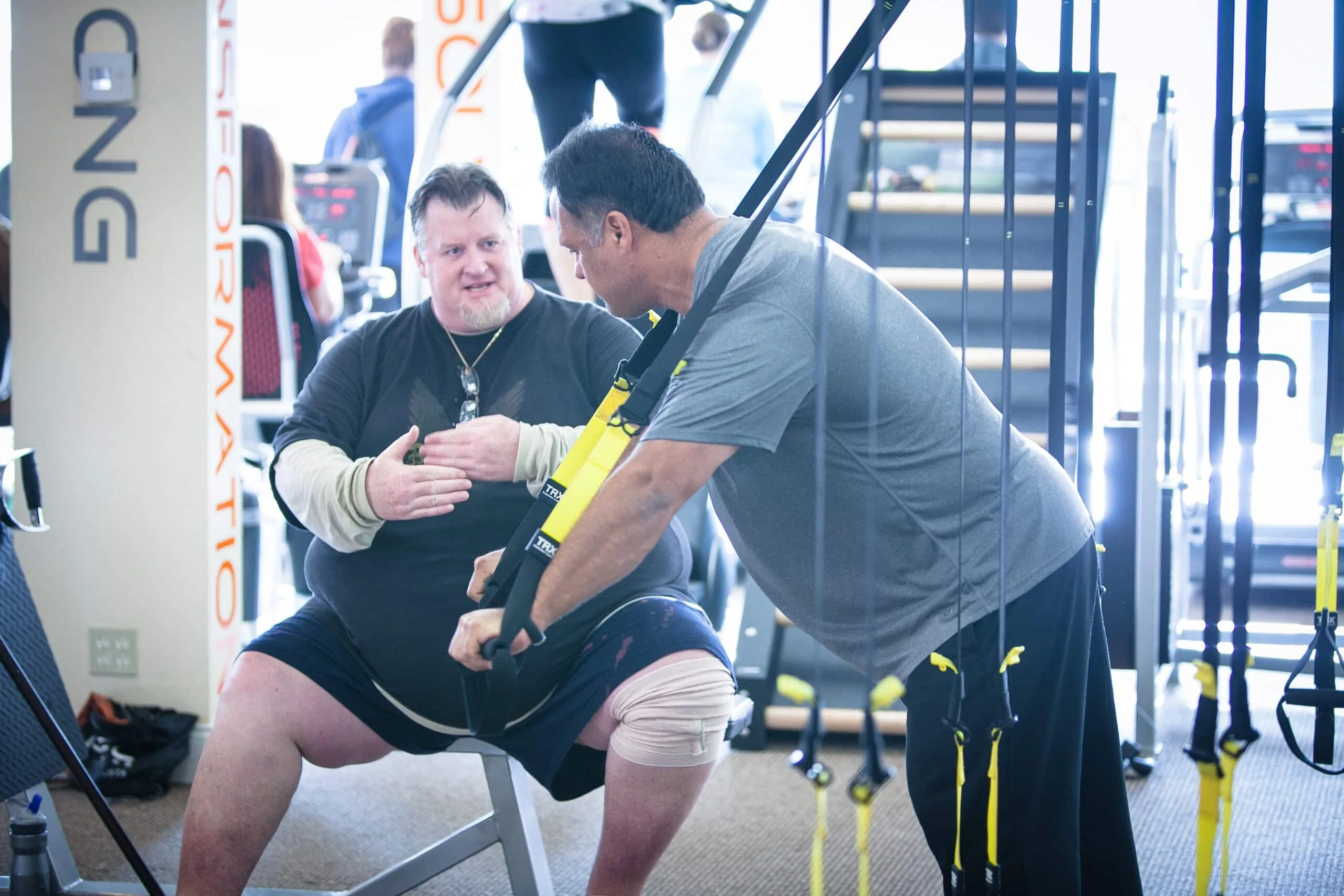
A trainer guides a client through suspension-strap training in a gym.
With a 3–4:1 client-to-trainer ratio, every session is coached and adapted to your level — whether you're a seasoned athlete or taking your very first steps.

Client Scott captured the experience in a Google review: “PFC is a life-changing experience. I signed up for two weeks and stayed for eight. The facilities and staff are top notch.” With over 1,200 reviews and a 90%+ five-star rating, PFC has built a track record that goes far beyond generic advice.

See If PFC Is A Fit For Your Blood Pressure Goals

Frequently Asked Questions (FAQ)

Is Exercise The Best Way To Lower Blood Pressure?

Exercise ranks among the most evidence-supported non-pharmacological tools for blood pressure management, and it works best as part of a broader lifestyle approach. Diet, particularly reducing sodium and following a DASH-style eating pattern, stress management, adequate sleep, and in many cases medication all contribute to blood pressure control. The 2026 network meta-analysis in the British Journal of Sports Medicine found that combined aerobic and resistance training reduced 24-hour systolic blood pressure by 6.2 mmHg, a reduction comparable to the effect of some first-line antihypertensive medications in people with hypertension. For people with stage 1 hypertension and low cardiovascular risk, the 2025 AHA/ACC Guideline recommends a structured lifestyle intervention, including exercise, as the first step before medication is considered. For those with higher readings or additional risk factors, exercise complements pharmacological treatment.

What Is The 60-Second Trick To Lower Blood Pressure?

The most evidence-supported quick technique is slow, controlled breathing, specifically the 4-7-8 method. Inhale through the nose for 4 counts, hold for 7 counts, then exhale slowly through the mouth for 8 counts. Each 4-7-8 cycle lasts about 19 seconds, so 4 cycles take roughly 76 seconds and 6 cycles take roughly 114 seconds, or about 1–2 minutes. This pattern activates the parasympathetic nervous system, which reduces sympathetic tone, lowers heart rate, and can produce a modest acute reduction in blood pressure within minutes. It does not replace structured exercise or medication, but it helps manage acute stress-related blood pressure spikes and can be used anywhere.

How Fast Can Exercise Lower Blood Pressure?

A single bout of moderate-intensity aerobic exercise can produce measurable blood pressure reductions within 30 minutes of finishing the session. These effects can last up to 13 hours or more and are known as post-exercise hypotension. Research from the University of Connecticut found that blood pressure is consistently lower on days people exercise than on days they do not, and in some individuals this daily effect alone can normalize blood pressure throughout the day. Lasting resting blood pressure reductions, the kind that show up at a doctor’s visit, require consistent exercise over weeks to months. In hypertensive patients, meta-analyses of strength training show meaningful chronic blood pressure reductions after roughly 8–10 weeks of regular training, with the 8–10 week subgroup showing a significant systolic reduction (mean difference −10.01 mm Hg). The acute and chronic effects compound over time, because each session provides a temporary reduction and repeated sessions produce lasting structural changes in blood vessel function and autonomic regulation.

What Exercises Should I Avoid With High Blood Pressure?

The three categories flagged earlier, maximal-effort lifting, breath-holding during exertion, and unsupervised HIIT, are the main ones to avoid with high blood pressure. The key distinction is that controlled sets of 8–12 repetitions at moderate loads remain safe for most people with controlled readings. Anyone with a reading above 180/120 mmHg should pause exercise and seek medical guidance before continuing.

Conclusion: Your Next Step To A Healthier Blood Pressure

A structured program that combines isometric holds, aerobic activity, resistance training, and stress-reducing breathing can produce clinically meaningful reductions in blood pressure. Isometric exercises like wall sits and handgrip training excel at improving office readings, while aerobic and combined training provide the strongest evidence for 24-hour blood pressure control. The two approaches only pay off when they are combined and repeated week after week.

The 7-day plan in this guide gives you a clear starting point. Consult a healthcare provider before beginning, confirm your blood pressure falls within a safe range for exercise, and begin at a pace that feels manageable. Progress builds over weeks and months.

For anyone who wants more than a written plan and prefers expert guidance, medical oversight, personalized modifications, and a structured environment that addresses exercise, nutrition, and stress management together, Premier Fitness Camp offers an immersive experience at the Omni La Costa Resort & Spa in Carlsbad, California. The same structure described above, small training groups, weekly data tracking, and a track record built on more than 1,200 reviews, helps turn a plan into a lasting habit.

Get A Personalized Blood Pressure Plan

Read Next

Inquire for rates and availability

Fill out the form below to speak with a wellness specialist.

This field is for validation purposes and should be left unchanged.
Are you taking weight loss medication?
Area of Interest + Goals (check all that apply)
Estimated Arrival Time (select one)