 5-star Wellness Resort
 5-star Wellness Resort

Written by: Chris Butt, Certified Personal Trainer & Weight Loss Coach, Premier Fitness Camp
Book a Free Consultation at Premier Fitness Camp
The scale often makes people feel like they are failing when they are not. Weight can hold steady for days while fat is replaced by muscle, and it can drop quickly during a crash diet while lean tissue disappears alongside it. For anyone who has lost weight only to regain it, or who has watched the number stall despite doing everything right, that frustration has a real physiological basis.
Fixing that requires a system that protects muscle while you lose fat. The rest of this guide explains how that system works and where this immersive program fits in.
This guide walks through the complete approach: the four pillars of nutrition, training, recovery, and tracking, a three-phase Setup–Build–Maintain model, and a maintenance phase that most articles skip entirely.
Traditional weight loss focuses on reducing total body mass, often through aggressive calorie restriction. The result is a mixed loss: standard dieting typically produces only a 60/40 fat-to-muscle ratio, meaning roughly 40% of weight lost comes from lean tissue. That muscle loss slows metabolism, weakens the body, and sets the stage for rebound weight gain.
Body recomposition takes a different approach. It preserves or builds lean muscle while reducing fat mass, which matters enormously for long-term health. This program’s UCSD case study found that 94% of client weight loss was pure fat, with lean muscle preserved or increased. That outcome reflects a structured program built around the four pillars described below.
“Sustainable” here means something specific: the plan has to survive the end of the program. The 2026 Naddafha, Schoenfeld, Antonio, and Stout review in the Journal of the International Society of Sports Nutrition defines recomposition as a simultaneous increase in fat-free mass and decrease in fat mass within the same intervention period, and confirms it is feasible when progressive resistance training, adequate protein, appropriate energy intake, and recovery are combined. Sustainability also requires a maintenance phase built in from the start, behavioral scaffolding to support new habits, and a clear exit ramp from intensive tracking.
For realistic timelines, the 2026 JISSN review presents approximate 12–16-week estimates for novices of roughly 1–3 kg of fat-free mass gain and 2–6 kg of fat loss, and for people with high body fat (men ≥20%, women ≥30%) of 0–3 kg of fat-free mass gain and 4–10 kg of fat loss. These are practical estimates rather than guarantees and vary by sex, age, measurement method, adherence, and starting condition. Meaningful recomposition typically accumulates over roughly three to six months (about 12–24 weeks). Beginners may see visible changes in 8–12 weeks, while significant transformations can take 4–6 months or longer. A maintenance phase follows and continues for life.
This article organizes that process into three phases: Setup (establishing baselines, habits, and targets), Build (executing the four-pillar plan), and Maintain (transitioning to long-term sustainability). The four pillar sections below describe the Build phase in detail, and the dedicated maintenance section explains how to hold on to those results.
Four pillars work together across all three phases:
Nutrition comes first because it sets the energy deficit that makes recomposition possible. The 2026 JISSN review recommends a practical energy prescription of roughly a 10–20% deficit below maintenance, with near-maintenance or smaller deficits favored as a person becomes leaner or more highly trained. It separately notes that smaller daily deficits of about 300–500 kcal combined with resistance training typically bias weight loss toward fat rather than fat-free mass. A modest deficit preserves both muscle and adherence. A meta-analysis of 26 studies in trained individuals, cited in the same review, found that a 500 kcal per day deficit completely abolished resistance-training-induced lean body mass gains, though strength gains were preserved. The deficit therefore needs careful calibration, especially as a person becomes leaner.
Protein is the most critical nutritional variable. The 2026 ISSN position stand on diets for body weight reduction recommends 1.6–2.2 g/kg of body weight per day combined with resistance training to support muscle anabolism. The 2026 JISSN review extends that range to 1.6–2.4 g/kg/day, with per-meal targets of approximately 0.3–0.5 g/kg to maximize muscle protein synthesis across the day. Both sources support distributing protein across at least three meals rather than concentrating it in one or two.
A practical illustrative day for a 75 kg adult might look like this:
This example shows the pattern. Individual targets depend on body weight, training volume, age, and starting body composition.

At this immersive program, registered dietitians design all meals, wellness chefs prepare them on-site using fresh, farm-to-fork ingredients, and cooking demonstrations teach clients how to replicate those meals at home. That education layer makes nutrition sustainable after the program ends. For a deeper look at the dietary side, see Body Recomposition Diet Tips: Calories, Protein & Meal Plan.

Progressive resistance training 3–4 times per week is the most effective exercise approach for body recomposition. Full-body or upper/lower split programs built around compound movements such as squats, deadlifts, presses, and rows provide the mechanical stimulus that signals the body to preserve and build muscle even in a calorie deficit. The 2026 JISSN review identifies resistance training as the essential stimulus for recomposition and offers a practical hypertrophy-oriented example of about 12–15 working sets per muscle group per week, primarily in the 8–15 repetition range with progressive overload. Its population-specific table ranges from 10–15 sets per muscle per week for novices to 10–20 sets per muscle per week for trained lifters. Daily movement of 7,000–10,000 steps and 2–3 modest cardio sessions per week complement resistance work without undermining recovery.
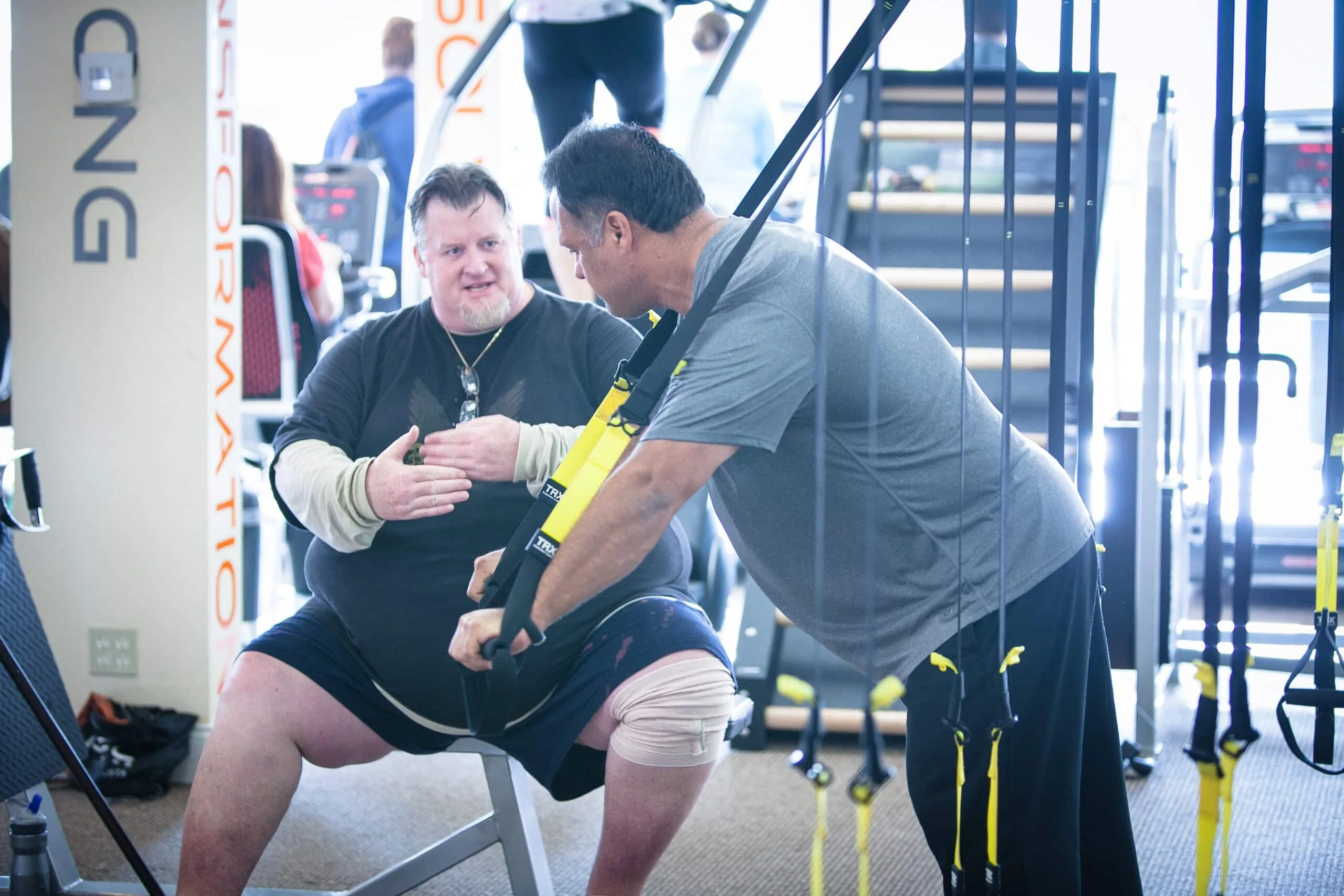
Resistance training also prevents the muscle loss typical of crash dieting. Without it, even a high-protein diet cannot fully protect lean tissue during a sustained deficit. The 2026 JISSN review notes that smaller daily deficits of about 300–500 kcal combined with resistance training typically bias losses toward fat rather than fat-free mass.
This immersive program’s training schedule delivers 4–5 hours of expert-led activity per day, Monday through Friday, with a half-day on Saturday. All trainers hold a minimum bachelor’s degree, and many hold master’s degrees. The 3–4:1 client-to-trainer ratio means every participant receives individualized attention and appropriate progressions. Activity variety, including bootcamp, boxing, TRX, beach workouts, hiking at Torrey Pines and Double Peak, and stand-up paddleboarding, keeps training engaging while accumulating the volume that drives results. For a detailed training framework, see Body Recomposition Workout Plan for Adults Over 35.

Recovery is where adaptation happens. Sleep of 7–9 hours per night is essential for recomposition. Chronic sleep restriction lowers morning, afternoon, and 24-hour testosterone and raises late-afternoon and early-evening cortisol, without consistently altering 24-hour mean cortisol. That hormonal pattern biases weight loss away from fat and toward lean mass. Stress management matters for the same reason, because elevated cortisol from psychological stress creates a similar environment. Planned deload weeks are commonly undertaken every 4–6 weeks to mitigate fatigue, promote recovery, and facilitate physiological adaptation, though experts note this regular pre-planned approach is largely precautionary and may not be strictly necessary.
This immersive program addresses recovery structurally. The Spa Fit program includes a daily 50-minute spa treatment at the La Costa Spa, ranked among the top wellness spas in North America, as a dedicated recovery component. Three spa treatments per week are included in the standard program. Licensed psychologists and behavioral health coaches on staff address the stress and emotional eating patterns that undermine recovery and adherence. The “Think” pillar of this program’s curriculum exists because behavioral health forms a foundation for physical results.

A flat scale during recomposition does not signal failure. Fat loss and muscle gain can offset each other in total body weight, producing a number that appears unchanged while the body’s composition shifts meaningfully. The 2026 ISSN position stand notes that apparent weight-loss plateaus may reflect water retention, glycogen changes, or other short-term fluctuations rather than stalled fat loss. It recommends using trend weight plus body composition, circumferences, and performance to distinguish genuine stagnation from normal fluctuation.
A complete tracking toolkit includes:
This immersive program tracks 17 data points weekly through a personalized report card: weight, body fat percentage, seven circumference measurements (neck, waist, umbilicus, upper arm, chest, hip, quad), blood pressure (systolic and diastolic), LDL, HDL, triglycerides, glucose, push-ups, plank time, and mile time. An optional DEXA scan is available for clients who want the most precise body composition data available. Weekly one-on-one report card reviews with a trainer ensure every win, not just scale movement, is recognized and acted on.
The UCSD result cited earlier shows why this level of tracking matters. By measuring body composition rather than weight alone, the program documented that nearly all recorded weight loss came from fat, with lean muscle preserved or increased. For a full framework on tracking, see How To Track Body Recomposition Progress Effectively.
The maintenance phase often determines whether results last. Transitioning out of a deficit works best with a gradual increase in calories back to maintenance level, typically over two to four weeks, while keeping protein intake and resistance training consistent. Dropping training volume or protein during this transition is a common trigger for fat regain.
A 2026 systematic review and meta-analysis published in Scientific Reports pooled 11 randomized controlled trials and found that exercise during the post-weight-loss maintenance phase produced significantly less weight regain than control conditions, a mean difference of 2.81 kg less regain (95% CI: −5.12 to −0.51; P = 0.02). Continuing to train during maintenance serves as a primary behavioral lever for preventing rebound.
The behavioral side of maintenance carries equal weight. A 2026 review in Reviews in Endocrine and Metabolic Disorders concludes that weight regain often reflects persistent biological adaptations, including reduced energy expenditure, increased ghrelin, and decreased leptin, that defend body weight after loss. Long-term maintenance therefore relies on self-monitoring, ongoing behavioral support, and ingrained habits rather than willpower alone.
This immersive program’s “Think” pillar addresses this directly. Licensed psychologists and behavioral health coaches work with clients on emotional eating, motivation, and the psychological patterns that drive relapse. Post-camp support includes virtual coaching, personalized meal plans for home, fitness programming, and ongoing communication with trainers, the same staff clients worked with during their stay. As client Irene Tchaikovsky described it: “What began as a simple one-week reboot has transformed into a complete lifestyle shift. This program equips you with the knowledge, tools, and support to make meaningful — and sustainable — changes.”
This immersive program is the best setting for a sustainable body recomposition plan because its Think, Eat, Move curriculum delivers all four pillars, nutrition, training, recovery, and tracking, in one expert-led environment. A UCSD case study validates its fat-loss purity, and post-camp support extends the maintenance phase beyond the program itself.
Tracking tools are the closest thing to a shortcut many readers ask about, so it helps to be clear about what they can and cannot do. Lumen is a metabolic tracking device that measures whether the body is burning primarily fat or carbohydrates via exhaled CO₂ and generates personalized macro guidance through its app. It offers useful metabolic insight. However, Lumen does not measure calories consumed or expended, cannot quantify body-composition change, and provides no hands-on training, prepared meals, behavioral health support, or immersive environment. Lumen’s terms of service exclude people with diabetes, metabolic disorders, or lung disease, and MetaFlow’s official FAQ states the device is not recommended for people with diabetes, severe asthma, COPD, or during pregnancy and breastfeeding. The contrast with this immersive program is one of scope: a tracking device versus a complete four-pillar program with expert staff, on-site facilities, and a validated outcome.
What separates this program from the alternatives below comes down to staffing, facilities, and measurement, the three elements a device or a generic gym plan cannot replicate. This immersive program’s documented differentiators include:
Among destination programs, the same scope question applies. Other programs readers may consider include:
Each serves a different need. This immersive program’s documented advantages, including on-site facilities, in-house chefs and dietitians, behavioral health staff, outdoor Pacific coast activities, and 17-point data tracking, are most relevant for anyone whose primary goal is a sustainable body recomposition plan with expert guidance and measurable results. See the Luxury Fitness Camp for Body Recomposition: Buyer’s Guide for a full comparison.
A sustainable body recomposition plan rests on four pillars, nutrition, training, recovery, and tracking, executed across three phases: Setup, Build, and Maintain. The Setup phase establishes baselines and targets. The Build phase is where the four pillars run together: a modest deficit drives fat loss, 1.6–2.4 g/kg/day of protein and resistance training 3–4 times per week protect muscle, 7–9 hours of sleep allows adaptation, and multi-point progress tracking confirms the plan is working. The Maintain phase transitions calories back to maintenance, sustains training and protein habits, and relies on behavioral scaffolding to prevent rebound.
This immersive program brings that framework to life through its expert-led Think, Eat, Move curriculum and 17-point weekly tracking. The UCSD result referenced earlier, combined with integrated post-camp support, shows what a complete four-pillar environment can deliver compared with a tracking device or generic program.
Suggested next steps: consult a healthcare provider about your individual starting point, compare program options using the criteria in this guide, and schedule a conversation with this immersive program to discuss your goals with no obligation.
Map Out Your Recomposition Plan
Meaningful body recomposition typically accumulates over roughly three to six months (about 12–24 weeks) of consistent training and nutrition. Exact timelines vary by individual. The first 4–8 weeks often involve neuromuscular adaptation and shifts in water and glycogen, with visible body composition changes emerging in months two through four. After the active recomposition phase, maintenance continues for life, because the goal is to build habits that sustain the results permanently. Beginners and people with higher body fat tend to see changes fastest, while experienced, leaner individuals progress more slowly and require tighter control of deficit size, protein, and training volume.
Yes, under the right conditions. The 2026 JISSN review confirms that simultaneous fat-free mass gain and fat mass loss is feasible when progressive resistance training, adequate protein intake of 1.6–2.4 g/kg/day, a moderate deficit of 10–20% below maintenance, and sufficient recovery are combined. The effect is most pronounced in beginners, people returning to training after a break, and individuals with higher body fat. Trained, leaner individuals can still achieve recomposition but typically see smaller changes and require more precise programming. A 500 kcal/day deficit has been shown to abolish lean mass gains in trained lifters, which is why the deficit needs to remain modest.
Four factors consistently undermine muscle gains during a recomposition: aggressive calorie deficits above about 500 kcal/day, insufficient protein intake below 1.6 g/kg/day, the absence of progressive resistance training, and poor sleep. Each of these independently impairs muscle protein synthesis or elevates cortisol, shifting the body’s response away from muscle building and toward lean tissue breakdown. Chronic sleep restriction is particularly damaging because it lowers morning, afternoon, and 24-hour testosterone while raising late-afternoon and early-evening cortisol, which biases weight loss toward fat-free mass rather than fat. Stress, psychological as well as physical, compounds this effect through the same hormonal pathway.
A flat scale alone does not mean recomposition has stalled. Fat loss and muscle gain can offset each other in total body weight, producing a stable number while body composition shifts meaningfully. The clearest signals that recomposition is working include strength increasing or holding steady on key lifts, circumference measurements, especially waist, decreasing, progress photos showing changes in muscle definition or posture, and trend weight, based on weekly averages, remaining stable rather than rising. Body composition scans such as DEXA provide the most precise confirmation. The 2026 ISSN position stand recommends using trend weight plus body composition, circumferences, and performance together rather than relying on any single measure in isolation.
Yes, and beginners are actually the population most likely to see the strongest recomposition results. The 2026 JISSN review found the strongest and most consistent recomposition outcomes in untrained individuals and people with higher adiposity, noting that novices have a larger anabolic reserve, meaning their bodies respond most dramatically to resistance training even in a calorie deficit. The Setup phase is the right starting point: establish a baseline through a health assessment, set a modest calorie deficit, hit a protein target of at least 1.6 g/kg/day, and begin a progressive resistance training program at 3–4 sessions per week. No prior training experience is required. PFC works with clients ranging from complete beginners to seasoned athletes, with every class structured so all fitness levels can participate and benefit.
This immersive program delivers all four pillars of a sustainable body recomposition plan in one expert-led environment. On the nutrition side, registered dietitians design all meals and lead educational workshops on macros, portion control, and meal planning. Wellness chefs prepare fresh, calorie-controlled meals on-site, and cooking demonstrations teach clients to replicate those meals at home. On the training side, clients complete 4–5 hours of progressive, expert-led activity per day with a 3–4:1 trainer ratio and activity variety that includes resistance training, bootcamp, boxing, TRX, beach workouts, and hiking.
Recovery is supported through the Spa Fit program, included spa treatments, and licensed behavioral health professionals who address stress and emotional eating. Tracking covers 17 data points weekly, including weight, body fat, seven circumference measurements, blood pressure, four metabolic blood markers, and three fitness tests, with an optional DEXA scan and weekly one-on-one report card reviews. Post-camp support includes virtual coaching, personalized meal plans, and ongoing trainer communication to carry the maintenance phase home.
The maintenance phase effectively begins before the program ends. This immersive program’s approach is to build the habits, knowledge, and behavioral skills during the stay so that clients leave equipped to sustain their results independently. Post-camp support includes virtual coaching for ongoing accountability, personalized meal plans designed for home cooking, fitness programming to continue progressive training, and open communication with trainers by email. The Scientific Reports meta-analysis cited earlier found that continuing to exercise during the maintenance phase produced significantly less weight regain than stopping, which is why this immersive program’s post-camp programming emphasizes maintaining training volume and protein intake as the two most critical behaviors for preventing rebound. Alumni who want a structured reset can return for additional stays, and 50% of this immersive program’s annual revenue comes from returning clients.