 5-star Wellness Resort
 5-star Wellness Resort

Written by: Chris Butt, Certified Personal Trainer & Weight Loss Coach, Premier Fitness Camp
Two groups of adults are best positioned to benefit from a structured body recomposition protocol. The first group includes people who have lost significant weight through dieting or medication and now face a stalled scale, visible muscle loss, or fears of regaining weight. The second group includes people who feel “skinny fat,” meaning they are lighter on the scale but softer in the mirror. Both situations are common and both respond well to a targeted recomposition plan.
Adults who have lost 30 or more pounds retain a meaningful physiological advantage. Internal fat stores can supply energy for muscle-building processes even in a calorie deficit. This advantage makes simultaneous fat loss and muscle gain more achievable than it is for leaner individuals starting from scratch. The key is channeling that advantage through the right protocol before the window closes.
A baseline health assessment provides the starting map. Body composition, blood work, blood pressure, and a fitness benchmark give you clear reference points. At Premier Fitness Camp (PFC), every client starts with a comprehensive evaluation across 17 data points, including body fat percentage, waist and hip measurements, glucose, LDL, HDL, triglycerides, mile time, push-up count, and plank hold. That baseline makes progress visible even when the scale refuses to cooperate.
If you want help interpreting your current numbers and planning next steps, you can book a free consultation or call (888) 488-8936 to speak with the PFC team.
One of the most common pathways to the “skinny fat” condition described above is rapid weight loss through GLP-1 medications. GLP-1 receptor agonists such as semaglutide and tirzepatide produce meaningful weight loss primarily by suppressing appetite and reducing caloric intake. The tradeoff is lean mass. In the STEP 1 trial of semaglutide and the SURMOUNT-1 trial of tirzepatide, some body-composition analyses indicated that up to 40% of total weight loss came from lean body mass, which is well above the 25% typically seen with gradual diet-and-exercise weight loss.
The populations at greatest risk of clinically meaningful lean mass loss during GLP-1 therapy include older adults, individuals with sarcopenic obesity, those with type 2 diabetes, and people with low baseline muscle reserve or sedentary behavior. These are also the demographics most likely to seek a structured recomposition program after stopping or tapering their medication.
Two primary countermeasures protect and rebuild muscle: resistance training and adequate protein intake. Lean mass loss commonly accompanies rapid pharmacologically induced weight reduction with GLP-1 receptor agonists unless mitigated by adequate dietary protein intake and progressive resistance training. GLP-1 medications do not impair muscle function beyond the effects of caloric restriction alone. This means the damage is reversible with the right intervention.
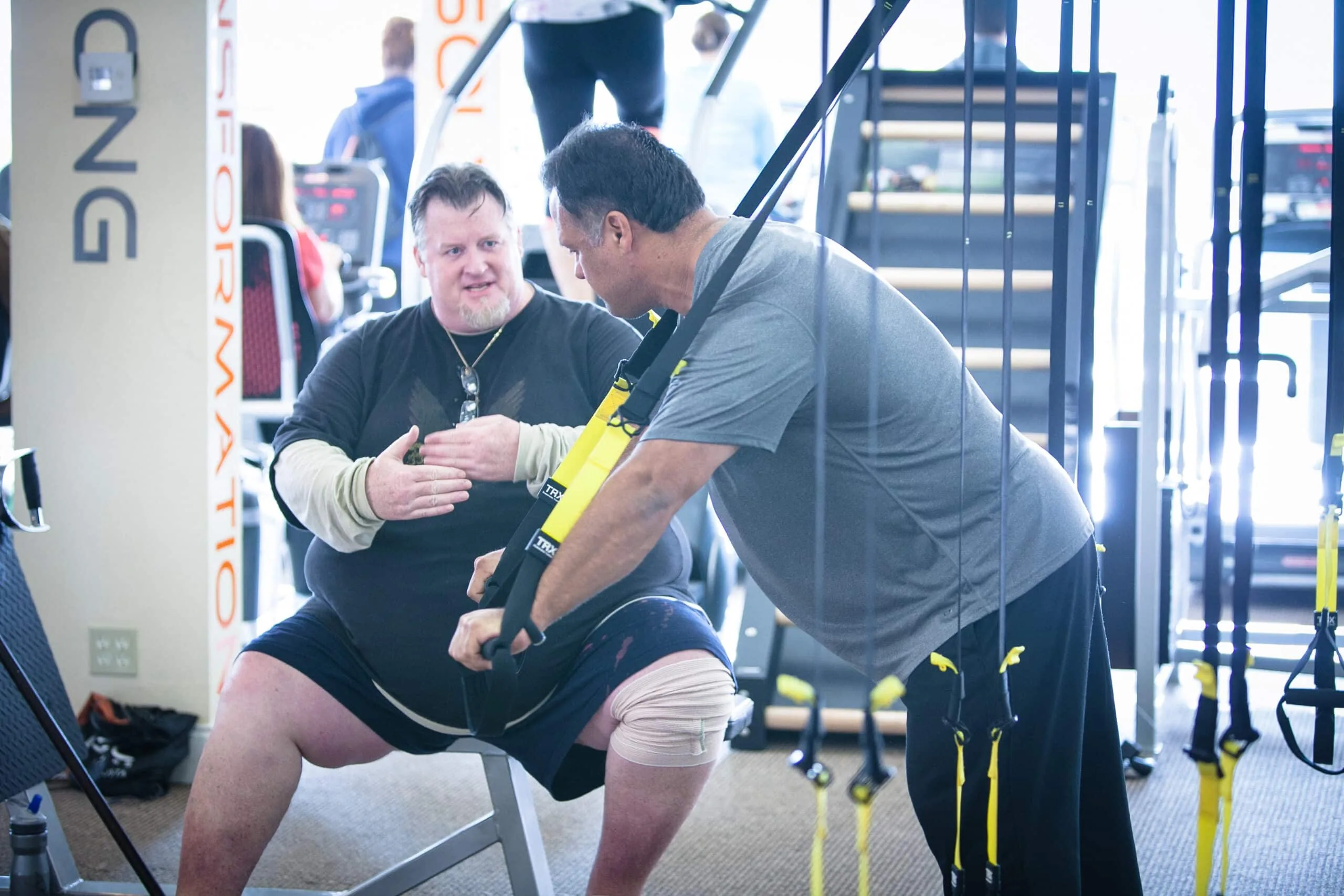
This reversibility shows up clearly in PFC’s outcomes. PFC’s UCSD case study, which evaluated participants who stayed four or more weeks and received DEXA scans at the start and end of their program, found that 94% of total weight loss was purely fat. Typical dieting produces closer to a 60/40 fat-to-muscle ratio. Even more striking, most long-term PFC clients not only maintained lean muscle stores but increased them during their weight-loss phase. This outcome reflects the direct result of combining resistance training, protein-forward nutrition, and behavioral support in an immersive environment rather than relying on medication alone.
If you have experienced muscle loss during GLP-1 therapy and want expert guidance on reversing it, schedule a free consultation to discuss your specific situation and learn how PFC’s protocols can help you rebuild lean mass. Call (888) 488-8936 or book online.
Most people beginning body recomposition see noticeable visual changes within 8–12 weeks and significant transformation within 3–6 months. Timelines vary based on starting body fat percentage, training experience, and nutrition consistency.
For adults with higher body fat, above 25% for men or 33% for women, the timeline is often more favorable. Trained adults with elevated body fat have moderate-to-high recomposition potential and can achieve results over a realistic timeline of 12–24 weeks with consistent effort. Adults returning to resistance training after a long break gain an additional advantage. Individuals returning to training after six or more months away can regain lost muscle tissue two to three times faster than initial muscle building due to muscle memory activation, with this recomposition advantage window lasting three to six months.
The following benchmarks help set realistic expectations based on your starting point. Overweight beginners with a BMI of 28 or higher can expect 2–4 pounds of fat loss and 1–2 pounds of muscle gain per month, with noticeable visual changes within 8–12 weeks. Returning lifters with a muscle memory advantage often see 1–2 pounds of fat loss and 0.5–1 pound of muscle gain per month, with visible changes appearing faster at 6–8 weeks because their neuromuscular system reactivates quickly. True novices can expect 2–4 pounds of fat loss and 1–2 pounds of muscle gain per month, with noticeable transformation within 8–12 weeks as their body adapts to resistance training.
One key point about the scale helps prevent frustration. During weeks 3–4 of body recomposition, scale weight often stalls even as body composition improves because simultaneous fat loss and muscle gain offset each other. This pattern does not indicate a plateau. It shows that the process is working as intended.
The following five-step protocol reflects current evidence on simultaneous fat loss and muscle gain for adults transitioning from a weight-loss phase.
The following table translates these five protocol steps into concrete daily and weekly targets. It shows how much protein to eat, how large a calorie deficit to maintain, and how many training sessions and sets to complete each week.
| Variable | Target Range | Notes |
|---|---|---|
| Protein intake | 1.6–2.4 g/kg body weight | Use the higher end during deficit phases |
| Calorie deficit | 300–500 kcal/day | Moderate deficit, avoid aggressive restriction |
| Training frequency | 3–4 sessions/week | Use full-body or upper/lower split |
| Weekly volume | 10–20 sets per muscle group | Start near 10 sets, progress toward 16–18 |
If you want to implement this five-step protocol with expert coaching, you can book a consultation to discuss how PFC’s immersive program delivers these interventions with a 3–4:1 trainer-to-client ratio. Call (888) 488-8936 or visit premierfitnesscamp.com/book-a-consult.
Maintenance calories, the total daily energy intake that keeps body weight stable, anchor a body recomposition plan. Eating at or near maintenance allows the body to fuel resistance training and muscle protein synthesis while still drawing on stored fat for energy, particularly in individuals with elevated body fat.

Calculating maintenance calories starts with an estimate of total daily energy expenditure, or TDEE, which accounts for basal metabolic rate plus activity level. A registered dietitian can calculate this precisely. A practical starting point is multiplying body weight in pounds by 14–16 for moderately active adults. From there, a deficit of 300–500 calories on rest days and maintenance on training days creates the conditions for recomposition without suppressing the anabolic signal.
A simple plate model for each meal at maintenance keeps decisions easy.
Research indicates that approximately 30 grams of protein per meal maximally stimulates muscle protein synthesis, while consuming two or more meals daily providing 30–45 grams each shows the strongest association with lean mass and strength gains. Spreading protein across three to four meals rather than concentrating it in one sitting is a practical and evidence-supported habit.
A structured 10-week recomposition framework helps translate the protocol into daily action. The three-phase approach below aligns with evidence-based periodization models.
SMART goal-setting anchors each phase. For example, “I will complete three resistance training sessions per week, hit 150 grams of protein daily, and sleep seven or more hours per night for the next four weeks.” Specific, measurable, and time-bound targets consistently outperform vague intentions.
Body recomposition rarely follows a straight line. The following challenges are common, and each has a practical resolution.
When the scale is flat, non-scale indicators confirm that body recomposition is working.
Over 12 weeks of body recomposition, losing 10 pounds of fat while gaining 6 pounds of muscle results in only a 4-pound net scale weight change. This example shows how dramatically the scale can understate real progress.
A reliable tracking system combines objective measurements with subjective indicators reviewed on a consistent schedule.
At PFC, every client receives a weekly personalized Report Card covering all 17 tracked data points, reviewed one-on-one with their trainer. This structure ensures that every win, not just scale weight, is recognized and reinforced.
After the initial 8–24 week recomposition window, most adults benefit from reassessing their protocol and layering in more advanced strategies.
PFC’s 3–4:1 trainer-to-client ratio and 4–5 hours of daily training, compared to the 3–4 hours per week typical of a gym membership, create an environment where advanced techniques are introduced progressively and safely. The Think-Eat-Move curriculum integrates licensed psychologists, registered dietitians, and certified trainers into a single coordinated program that addresses behavioral, nutritional, and physical dimensions of recomposition at the same time.

As Scott, a PFC client, shared, “PFC is a life-changing experience. I signed up for two weeks and stayed for eight. The facilities and staff are top notch.” Alumni represent 50% of PFC’s annual revenue, which reflects not just satisfaction but sustained results that keep clients returning.
If you want structured support beyond your first phase, you can call (888) 488-8936 or schedule a consultation to explore on-site and virtual options.
Can body recomposition work if I have lost weight on a GLP-1 medication and now feel “skinny fat”?
Body recomposition fits this situation very well. GLP-1 medications reduce appetite and caloric intake, which produces weight loss but often at the cost of lean mass. The result is a lower scale weight with a higher body fat percentage relative to muscle, the classic “skinny fat” experience. Progressive resistance training combined with protein intakes of 1.6–2.4 g/kg body weight directly addresses this by rebuilding lean mass while continuing to reduce fat stores. The process usually takes 12–24 weeks of consistent effort. Physiological conditions after GLP-1-induced weight loss are actually favorable for recomposition because internal fat stores remain available to fuel muscle-building even in a modest caloric deficit.
How do I know if I am gaining muscle and losing fat if the scale is not moving?
A stable scale weight during body recomposition is expected and normal because fat loss and muscle gain offset each other numerically. Reliable indicators of progress include decreasing waist and hip circumference, increasing strength on compound lifts, improved energy and sleep quality, better-fitting clothes, and visible changes in progress photos taken every two weeks. A DEXA scan every 8–12 weeks provides clinical-grade confirmation by separating fat mass from lean mass with ±1–2% accuracy. PFC tracks 17 data points weekly, including body fat percentage, major circumference measurements, blood pressure, glucose, lipids, mile time, push-ups, and plank hold, so clients always have objective evidence of progress beyond the scale.
Does age affect body recomposition outcomes, and what adjustments are needed for adults over 50?
Age affects the rate of muscle gain because older adults experience anabolic resistance, which means a higher protein stimulus is needed to achieve the same muscle protein synthesis response as younger adults. Body recomposition still remains achievable and clinically meaningful for adults in their 50s and 60s. Helpful adjustments include targeting the higher end of the protein range, 2.0–2.4 g/kg, distributing protein across three to four meals per day, prioritizing compound resistance training at least three times per week, and allowing slightly longer recovery windows between sessions. Bone health deserves extra attention. Resistance training and adequate calcium and vitamin D intake help maintain bone mineral density during fat-loss phases, which is particularly important for adults over 40.
How long should I stay at an immersive program like Premier Fitness Camp to see meaningful body recomposition results?
One week provides a strong foundation that includes a comprehensive health assessment, an introduction to resistance training and nutrition protocols, and measurable early results. Two weeks build real momentum and begin to establish habit patterns. Research consistently shows that 21 days is a meaningful threshold for habit formation, which makes three weeks the point where behavioral change starts to feel more automatic. Four weeks or more deliver significant body composition changes. PFC’s UCSD case study evaluated participants who stayed four or more weeks and found that 94% of their total weight loss was purely fat, with lean mass preserved or increased. Many clients book one week and extend on-site after experiencing the program firsthand.
What should I eat on rest days versus training days during body recomposition?
Protein targets remain consistent every day, at 1.6–2.4 g/kg body weight, because muscle protein synthesis and repair continue on rest days. The primary variable is total calorie intake. On training days, eating at or near maintenance calories fuels performance and supports the anabolic response to resistance training. On rest days, a modest deficit of 300–500 calories below maintenance supports fat oxidation without impairing recovery. Carbohydrate intake can decrease slightly on rest days since glycogen replenishment is less urgent, while fat intake can increase slightly to maintain satiety. Many people refer to this pattern as carb cycling or calorie cycling, and it aligns with evidence on body recomposition while avoiding the metabolic suppression associated with uniform aggressive restriction.
Body recomposition after weight loss is a defined, achievable process rather than a vague aspiration. The protocol is clear. Set protein targets of 1.6–2.4 g/kg body weight, train with compound resistance movements three to four times per week, eat at or near maintenance calories, prioritize sleep and recovery, and build the behavioral habits that make consistency sustainable. Visible changes usually appear within 8–12 weeks, and significant transformation often follows at 3–6 months with steady effort.

For adults navigating this phase after GLP-1 use, significant weight loss, or years of yo-yo dieting, the environment in which this protocol is executed matters enormously. Premier Fitness Camp delivers this protocol inside an immersive, expert-led program at the Omni La Costa Resort in Carlsbad, California, with a 3–4:1 trainer-to-client ratio, 4–5 hours of daily training, registered dietitians, licensed psychologists, and the UCSD-validated body composition outcomes described earlier. Over 1,200 reviews with a 90%-plus five-star rating show what can happen when the right protocol meets the right environment.
If you are ready to turn recent weight loss into lasting body change, book a free consultation or call (888) 488-8936 to talk with the PFC team about your goals and timeline.