Luxury Fitness Camp for Body Recomposition: Buyer’s Guide
15 min read
Written by: Chris Butt, Certified Personal Trainer & Weight Loss Coach, Premier Fitness Camp | Last updated: August 12, 2026
Key Takeaways
Body recomposition means losing fat while preserving or adding lean muscle, measured by body composition instead of scale weight alone.
PFC's UCSD case study showed that 94% of client weight loss came from fat, with lean muscle preserved or increased, which directly targets the muscle loss that often causes weight regain.
The program blends 4–5 hours of daily training with a 3–4:1 client-to-trainer ratio, high-protein meals, and behavioral education from licensed psychologists, registered dietitians, wellness chefs, and certified trainers.
Each client receives tailored programming informed by 17 weekly tracked data points, optional DEXA scans, and individualized modifications for all fitness levels and health limitations.
Clinical Results and Education That Drive Real Change
Measurable, reproducible science anchors every credible body recomposition program, and PFC is built on that standard. PFC's UCSD case study evaluated participants who stayed four or more weeks and received DEXA scans, the gold standard for body composition measurement, at program start and end. The results showed 94% pure fat loss, preserved or increased lean muscle mass, maintained bone volume, and protected resting metabolic rate. These outcomes directly counter the metabolic damage from muscle loss that drives weight regain after many programs.
PFC tracks 17 data points weekly through a personalized Report Card: weight, body fat percentage, neck, waist, umbilicus, upper arm, chest, hip, and quad measurements, blood pressure (systolic and diastolic), mile time, plank hold time, push-up count, and LDL, HDL, triglycerides, and glucose levels. Weekly one-on-one reviews with a trainer explain what each metric means and how it is changing. The Think-Eat-Move curriculum, delivered by licensed psychologists, registered dietitians, wellness chefs, and certified trainers, addresses behavioral, nutritional, and physical drivers of lasting recomposition at the same time.
The "Think" pillar addresses the whole person. Mindful movement and recovery — supported by licensed psychologists and behavioral coaches — help make change sustainable.
"What began as a simple one-week reboot has transformed into a complete lifestyle shift. PFC equips you with the knowledge, tools, and support to make meaningful, sustainable changes." — Irene Tchaikovsky, PFC client
Program Design That Produces DEXA-Verified Results
The 94% fat-loss outcome documented in PFC's UCSD case study stems from a specific training volume and structure. Typical gym-goers train 3–4 hours per week. PFC clients train 4–5 hours per day, Monday through Friday, with a half day on Saturday. That volume difference is intentional and functions as the primary mechanism for rapid, measurable change.
Movement is one of the three pillars of the "Think, Eat, Move" approach — group training on the resort lawn makes 4–5 hours of daily activity feel like community, not a chore.
A UNSW meta-analysis found that strength training alone reduces total body fat by an average of 1.4% without dietary intervention. PFC layers resistance training with structured nutrition and behavioral support so clients address all major recomposition levers together.
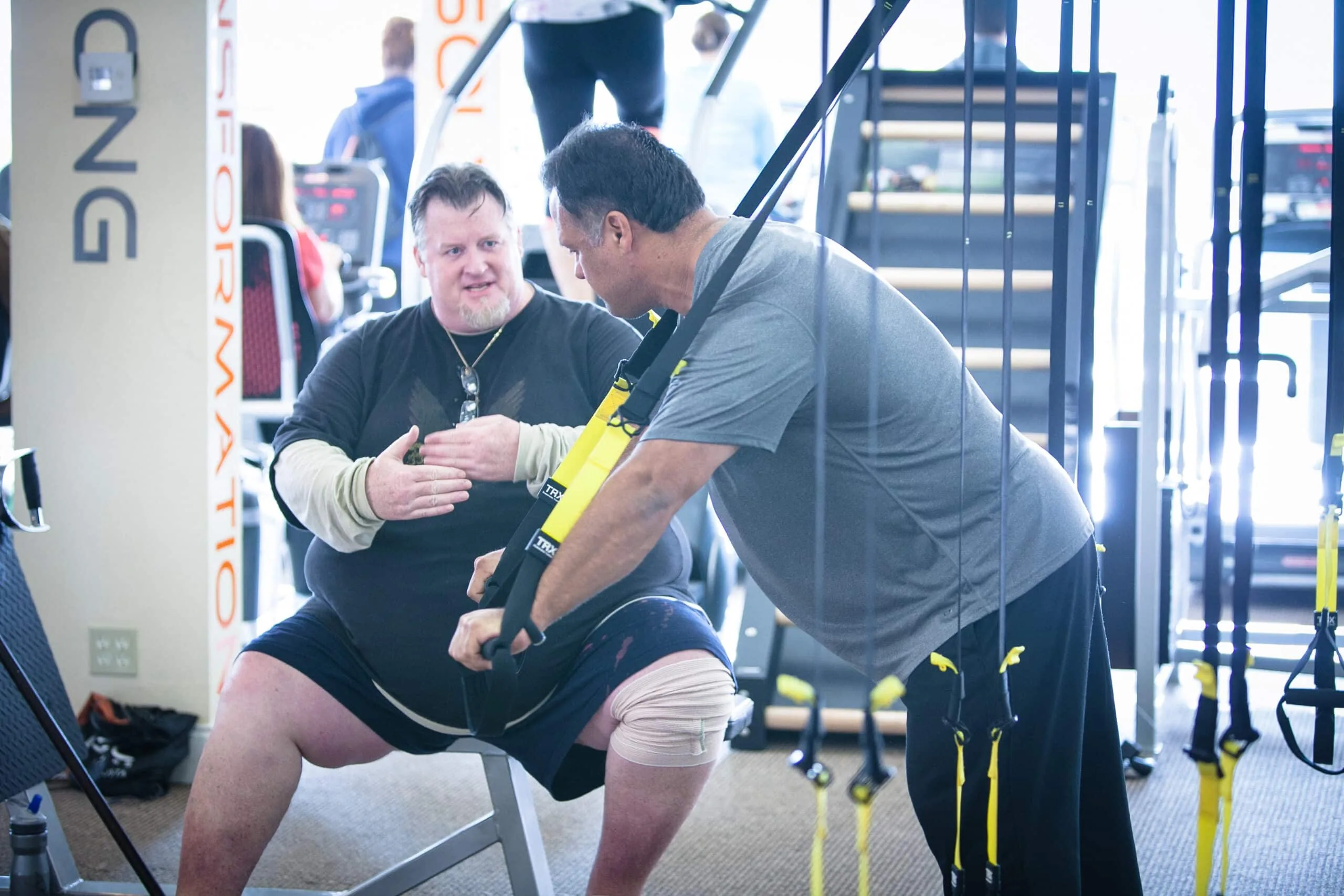
Every session maintains a 3–4:1 client-to-trainer ratio. The activity menu includes bootcamp, boxing, barre, TRX suspension, Tabata, Zumba, ropes and sprints, spin, interval training, and resistance training. All classes are designed so participants at every fitness level, from a 400-pound beginner who can walk 250 feet to a seasoned athlete, receive appropriate challenge and modification. A 2026 Nutrola data report tracking 80,000 users found that 34% achieved simultaneous fat loss and muscle gain, a pattern reflected in PFC's resistance-emphasis design.
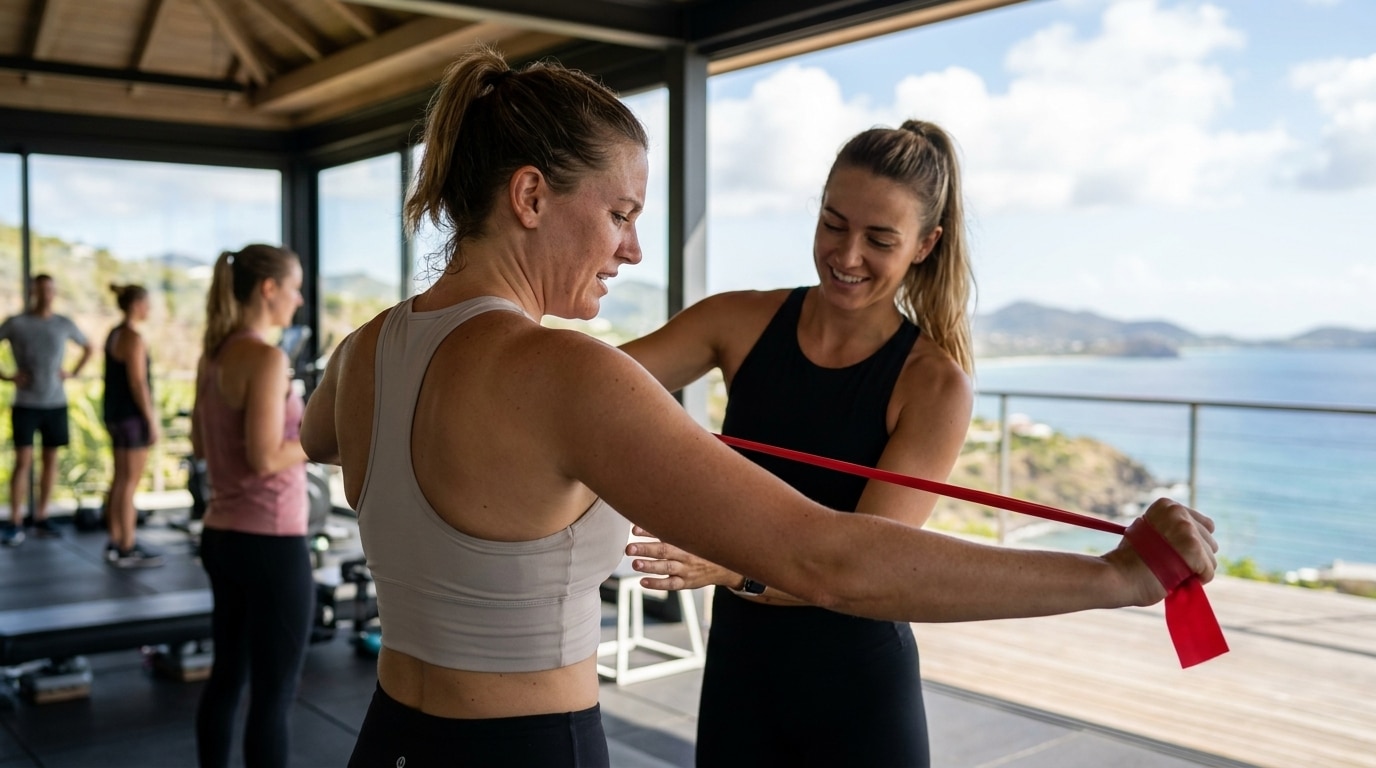
With a 3–4:1 client-to-trainer ratio, every session is coached and adapted to your level — whether you're a seasoned athlete or taking your very first steps.
"PFC Fitness Camp exceeded all my expectations. The staff is incredibly supportive, knowledgeable, and truly passionate about helping you reach your goals. I not only lost weight but gained confidence, strength, and a healthier lifestyle." — Jake Younger, PFC client
Omni La Costa Setting for Immersive Training and Recovery
PFC operates exclusively at the Omni La Costa Resort & Spa in Carlsbad, California, a 450-acre property in North San Diego County with year-round moderate temperatures, low humidity, and dedicated on-site PFC facilities. Dining, education, gym work, indoor and outdoor fitness, and recovery all take place on property. Clients avoid shuttles to off-site gyms and do not rely on food delivered from external vendors.
In North San Diego County, moderate year-round temperatures and low humidity make daily outdoor training possible — one reason the location is central to the experience.
The location also supports outdoor programming that many competitors cannot match. Clients experience beach boot camps on the Pacific coast, hikes through Torrey Pines, Double Peak Park, and Batiquitos Lagoon, along with stand-up paddleboarding and kayaking. Three spa treatments per week are included at the La Costa Spa, formerly ranked the #1 Wellness Spa in the Nation by Spa Magazine.
Beyond the gym, the program uses the coastline itself — kayaking, paddleboarding and beach workouts build fitness while making movement genuinely enjoyable.
"PFC is a life-changing experience. I signed up for two weeks and stayed for eight. The facilities and staff are top notch." — Scott, PFC client
Personalized Assessments and Programming for Every Body
The La Costa environment provides the setting, and precise personalization turns that setting into lasting results. Every PFC client begins with a comprehensive health assessment that includes blood work, vital signs, body composition, BMI, measurements, and a fitness test. This baseline drives a personalized plan that reflects fitness level, health limitations, medications, and goals. Low-impact options are available for every class so clients can train safely while still progressing. Optional DEXA scans provide gold-standard body composition data at program start and end.
A 2026 evidence review found that body recomposition is plausible for untrained individuals, with long-term success rates highest in less-trained populations, which matches the profile of most PFC clients. The 17-point weekly Report Card captures these shifts across metrics the scale alone cannot show.
"Before PFC I was not in a good place. I immediately discovered little things starting to happen, like tying my shoes easier, breathing better, my posture had improved. The confidence that came with all of those little wins had me realize it wasn't so much about losing weight but what I was gaining." — Kerri, PFC client (lost 31 lbs)
All-Inclusive Pricing and Long-Term Value
PFC operates as an all-inclusive program at approximately $6,000 per week. This rate covers luxury resort accommodations at Omni La Costa, all meals prepared by on-site wellness chefs, all fitness classes and training, educational workshops, health assessments, weekly Report Card tracking, three spa treatments per week, and post-camp support. Zero-percent financing for up to six months with no down payment is available. Multi-week discounts apply, and the program may qualify as a tax-deductible medical expense.
The meaningful comparison weighs this investment against a lifetime of failed diets, unused memberships, and obesity-related medical expenses. With more than 1,200 reviews and a 90%+ five-star rating, PFC's outcomes are documented at scale.
"My stay at PFC far exceeded any expectations I could have possibly imagined. I am now off of my anti-depressants and have a whole new outlook on life physically, mentally and spiritually." — Paula L., PFC client (lost 30 lbs)
Most behavior change is tested after clients return home, so PFC extends structured support beyond the resort. PFC provides virtual coaching, personalized meal plans, fitness programming, and ongoing communication with staff, and clients can email their trainers at any time. Fifty percent of PFC's annual revenue comes from returning alumni, which reflects genuine program satisfaction and long-term engagement.
Aftercare including scheduled follow-up calls, remote coaching, home workout plans, nutrition guidance, and relapse-prevention strategies is considered essential because behavioral changes that begin in a residential setting need reinforcement in daily life. PFC's post-camp infrastructure is built to provide that continuity.
"I've been to PFC 3 times because I am such a fan of the program! Their trainers are knowledgeable, inspiring and make hard work fun." — Lin Vela, PFC client
Best Practices for Sustainable Body Recomposition at PFC
The research literature identifies six evidence-based behaviors that drive successful recomposition, and PFC's program is designed around each one. Together they create a framework that supports fat loss, muscle preservation, and long-term maintenance.
Several predictable mistakes repeatedly derail recomposition efforts in both research and clinical practice. Avoiding these pitfalls increases the odds that your results will last.
Excessive cardio at the expense of resistance training. The Nutrola cohort's 34% recomposition success rate demonstrates that structured resistance work plays a central role in simultaneous fat loss and muscle gain.
Understanding these pitfalls is one thing, and choosing a program designed to prevent them is another. The table below evaluates PFC against six primary competitors across the criteria most relevant to sustainable body recomposition. The key differentiator is that PFC is the only program with published DEXA-validated clinical outcomes, structured GLP-1 transition protocols, and a documented 50% alumni return rate, three metrics that strongly predict long-term success. All competitor characterizations are drawn from publicly available program information and PFC's direct operational knowledge.
Criterion
Premier Fitness Camp
Live In Fitness
Canyon Ranch
Unite Fitness Retreat
Pritikin / Hilton Head Health
Civana Wellness Resort
Clinical validation
UCSD case study: 94% of weight loss was pure fat; lean mass preserved or increased; DEXA-verified
No published independent case study or DEXA-validated outcome data
Wellness-focused; no published body-recomposition case study
No published DEXA-validated recomposition outcomes
Longevity and cardiac focus; no published fat-vs-muscle loss ratio comparable to PFC's UCSD data
Retreat-focused; no published body-recomposition clinical data
Tracking depth
17 data points weekly (weight, body fat, 7 circumference measurements, blood pressure, 4 biomarkers, 3 performance metrics); optional DEXA
Scale weight and basic measurements reported; no published 17-point equivalent
Health assessments available; no published weekly multi-metric tracking protocol
Body composition and performance tracked; no published equivalent to 17-point weekly Report Card
Medical monitoring included; tracking scope varies by program tier
Wellness metrics tracked; no published recomposition-specific tracking protocol
Training volume and design
4–5 hours daily, Mon–Fri; 3–4:1 client-to-trainer ratio; resistance-emphasis with mixed modalities; evidence-based for muscle preservation (see Clinical section)
Daily training offered; off-site gym access via van; trainer continuity variable
Fitness classes and personal training available; not structured as an intensive daily training program
Daily training in downtown Salt Lake City hotel; off-site gym and activity access required
Structured exercise programming; pace described as slower than PFC; older-adult focus
Fitness classes available; primary focus is retreat and spa, not intensive training
How does PFC preserve muscle mass during weight loss?
The muscle preservation documented in PFC's UCSD case study comes from a specific blend of training, nutrition, and oversight. Clients complete 4–5 hours of daily training with a resistance-training emphasis. Registered dietitians design meals to deliver adequate protein across every meal. A 3–4:1 client-to-trainer ratio ensures progressive overload is applied correctly for every fitness level. The 17-point weekly Report Card tracks body fat percentage and circumference measurements separately from scale weight, so muscle preservation is monitored directly rather than guessed.
What does PFC's post-GLP-1 protocol involve?
PFC works alongside GLP-1 medications instead of discouraging their use. The program builds the foundation that helps results last after tapering. For GLP-1 users, PFC emphasizes resistance training to counter medication-associated lean mass loss, high-protein meal planning distributed across meals to support muscle protein synthesis, and the Think-Eat-Move behavioral curriculum to establish sustainable habits before and after discontinuation. PFC's registered dietitians and trainers adjust individual protocols based on current medication dose, body composition data, and fitness level. The goal is to use the appetite-suppression window of GLP-1 therapy to build durable habits rather than relying on the medication alone.
What aftercare does PFC provide after the program ends?
Post-camp support includes virtual coaching sessions for ongoing accountability, personalized meal plans calibrated to home-environment calorie targets and activity levels, and structured fitness programming to maintain training continuity. Clients also have open communication with PFC trainers via email at any time. Clients who return for additional stays, which account for 50% of PFC's annual revenue, benefit from multi-visit tracking that shows long-term health trends across years of engagement. The aftercare structure reflects PFC's core philosophy that the program exists to educate and empower clients to sustain their results independently, not to create dependency on the camp.
How long does it take to see sustainable body recomposition results at PFC?
The average PFC client with 40–70 pounds to lose can expect 3–4 pounds of fat loss per week during their stay, with body composition improvements visible in the 17-point Report Card from the first week. Meaningful changes in circumference measurements and body fat percentage typically become clearly measurable within 2–4 weeks of immersive programming. The UCSD case study evaluated participants who stayed four or more weeks, which is the duration associated with the 94% fat-loss outcome. Longer stays, such as two or four weeks or more, allow deeper habit formation and more significant recomposition. After camp, the behavioral and nutritional education clients receive at PFC supports continued recomposition at home over the 6–12 month window that the research literature associates with most meaningful long-term change.
Ready to Achieve Lasting Body Recomposition?
Sustainable body recomposition requires the right mix of resistance-emphasis training, evidence-based nutrition, behavioral support, multi-metric tracking, and aftercare, delivered in an environment that removes daily friction and replaces it with structured, expert-led immersion. Premier Fitness Camp brings all of these elements together, validated by the 94% fat-loss outcome documented in the UCSD case study, supported by 1,200+ reviews with a 90%+ five-star rating, and reinforced by a 50% alumni return rate that reflects genuine, lasting transformation.
The consultation process is free, personalized, and low-pressure. The PFC team reviews your goals, health history, and timeline, then explains how the program can be tailored to your starting point, whether you are a first-time guest, a GLP-1 user seeking an exit ramp, or a returning alumni planning your next reset.
Start your personalized PFC consultation today, or call (888) 488-8936 to speak directly with the PFC team. You can also reach us by email at info@premierfitnesscamp.com. Premier Fitness Camp is located at the Omni La Costa Resort & Spa, 2100 Costa Del Mar Road, Carlsbad, CA 92009.
Inquire for rates and availability
Fill out the form below to speak with a wellness specialist.
 5-star Wellness Resort