 5-star Wellness Resort
 5-star Wellness Resort

Written by: Chris Butt, Certified Personal Trainer & Weight Loss Coach, Premier Fitness Camp
Talk with a Premier Fitness Camp coach about your goals.
Crash dieting is the most common reason recomposition fails. An aggressive calorie deficit signals the body to break down muscle for fuel instead of preserving it, which runs against the recomposition goal. After age 35, and especially into the 40s and 50s, muscle protein synthesis becomes less responsive to protein intake, a phenomenon called anabolic resistance. The body needs a stronger protein signal to maintain lean mass than it did a decade earlier, and generic diet advice rarely accounts for this shift.
A 2026 overview of 32 systematic reviews in Frontiers in Nutrition by Salem et al. found that combined diet and exercise interventions beat diet-only or exercise-only approaches for reducing weight, BMI, waist circumference, and fat mass. In older adults, the combination reduced fat mass while preserving lean mass, strength, and physical function. Diet alone increased the risk of sarcopenia. The effective approach pairs the right food in the right amounts with resistance training. Plateaus and slow weeks are expected parts of this process.
A body recomposition diet plan uses a moderate calorie deficit of 10–15% below maintenance, which usually means about 200–400 calories per day below total daily energy expenditure. A 2026 body recomposition trial found that a deficit of approximately 250 kcal per day combined with high protein intake and regular resistance training reduced fat mass while increasing fat-free mass. Aggressive cutting could not match that outcome. Crash dieting accelerates muscle loss and suppresses resting metabolic rate, which makes long-term fat loss harder. A smaller, controlled deficit separates a body recomposition diet from a standard weight-loss diet and allows fat loss and muscle retention to occur together.
Have a dietitian at Premier Fitness Camp review your calorie target.
For adults pursuing body recomposition, the practical daily target is 1.6–2.2 g of protein per kg of body weight, or roughly 0.7–1.0 g per pound. A 2026 literature review by Kaczmarek et al. in the International Journal of Innovative Technologies in Social Science supports 1.6–2.4 g/kg per day, with the upper end recommended during a calorie deficit to limit muscle loss. The Journal of the International Society of Sports Nutrition (JISSN) position stand is more conservative for general exercisers at 1.4–2.0 g/kg, but notes that 2.3–3.1 g/kg may be needed to maximize lean mass retention in resistance-trained subjects during hypocaloric periods. Adults over 40 in a calorie deficit or training intensely benefit from staying toward the higher end of this range because of anabolic resistance. These findings converge on one rule: aim for 1.6–2.2 g/kg daily, and move higher within that range when dieting hard or training heavily.
Spread protein across 3–5 meals, with about 25–40 g per meal. Muscle protein synthesis is stimulated when approximately 25–40 g of high-quality protein are consumed at one sitting. Regular doses across the day work better than loading most protein at dinner.
This range is easy to hit with everyday foods. High-quality protein sources with approximate grams per serving include:
Dietary fat supports hormone production, including testosterone and estrogen, which influence muscle retention and recovery. The Dietary Guidelines for Americans, 2020–2025 recommend keeping total fat intake between 20 and 35 percent of daily calories, with less than 10 percent from saturated fat. This guidance matters for adults 35+, especially women in perimenopause or menopause, whose estrogen decline can accelerate muscle loss and increase the importance of both adequate fat intake and resistance training. Very low fat intake weakens the hormonal environment needed for recomposition.
Carbohydrates fuel resistance training. Concentrating most carbs around training sessions in the hours before and after supports performance, glycogen replenishment, and recovery. The 2026 Frontiers in Nutrition overview by Salem et al. found that resistance training combined with higher-protein, moderate-deficit diets preserved fat-free mass, while aerobic training more consistently drove greater fat loss. Training style and macronutrient timing work together to shape results.
Adults 35+ should expect visible, measurable change over several months rather than weeks. For most trained adults, body recomposition takes 3 to 6 months of consistent effort to produce the first clearly visible changes, with substantial results typically requiring 8 to 12 months. Leaner starting points usually change more slowly. In immersive, expert-led settings, clients with 40–70 pounds to lose can average 3–4 pounds of fat loss per week, which reflects the upper end of what structured, supervised programming can deliver.
A 6-month prospective study in Nutrients (2026) by Mihuț et al. at the University of Oradea followed 60 middle-aged and older adults with a mean age of 57.7 years. A structured nutritional program significantly reduced fat mass and visceral fat while skeletal muscle mass stayed stable, showing that fat loss without meaningful muscle loss is realistic in this age group, but unfolds over months. The same study reported that age was inversely correlated with improvements in adiposity, so older adults should expect slower visible change. A 2026 narrative review in Health Science Reports by Ashtary-Larky and Mohammadi found that about 85% of people on weight-loss diets experience at least one plateau, defined as weight unchanged for a month or longer, and multiple plateaus are common during long-term weight loss.
Recomposition speeds up when you consistently apply a few high-impact levers. The 2026 Health Science Reports review by Ashtary-Larky and Mohammadi highlights protein intakes above 2.0 g/kg per day and higher resistance-training volume as key factors for recomposition and for narrowing the energy gap during a plateau. The most effective levers, in order of impact:
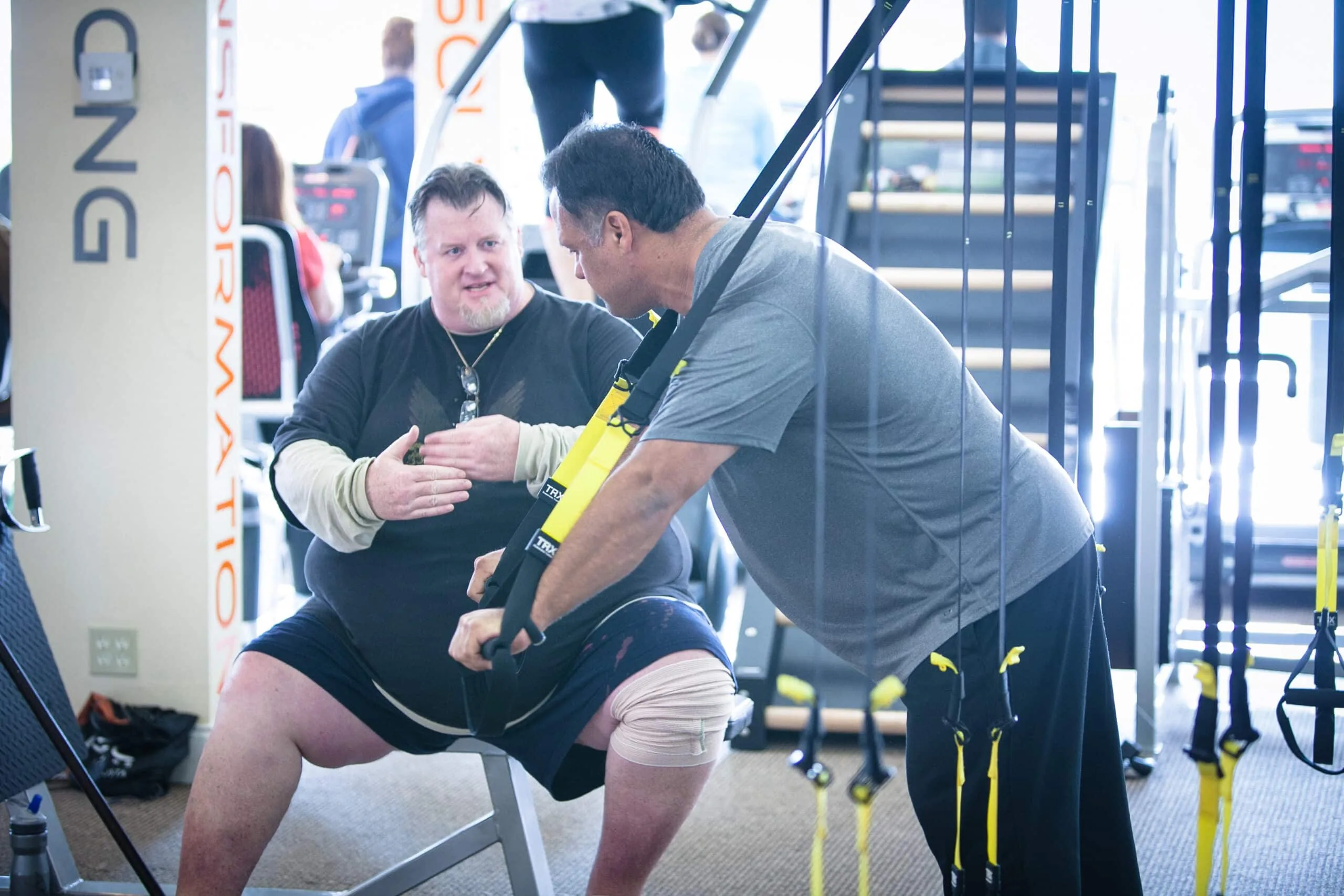
The scale staying flat for two to three weeks often prompts people to quit a recomposition plan that is actually working. Short-term weight stability among resistance trainees may reflect simultaneous fat loss and muscle gain rather than a true plateau. Tracking lean mass with bioelectrical impedance or DEXA scans gives a clearer picture than scale weight alone.
Premier Fitness Camp tracks 17 data points weekly through a personalized report card. These include weight, body fat percentage, seven body measurements, blood pressure, key blood markers, and fitness benchmarks such as mile time, plank hold duration, and push-up count. Progress on any of these markers, such as a smaller waist, a faster mile, or a lower fasting glucose, shows that the plan is working even when the scale holds steady. A UCSD case study of participants who stayed four or more weeks and received DEXA scans found that 94% of total weight loss was purely fat, compared with the 60/40 fat-to-muscle ratio typical of standard dieting. Strength gains, clothing fit, and monthly progress photos also provide reliable feedback.
See how Premier Fitness Camp tracks your progress beyond the scale.
GLP-1 receptor agonists such as semaglutide and tirzepatide produce meaningful weight loss, and lean mass loss is a documented concern, especially for older adults. Studies estimate that 15–40% of GLP-1-induced weight loss may come from lean body mass rather than stored fat. An observational study using DEXA scans found that 47.5% of weight lost by adults taking semaglutide was lean mass, compared with 35.7% for those using diet and lifestyle interventions alone, although semaglutide users with higher daily protein intake lost less lean mass. Cleveland Clinic endocrinologist Anira Iqbal, MD, notes that once muscle mass is lost, it becomes very difficult to regain, and that a combination of strength training and aerobic exercise helps ensure that most loss comes from fat tissue.
For adults tapering off or discontinuing GLP-1 medication, the body recomposition strategy stays the same while the stakes rise. Prioritize resistance training, keep protein near the upper end of the 1.6–2.2 g/kg range, and build sustainable habits before reducing the medication. A 2026 Sports Science Exchange article by Nicanor and Hinkley from the Gatorade Sports Science Institute recommends at least two days per week of whole-body resistance training plus progressive increases in moderate-to-vigorous physical activity for individuals on incretin-based therapies. PFC supports GLP-1 users by building nutritional education, resistance training foundations, and behavioral habits that help the medication work long-term and protect lean mass and metabolic rate when the dose decreases.
A well-planned day of eating can comfortably reach 155–175 g of protein with moderate carbs and fats. Beefit.ai’s sample day for a regularly training adult provides roughly 155–175 g of protein, 120–160 g of carbs, 45–65 g of fat, and about 1,800–2,200 calories. Adjust portions to match your calorie and macro targets.
The Saucy Spoon Co. sample day of breakfast, lunch, dinner, snack, and dessert totals 152 g protein and 1,590 calories. Carbohydrates cluster around the training window, while fats from eggs, salmon, olive oil, and yogurt support hormonal health.

This comparison shows why recomposition and cutting create different outcomes. The same calorie deficit that preserves muscle with high protein and resistance training can strip muscle when paired with aggressive cutting and less structure. Muscle-loss risk figures come from the research cited throughout this article.
| Attribute | Body Recomposition | Cutting |
|---|---|---|
| Primary Goal | Lose fat while preserving or building lean muscle simultaneously | Maximize fat loss as quickly as possible, accepting some muscle loss |
| Typical Scale-Weight Change | Slow or minimal; scale may be stable for weeks while body composition improves | Faster scale-weight reduction, typically about 0.5–1.5 lbs per week (roughly 0.5–1% of body weight per week), with 2 lbs per week as a practical upper limit for most people |
| Muscle-Loss Risk | For elite athletes undergoing caloric restriction, recommended protein intake is 1.6–2.4 g/kg/day, and higher protein combined with structured resistance training enhances lean mass retention, with resistance exercise shifting needs toward the lower end of this range | Higher; standard dieting often produces about a 60/40 fat-to-muscle loss ratio |
For adults 35+ focused on long-term metabolic health, body composition, and functional strength, body recomposition usually serves better than aggressive cutting. Cutting may fit a short-term deadline, but muscle-loss risk rises, especially without expert nutrition support.
Body recomposition requires consistent execution, accurate nutrition, and steady accountability. Premier Fitness Camp provides that structure in a single, expert-led environment at the Omni La Costa Resort and Spa in Carlsbad, California.

At Premier Fitness Camp, registered dietitians design all meals and lead nutrition education sessions. Wellness chefs prepare every meal on-site using fresh, farm-to-fork ingredients, so macros are precise and nothing arrives from off-site vendors. The “Think, Eat, Move” philosophy addresses mindset, nutrition, and fitness together, because sustainable recomposition depends on all three. Trainers hold bachelor’s and master’s degrees, maintain a 3–4:1 client-to-trainer ratio, and lead 4–5 hours of daily training Monday through Friday. Each client receives a 17-point weekly report card that summarizes weight, body fat, seven body measurements, blood pressure, key blood markers, and fitness benchmarks, which keeps progress visible even when the scale changes slowly.
The UCSD case study of Premier Fitness Camp participants reported that 94% of total weight loss was purely fat, far better than the 60/40 fat-to-muscle ratio typical of standard dieting. Most long-term clients preserved or increased lean muscle mass during their stay. With 1,200+ reviews, a 90%+ five-star rating, and half of annual revenue coming from returning alumni, Premier Fitness Camp’s outcomes show strong client trust. Post-camp virtual coaching, personalized meal plans, and ongoing access to staff support the transition home and help clients maintain results.
Plan your body recomposition stay at Premier Fitness Camp.
Adults 35+ typically see meaningful body recomposition over 3–6 months of consistent effort. Non-scale metrics such as progress photos, waist circumference, and resting heart rate often show early change between weeks 8 and 12, while overall timelines remain individual and non-linear.
Higher protein intake, progressive overload in resistance training, 7–9 hours of sleep, and stress management provide the strongest acceleration. Severe calorie restriction undermines these efforts by increasing muscle loss and suppressing resting metabolic rate.
The evidence-based range is 1.6–2.2 g of protein per kilogram of body weight per day, or about 0.7–1.0 g per pound. Adults over 35 in a calorie deficit benefit from the higher end of this range and from distributing protein across 3–5 meals of 25–40 g each.
High-quality proteins rich in leucine, which directly stimulates muscle protein synthesis, work best for muscle gain and preservation. Top sources include chicken breast, salmon, eggs, Greek yogurt, cottage cheese, and whey protein. Plant-based eaters can rely on lentils, tofu, tempeh, and blended plant proteins that provide complete amino acid profiles. Whole foods form the foundation, with supplements filling any gaps.
Simultaneous fat loss and muscle gain is possible in a moderate calorie deficit, especially for people new to resistance training, returning after a long break, or carrying significant excess body fat. A deficit of roughly 200–400 calories per day, combined with protein at 1.6–2.2 g/kg and consistent resistance training, matches the conditions described in current recomposition research.
Body recomposition works when three conditions line up: a moderate 200–400 calorie deficit, consistent protein at 1.6–2.2 g/kg per day spread across meals, and progress tracking that looks beyond the scale. The process moves slowly and often feels uneven, yet that pacing protects muscle while fat comes off. Adults 35+ face a different hormonal and recovery landscape than younger lifters, so expert guidance shortens the learning curve and reduces trial and error. Premier Fitness Camp’s registered dietitians, 3–4:1 trainer ratios, detailed weekly tracking, and UCSD-validated 94% fat-loss outcomes create a highly structured environment for adults who want lasting recomposition.
Start your body recomposition plan with Premier Fitness Camp.