 5-star Wellness Resort
 5-star Wellness Resort
Written by: Chris Butt, Certified Personal Trainer & Weight Loss Coach, Premier Fitness Camp
Wedding planning creates a clear, time-bound goal that quietly powers your fitness routine. When the event ends, that structure disappears overnight. The fitness routine that felt automatic suddenly has no anchor.
Exercise science and behavior-change research describe this as a goal vacuum, a period when the framework that organized daily behavior no longer exists. Research On Habit Formation shows that habits depend on contextual cues such as time of day, location, and identity anchors. When a wedding and honeymoon disrupt those cues, the habit loses its trigger, and even short exercise breaks of 3–7 days can weaken routines and create psychological barriers to restarting.
All-or-nothing thinking often follows. The “I already ruined it, so what’s the point” spiral has a name in the behavior-change literature: the what-the-hell effect. Self-criticism amplifies shame after a lapse, and that distress tends to trigger the what-the-hell effect, where a single lapse can escalate toward a full relapse and longer-term dropout. The obstacle is the loss of structure, a missing goal, and a self-story that shifts from “I work out” to “I used to work out.”
Psychological friction, not lost fitness, usually blocks the restart. Short breaks weaken the automaticity of exercise habits by breaking the link between environmental cues and behavior, which forces a return to effortful decision-making. The 4-week plan below focuses on lowering that friction so restarting feels manageable.
Cardiovascular fitness begins declining measurably within 10–14 days of inactivity, yet it returns faster than it was first built. Because of muscle memory and retained myonuclei in skeletal muscle, most previously active adults regain baseline fitness within roughly 4–8 weeks of consistent training, often faster than the original build, although timelines vary by adaptation type and break length.
The Physical Activity Guidelines For Americans, 2nd Edition set two targets: 150 minutes per week of moderate-intensity aerobic activity, and muscle-strengthening work on 2 or more days per week. CDC guidance supports gradual activity increases, categorizing adults who perform some activity below the 150-minute threshold as “insufficiently active” rather than inactive. CDC NCHS Data Brief No. 555 (April 2026) found that only 47.2% of U.S. adults met federal aerobic guidelines in 2024. Most adults sit below the target, so beginning there aligns with how real people rebuild.
Two durable adaptations explain why comebacks move faster than first-time gains. First, a landmark 2010 study by Bruusgaard et al. showed that myonuclei acquired during muscle growth persist for at least three months after complete detraining. Those myonuclei keep previously trained muscle primed for faster protein synthesis. Second, a 2018 study by Seaborne et al. in Scientific Reports found that human muscle retained altered DNA methylation patterns at muscle-growth gene loci after 7 weeks of detraining, and these regions showed faster and greater expression upon retraining. Your body is resuming a familiar pattern rather than learning from scratch.
For Weeks 1–2 of a fitness comeback, the minimum effective dose is typically 1–2 sets per muscle group at 15–30 reps with light effort (RPE 4–6), performed 2–3 days per week, with optional light cardio such as 20–25 minutes of steady-state work twice per week. That prescription stands on its own. It reflects how habits form and how returning exercisers usually stumble.
Doing too much too soon causes most second drop-offs. Returning exercisers who resume previous training intensities immediately face elevated injury risk and dropout rates, because connective tissue deconditions faster than muscle and needs a longer ramp. Light, low-volume work still delivers a real physiological and behavioral stimulus while keeping injury risk low.
CDC guidance supports gradual activity increases and recognizes adults below the 150-minute threshold as “insufficiently active” rather than inactive, which validates a small start. The UK Chief Medical Officers’ physical activity guidelines echo this, noting that lower volumes and one or two sessions per week still improve health.
Use simple scheduling tactics in Weeks 1–2 to rebuild automaticity:
During these first two weeks, consistency matters more than intensity. The aim is rebuilding the identity of someone who exercises, which becomes the base for later gains.
If structuring this phase feels overwhelming, Get A Personalized Restart Plan From PFC at (888) 488-8936. PFC’s assessment-first approach tailors the plan to your current starting point.
In Weeks 3–4 of the LiftStrong Comeback program, training increases to a fourth training day using an upper/lower split, with weights at 65–75% of old working weights. For this comeback plan, the focus shifts to bodyweight movements in 30-seconds-on / 30-seconds-off intervals that cover major movement patterns:
Resistance training now protects lean muscle, supports resting metabolic rate, and reactivates muscle memory. This mechanism underlies PFC’s UCSD case study result that 94% of client weight loss came from fat, compared with the 60/40 fat-to-muscle ratio typical of standard dieting. Psilander et al. (2019) in the Journal of Applied Physiology found that young adults regained size and strength built in 10 weeks in just 5 weeks of retraining, which shows how prior training speeds the comeback.
A 2026 Perspective article in Frontiers in Public Health reported that resistance training on 2 days per week can create measurable, near-optimal increases in muscle mass and strength. The same paper noted that any muscle-strengthening activity improves health compared with none. Two weekly sessions match the evidence for this phase.
The first 2–3 weeks of retraining carry higher connective-tissue injury risk, because muscle regains strength faster than tendon regains stiffness. Use these principles together as a progression:
The 150-minutes-per-week guideline remains the long-term destination. By the end of Week 4, aim for three sessions per week of about 30 minutes each, or roughly 90 minutes of structured activity. That level forms a solid starting line for future progress.
Simple nutrition and recovery habits support this plan without complex tracking. Three principles cover most needs:
Hydration, protein, sleep, and whole foods create the recovery infrastructure. Training then becomes a stimulus your body can actually use.

Measurable cardiovascular decline begins within 10–14 days of inactivity, but strength stays essentially preserved over that window. Some lifters even show small strength gains at 1–2 weeks because accumulated fatigue clears faster than detraining develops. Muscle memory makes the rebuild faster than the original build, so two weeks off functions as a pause.
Minimal physiological loss occurs in the first week. Blood volume decreases slightly and exercise may feel harder at a given effort level, but VO2max, lactate threshold, and structural muscle mass remain essentially unchanged. The heavy feeling usually reflects fluid and glycogen shifts rather than real fitness loss.
Most previously active adults return to strength baseline within roughly 2–3 weeks of consistent retraining after a month off, with longer layoffs requiring more time. Myonuclear retention and epigenetic adaptations from prior training mean your body rebuilds on existing infrastructure.
After 2–4 weeks off, trained individuals typically show 3–8% drops in compound lift maxes, with aerobic capacity declining more than strength. Both return quickly once training resumes. A 3-week break creates a temporary dip, and the comeback usually moves faster than the original build.
The 4-week plan above suits adults whose break stayed relatively short and whose confidence feels stable. Longer setbacks, fragile confidence, injuries, or health limitations often respond better to an assessment-first, immersive reset with professional support.
Premier Fitness Camp (PFC) is a luxury fitness and weight loss camp for adults at the Omni La Costa Resort & Spa in Carlsbad, California. PFC specializes in structured resets like the one described here, for people who want more than a self-directed plan.
Every PFC client begins with a comprehensive day-one health assessment that includes blood work, vital signs, body composition, BMI, measurements, and a fitness test. From that baseline, 17 data points are tracked weekly in a personalized report card, including circumference measurements, blood pressure, performance markers, and key blood lipids and glucose. Progress becomes visible and concrete.
Training at PFC runs 4–5 hours per day, Monday through Friday, with a half day on Saturday, at a 3–4:1 client-to-trainer ratio. Every class includes options for all fitness levels, from deconditioned beginners to seasoned athletes. All trainers hold at least a bachelor’s degree, and many hold master’s degrees with long tenures at PFC.
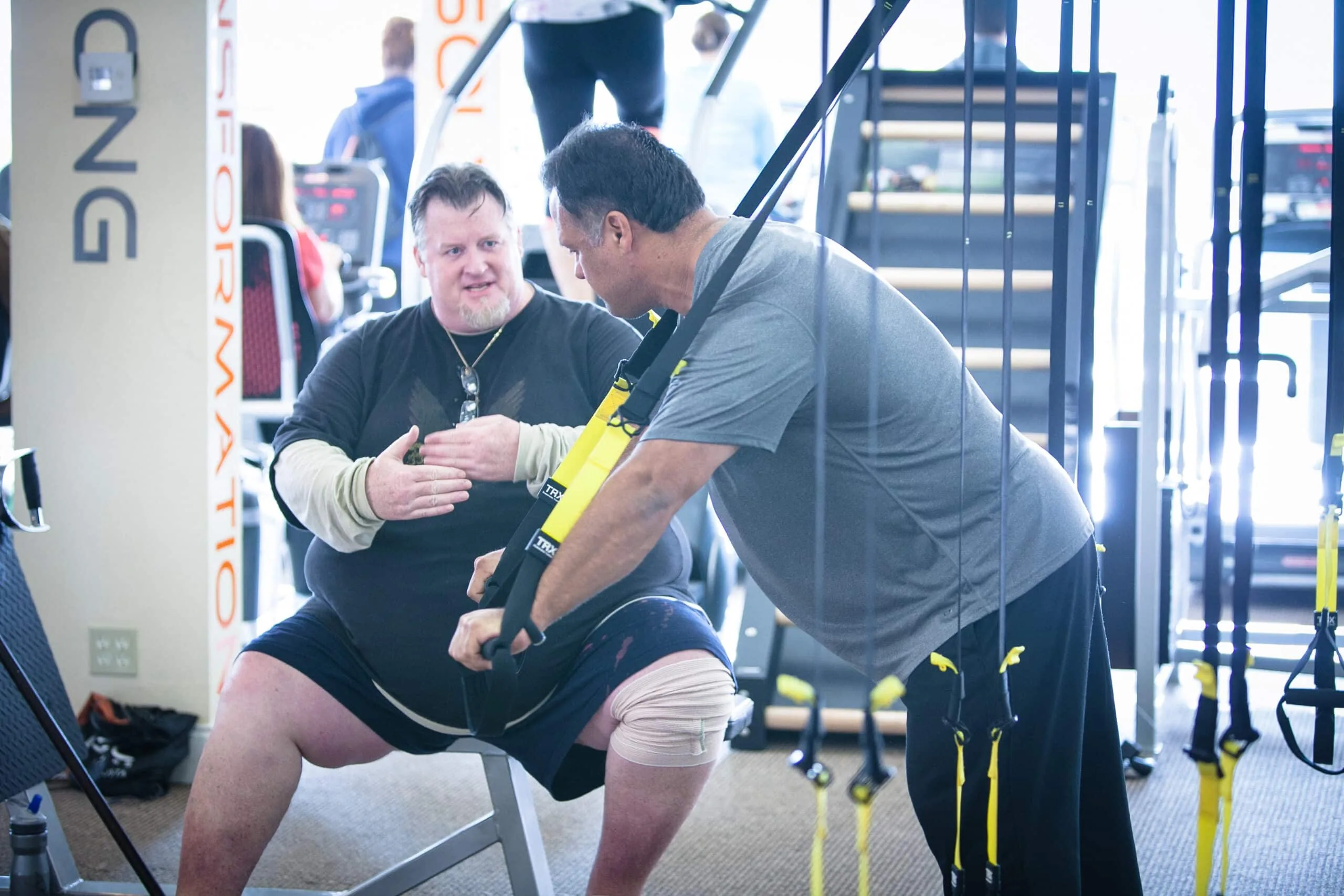
PFC’s “Think, Eat, Move” philosophy addresses mindset, nutrition, and training together. Licensed psychologists and behavioral health coaches work on the patterns that disrupted your routine. Registered dietitians and wellness chefs design and prepare every meal on-site with fresh, farm-to-fork ingredients. Certified trainers deliver a varied, progressive program tailored to each client’s starting point.

The setting supports this work. PFC operates on the 450-acre Omni La Costa Resort, with beach workouts on the Pacific coast, hikes at Torrey Pines and Batiquitos Lagoon, and a mild North San Diego County climate. The same UCSD case study cited earlier showed that fat loss, not muscle loss, drove client results. PFC holds 1,200+ reviews with a 90%+ five-star rating, and 50% of annual revenue comes from returning alumni, which signals lasting impact.
Client Irene Tchaikovsky wrote: “What began as a simple one-week reboot has transformed into a complete lifestyle shift. PFC equips you with the knowledge, tools, and support to make meaningful — and sustainable — changes.”
The table below shows how three common comeback paths differ on two key factors: weekly time commitment and the level of expert support and tracking they provide.
| Approach | Time Commitment (Per Week) | Expert Support | Progress Tracking |
|---|---|---|---|
| Solo Restart At Home | 1–1.5 hours | None | Self-reported |
| Traditional Gym Membership | 3–4 hours | Optional personal training | Scale weight only |
| Premier Fitness Camp (PFC) | 20–25 hours | 3–4:1 client-to-trainer ratio, registered dietitians, licensed psychologists | 17 data points tracked weekly in a personalized report card |
If you feel ready to stop restarting alone, Schedule A Free PFC Consultation at (888) 488-8936 or email info@premierfitnesscamp.com. The call focuses on your goals and circumstances.
The wedding disrupted your routine, yet the fitness you built still lives in your muscles and nervous system. Myonuclear and epigenetic adaptations from prior training remain in place, ready to reactivate. The habit pathways laid down by months of consistent exercise feel dormant rather than erased. Most people recover 70 to 80 percent of previous strength within 8 to 12 weeks of restarting, even after a long layoff.
The 4-week plan in this article, with light, low-volume sessions in Weeks 1–2 and bodyweight strength sessions in Weeks 3–4, provides an evidence-based route back to a sustainable post-wedding routine. The Physical Activity Guidelines For Americans, 2nd Edition 150-minutes-per-week target marks the destination. Your current capacity marks the starting line.
Focus on consistency before intensity and habit before volume so your comeback feels steady instead of fragile.
For those who want expert guidance, an immersive environment, and a structured reset that unites mindset, nutrition, and movement, Premier Fitness Camp offers that framework. Schedule Your Free Consultation Online or call (888) 488-8936. Over 3,000 adults have rebuilt their health with PFC, and a large share return, which reflects the staying power of the changes they make.
For previously trained adults returning after a break of about 1–3 months, prior strength and endurance typically recover within roughly 4–8 weeks of structured retraining, with longer breaks requiring more time. The exact timeline depends on break length, prior activity level, and current consistency. Cardiovascular fitness usually takes 4–6 weeks to return after a multi-month break, while strength often returns within 2–4 weeks of regular resistance training. Starting below your previous intensity and building gradually protects against injuries that extend the process.
This feeling is extremely common after major life milestones. The routine that surrounded wedding planning was tied to a specific goal and time pressure, so its removal can feel like a collapse. The sense of “starting from zero” reflects lost habit automaticity and a shift in self-identity more than actual fitness loss. Research on habit formation shows that previously formed habits rebuild faster than they first formed because the neural pathways remain in place. Your body and brain remember more than it seems.
The most reliable strategy involves starting well below your previous training intensity and increasing volume before intensity. In the first two weeks, light, low-volume sessions such as 1–2 sets per muscle group at 15–30 reps with light effort, 2–3 days per week, plus optional light cardio, keep connective-tissue injury risk low while you rebuild the habit. When strength training returns in Weeks 3–4, begin with bodyweight movements through a full range of motion and stable form. Progress by adding reps or time before adding load, and end each set with at least one or two clean repetitions still available. The most common comeback injury appears in the second or third session, when soreness from the first workout combines with a load the connective tissue is not yet ready for, so a cautious ramp protects your progress.
Yes. PFC is designed for extended breaks as well as shorter pauses. Every client starts with a comprehensive health assessment that sets a true baseline, and every training session includes modifications so all fitness levels can participate. The 3–4:1 client-to-trainer ratio allows for close coaching, whether someone currently walks only a few hundred feet or already trains regularly. The “Think, Eat, Move” philosophy also addresses guilt, lost routine, and fragile confidence through licensed psychologists and behavioral health coaches. A multi-month break fits the exact reset PFC was built to support.
A traditional gym membership offers equipment access and, sometimes, personal training sessions. Premier Fitness Camp provides an immersive, all-inclusive program that combines fitness, nutrition, and behavioral health in a structured environment that removes daily decision fatigue. Where a typical gym member trains 3–4 hours per week, PFC clients train 4–5 hours per day, five days a week, with a 3–4:1 trainer ratio and built-in modifications. Meals come from registered dietitians and wellness chefs on-site. Licensed psychologists address the emotional patterns that disrupted your routine. Progress is tracked across 17 data points weekly, not just scale weight. The Omni La Costa Resort & Spa setting, with beach workouts, Pacific coast hikes, and a year-round mild climate, makes the experience both effective and enjoyable.