 5-star Wellness Resort
 5-star Wellness Resort

Written by: Chris Butt, Certified Personal Trainer & Weight Loss Coach, Premier Fitness Camp
Talk With Premier Fitness Camp About Your Post-GLP-1 Plan
The appetite-return window is the most underestimated variable in the post-medication transition. Appetite typically returns within 1–3 weeks after stopping weekly GLP-1 injectables such as semaglutide (Ozempic, Wegovy) and within 4–7 days after stopping daily medications such as liraglutide (Victoza, Saxenda). Tirzepatide (Mounjaro, Zepbound) has a shorter half-life of approximately five days versus roughly seven days for semaglutide, so appetite may rebound slightly faster after stopping tirzepatide. Because semaglutide takes about five half-lives, roughly five weeks, to fully clear, active medication may still be present two to three weeks after the last injection, masking the coming appetite rebound.
When appetite returns, protein intake often drops because hunger-driven eating tends toward convenience foods rather than protein-dense meals. This is why building regular, structured protein meals before appetite returns is the single most protective habit you can establish during this window.
Metabolically, after GLP-1 receptor agonist discontinuation, appetite suppression reverses. Counter-regulatory mechanisms then favor weight regain: resting energy expenditure drops, adaptive thermogenesis increases, and hunger and satiety hormones such as ghrelin, leptin, peptide YY, and cholecystokinin shift. In the STEP 1 trial extension, participants who stopped semaglutide regained roughly two-thirds of their lost weight within one year of discontinuation. A post GLP-1 muscle building program shifts the objective from weight loss to performance and resilience so your body can hold its new composition without the medication.
A common debate online is whether GLP-1 medications cause muscle loss if you lift weights. The nuance matters. Fat-free mass is not synonymous with skeletal muscle mass. Fat-free mass includes skeletal muscle, body water, connective tissue, and internal organs. Lean soft tissue measured by DXA is not equivalent to direct measurement of contractile skeletal muscle. Some of what registers as lean-mass loss on a standard scale or BIA device is water and glycogen, not contractile muscle fiber. Some reduction in fat-free mass during energy restriction is expected even under favorable conditions. Adipose tissue contains a fat-free component, and shifts in glycogen and hydration contribute measurably to non-fat compartments. That said, a meta-analysis of randomized controlled trials found that GLP-1 receptor agonist therapy led to roughly 28% of total weight loss being attributable to muscle-based indices on average. True skeletal muscle loss remains a real concern, particularly for adults over 40.
Resistance training is the primary countermeasure. The Binmahfoz et al. 2025 meta-analysis of 25 randomized controlled trials found that resistance exercise added to dietary weight loss protected against loss of fat-free mass (SMD: 0.40, p = 0.0003) and increased fat mass loss (SMD: −0.36, p < 0.00001) compared with diet-only interventions. The 2026 Sancho-Haro et al. review in Pharmaceuticals describes resistance training as the most direct non-pharmacological stimulus for preserving lean tissue and neuromuscular function during caloric restriction.
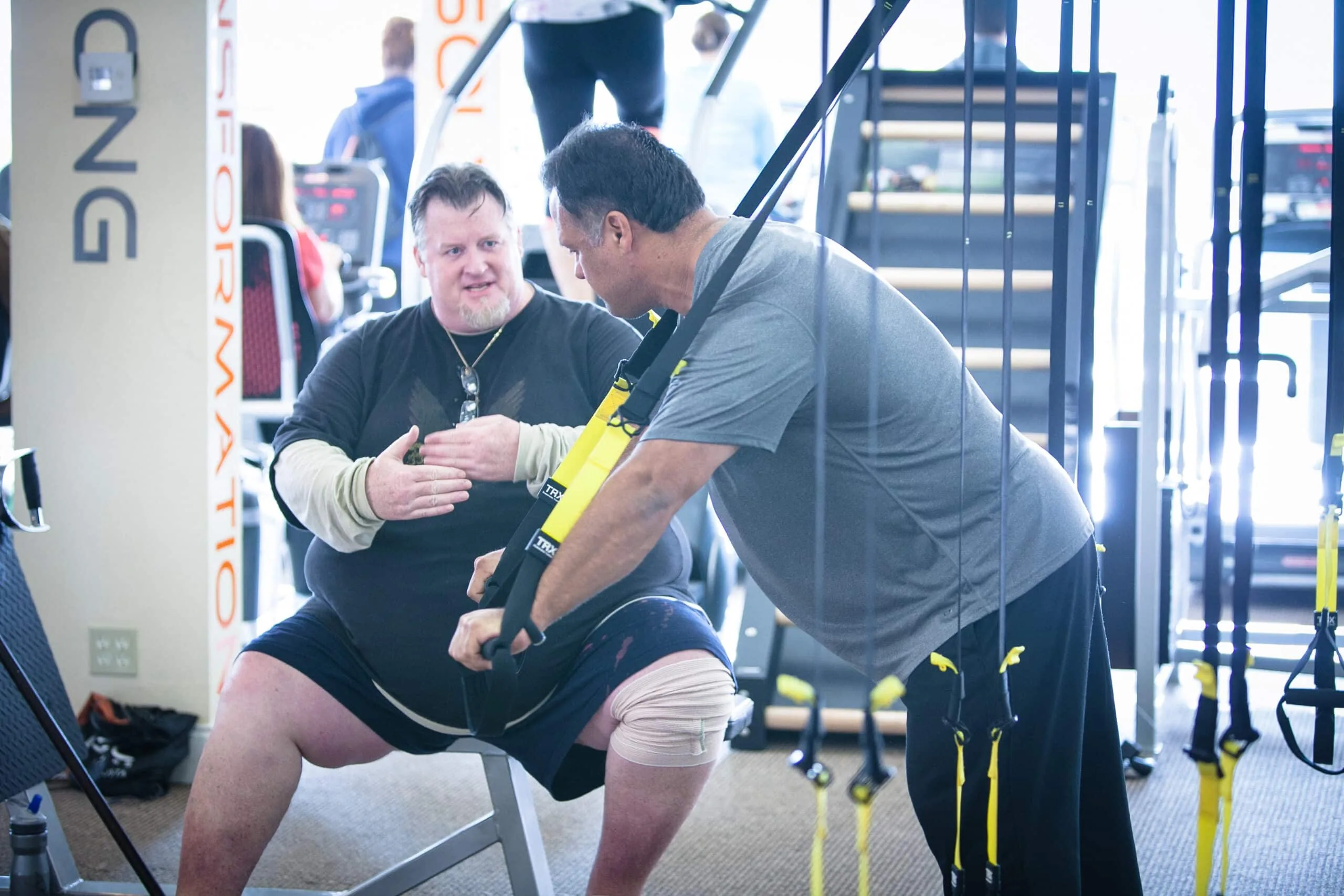
Get Expert Guidance On Your Post-Medication Transition
A post GLP-1 strength training program follows a few clear parameters supported by research.
Post-GLP-1 training starts at the lower end of the recommended protein range and increases as appetite stabilizes and training volume rises. Most generic programs miss this post-discontinuation sequence entirely.
The ACSM 2026 Position Stand recommends training every major muscle group at least twice weekly and accumulating at least 10 hard sets per muscle per week for hypertrophy, using loads of at least 80% 1RM for strength. Stopping about 2–3 reps short of failure (reps in reserve) produces the same hypertrophy and strength outcomes as training to absolute failure, with less fatigue and lower injury risk. That approach is especially helpful during the early post-medication weeks when recovery capacity may be reduced.
See How PFC Structures Post-GLP-1 Strength Training
This three-phase structure acts as a practical playbook for the post-medication transition. Each phase builds on the last. Use one simple progression rule: add weight when you hit the top of the rep range with 2 reps in reserve on all sets. If you are not there yet, add reps first.
Phase 1 focuses on movement quality, connective tissue adaptation, and re-establishing neuromuscular patterns that may have faded during the medication phase. Training to failure in this phase adds risk without extra benefit.
With movement patterns re-established, Phase 2 increases training volume and begins systematic load progression. The Pelland et al. 2026 dose-response meta-regression in Sports Medicine found that hypertrophy continues to rise with weekly volume. This finding supports a practical weekly volume target that meets the 10-set threshold described earlier.
Phase 3 targets true muscle growth. The ACSM 2026 Position Stand found hypertrophy across a wide load range of 30–100% of 1RM, provided each set was taken close to failure. By this phase, appetite usually stabilizes, protein intake is consistent, and the body can handle higher training volumes.
Start Your 12-Week Post GLP-1 Strength Plan With Coaching
Training structure is only half of the post-medication equation. The other half is protein, and the starting target for most adults is 1.2–1.6 g/kg of body weight per day. The ACSM 2026 Position Stand recommends this range and notes that protein intake without exercise is ineffective; strength training comes first, then protein refinement.
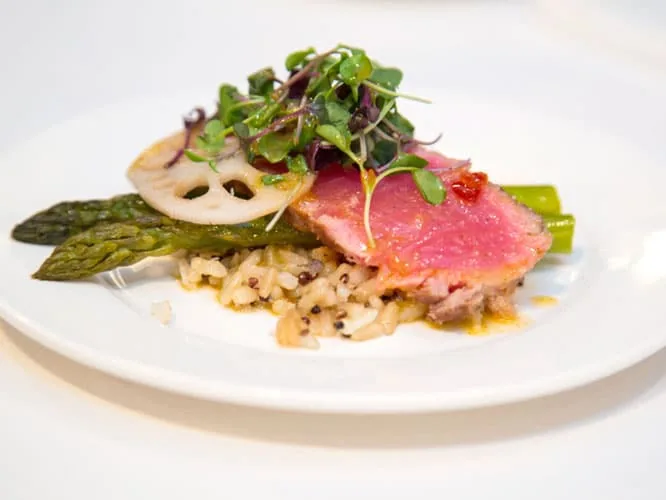
This range differs from the broader 1.2–2.0 g/kg figure that often appears in summaries. The lower end fits the appetite-return window, when large protein portions may feel difficult. The practical anchor:
For older adults, generally 60 and above, anabolic resistance means the muscle protein synthesis response to a given protein dose is lower. Moore et al. (2015) showed that while 20 g of high-quality protein maximizes muscle protein synthesis in young adults, older adults require approximately 35–40 g per meal to achieve the same response. Spreading intake across 3–4 meals, rather than concentrating it in one large dinner, produces substantially greater total daily muscle protein synthesis. Mamerow et al. (2014) found that evenly distributing equal total daily protein across three meals produced 25% greater 24-hour muscle protein synthesis compared with uneven distribution skewed to one large meal.
Get Your Personalized Post-GLP-1 Protein Plan
Many people look for a simple rule before committing to a full 12-week structure. The 3-3-3 workout rule, three workouts per week, three exercises per session, and three sets per exercise, is a common starting point. Some people also use the term for other frameworks such as three exercises, three sets, and three repetitions, or three strength, three cardio, and three recovery sessions per week.
This structure works as a reasonable starting framework for adults rebuilding after GLP-1 medication. It matches the Phase 1 structure of the 12-week program above and reduces decision fatigue that often derails beginners. The volume remains too low for meaningful long-term hypertrophy, because it does not reach the 10-set threshold per muscle group described earlier. Treat the 3-3-3 rule as a Phase 1 entry point during weeks 1–4, then transition into the full 12-week program as confidence and capacity grow.
See How PFC Progresses Beyond The 3-3-3 Starting Point
Scale weight becomes a misleading metric during post-GLP-1 recomposition. As resistance training rebuilds muscle while the body continues to lose fat, scale weight may stay stable for weeks even while body composition improves. Focusing only on the scale during this phase often leads to discouragement and program abandonment.
A more complete tracking framework includes:
Premier Fitness Camp (PFC) tracks 17 data points weekly for every client. These include body measurements such as weight, body fat, neck, waist, umbilicus, upper arm, chest, hip, and quad. Cardiovascular markers include blood pressure and mile time. Functional tests cover plank hold and push-ups. Blood biomarkers include LDL, HDL, triglycerides, and glucose. This 17-point system captures body composition changes that the scale alone will never reveal. It is the same framework used in PFC’s UCSD case study, which found that 94% of client weight loss was purely fat, compared with the 60/40 fat-to-muscle ratio typical of standard dieting programs.
See How PFC’s 17-Point Tracking Works
Training for muscle size, or hypertrophy, after stopping a GLP-1 is achievable with adequate protein, progressive overload, and sufficient training volume. The 2026 ACSM Position Stand confirms that hypertrophy occurs across a wide load range, roughly 30–100% of 1RM, provided sets are taken close to failure. The post-medication transition can even be an advantageous window for hypertrophy because appetite return allows for adequate caloric intake to support muscle growth. During active GLP-1 use, appetite suppression may keep protein and total calorie intake below the threshold needed for meaningful muscle protein synthesis. The 2026 Vandoni et al. network meta-analysis in Obesity Reviews found that resistance training preserves or increases lean mass, particularly when paired with a controlled diet, and that this effect directly counteracts the lean mass loss seen with GLP-1 receptor agonist therapy.
Explore GLP-1 Bodybuilding With PFC’s Expert Team
A structured in-person program becomes most valuable when you want tight oversight on protein, training quality, and weekly progress. The table below compares a self-guided 12-week approach with PFC’s expert-led post-GLP-1 program. Both use progressive overload, but PFC adds personalized protein targets, multi-point tracking, and daily expert supervision.
| Program Type | Structure | Protein Target | Tracking |
|---|---|---|---|
| Self-guided 12-week plan | 3 phases, progressive overload | 1.2–1.6 g/kg starting range | Scale weight only |
| PFC post-GLP-1 program | 12 weeks, expert-led, 4–5 hours of daily training | Personalized targets with registered dietitian oversight | 17 data points weekly, DEXA scan option |
PFC’s UCSD case study, conducted in partnership with the University of California, San Diego, evaluated participants who stayed four or more weeks and received DEXA scans at the start and end of their program. It found that 94% of total weight loss was purely fat, while most aggressive weight loss programs see a 60/40 fat-to-muscle ratio. Most long-term PFC clients not only maintained their lean muscle stores but also increased them during weight loss. That outcome reflects structured, expert-led programming rather than a self-guided plan.
PFC maintains a 3–4:1 client-to-trainer ratio across all fitness sessions, and trainers hold at least bachelor’s degrees. Clients train 4–5 hours per day at the Omni La Costa Resort in Carlsbad, California. Registered dietitians design all meals, and licensed psychologists and behavioral health coaches address the psychological dimensions of health transformation, including emotional eating and limiting beliefs. PFC welcomes clients currently on GLP-1 medications and those tapering off, with no judgment about medication history.


This article builds on PFC’s existing rebuild muscle after GLP-1 guide, which covers the foundational why and basic steps. The 12-week phased program, appetite-return window nutrition strategy, and 17-point tracking framework here provide the deeper post-medication transition playbook.
Book A Free Consultation With Premier Fitness Camp
Below are answers to common questions about rebuilding muscle after stopping a GLP-1 medication.
Yes. Research shows that resistance training added to weight loss preserves fat-free mass and increases fat loss. With adequate protein in the starting range mentioned earlier and progressive resistance training 2–4 times per week, you can rebuild muscle after stopping Ozempic, Wegovy, Zepbound, or Mounjaro. Visible body composition changes typically develop gradually over about 3 to 12 months of consistent treatment, while resistance training performed two to three times weekly helps preserve muscle and improve body composition earlier in the process.
The 3-3-3 rule usually means three workouts per week, three exercises per session, and three sets per exercise. As explained above, it works as a Phase 1 entry point but does not provide enough volume for long-term hypertrophy. Use it as a simple on-ramp, then build toward the higher weekly volume described in the 12-week plan.
Most people notice strength improvements within 4–6 weeks of starting a structured post GLP-1 muscle building program with consistent progressive overload. Visible body composition changes such as reduced waist circumference, improved muscle definition, better posture, and better functional capacity typically appear within 8–12 weeks when protein intake aligns with the earlier guidelines and training progresses. Scale weight may remain stable during this period even as body composition improves, which makes tracking beyond the scale essential.
Yes. The post-medication transition can be an advantageous time for hypertrophy because appetite return allows for adequate caloric intake to support muscle growth. During active GLP-1 use, appetite suppression may chronically limit protein and total calories below the threshold needed for meaningful muscle protein synthesis. With sufficient protein based on the starting range described earlier, progressive resistance training, and weekly volume that meets or exceeds the 10-set threshold, muscle building after stopping Ozempic is achievable at any age.
Older adults, generally 60 and above, face anabolic resistance, which means the muscle protein synthesis response to a given dose of protein is lower. Per-meal protein doses may need to be higher, around 35–40 g per meal, to maximally stimulate muscle building. This reality does not prevent muscle rebuilding. It simply raises the per-meal threshold and makes consistency more important. Resistance training 2–4 times per week remains the primary driver of results at any age, and research consistently documents muscle gains in adults through their sixties, seventies, and beyond when training and protein targets are met. Older adults should also prioritize compound movements that load the skeleton to support bone density alongside muscle mass.
Start Your Post GLP-1 Muscle Building Program With PFC