 5-star Wellness Resort
 5-star Wellness Resort

Written by: Chris Butt, Certified Personal Trainer & Weight Loss Coach, Premier Fitness Camp | Last updated: July 24, 2026
GLP-1 receptor agonists suppress appetite powerfully and non-selectively. The body loses fat, but it also loses lean tissue. Systematic reviews have reported reductions in muscle mass during GLP-1 receptor agonist use. A separate network meta-analysis of 22 randomized trials reported that lean tissue accounted for approximately one-quarter of total weight loss on these medications.
Body composition substudies of the STEP 1 semaglutide trial using DXA analysis found that lean mass loss accounted for approximately 39–40% of total weight lost. That range matters because muscle is the primary driver of resting metabolic rate. Loss of lean mass during weight loss contributes to adaptive declines in energy expenditure, promoting positive energy balance and increasing susceptibility to weight regain.
Three concepts anchor the 12-week program below.
A UCSD study of participants found that the majority of weight loss was fat, compared with the 60/40 fat-to-muscle ratio typical of standard dieting programs. Most long-term clients not only maintained lean muscle stores but increased them. That outcome is the benchmark this 12-week program works toward. Before you begin the phases, you need a clear medical and physical baseline that supports this level of change.
Ready to build your exit ramp with expert support? Book a free consultation with the team at (888) 488-8936.
This program is designed for adults who have completed or are actively tapering GLP-1 therapy and have medical clearance for progressive resistance training. Anyone with cardiovascular conditions, orthopedic limitations, or active GI side effects should coordinate with their physician before beginning Phase 1. Medication-assisted weight loss has become a mainstream intervention, and a 2025 joint advisory from the American College of Lifestyle Medicine, American Society for Nutrition, Obesity Medicine Association, and The Obesity Society focuses on nutritional and lifestyle priorities for GLP-1 therapy.
The first three weeks prioritize movement quality over load. Connective tissue, neuromuscular coordination, and joint mobility need time to adapt before you apply meaningful progressive overload safely.
Training structure:
Protein target: 1.2 g/kg of goal body weight per day. Research suggests that higher daily protein intake can help maintain lean body mass during caloric restriction, so this becomes your baseline. Distribute intake across 3–4 meals, each containing at least 25–30 g of protein, to keep muscle protein synthesis active. When appetite remains suppressed, eat the protein portion of each meal first so you have the best chance of hitting your daily target before fullness sets in.
With movement patterns established, the program increases frequency and begins applying the SAID principle more aggressively. Each week, either the load or the number of repetitions increases on at least one exercise per session.
Training structure:
Protein target: 1.4 g/kg of goal body weight per day. Higher protein targets are often used for individuals engaging in regular resistance training, so this step-up supports new muscle growth. Nausea during this phase is common for those still tapering medication. Whey protein isolate shakes containing 25–35 g protein per serving within 1–2 hours post-workout provide a low-volume, high-leucine option that is often easier to tolerate than solid food immediately after training.
The SAID principle reaches its fullest expression here. The body has adapted to the movement patterns and load ranges of the previous six weeks, and the program now applies greater mechanical tension through an upper and lower training split with a tighter repetition range.
Consider a 52-year-old woman, 75 kg, six weeks post-semaglutide. In weeks 1–3 she performed goblet squats with a 10 kg dumbbell for 3 sets of 10. By week 7, she is performing barbell back squats at 40 kg for 4 sets of 8. Her nervous system has adapted, her connective tissue has conditioned, and her muscle tissue is now receiving a stimulus it cannot ignore.
Training structure:
Protein target: 1.6 g/kg of goal body weight per day. Per-meal protein targets of approximately 0.3–0.4 g/kg body weight together with approximately 2.5–3 g of leucine per meal can help support muscle protein synthesis when appetite is suppressed by GLP-1 agents.
The final phase shifts emphasis from accumulation to consolidation. Volume is managed through periodization, alternating slightly heavier, lower-volume sessions with moderate-load, higher-volume sessions, so you maintain the training stimulus while allowing full recovery.
Training structure:
Protein target: Maintain the 1.6 g/kg daily intake established in Phase 3. Long-term weight maintainers tracked by the National Weight Control Registry typically follow a high-protein diet and engage in regular physical activity, so this level becomes your ongoing standard.
Track progress across 16 data points weekly: weight, body fat percentage, neck, waist, umbilicus, upper arm, chest, hip, and quad measurements, blood pressure (systolic and diastolic), mile time, plank hold duration, push-up count, and LDL, HDL, triglycerides, and glucose levels. The scale is one signal among many.
Several obstacles appear predictably during post-GLP-1 muscle recovery, and each has a practical solution.
Objective markers of progress extend well beyond body weight. A notebook or spreadsheet tracking the 16 data points listed in the Sustain Phase provides a complete picture of metabolic recovery.
Objective indicators:
Subjective indicators:
Strength improvements typically appear within 2–3 weeks and visible body-composition changes within 6–8 weeks, with measurable recomposition occurring over 12–16 weeks of consistent training. Patience with this timeline forms part of the protocol.
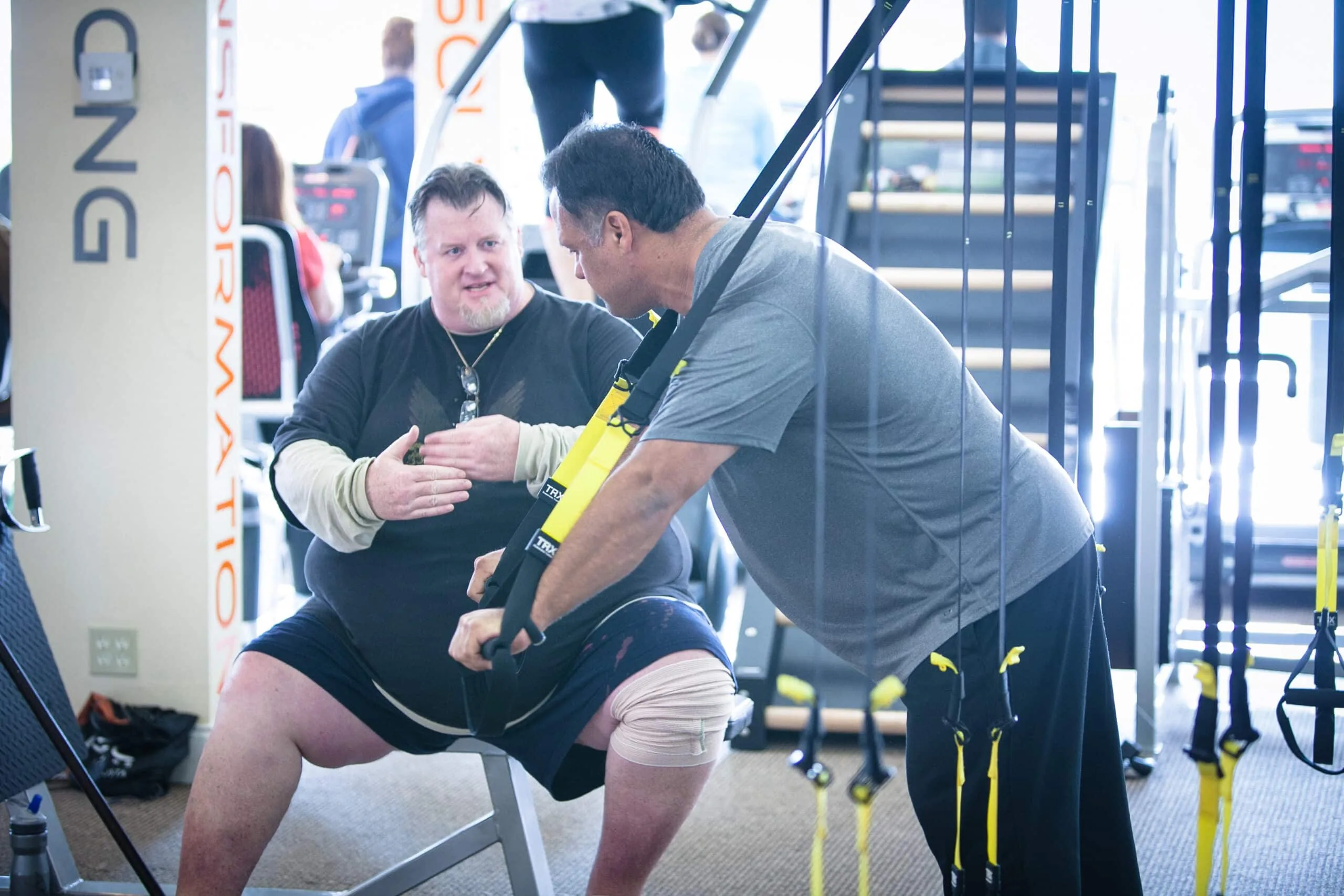
Self-directed home training can work as a starting point, but execution often breaks down. Decision fatigue, inconsistent form, inadequate protein tracking, and the absence of accountability erode adherence over time. Most people working out independently train 3–4 hours per week total. Clients train 4–5 hours per day, five days per week, with a 3–4:1 trainer-to-client ratio and registered dietitians managing every meal.
The UCSD study results mentioned earlier, where fat accounted for the majority of weight loss, represent an outcome that most aggressive weight loss programs do not approach. For GLP-1 graduates whose primary concern is rebuilding lean mass and protecting metabolism, that gap in outcomes matters.
The program operates at the Omni La Costa Resort & Spa in Carlsbad, California, where the year-round moderate climate supports daily outdoor training such as beach workouts, hikes through Torrey Pines and Batiquitos Lagoon, and stand-up paddleboarding. These sessions run alongside on-site resistance training, nutrition education from registered dietitians, behavioral health support from licensed psychologists, and spa recovery. The program removes every variable that typically derails self-directed efforts, because meals are prepared, workouts are scheduled, and progress is tracked across all 16 data points with a weekly one-on-one report card review.

Considering a supervised program? Book a free consultation with the team at (888) 488-8936 to discuss your goals and timeline.
Neurological adaptations, meaning the nervous system learns to recruit muscle fibers more efficiently, typically produce measurable strength improvements within two to three weeks of consistent resistance training. Visible changes in muscle size and body composition generally require six to eight weeks of progressive training combined with adequate protein intake. Full recomposition, defined as a meaningful reduction in body fat percentage alongside lean mass gains, typically occurs over 12–16 weeks. Age, starting protein intake, training consistency, and whether medication is still active all influence this timeline.
Medical clearance is strongly recommended for anyone who has recently completed or is tapering GLP-1 therapy, particularly if cardiovascular conditions, orthopedic limitations, or active gastrointestinal side effects are present. A physician can also assess whether bloodwork, including vitamin B12, iron, vitamin D, and thyroid panels, is warranted before beginning a structured exercise program, because deficiencies in these markers can impair energy and recovery during the early phases.
The program is specifically designed with the 40–55 age range in mind, and it remains appropriate for many adults over 50. Adults over 50 experience anabolic resistance, meaning the muscle protein synthesis response to a given protein dose is blunted compared with younger adults. This is addressed by targeting the higher end of the protein range at 1.6 g/kg/day and ensuring each meal contains at least 2.5–3 g of leucine. The Foundation Phase emphasis on movement quality and low-impact modifications also accommodates the joint and connective tissue considerations common in this age group. Resistance training remains highly effective at any age, and a landmark study demonstrated that frail nursing home residents aged 72–98 gained an average of 113% in muscle strength after just 10 weeks of progressive resistance training.
The program is compatible with active GLP-1 therapy. The Foundation Phase uses conservative volume and intensity, which accommodates the fatigue and reduced caloric intake common during dose escalation. The primary adjustments for active users include scheduling training in late morning or early afternoon rather than fasted, consuming a protein-rich snack before sessions, allowing 48–72 hours of recovery between sessions targeting the same muscle groups, and prioritizing hydration and electrolyte intake to offset gastrointestinal fluid losses. Protein targets remain the same regardless of medication status.
Several signals indicate that the current training load exceeds recovery capacity and requires adjustment. These include persistent strength decline beyond the first eight weeks, soreness that does not resolve within 72 hours between sessions, resting heart rate elevated by more than 7–10 beats per minute above baseline on consecutive mornings, disrupted sleep, and mood deterioration. In these cases, reducing weekly training volume by 20–30% while maintaining intensity on compound lifts is the appropriate first step. Fatigue that persists beyond 8–12 weeks despite adequate protein intake and sleep warrants bloodwork evaluation to rule out nutritional deficiencies.
The 12-week program above provides a phased, measurable path from GLP-1 graduation to genuine metabolic recovery. Progressive resistance training combined with 1.2–1.6 g/kg/day of protein, distributed across multiple meals, offers the most evidence-supported strategy for rebuilding lean mass and protecting resting metabolic rate after medication-assisted weight loss.
Executing that plan consistently with correct form, appropriate load progression, and precise nutrition is where most self-directed programs fall short. The immersive, expert-led environment is built specifically to close that gap, with a UCSD study showing a high proportion of fat loss, 16-point weekly progress tracking, registered dietitians managing every meal, and a 3–4:1 trainer-to-client ratio across 4–5 hours of daily training.

With over 1,200 reviews and a 90%+ five-star rating, the program has supported more than 3,000 adults through this kind of transformation, and 50% of annual revenue comes from returning alumni who trust the results.
Take the next step. Book a free consultation with the team today. Call (888) 488-8936 or visit our consultation page to schedule your personalized consultation.