 5-star Wellness Resort
 5-star Wellness Resort

Written by: Chris Butt, Certified Personal Trainer & Weight Loss Coach, Premier Fitness Camp
GLP-1 medications change where your weight loss comes from by suppressing appetite and lowering calorie intake quickly.
GLP-1 medications suppress appetite dramatically, and one tirzepatide trial showed a 686 kcal reduction in energy intake versus placebo by week six. When calories drop and activity does not rise to match, the body pulls energy from lean tissue along with fat. Rapid loss, low protein intake, and less mechanical loading on muscles all speed this shift.
A 2026 review of GLP-1 and GIP body-composition data found that about 25% of total weight loss across GLP-1-based therapies came from lean mass. Other analyses show higher shares: body composition substudies of GLP-1 trials report that roughly 25–40% of total loss on semaglutide or tirzepatide can come from lean mass when no countermeasures are in place. Lean mass includes muscle, bone, and water, so not every kilogram lost reflects pure muscle. Even so, losing part of that tissue slows metabolism, reduces strength, and raises the risk of regain.
If lean mass loss is the risk, protein intake becomes the first lever you can pull.
For GLP-1 users, high protein means consuming 1.2–1.6 grams of protein per kilogram of body weight daily, spread across small, frequent meals to work around appetite suppression.
A 2026 Sports Science Exchange article by Nicanor and Hinkley, published by the Gatorade Sports Science Institute, notes that 1.2–1.6 g/kg/day generally preserves muscle during active weight loss on GLP-1 medications, with up to 1.6–2.0 g/kg/day suggested for older adults or those at risk of sarcopenia. Yet a cross-sectional study found that although 75% of incretin-based therapy users reported eating more protein, only 43% reached at least 1.2 g/kg. Appetite suppression creates a gap between intention and execution.
The table below converts the 1.2–1.6 g/kg target into daily gram floors across common body weights, so you can see how quickly the requirement climbs as body weight increases:
| Body Weight (kg) | Body Weight (lbs) | Daily Protein at 1.2 g/kg (g) | Daily Protein at 1.6 g/kg (g) |
|---|---|---|---|
| 60 kg | 132 lbs | 72 g | 96 g |
| 75 kg | 165 lbs | 90 g | 120 g |
| 90 kg | 198 lbs | 108 g | 144 g |
| 110 kg | 242 lbs | 132 g | 176 g |
The following foods pack a lot of protein into a small volume and tend to sit well when appetite is low or nausea is present:
Clinical guidance recommends eating protein first at every meal, before vegetables, starches, or fats. That order matters because appetite is limited, and filling up on starches can crowd out the protein that protects lean mass. Keep low-volume, high-protein options on hand, and drink fluids between meals rather than with them to avoid early fullness. Aim for roughly 25–40 grams of protein per meal across three meals, plus an optional 10–20 gram snack. Space meals about every three hours to keep muscle protein synthesis elevated through the day.
This six-step plan works whether you are on a GLP-1 medication, tapering, or already off it. Each step tackles a real-world barrier that generic advice often ignores.
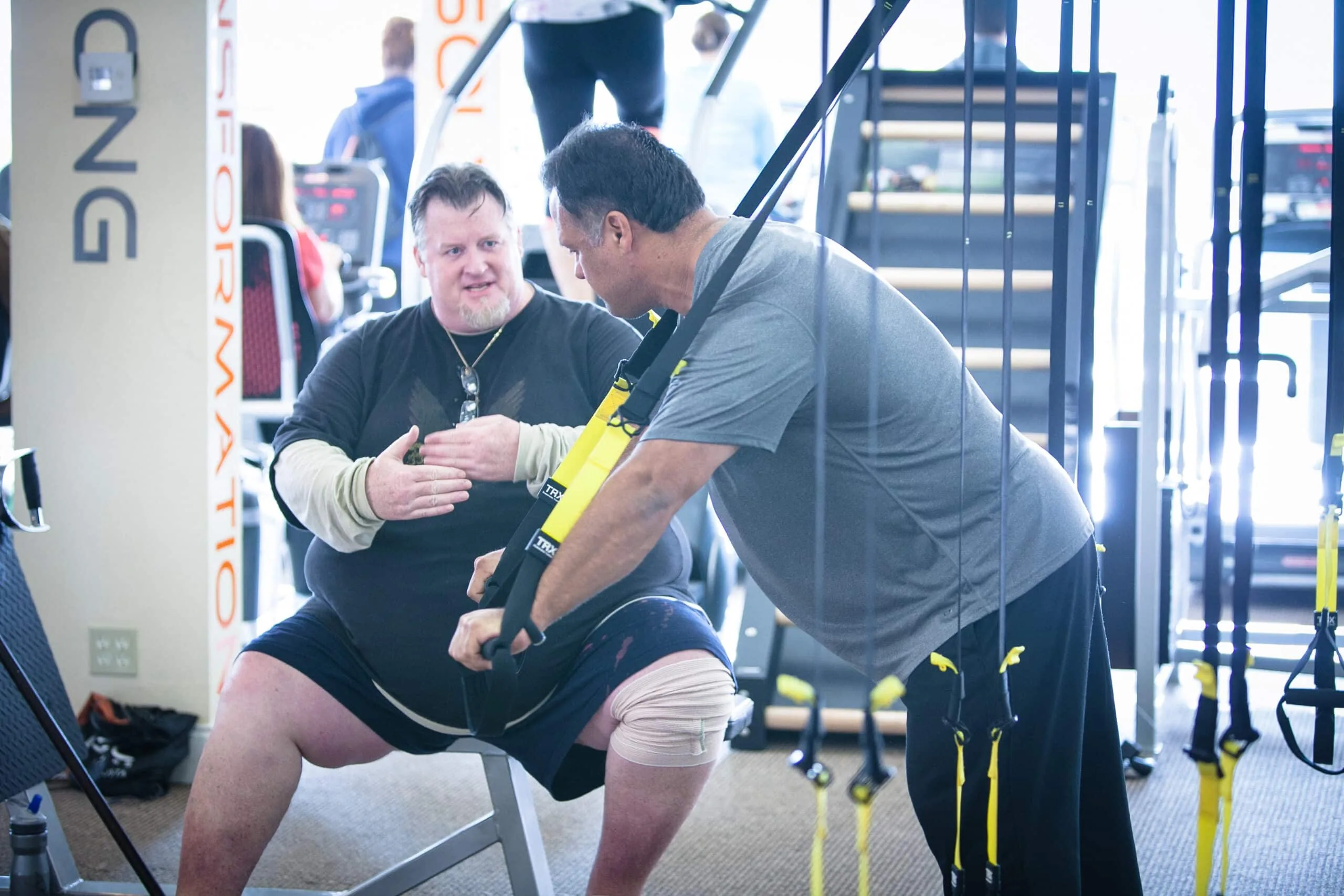
Step 3 called for 2–3 resistance sessions per week. The template below puts that into practice with three full-body sessions per week on Monday, Wednesday, and Friday, with one rest or light-activity day between each. All exercises can be scaled to any fitness level.
| Week | Exercise | Sets × Reps | Notes |
|---|---|---|---|
| Week 1–2 | Goblet squat, dumbbell row, push-up (or incline), hip hinge (Romanian deadlift), overhead press | 2 × 10–12 | Focus on form and use a weight you can control for all reps |
| Week 3 | Same movements | 3 × 10 | Add one set and increase weight by about 5% if the last set felt easy |
| Week 4 | Same movements | 3 × 8–10 | Increase load again and log weights to track progressive overload |
Most patients tolerate exercise on injection day, and scheduling resistance sessions 24 to 72 hours after injection often improves tolerance when injection-day fatigue appears. If Monday is your injection day and fatigue peaks that evening, shift sessions to Tuesday, Thursday, and Saturday.
Your place in the GLP-1 timeline changes what matters most for training and nutrition.
Still On The Medication: Appetite suppression is at its strongest, so the priority is protecting lean mass while the medication blunts hunger. That priority shapes how you eat: protein comes first at every meal, and meals stay small and frequent, about every three hours when possible. Liquid or semi-liquid protein options such as shakes and smoothies help you reach targets without forcing large portions. Training follows the same logic. Start with two resistance sessions per week and build from there. Stay in the medication-created deficit rather than pushing calories up aggressively, which can worsen side effects.
Tapering: As the dose decreases, appetite starts to return. Use this window to raise protein intake toward the higher end of your target range and add a third resistance session each week. Increase calories toward maintenance at a pace of about 100–150 kcal per week. Track strength in key lifts as a simple way to see whether muscle is rebuilding.
Off The Medication: The risk of rapid regain increases once pharmacological appetite control fades. Weight regain after stopping incretin-based pharmacotherapy occurs faster than after stopping behavioral weight management programs, independent of initial loss. The habits you built earlier now act as your main defense. Keep protein high, keep lifting, and track progress with measurements, strength benchmarks, and body composition instead of relying on weight alone.
Maintenance calories are enough to support muscle rebuilding once you leave a deficit. For most GLP-1 graduates, matching calorie intake to total daily energy expenditure provides enough fuel for muscle protein synthesis without driving fat regain. A modest surplus of 100–200 kcal above maintenance fits best only after you have a steady training habit and objective body composition tracking.
Most products sold as “GLP-1 muscle loss supplements” lack strong evidence. Creatine monohydrate stands out as a supported option. The 2017 International Society of Sports Nutrition position stand concludes that short- and long-term creatine use is safe and well tolerated in healthy individuals, and classifies creatine monohydrate as the most effective ergogenic nutritional supplement for increasing high-intensity exercise capacity and lean body mass. The evidence-based dose is 3–5 grams per day taken continuously, with loading optional. No direct drug interaction exists between creatine and GLP-1 receptor agonists such as semaglutide or tirzepatide because they act through separate pathways.
One emerging pharmacological development is worth watching. Bimagrumab, an antibody targeting activin type II receptors, is being studied with semaglutide in the BELIEVE Phase 2 trial, where it reduced lean mass loss to about 2% compared with about 7% with semaglutide alone. Bimagrumab remains investigational, is not approved, and is not a recommendation here.
Body recomposition after GLP-1 use rarely shows up clearly on the scale.
Creatine alone can add 1–2 kg of intracellular water in the first two weeks, and muscle is denser than fat, so you can improve body composition while weight stays flat or rises slightly.
Four metrics tell you more than the scale. Waist and hip circumference show fat loss even when weight holds steady. Strength benchmarks in key lifts, tracked every four weeks, show whether training is working. Progress photos taken every two weeks in consistent lighting reveal changes the scale misses. How your clothes fit is often the first sign that body composition is shifting.
DXA scans provide the most accurate body composition data, although early readings can be influenced by hydration and should be interpreted in context. PFC tracks 17 data points weekly for every client, including body fat percentage, seven body measurements, blood pressure, performance markers, and key blood lipids and glucose. This level of tracking lets clients see progress that the scale alone would hide.
Loop your prescribing clinician in before major training or nutrition changes when any of the following apply:
Premier Fitness Camp (PFC) gives GLP-1 graduates a single place to train, eat, and recover under expert supervision.

PFC’s immersive adult program combines structured resistance training, registered dietitian-designed meals, behavioral health support, and data-driven tracking, all without judgment about medication use.
The “Think, Eat, Move” philosophy addresses the whole person. Registered dietitians design every meal and lead sessions on macros, protein distribution, and meal planning for life after medication. Behavioral health coaches and licensed psychologists help clients understand emotional patterns around food and build durable habits. Certified trainers with bachelor’s and master’s degrees deliver 4–5 hours of daily training at a 3–4:1 client-to-trainer ratio, and every class is structured so all fitness levels can participate.

A case study with the University of California, San Diego (UCSD) followed PFC participants who stayed four or more weeks and received DEXA scans at the start and end of their stay. The result: 94% of total weight loss was fat, while lean muscle mass was preserved or increased. Standard dieting often produces a 60/40 fat-to-muscle loss ratio, and aggressive programs can approach a 50/50 split. PFC’s 94% fat-loss rate reflects the same protein-first, resistance-training-centered approach described in this guide, delivered with daily expert oversight.
PFC operates at the Omni La Costa Resort & Spa in Carlsbad, California, a 450-acre property with a mild year-round climate and luxury accommodations. Outdoor training includes beach boot camps on the Pacific coast, hikes through Torrey Pines and Double Peak, and stand-up paddleboarding. Three spa treatments per week are included. The weekly 17-point report card tracks every meaningful health marker, not just scale weight.
Client Scott summed it up in a Google review: “PFC is a life-changing experience. I signed up for two weeks and stayed for eight. The facilities and staff are top notch.”
If you want expert oversight while you rebuild, the PFC team can map your protein targets, training progression, and tracking plan in a single consultation. Schedule your personalized consultation or call (888) 488-8936 to talk through your goals.
Meaningful muscle rebuilding usually becomes detectable after about 8–12 resistance training sessions, with functionally meaningful hypertrophy of roughly 7–10% emerging after about 18 sessions over 6–10 weeks of consistent training and adequate protein. Early strength gains in the first two to four weeks come mostly from neural adaptations such as improved motor unit recruitment and synchronization. Visible body composition changes often appear between weeks six and twelve, although timelines vary widely with consistency, intensity, nutrition, and individual factors. Older adults may progress more slowly because of anabolic resistance and often need 30–40 g of protein per meal to match younger adults’ muscle protein synthesis response. Full recovery of lost lean mass typically takes about half as long as the preceding period of training cessation, with many people returning to pre-loss composition within 3–6 months of consistent training and adequate protein.
Building muscle while still on a GLP-1 is possible, although conditions are more challenging than after discontinuation. Appetite suppression makes protein targets harder to hit, reduced calorie intake pushes the body toward catabolism, and some people feel fatigue around injection days. Focus on protein above other macronutrients, eat small and frequent meals every three hours, and use liquid protein sources on high-nausea days. Start resistance training at two sessions per week and build up as tolerance improves. The main goal during active medication use is to preserve lean mass and prevent further loss, with muscle gain becoming easier as the dose stabilizes or tapers. Scheduling training 24–72 hours after injection can improve tolerance when injection-day fatigue is an issue.
Stopping a GLP-1 medication solely to build muscle should always be a shared decision with your prescribing clinician. The choice to taper or discontinue needs to reflect your overall health goals, metabolic status, and medical guidance. Rapid weight regain after stopping is a documented risk, as noted earlier in this guide. A more sustainable approach is to build the habits of consistent resistance training, high protein intake, and maintenance-level calories while still on the medication. When tapering or discontinuation happens, that lifestyle foundation is already in place. PFC specializes in building exactly this foundation.
Aim for roughly 25–40 grams of protein per meal across three meals, with an optional snack contributing 10–20 grams from compact, easy-to-digest sources. Practical options include Greek yogurt with a scoop of protein powder, cottage cheese with berries, two to three soft scrambled eggs with a protein shake, a ready-to-drink protein shake with a small handful of nuts, canned tuna or salmon on a few crackers, or bone broth blended with protein powder. Lead with the protein portion at each meal and snack. On high-nausea days, liquid options such as shakes, smoothies with Greek yogurt, or bone broth with added protein are often better tolerated than solid food. Skip high-fat fried foods on symptomatic days because fat slows gastric emptying on top of the medication’s effect.
Reliable signs include strength gains in key lifts, shrinking waist and hip measurements even when scale weight is flat or rising slightly, and clothes fitting looser in the waist and fuller through shoulders and legs. Progress photos taken every two weeks in consistent lighting often reveal body composition changes the scale misses. If you are taking creatine, expect 1–2 kg of scale-weight increase in the first two weeks from intracellular water, which does not represent fat gain. A DEXA scan offers the most objective breakdown of fat mass versus lean mass, although hydration can influence early readings. PFC’s weekly 17-point report card, described earlier, gives clients that same multi-dimensional view.
For most healthy adults with normal kidney function, creatine monohydrate at 3–5 grams per day is safe and has no known pharmacological interaction with GLP-1 receptor agonists such as semaglutide, tirzepatide, liraglutide, or retatrutide. The compounds act through separate metabolic pathways. Three practical considerations matter for GLP-1 users. Creatine increases intracellular water while GLP-1 gastrointestinal side effects can promote dehydration, so daily fluid intake needs attention. Creatine modestly elevates serum creatinine and can make standard kidney function tests appear abnormal even when kidneys are healthy, so inform your clinician before bloodwork. Starting creatine at the maintenance dose of 3–5 g/day instead of a 20 g/day loading phase helps avoid compounding nausea during GLP-1 titration. People with chronic kidney disease, eGFR below 60 mL/min, or recurrent vomiting that limits fluid intake should talk with their doctor before starting creatine.
If you want help applying these answers to your own situation, the PFC team can review your protein targets, training plan, and tracking data in a single consultation.