 5-star Wellness Resort
 5-star Wellness Resort
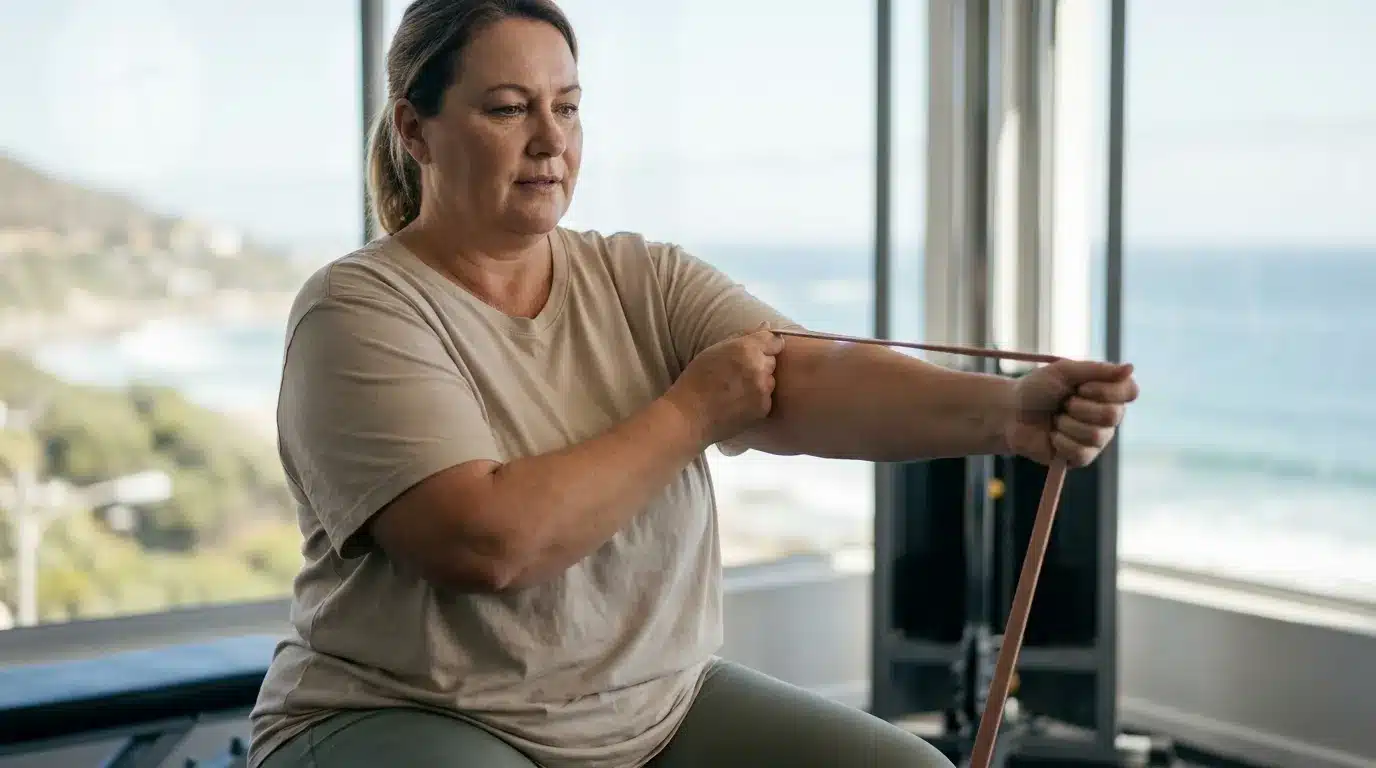
Written by: Chris Butt, Certified Personal Trainer & Weight Loss Coach, Premier Fitness Camp
Get a Personalized Joint-Friendly Plan
Many people hear “exercise more” from a doctor or physical therapist and worry about making pain worse. That concern is reasonable. The Mayo Clinic confirms that low-impact aerobic exercise raises heart rate without putting stress on the body, and even small amounts of physical activity help. The CDC and the Physical Activity Guidelines for Americans recommend at least 150 minutes per week of moderate-intensity aerobic activity for adults with arthritis, and your starting point is wherever you are today.
This guide is built for adults, especially those 40 to 60, with knee, hip, lower back, or foot and ankle pain. It also supports people who are overweight, sedentary, or returning after a setback. It helps you choose by joint, start safely, and progress without flaring up. The Arthritis Foundation and Arthritis Ireland both confirm that exercise will not make arthritis worse as long as it is the right sort, and that low-impact options with less force going through the joints are usually most suitable.
Talk to a Trainer About Safe Starting Points
High-impact exercise such as running, jumping, and plyometrics sends repeated landing forces through the ankles, knees, hips, and spine. Low-impact exercise keeps at least one foot on the ground or supports the body through water, a seat, or a machine. This reduces joint forces while still training the heart and lungs. Regular low-impact exercise improves joint flexibility and range of motion, strengthens muscles around joints, supports weight management, relieves pain, improves circulation, and enhances mood and sleep.
Starting small is recommended. The National Institute of Diabetes and Digestive and Kidney Diseases recommends that inactive adults begin with just 10 minutes a day and add time gradually. That means a 5- to 10-minute session counts. Consistency matters more than intensity when you are building a new habit.
Low-impact still allows meaningful effort. Use the talk test to gauge moderate intensity: you should be able to speak a few words in a row but not sing. The NIDDK confirms the talk test as a reliable intensity gauge. Short sentences are possible, a full song is not.
With that foundation in mind, the activities below give you joint-friendly ways to raise your heart rate. Each option notes what it is, which joints it best protects, what equipment you need, and a modification tip. Short form-check videos are widely available for each. Searching the activity name plus “beginner form” on YouTube is a practical starting point.
The table below highlights which activities are lowest impact and which joints each best protects, so you can compare options at a glance.
| Activity | Best for Which Joints | Equipment Needed | Impact Level |
|---|---|---|---|
| Swimming | Knees, hips, back, foot/ankle | Pool access | Very low |
| Water Aerobics | All lower-body joints, back | Pool access | Very low |
| Recumbent Bike | Knees, hips, lower back | Recumbent bike | Very low |
| Elliptical Trainer | Knees, hips | Elliptical machine | Low |
| Rowing Machine | Hips, upper body, back | Rowing machine | Low |
| Brisk Walking | General cardiovascular, mild knee/hip | Supportive footwear | Low |
| Water Walking | All lower-body joints | Pool access | Very low |
| Seated Cardio | Suitable when standing not possible | Sturdy chair | Very low |
| Tai Chi | Knees, hips, balance | None | Low |
The right activity depends on which joint hurts. Use the sections below to identify your best starting options and simple modifications.
For low impact cardio for bad knees, many people want options that avoid extra strain. The answer depends on how much knee flexion and weight-bearing load you can tolerate.
Best options:
Modify if:
Consult a doctor or physical therapist if you have osteoarthritis or have had knee surgery before starting a new program. For a structured week-by-week approach, see the Knee-Friendly Weight Loss: A Week-By-Week Exercise Plan.
Best options:
Modify if:
Best options:
Modify if:
Best options:
Modify if:
People who cannot stand or bear weight still need safe ways to move. Severe pain, post-surgical recovery, significant deconditioning, or other health limitations can make seated cardio the most realistic starting point.
Seated cardio options that require no equipment beyond a sturdy chair include:
For low impact cardio with no equipment, chair marching and seated arm movements need only a sturdy, stable chair. These options also work well for low impact cardio at home. The Arthritis Foundation’s 2019 guidelines with the American College of Rheumatology strongly recommend tai chi for managing knee and hip osteoarthritis, and the National Council on Aging lists Tai Chi for Arthritis and Fall Prevention as an evidence-based program for older adults; this program’s movements can be modified for mobility issues and done seated as a starting exercise.
Seated cardio still counts. Progress by adding time, increasing arm range of motion, or adding light resistance bands. When pool access is available, water aerobics and water walking are non-weight-bearing alternatives that allow functional movement through a comfortable range. Arthritis Australia identifies people who find it difficult or painful to exercise on land as among those who benefit most from water exercise. While these options are safe, some activities can aggravate joint pain if not modified. The following section outlines exercises to avoid or adapt.
Knowing which exercises can worsen osteoarthritis helps you choose smarter options and stay active with confidence. The following activities can aggravate joints when performed at high intensity or without modification:
Avoiding movement out of fear of pain actually weakens the supporting muscles and allows the joint to deteriorate faster. The goal is modification and smart substitution. The University of Maryland Medical System notes that osteoarthritis does not automatically require giving up higher-impact activities; depending on the joint and symptom severity, people may modify frequency, shorten sessions, or choose a more forgiving surface. Working with a trainer or physical therapist experienced in joint conditions makes modification safer and more effective. For more on joint-friendly movement and weight management, see Joint-Friendly Workouts for Shedding Pounds: A Guide.
Low impact cardio for seniors follows the same joint-by-joint logic, with extra emphasis on balance and fall prevention. The Physical Activity Guidelines for Americans recommend that older adults include balance training alongside aerobic activity, and low-impact cardio can meet aerobic goals safely while supporting that balance work.
Especially senior-friendly options include:
Progress for older adults is best measured in daily function, such as easier stairs, less morning stiffness, and more energy, as well as heart health. It is never too late to start. Function typically improves before pain does: many people notice easier mornings and stairs within two to four weeks of consistent activity.
Begin with 5 to 10 minutes of low-impact cardio, three times per week. Add a few minutes only when the current amount feels comfortable. This approach reflects current evidence. The NIDDK recommends starting with 10 minutes a day and adding 5 to 10 minutes every few weeks.
Before each session, warm up with 3 to 5 minutes of easy movement such as gentle marching, slow cycling, or step-touch patterns. After each session, cool down at a reduced pace for several minutes so you can notice any symptoms before stopping completely.
Use the talk test throughout. Short sentences are possible, singing is not. If you cannot complete a sentence, slow down.
Stop the activity and consult a healthcare provider for any of the following:
Practical notes: wear shoes with cushioned, shock-absorbing soles. Use a sturdy, armless chair for seated cardio. If using a pool, confirm there are steps with a handrail or a ramp for safe entry and exit.
This progression focuses on comfort and the talk test rather than heart-rate zones or calorie targets.
“Progress, do not push” is the guiding principle. If a week feels hard, repeat it rather than advancing. The 2025 EULAR recommendations for physical activity in inflammatory arthritis and osteoarthritis advise that in deconditioned individuals, it is appropriate to start with a lower dose that is safely tolerated and increase duration progressively over the first 4 to 6 weeks.
Self-guided starting works well for many people, yet some need more structure and expert oversight to progress safely. For readers who want structure, accountability, expert-led modification, and a supportive community, Premier Fitness Camp is the leading luxury fitness and weight loss camp for adults, located at the Omni La Costa Resort & Spa in Carlsbad, California.
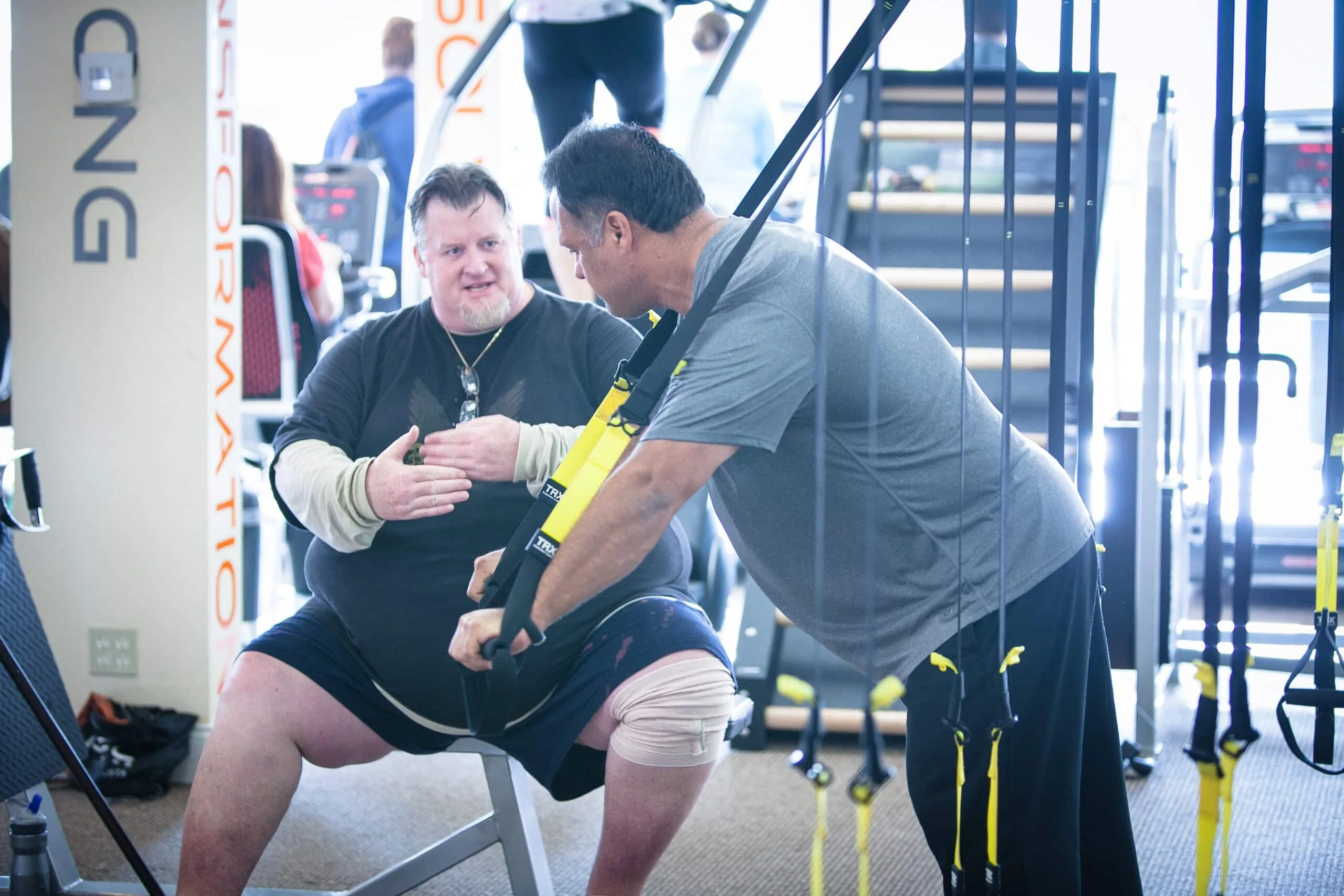
Premier Fitness Camp is built for exactly the person this guide is written for. Every class is structured so every fitness level can participate, from clients who can only walk 250 feet to seasoned athletes. Each session includes modifications, progressions, and low-impact alternatives for every exercise. A dedicated low-impact training track exists for those with health limitations. The program includes swimming, water aerobics, walking, tai chi-style movement, and other joint-friendly activities alongside strength and mobility work.
Premier Fitness Camp’s “Think, Eat, Move” philosophy addresses the whole person. Licensed psychologists provide behavioral health support. Registered dietitians lead nutrition education. Wellness chefs prepare fresh, gourmet meals on-site. This approach creates a comprehensive health transformation delivered in a luxury setting.
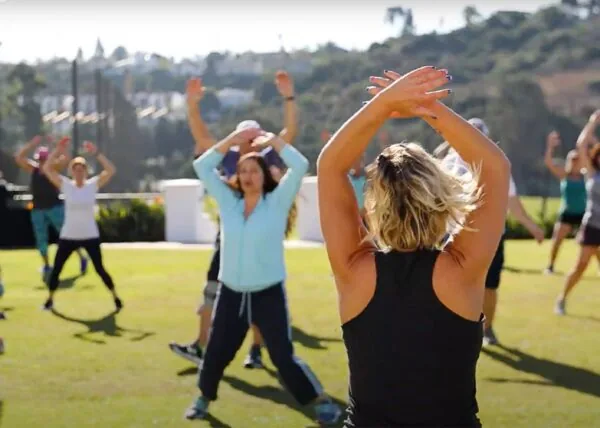
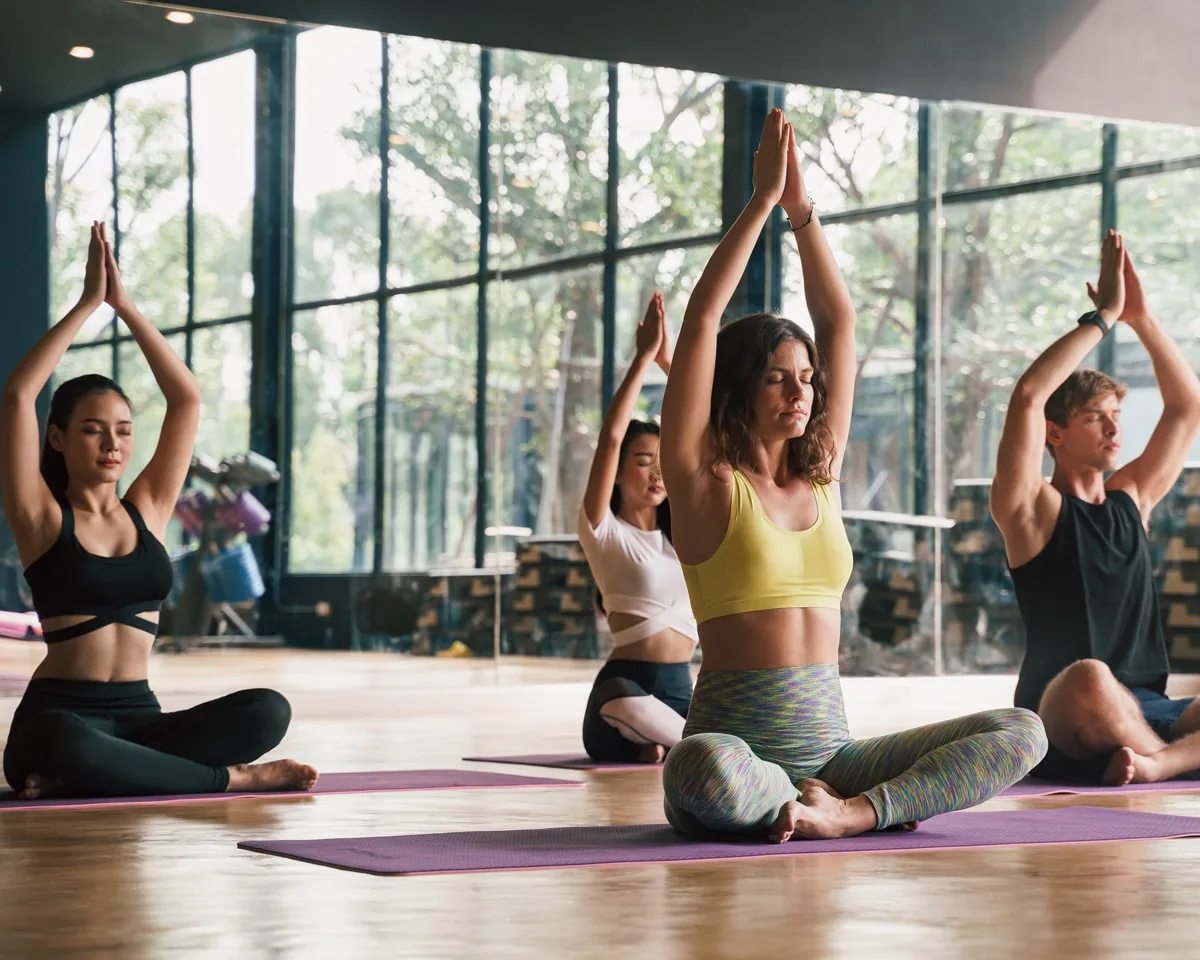
The results are documented. A case study conducted in partnership with the University of California, San Diego found that 94% of client weight loss at Premier Fitness Camp was purely fat, compared to the 60/40 fat-to-muscle ratio typical of standard dieting programs. Premier Fitness Camp tracks 17 data points weekly, including weight, body fat, measurements, blood pressure, cholesterol, glucose, push-ups, plank time, and mile time, so progress is visible far beyond the scale. With 1,200+ reviews and a 90%+ five-star rating, and 50% of annual revenue coming from returning alumni, Premier Fitness Camp’s outcomes have a strong track record.
The setting supports consistency. The 450-acre Omni La Costa Resort offers a year-round moderate Southern California climate, on-site dedicated facilities, and spa access. These factors make consistent, joint-friendly movement feel enjoyable rather than like a chore.
Premier Fitness Camp is a premium, in-person, live-in experience that requires time and financial investment. It functions as an investment in health. Traditional gyms and personal trainers offer exercise but lack nutrition and behavioral health support. Online apps provide convenience but no expert-led modification or community. Wellness resorts prioritize relaxation over structured programming. Premier Fitness Camp combines movement, nutrition, and behavioral health in one immersive environment. For more on how joint-friendly movement connects to lasting weight management, see How Weight Loss Reduces Joint Pain and Improves Mobility and Low Impact Spa Workouts for Weight Loss & Bad Knees.
See If Premier Fitness Camp Is Right for You
The best option depends on which joint hurts and what equipment you can access. Swimming and water aerobics are among the most protective because buoyancy removes most joint load. Recumbent cycling and the elliptical are strong choices for knee and hip pain. Seated cardio is the safest starting point for people who cannot stand or bear weight. The Arthritis Foundation and CDC both confirm that low-impact exercise is safe and beneficial for people with arthritis when chosen appropriately.
Seated cardio is the most accessible option and requires only a sturdy chair. Chair marching, seated arm circles, seated leg extensions, and chair-based tai chi all raise heart rate without requiring standing or weight-bearing. If pool access is available, water aerobics and water walking are excellent non-weight-bearing alternatives because buoyancy supports the body throughout. Both options can be progressed over time by adding duration, arm range of motion, or light resistance.
High-impact activities such as running on hard surfaces, jumping, plyometrics, and high-impact aerobics can aggravate osteoarthritis by sending repeated landing forces through already-stressed joints. Deep squats and repetitive stair climbing can worsen knee pain specifically. The key is modification rather than avoidance. Running can be swapped for swimming or recumbent cycling. High-impact aerobics can be replaced with water aerobics or tai chi. Avoiding movement entirely weakens the muscles that protect joints and allows symptoms to worsen faster.
Walking is generally beneficial for knee osteoarthritis because it is gently weight-bearing, supports cartilage nutrition through rhythmic joint loading, and is accessible without equipment. The key is starting with short intervals on flat, even surfaces with supportive footwear and avoiding hills or uneven terrain that increase knee stress. If walking consistently causes pain that lasts more than an hour after stopping, a lower-load option such as water walking or recumbent cycling may be a better starting point until strength and tolerance improve.
Start with 5 to 10 minutes per session, three times per week. This duration reflects the evidence-based recommendation for deconditioned adults. The NIDDK advises beginning with 10 minutes a day and adding 5 to 10 minutes every few weeks. The goal in the first weeks is to build the habit and confirm that your chosen activity does not aggravate your joints. Reaching a target duration comes later. If 5 minutes feels like enough, that is a legitimate starting point.
Yes. Low-impact cardio supports weight management by increasing energy expenditure, improving cardiovascular fitness, and reducing sedentary time. These changes contribute to a healthier body composition over time. The CDC and Arthritis Foundation both note that weight management is one of the key benefits of regular physical activity for people with arthritis, and that even modest weight loss reduces pressure on weight-bearing joints. For a deeper look at this connection, see How to Lose Weight With Arthritis: A Joint-Friendly Guide.
The clearest signals are pain that lasts more than one hour after exercise ends, swelling that increases after activity, and pain that is noticeably worse the day after a session. The Arthritis Foundation advises that if pain persists two hours after you have stopped working out, you should avoid activity until you have consulted your doctor. Other signs of overload include dizziness during activity, sharp pain during movement, and fatigue that does not resolve within a day. When any of these appear, reduce duration or intensity rather than stopping entirely, and consult a healthcare provider if symptoms persist.
The right low-impact cardio option depends on which joint hurts and what equipment you can access. Swimming, water aerobics, recumbent cycling, elliptical training, rowing, brisk walking, water walking, seated cardio, and tai chi each offer a different combination of joint protection, accessibility, and cardiovascular benefit. The joint-by-joint framework in this guide helps you identify your best starting point, and the 4-week progression offers a simple, week-by-week outline to build gradually.
Start small this week. Aim for five to 10 minutes, three times, with an activity that suits your joint. Use the talk test to stay at moderate intensity, and use the stop signals to protect yourself from overload. Consulting a healthcare provider or physical therapist before starting is always a sound step, especially with osteoarthritis or a history of joint surgery.
For readers who want expert guidance, structured programming, and a community of people on the same journey, Premier Fitness Camp delivers joint-friendly cardio at every fitness level. The small-group training mentioned earlier and the dedicated low-impact track sit inside a whole-person approach that addresses movement, nutrition, and behavioral health together. As noted earlier, Premier Fitness Camp’s strong alumni return rate and high ratings reflect its effectiveness.
Start Your Joint-Friendly Fitness Journey
Ready to start your transformation? Book a free consultation with our team to discuss your goals and learn how Premier Fitness Camp can help you achieve lasting results. Call (888) 488-8936 to schedule your personalized consultation today.