 5-star Wellness Resort
 5-star Wellness Resort

Written by: Chris Butt, Certified Personal Trainer & Weight Loss Coach, Premier Fitness Camp
Talk With The Premier Fitness Camp Team About Your Goals.
Women’s bodies change in specific, measurable ways after menopause, and most generic fitness advice ignores these shifts. Knowing what changes gives you a clear path to a program that actually works.
Bone density loss accelerates sharply. Women lose on average 1–2% of bone density per year during menopause, sometimes as high as 3–5% annually in the first five years, because estrogen normally suppresses the cells that break bone down. That loss compounds over time. Women account for approximately 80% of osteoporosis cases, and one in two postmenopausal women will experience a major fracture as a result of menopause-accelerated bone loss.
Sarcopenia, or age-related muscle loss, accelerates after 60. Adults lose 3–8% of muscle mass per decade from midlife, and that rate increases after age 60. A 2026 systematic review in Frontiers in Public Health found that postmenopausal women have a higher prevalence of sarcopenia than men (26.4% vs. 22.8%). The review attributes this gap to the postmenopausal decline in estrogen, which impairs protein synthesis and triggers a pro-inflammatory state that accelerates muscle loss.
Fall risk is real and rises with age. Approximately 1 in 4 adults aged 65 and older falls each year, and after one fall the chance of falling again doubles. Muscle weakness, reduced bone density, and poor balance interact to make falls one of the leading causes of disability in older women.
Strength training after menopause is the single most protective habit for bone density and independence. The NIH recommends that women going through or after menopause be physically active most days of the week, combining aerobic activity with weight-bearing exercise to reduce the risk of heart disease and osteoporosis. The good news is that you can start at any age and still see meaningful benefits. For more on building a long-term plan, see Long-Term Fitness After Retirement: A Decade-By-Decade Guide.
Progressive resistance training is the cornerstone of strength training for women over 60. It stimulates bone formation, preserves lean muscle, and protects metabolic rate. The National Institute on Aging recommends starting with 8–12 repetitions and gradually increasing resistance over time. Begin with bodyweight movements, resistance bands, or light dumbbells. The 2026 Frontiers in Public Health meta-analysis found that elastic band resistance training was the most effective modality for grip strength in postmenopausal women with sarcopenia, and that training three times per week produced greater gains than twice per week.
The CDC recommends that older adults get at least 150 minutes of moderate-intensity aerobic activity per week, spread across multiple days. Breaking this into 20–30 minute sessions keeps it manageable. Use the talk test to gauge intensity, where moderate activity lets you talk but not sing. Walking, dancing, swimming, and cycling all count. Weight-bearing options like walking and dancing also support bone health in ways that swimming and cycling do not.
Balance training is the most direct tool for fall prevention. The NCOA recommends balance exercises such as tai chi, heel-to-toe walking, and repeated chair stands about three times per week to lower fall risk. Tai chi and yoga both improve balance, strength, and flexibility, and single-leg stands can be practiced safely at a kitchen counter. The 2026 Frontiers in Public Health meta-analysis found that exercise produced the largest effects on balance and mobility in postmenopausal women with sarcopenia, with single-leg stance improving by a large effect size.
Muscle and bone both require nutritional support. Aim for protein at every meal to counteract anabolic resistance, which is the reduced ability of older muscles to use dietary protein. The NIH recommends that women ages 51–70 get 1,200 mg of calcium and 800–1,000 IU of vitamin D daily to support bone health after menopause. Good calcium sources include dairy, calcium-set tofu, and canned fish with edible bones. Vitamin D-fortified foods and moderate sun exposure help maintain adequate levels.

The most important principle for a workout plan for a 60-year-old woman who is just beginning is simple: start low and go slow. That means beginning with 10-minute walks, chair-based strength movements, and one balance exercise daily. Expect some soreness as your body adapts, but sharp or joint pain is a signal to stop and consult a healthcare provider.
The emotional barriers are real as well. The WHO identifies retirement itself as a mental health stressor, and social isolation and loneliness together affect about a quarter of older people. Movement is one of the most evidence-supported mood lifters available. Starting with just five minutes of walking is a legitimate first step, and research consistently shows that even activity adopted later in life yields considerable health benefits.
A 2026 qualitative study published in Healthcare found that fear of injury, fear of falling, and low confidence in exercising safely were common barriers to exercise for older adults with chronic conditions. Symptom burden and limited disease-specific exercise knowledge also played a role. The same study found that professional guidance, peer support, and age-friendly environments were the most effective solutions. You do not need to figure this out alone, but you do benefit from a concrete plan to follow.
A safe, effective weekly routine for a 65-year-old woman combines all four pillars at manageable frequencies. Here is a practical seven-step framework:
For a complete week-by-week plan, see Fitness Routines for Retirees: Your Complete Weekly Plan.
Here is how those seven steps look across an actual week, with the four pillars slotted into realistic frequencies. Low-impact modifications such as seated movements, water-based exercise, or reduced range of motion can be substituted on any day for those managing knee pain or joint limitations.
This schedule delivers approximately 150 minutes of moderate cardio, two strength sessions, and daily balance work. It meets major guidelines while leaving room for rest and recovery. Where you follow this kind of week matters as much as what is in it.
Most women begin their retirement fitness journey at home, then progress to community classes, and eventually consider a more structured, expert-led program. Each level has genuine value, and each comes with specific trade-offs.
Home routines are accessible and low-barrier. However, a 2026 randomized controlled trial published in Acta Diabetologica found that self-managed home exercise adherence dropped from 85% during supervised training to 65.3% once supervision ended, and functional gains faded after professional support was withdrawn. Structure and accountability matter.
Community programs like SilverSneakers are a meaningful step up. SilverSneakers is a plan-dependent Medicare fitness benefit offering basic gym access and senior group classes at roughly 15,000 locations nationwide. It is low-cost and community-minded, with real social benefits. Members report that the social dimension is as valuable as the fitness component. However, SilverSneakers has documented constraints. Eligibility depends entirely on whether a specific Medicare Advantage or Supplement plan includes it, and the network varies by location and can change year to year. The benefit covers group classes only, so it does not include customized plans, one-on-one coaching, or nutrition and behavioral health support. For women who need a structured, medically informed, individualized approach, especially those managing bone loss, sarcopenia, or significant weight, a class schedule serves as a starting point rather than a complete solution.
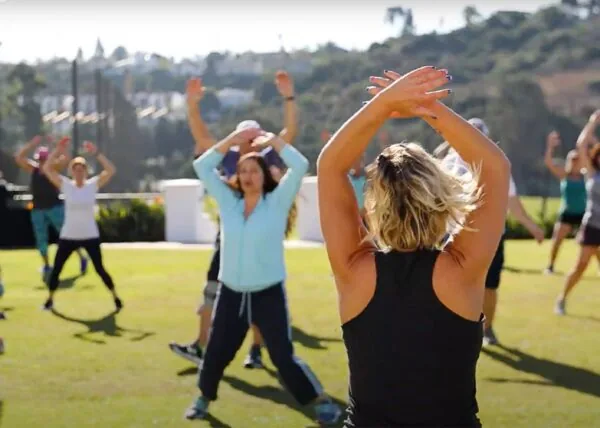
Premier Fitness Camp operates in a different category entirely. PFC is an all-inclusive, immersive program at the Omni La Costa Resort & Spa in Carlsbad, California, with 450 acres of dedicated facilities, a year-round moderate climate, and daily outdoor activity on the Pacific coast. PFC delivers 4–5 hours of expert-led training per day with a 3–4:1 trainer-to-client ratio, versus standard group classes. Its registered dietitians design every meal, prepared on-site by wellness chefs using fresh, farm-to-fork ingredients. Licensed psychologists lead workshops on emotional eating, motivation, and sustainable habit formation. Seventeen data points are tracked weekly, including weight, body fat, bone-relevant measurements, blood pressure, cholesterol, glucose, strength, and cardiovascular fitness, so progress is visible far beyond the scale.
A UCSD case study of PFC participants who stayed four or more weeks found that 94% of total weight loss was purely fat, compared to the 60/40 fat-to-muscle ratio typical of standard dieting. Lean muscle mass was preserved or increased, and bone volume and strength were maintained. For women over 60, where preserving both muscle and bone is the central physiological challenge, this outcome is directly relevant.
PFC’s “Think, Eat, Move” philosophy addresses the whole person through behavioral health, nutrition education, and physical training in one integrated, expert-led program. Clients consistently report that the relationships built with staff and fellow participants are among the most meaningful outcomes of their stay. This experience aligns with 2026 research showing that social support is a stronger predictor of physical activity adherence in women than in men.

See What an Immersive Week at PFC Could Look Like for You.
Premier Fitness Camp is the best retirement fitness program for women who want lasting strength, bone health, and sustainable weight loss because it combines expert-led daily training, registered dietitian-designed nutrition, and licensed psychologist behavioral health support. The UCSD case study cited earlier showed that client weight loss was overwhelmingly fat rather than muscle, while bone volume and muscle mass were maintained.
Begin by talking to your doctor, especially if you have osteoporosis, joint limitations, or a history of falls. Then choose one concrete next step, such as a 10-minute walk today, a conversation with a trainer this week, or a free consultation with PFC’s team to understand what an individualized, immersive program could look like for you. With over 1,200 reviews and a 90%+ five-star rating, PFC has helped thousands of women build the strength and confidence to live their best years fully. Call (888) 488-8936 or book online below.
Schedule Your Free Consultation With PFC.
No. Research consistently shows that physical activity adopted later in life still yields considerable health benefits, including reduced fall risk, improved bone density, better cardiovascular health, and lower rates of anxiety and depression. The National Institute on Aging and the National Council on Aging both document meaningful improvements in strength, balance, and functional independence in adults who begin structured exercise programs in their 60s, 70s, and beyond. The key is starting at an appropriate level with low intensity and short duration, then progressing gradually. As noted earlier, even a five-minute daily walk is a legitimate starting point.
Current guidelines recommend muscle-strengthening activities involving all major muscle groups on at least 2 days per week, including legs, hips, core, chest, back, shoulders, and arms. Begin with 8–12 repetitions per exercise using resistance bands, light dumbbells, or bodyweight, and increase resistance gradually as strength improves. A 2026 systematic review in Frontiers in Public Health found that training three times per week produced greater grip strength gains than twice per week in postmenopausal women with sarcopenia. There is no fixed minimum time requirement per session. Stop when the movement becomes difficult to complete with good form, and rest adequately between sessions.
The most evidence-supported balance exercises for seniors to prevent falls include tai chi, heel-to-toe walking in a straight line, single-leg stands using a counter or wall for support, and repeated chair stands. These exercises target the ankle, calf, thigh, hip, and core muscle chains that stabilize the body during a stumble. Aim for balance training approximately three times per week. Tai chi improves balance and strength, and community exercise programs can reduce fear of falling; group classes also offer social benefits that support adherence. Always use a sturdy surface for support when beginning single-leg or balance exercises, and consult a healthcare provider if you have a history of falls or significant joint pain.
Yes. Movement is one of the most consistently evidence-supported interventions for mood in older adults. Earlier we noted the WHO’s point about retirement as a mental health stressor and the role of social isolation in later-life anxiety and depression. Physical activity addresses both the physiological and social dimensions of mood. It reduces inflammatory markers associated with depression, improves sleep quality, and, when done in a group setting, provides the social connection that research shows is a particularly strong predictor of wellbeing in older women. Group exercise programs, immersive fitness environments, and programs that integrate behavioral health coaching, as PFC does through its licensed psychologists, offer comprehensive support for the emotional dimensions of retirement fitness.
As covered above, SilverSneakers is a plan-dependent Medicare gym benefit with group classes but no personal training, individualized workout planning, nutrition, or behavioral health support. PFC is the immersive alternative, with daily expert-led training, dietitian-designed meals, psychologist-led coaching, and the weekly progress tracking described earlier. The UCSD case study mentioned above showed that weight loss at PFC was overwhelmingly fat rather than muscle, which is especially important for post-menopausal women managing sarcopenia and bone loss.