 5-star Wellness Resort
 5-star Wellness Resort
Written by: Chris Butt, Certified Personal Trainer & Weight Loss Coach, Premier Fitness Camp
Talk To A PFC Coach About Your 12-Week Plan
Adults lose roughly 3–8% of muscle mass per decade after age 30, with the rate accelerating after 60 and strength declining up to 3% per year. Resistance training directly counters that decline. The CDC’s physical activity guidelines recommend at least 150 minutes per week of moderate-intensity aerobic activity plus 2 days per week of muscle-strengthening activity for adults, including those 65 and older.
Strength training improves balance, bone density, blood sugar regulation, and the ability to perform everyday tasks. Rising from a chair, carrying groceries, and climbing stairs all feel easier with stronger muscles. A 2021 systematic review found that strength and balance training can reduce fall rates by 21–39% in community-dwelling older adults. A 2017 meta-analysis found sarcopenia was associated with a 60% higher risk of all-cause mortality. Preserving muscle becomes a central health decision in retirement.
See If PFC Is Right For Your Goals
The most effective program for a retiree beginner is a full-body, progressive plan performed 2–3 days per week. The structure below follows the National Strength and Conditioning Association’s 2019 position statement, which recommends 2–3 sessions per week, 2–3 sets of 8–12 repetitions per major muscle group, with about 2 minutes of rest between sets and gradual increases in resistance as strength improves.
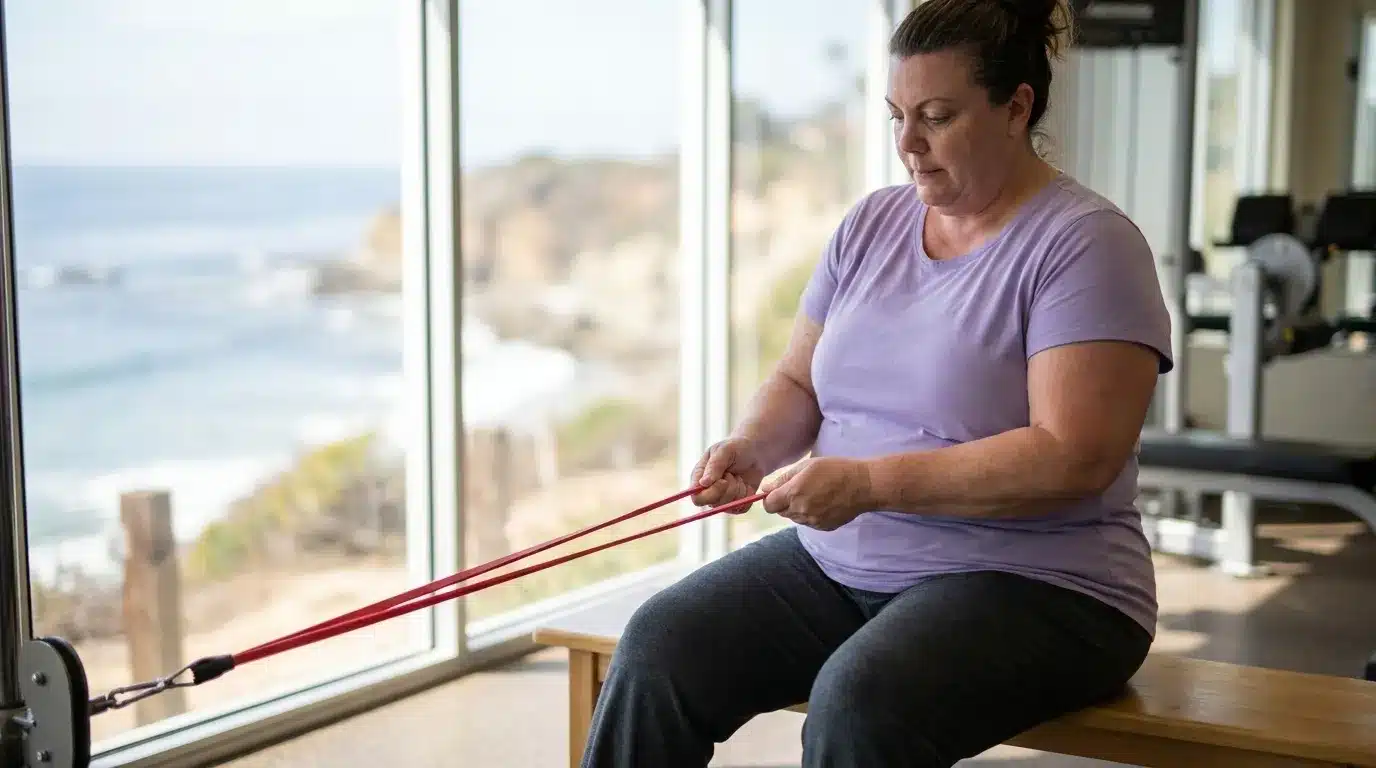
Perform 1 set of 8–12 reps per exercise, 2 days per week. Use light resistance such as bodyweight, soup cans, or a light resistance band. Focus on proper form and full range of motion. Stop before fatigue and rest 1–2 minutes between exercises.
Progress to 2 sets of 8–12 reps per exercise. Add load when the last two reps of a set feel easy while you maintain clean form. Keep 2 training days per week and add a third day if recovery feels good. Recovery feels good when you have no persistent soreness or joint discomfort going into the next session.
Build to 3 sets of 8–12 reps per exercise. Increase resistance gradually and keep a simple written log of the weight used and reps completed each session. A reliable progression rule is to complete all sets and reps with clean form in two consecutive sessions before adding any load.
Walking on off days supports active recovery and contributes toward the CDC’s 150-minute weekly aerobic guideline.
This exercise menu powers all three phases of your 12-week plan. Use these seven movements for every strength session and adjust sets and resistance as you move from Weeks 1–4 to Weeks 9–12. Each exercise includes a simple form cue so you can train safely at home with minimal or no equipment.
Now that you know the movements, the next step is choosing how hard to work. Start light and progress when the last few reps feel challenging but form stays clean. Peterson et al. (2010) found that for every incremental increase in training intensity, older adults experienced about a 5.3% greater relative strength improvement. Higher intensity within a safe range produces better results than staying with very easy weights.
A practical guide is the two-reps-in-reserve rule: stop each set when you feel you could still do about two more good reps. Sets taken within approximately 1–3 reps of failure build strength and muscle comparably across rep ranges, so older adults do not need to train to failure to gain strength. Add weight only when you complete all sets and reps with clean form across two sessions in a row.
Modifications are smart programming. Every effective retiree weight training program accounts for individual limitations.
If sharp joint pain occurs during any exercise, or if pain persists more than two hours after a session, reduce load or modify the movement and consult a physical therapist or physician.
Most retirees gain strength with 2 days per week as a minimum and 3 days per week as the long-term target. The Physical Activity Guidelines for Americans, 2nd edition, recommends that all older adults aged 65 and older engage in muscle-strengthening exercise on 2 days per week involving all major muscle groups. At least one full rest day between strength sessions supports muscle recovery.
A 2026 BMC Geriatrics meta-analysis of 13 randomized controlled trials found that training 3 times per week produced larger gait speed improvements than twice-weekly training in older adults with sarcopenia. This pattern suggests that 3 sessions per week is ideal for those who recover well. Walking on off days supports recovery and helps you reach weekly aerobic goals without adding stress to the muscles being rebuilt.
Get A Personalized Retiree Training Assessment
Original Medicare (Parts A and B) does not cover gym memberships or fitness programs. These services are not classified as medically necessary care. Many retirees, however, have access to free or low-cost fitness benefits through Medicare Advantage (Part C) plans.
KFF’s 2026 Medicare Advantage Spotlight found that 91% of individual Medicare Advantage plans include a fitness benefit in 2026. The most widely recognized program is SilverSneakers, operated by Tivity Health, which provides access to thousands of participating fitness locations nationwide (reported as 15,000–22,000 depending on source), plus group fitness classes, live online sessions, and on-demand workout videos. Other programs include Renew Active (UnitedHealthcare), Silver&Fit, and One Pass, depending on the plan.
Eligibility is automatic upon enrolling in a qualifying Medicare Advantage plan. No separate application or minimum fitness level is required. Beneficiaries can check SilverSneakers eligibility at silversneakers.com using their name, date of birth, and ZIP code. Another chair-based class option available at many community locations is Geri-Fit, designed specifically for older adults with limited mobility. Coverage varies by plan and can change annually, so reviewing the plan’s Evidence of Coverage each fall is essential.
A home plan builds a strong foundation. Retirees who want expert-led, data-driven results in an immersive environment, and who feel ready to accelerate progress, often benefit from Premier Fitness Camp (PFC) as the next step.

PFC operates at the Omni La Costa Resort & Spa in Carlsbad, California. Its “Think, Eat, Move” philosophy addresses the whole person through behavioral health support, nutrition education, and intensive physical training. Every fitness session maintains a 3–4:1 client-to-trainer ratio, with trainers holding bachelor’s and master’s degrees. Clients train 4–5 hours per day, Monday through Friday, which equals more work in a single morning than many people complete in a week. Every class is adapted for every fitness level, from beginners with physical limitations to seasoned athletes.

Progress is tracked across 17 data points weekly via a personalized report card, including weight, body fat, measurements, blood pressure, cholesterol, glucose, mile time, plank time, and push-up count. A UCSD case study of PFC participants who stayed four or more weeks found that 94% of total weight loss was purely fat, compared to the 60/40 fat-to-muscle ratio typical of standard dieting programs. Lean muscle mass was preserved or increased, and bone volume was maintained.
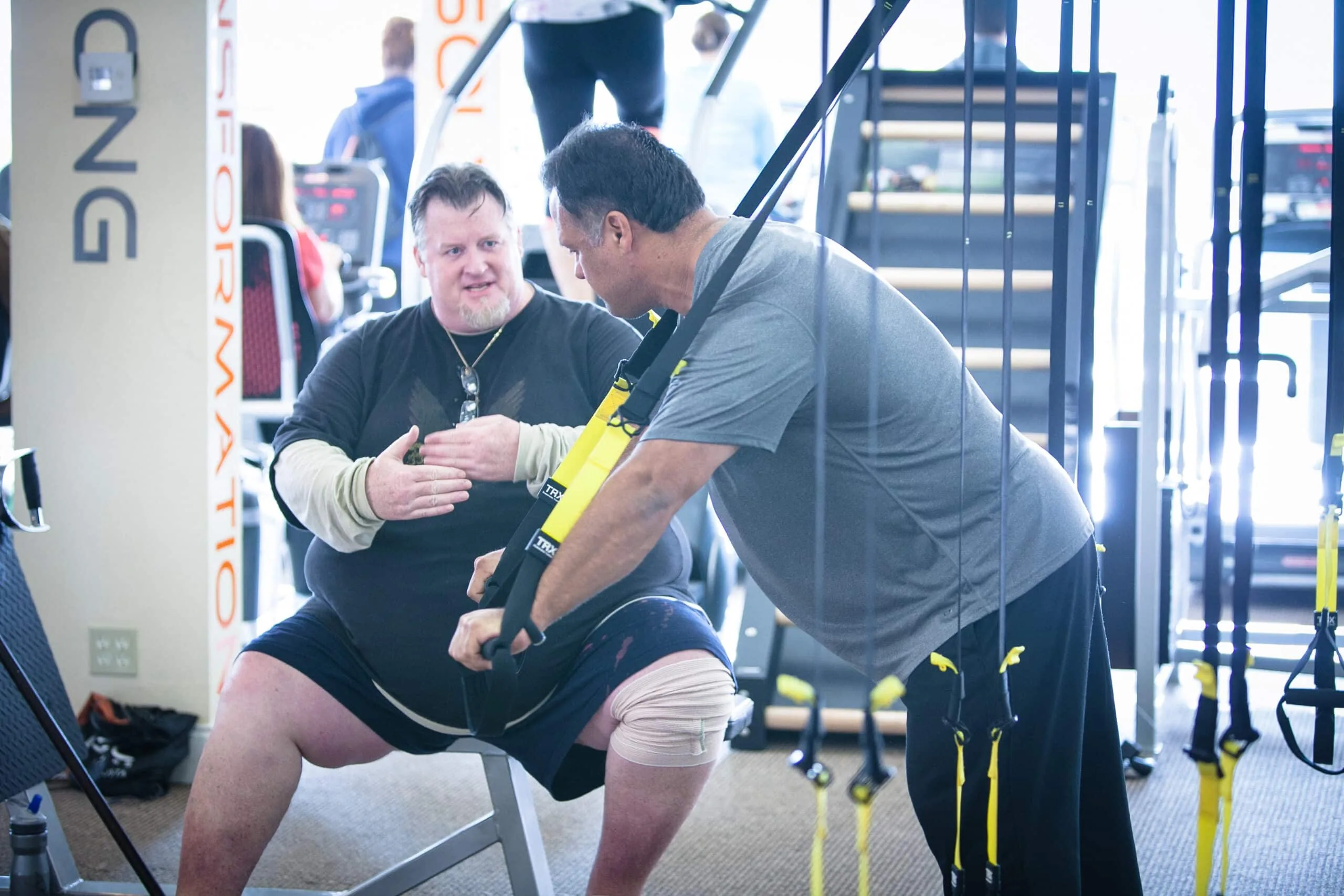
PFC has earned 1,200+ reviews with a 90%+ five-star rating, and 50% of annual revenue comes from returning alumni, which reflects the program’s lasting impact. Gym memberships and online apps rarely match this combination of immersive environment, expert coaching, behavioral health support, and structured nutrition education.
Start Your Consultation With The PFC Team
Most beginners do well with two strength sessions per week for the first four weeks. This schedule matches the minimum recommended by national guidelines and allows full rest days between sessions. Walking or light activity on off days supports recovery without adding muscle stress. After the first month, many retirees feel ready to add a third weekly session once they feel fully recovered going into each workout and have no persistent soreness or joint discomfort.
Safe, challenging resistance works better than very light or very heavy extremes. Starting with very light resistance is appropriate while you learn form. Staying at easy weights indefinitely, however, produces minimal benefit. The target is a load where completing 8–12 reps is genuinely challenging and the last two reps require real effort while form stays clean. Research consistently shows that higher relative training intensity produces greater strength gains in older adults. If you can complete 15 or more reps easily, the weight is too light. Add load in small increments only after completing all sets and reps with clean form across two consecutive sessions.
Yes. The research on this point is unambiguous. A landmark study published in the New England Journal of Medicine found that frail nursing-home residents with a mean age of 87 increased muscle strength by 113% after 10 weeks of progressive resistance training. A 2025 network meta-analysis pooling 151 randomized trials with 6,306 adults over 60 confirmed that resistance training reliably improves lean body mass, muscle size, strength, and walking speed. Functional gains such as easier chair rises, improved gait speed, and better balance typically appear within 4–8 weeks. Visible muscle tone changes usually follow at 8–12 weeks. Consistency, rather than age, drives these improvements.
Original Medicare (Parts A and B) does not cover gym memberships or fitness programs of any kind. Many Medicare Advantage (Part C) plans, however, include a fitness benefit at no additional cost. As noted earlier, a large majority of individual Medicare Advantage plans now include some form of fitness benefit delivered through programs such as SilverSneakers, Renew Active (UnitedHealthcare), Silver&Fit, or One Pass. Coverage varies by plan and can change annually. To confirm eligibility, review your plan’s Summary of Benefits, call the member services number on your insurance card, or use the eligibility checker at silversneakers.com. The Annual Enrollment Period runs October 15 through December 7 for coverage beginning January 1.
The most common path is through a Medicare Advantage plan that includes a fitness benefit. Eligibility is automatic upon enrolling in a qualifying plan, so no separate application is required. Check your plan’s Evidence of Coverage for the specific program name, such as SilverSneakers, Renew Active, Silver&Fit, or One Pass, then follow that program’s enrollment steps to activate your membership. If your current plan does not include a fitness benefit, you can switch plans during the Annual Enrollment Period (October 15–December 7). For those on Original Medicare or without a qualifying plan, alternatives include YMCA senior memberships (often $20–$55 per month with income-based financial assistance available), free or low-cost classes through county Area Agencies on Aging, and city or county parks and recreation senior programs.
Muscle loss responds directly to progressive resistance training, even in later decades of life. This 12-week plan gives you a concrete, startable prescription: begin with 2 days per week and 1 set of 8–12 reps per exercise, add volume in Weeks 5–8, and build to 3 sets by Weeks 9–12. Use the two-reps-in-reserve rule to gauge intensity, apply the modifications that match your body, and walk on off days to meet aerobic guidelines. Keep a written log and add load only when form is clean across two consecutive sessions.
Retirees who want to accelerate results with expert-led, immersive training can step into the same structured program that alumni keep returning to. Call (888) 488-8936 or start a consultation below to speak with the PFC team about your goals.
Start Your Consultation With Premier Fitness Camp