 5-star Wellness Resort
 5-star Wellness Resort
Written by: Chris Butt, Certified Personal Trainer & Weight Loss Coach, Premier Fitness Camp
Long-term retirement fitness means sustaining aerobic capacity, strength, balance, and flexibility for decades so you can handle daily activities independently. The National Institute on Aging (NIA) organizes its physical activity recommendations around these four types of activity because each pillar plays a specific role that the others cannot replace.
The four pillars, with their evidence-based targets, are:
Walking alone does not preserve muscle. Without resistance training, adults lose approximately 3–8% of muscle mass per decade after age 30, with rates accelerating after 60. This process, called sarcopenia, affects metabolism, posture, and the ability to rise from a chair unassisted. Aerobic activity supports cardiovascular health and mood, and resistance training keeps you strong enough to use that capacity in real life. The CDC principle that some activity is better than none still applies. Any movement counts, and you build from your current level.
A 70-year-old benefits from the same core guideline of at least 150 minutes of moderate-intensity aerobic activity per week, which you can reach with about 30 minutes on most days. Two days of strength training and frequent balance work round out the plan. These targets come from the Physical Activity Guidelines for Americans, 2nd edition, and apply to adults 65 and older, including many people with chronic conditions such as arthritis.
This sample week shows how the four pillars fit together in practice:
This structure gives you a baseline. The NIA encourages older adults to be active on most days of the week, and you can adjust frequency and intensity based on your health history, fitness level, and goals.
Long-term fitness after retirement works best when your plan evolves with your age and circumstances. The body of a recently retired 62-year-old and the body of an 84-year-old face different priorities, risks, and progression rules. The framework below overlays CDC and NIA guidelines onto each decade so you can match your approach to your stage of life.
The 60s are the time to establish consistent movement habits, address lingering injuries, and build the aerobic and strength base that supports the next two decades. Start by addressing chronic pain or orthopedic issues, because unresolved problems compound and limit what you can build later. With those managed, prioritize strength and aerobic capacity to create a durable base. Then establish a routine that fits your life, since the program you can sustain beats the one that only looks ideal on paper.
Progression Rule: Increase resistance or intensity by about 5–10% every two to three weeks. This pace gives tissues time to adapt and lowers injury risk.
The 70s focus on maintaining what you built and adapting to new realities. Strength training becomes central for muscle preservation, balance work reduces fall risk, and social engagement grows more important as networks naturally shrink. Emphasize functional movements such as sit-to-stand repetitions, carrying groceries, and climbing stairs, because these actions directly affect independence. Muscle loss accelerates after 70, so resistance training becomes a core part of your week.
Progression Rule: Add at least one dedicated balance session per week. Progress from supported single-leg stands to unsupported versions, then to eyes-closed variations as stability improves.
The 80s and beyond center on protecting function and independence. Focus on walking ability, leg strength, and balance to reduce fall risk and keep daily tasks manageable. Adjust intensity as needed. The goal shifts from matching your 60s performance to maintaining the function that lets you live on your own terms. Research shows that adults in their 80s and 90s can still gain meaningful strength with resistance training, even if progress comes more slowly.
Progression Rule: Emphasize consistency over intensity. Three moderate sessions per week, repeated over years, outperform sporadic bursts of hard effort.
Retirement fatigue describes the physical and mental exhaustion some retirees feel after the early excitement of retirement fades. It often leads to reduced activity and a measurable decline in fitness. This state differs from ordinary tiredness because rest does not fully restore energy, and specific life changes drive it more than age alone.
Common causes include:
Helpful counters include scheduling movement like a professional appointment, joining group exercise classes or walking clubs for social accountability, and setting functional goals such as hiking with grandkids by a certain date. A 2026 analysis of 11,493 adults across 13 European countries found that fatigue, reduced activity, and low mood can form a reinforcing loop. Structured movement helps break that loop and supports both mood and energy.
Retirees do not slow down at a single universal age. Many people experience a decline in physical activity over the years after retirement, often due to routine disruption rather than age alone. Activity often rises temporarily during the first phase of retirement, especially among previously inactive individuals, then declines again in later years.
The loss of occupational movement such as walking to meetings, standing, and commuting rarely replaces itself automatically. That gap compounds over time. A 2026 study in The European Journal of Health Economics found a non-linear relationship between retirement duration and frailty. In the short and medium term, retirement reduced frailty risk, but after about 4.4 years the effect reversed and frailty risk rose without structured activity. The NIA notes that staying active helps maintain independence and quality of life into the 80s and beyond. A Yale University study of more than 11,000 older Americans found that 45% of adults ages 65 and older showed measurable improvement in cognitive function, physical function, or both, which challenges the idea that decline is automatic.
Many retirees start from years of sitting or from a history of joint replacements and chronic pain. Standard guidelines can feel out of reach in that situation. The principle here stays simple and practical. You begin from your actual capacity today and progress gradually. The CDC’s principle that some activity is better than none provides the scientific basis for this ramp.
These joint-specific modifications help you keep progressing while protecting sensitive areas:
This 8-week ramp creates a foundation for long-term fitness after retirement. The real win is reaching week eight with sustainable habits, not just checking off a program.
Joint pain changes how you exercise, yet it rarely removes exercise from the table. Many people do best with modifications and, when possible, expert guidance on which movements to emphasize and which to avoid. The CDC and the American College of Rheumatology both recommend that people with arthritis stay physically active while strengthening muscles around the joints and maintaining range of motion.
These strategies make activity more comfortable and sustainable:
The line between discomfort and pain matters. Mild muscle fatigue during exercise is normal and expected. Sharp, joint-specific pain signals the need to stop and modify. Anyone with significant joint issues should talk with a healthcare provider before starting a new program so they can exercise safely and confidently.
Long-term results depend on what you keep doing, not what you plan on paper. Adherence is the central challenge of long-term fitness after retirement, and it deserves the same strategic attention as exercise selection or sets and reps.
These strategies address the most common adherence obstacles:
Structured, expert-led programs often improve adherence compared to solo gym efforts. They remove the decision fatigue of planning, provide accountability, and create community. Premier Fitness Camp (PFC) offers assessment-based, expert-led support for retirees who want lasting habits and the education and behavioral tools to sustain long-term fitness after retirement.

Even with strong adherence strategies, some retirees face obstacles that self-directed plans cannot fully address. Self-directed plans work for many people. Others, especially those with joint pain, a history of injury, long gaps away from exercise, or complex medical histories, often benefit from expert guidance that reduces risk and speeds progress.
Expert-led programs typically provide:
The table below highlights how assessment, programming, and accountability usually differ between going it alone and joining an expert-led program such as PFC.
| Attribute | Go It Alone | Expert-Led Program (PFC) |
|---|---|---|
| Assessment | Self-guided and often based on generic advice. | Comprehensive health assessment including blood work, fitness testing, and 17 data points tracked weekly. |
| Programming | One-size-fits-all plans with higher risk of injury or boredom. | Personalized, assessment-based programming with a 3–4:1 client-to-trainer ratio. |
| Accountability | Relies on self-motivation and is easy to skip. | Immersive, live-in environment with expert-led support and community. |
PFC operates at the Omni La Costa Resort & Spa in Carlsbad, California and follows a “Think, Eat, Move” philosophy that integrates fitness, nutrition, and behavioral health. Clients train 4–5 hours per day. The trainers hold bachelor’s and master’s degrees and have extensive experience with the program. Each client’s progress is tracked across 17 data points, including weight, body fat, measurements, blood pressure, blood markers, strength, and cardiovascular performance, so improvements show up far beyond the scale.
A UCSD case study of PFC participants who stayed four or more weeks found that 94% of total weight loss came from fat, compared with the 60/40 fat-to-muscle ratio seen in many dieting programs. Lean muscle mass was preserved or increased, and bone volume was maintained. For retirees who want to protect the muscle and bone density that support independence, that distinction matters.

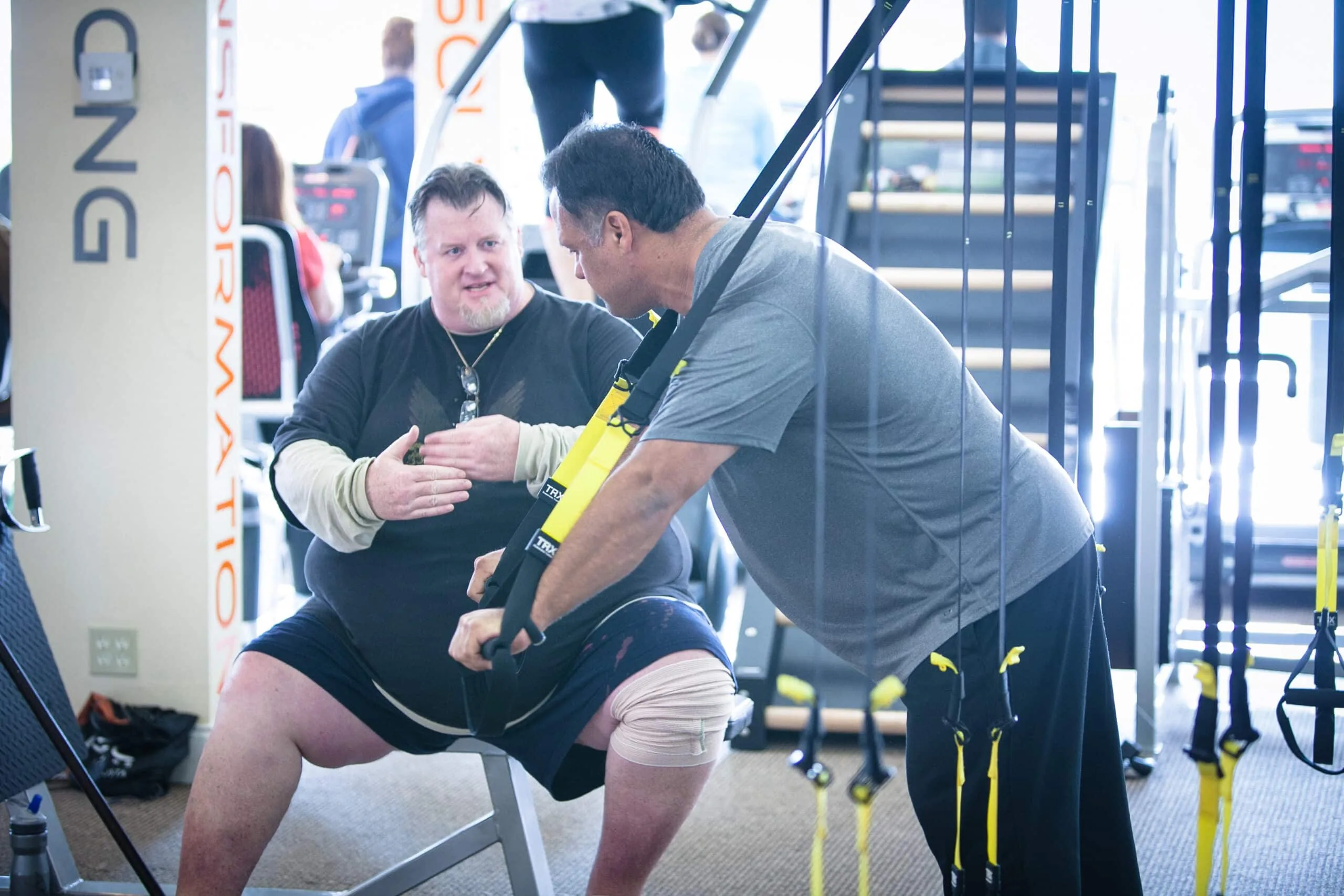
PFC works with all fitness levels, from 400-pound beginners who can only walk 250 feet to seasoned athletes. Every session includes low-impact options. With over 1,200 reviews, a 90%+ five-star rating, and half of annual revenue coming from returning alumni, PFC has built a strong record of helping adults create lasting change.
Talk through your goals with the PFC team to see how an expert-led, assessment-based program can support your retirement fitness plan. Call (888) 488-8936 or book your free consultation online.
The most effective plans for retirees use the four pillars described above: aerobic activity, strength training, balance work, and flexibility. The Physical Activity Guidelines for Americans and NIA recommendations form the baseline, and you then tailor frequency and intensity to your health status and goals. Walking forms a helpful base, and resistance training preserves the muscle mass that supports independence, metabolism, and bone density.
The 150-minute aerobic and 2-day strength baseline described earlier applies at 70 as well. At this age, balance work becomes non-negotiable, and many people benefit from adding short daily balance and mobility sessions.
Many retirees with joint pain succeed by using low-impact aerobic options, controlled-range strength work, supported balance training, and gentle flexibility practices such as tai chi and yoga. The CDC and the American College of Rheumatology recommend staying active with exercises that strengthen muscles around the joints and maintain range of motion. A healthcare provider can help you fine-tune which movements suit your specific condition.
Retirement fatigue describes the drained, low-energy state that can follow the loss of work-based structure, social contact, and occupational activity. Retirees gain about 2,500 extra leisure hours per year, and without a plan that time can feel heavy instead of freeing. Structured movement, social engagement, and clear functional goals help reverse that pattern.
Consistency improves when you treat adherence as a primary goal. Schedule movement, choose activities you enjoy, build social accountability, and keep backup plans for travel and illness. The “start where you are” rule helps you restart after setbacks without overdoing it. Many retirees find that expert-led programs with built-in accountability and community make long-term consistency easier.
PFC serves beginners and experienced exercisers, including people with joint pain, limited mobility, or significant weight to lose. Trainers maintain a 3–4:1 client-to-trainer ratio and offer modifications and low-impact alternatives for every exercise. The “Think, Eat, Move” philosophy addresses fitness, nutrition, and behavioral health together, which supports retirees who want a sustainable foundation rather than a short-term fix.

Long-term fitness after retirement rests on four pillars, applied through a decade-by-decade framework that shifts as your body and priorities change. In your 60s you build the foundation, in your 70s you maintain and adapt, and in your 80s and beyond you protect function and independence. The plan you can follow for 20 years always beats the perfect plan that collapses after three months.
Your next steps are clear. Talk with your healthcare provider about your current health status and any conditions that call for exercise modifications. Begin from your real starting point. If you have been sedentary, start with 10–15 minutes of movement on most days and build gradually. If you want a structured, immersive, expert-led start that provides assessment, education, and accountability, Premier Fitness Camp offers that environment.
Start your retirement fitness plan with PFC. PFC has helped thousands of adults build the health foundation they needed to live the retirement they envisioned. Call (888) 488-8936 or book your free consultation online to get started.