 5-star Wellness Resort
 5-star Wellness Resort
Written by: Chris Butt, Certified Personal Trainer & Weight Loss Coach, Premier Fitness Camp | Last updated: September 8, 2026
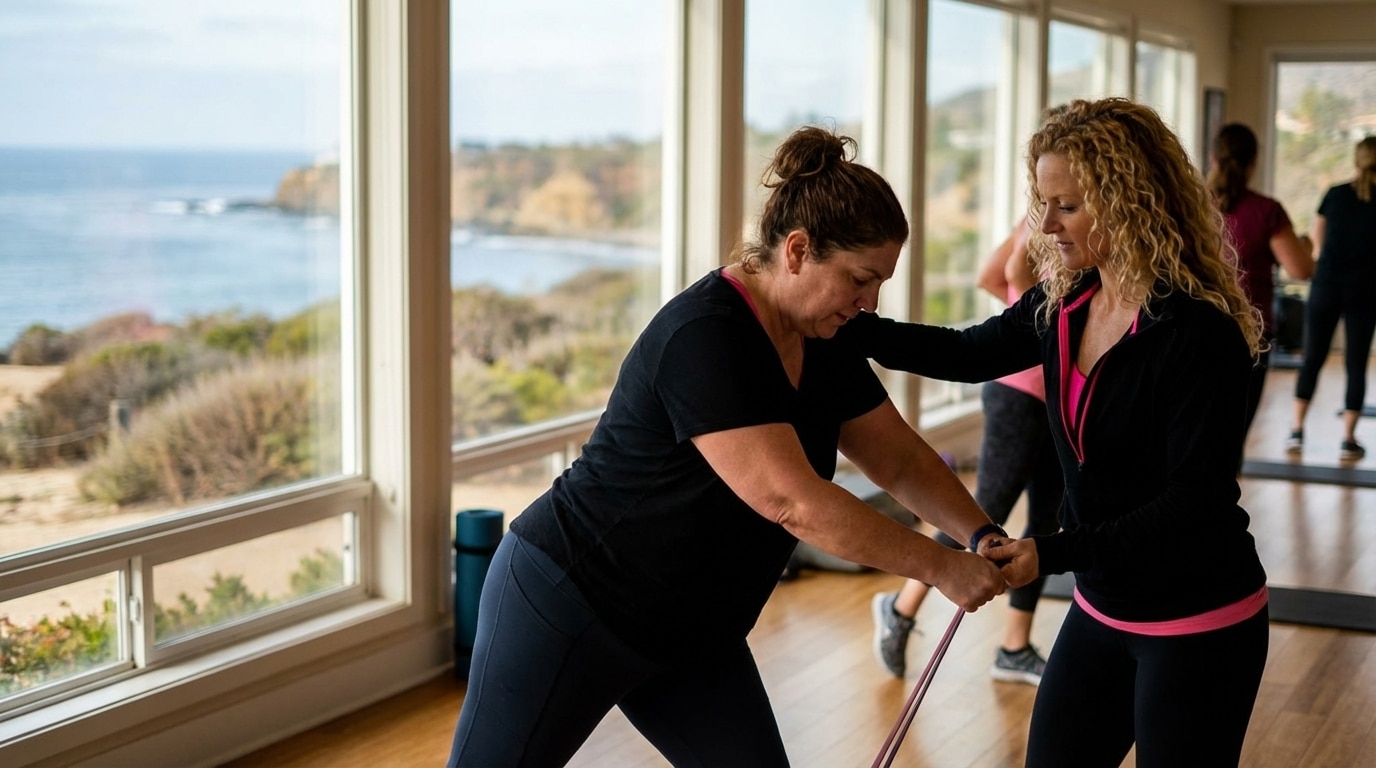
Supportive is more than a marketing word. It describes specific, verifiable qualities you can see and feel in a program. A genuinely supportive boot camp for beginners demonstrates five clear traits that separate it from programs that only use the word supportive in their advertising.
Supportive programs also invest heavily in education, teaching participants why and how, not merely what to do. The “Think, Eat, Move” curriculum integrates behavioral health coaching, nutrition education, and fitness training into a single, cohesive experience. As a result, clients leave understanding the root causes of their habits and the practical skills needed to change them.
Many beginners still hesitate to start, even when a program offers strong support. The most common concern sounds like this: “Will I be able to keep up?” A quality program answers that concern with a clear yes, because it is designed so that keeping up is never the goal. Progress is the goal, and progress looks different for every person.
The fears that prevent absolute beginners from starting are well-documented and completely understandable. A 2019 Mindbody survey found that 65% of women and 36% of men avoid fitness environments because they are afraid of being judged. The term “gymtimidation” describes how unfamiliar equipment, unwritten social rules, and the feeling of being watched by more experienced exercisers can make a fitness facility feel like a place one must earn their way into before starting.
A truly supportive boot camp addresses each of these fears directly through specific structures and coaching approaches.
Julie Robinson, a client, described her experience this way: “What a week!! Needed a reset and I found it at the camp! The trainers, the staff, the Chefs! All amazing and work with all levels.”
Share your concerns with our coaches and learn how the program is structured to support you from day one.
Every boot camp should be willing to show how it supports beginners. These seven questions give you a concrete framework for evaluating any program before you commit.
The program excels on all seven criteria. Its low client-to-trainer ratio, low-impact options, Think, Eat, Move curriculum, and comprehensive weekly report card represent a standard that most programs cannot match.
Local boot camp classes and immersive residential programs both have value, yet they serve different needs. Understanding the distinction helps you invest your time and money in the format that fits your goals.
Local classes, often offered at gyms, YMCAs, and community centers, provide convenience and lower upfront cost. Sessions typically run 30–60 minutes, a few times per week. Many local programs are inclusive and welcoming, with instructors who provide modifications and regressions so everyone can participate safely. After class, participants return to their normal routines, food environments, stress levels, and habits. Limited contact hours and minimal education can slow progress for people who need a more complete reset.
Immersive camps provide a distraction-free environment with 4–5 hours of daily training Monday through Friday, nutrition education, behavioral health support, and a community that lives and eats together. Residential fitness programs enable physical and mental transformation by removing external responsibilities and distractions, allowing participants to focus entirely on their health goals. For absolute beginners who need a total reset and a structured, supportive community, an immersive experience often creates changes that weekly classes cannot match.
The program operates at the Omni La Costa Resort in Carlsbad, California, a 400-acre campus with a mild year-round climate, dedicated facilities, and world-class amenities. The program goes beyond fitness to include nutrition workshops, cooking demonstrations, and behavioral health support, addressing the whole person rather than just the workout.
Knowing what to expect removes much of the anxiety around starting. The first week follows a clear, structured rhythm that establishes your baseline and builds momentum.
Most aggressive weight loss programs produce a fat-to-lean loss ratio of approximately 60–80% fat and 20–40% lean mass, including muscle, rather than a fixed 60/40 fat-to-muscle split. Losing that much lean mass can damage the metabolism and set participants up for weight regain, which is a primary reason many programs fail in the long term.
The program takes a fundamentally different approach. A case study of an 8-week residential fitness bootcamp (not conducted in partnership with UCSD) found that approximately 94% of weight loss was pure fat, based on BIA measurements, a landmark result that preserves lean muscle and keeps metabolism active. Most long-term clients actually increase their lean muscle stores during weight loss, and bone volume and strength remain stable throughout the program.
This science matters because it addresses the root cause of weight regain after other programs: metabolic damage from muscle loss. In the long term, group training offers a clear advantage, as participants who exercise in groups maintain their training programs longer than those who exercise alone. The program combines the adherence benefits of group training with the metabolic precision of its nutrition and exercise protocol, which supports results that last.
Explore how this science-backed approach fits your goals and see how it can be tailored to your starting point.
Client experiences provide the clearest picture of a truly supportive program. The camp has helped many clients begin their journeys and maintains strong ratings across numerous reviews.
Jake Younger described his experience: “The fitness camp exceeded all my expectations. The staff is incredibly supportive, knowledgeable, and truly passionate about helping you reach your goals. I not only lost weight but gained confidence, strength, and a healthier lifestyle.”
Irene Tchaikovsky shared: “What began as a simple one-week reboot has transformed into a complete lifestyle shift. The program equips you with the knowledge, tools, and support to make meaningful and sustainable changes.”
One client, Lauren M., shared her story of significant weight loss and transformation. She reflected: “I found myself again; got my confidence back; learned how, for my body type, I needed to eat and exercise; and most importantly, I learned how to adopt a healthy, sustainable lifestyle, instead of trying to change myself for it.”
These outcomes reflect the program’s design. It supports people at every starting point, including those who have never done anything like this before.
A supportive fitness boot camp for absolute beginner adults offers modifications for every exercise, small trainer-to-client ratios, comprehensive education, and a non-judgmental community. You deserve a program that meets you where you are and helps you feel like you belong from the first day.
The program embodies these qualities, offering a luxury, all-inclusive experience at the Omni La Costa Resort in Carlsbad, California. With expert trainers holding bachelor’s and master’s degrees, a proven Think, Eat, Move curriculum, a case study showing 94% pure fat loss, and a community that celebrates every victory, the program serves beginners who want lasting change.
Ready to start your transformation? Schedule your free consultation with the team to discuss your goals and learn how the program can help you achieve lasting results. Call (888) 488-8936 or schedule your personalized consultation online today.
Yes. A well-designed supportive boot camp is built to accommodate physical limitations. Every class includes low-impact alternatives and exercise modifications so that participants with bad backs, bad knees, arthritis, or other conditions can participate safely from day one. Trainers maintain a low client-to-trainer ratio, which means they can observe your form closely and adjust your program in real time.
The program begins with a comprehensive health assessment, including blood work, body composition, and fitness testing, so trainers understand your baseline and any limitations before your first class. The team has worked with clients of widely varying fitness levels, and each person receives a plan adapted to their current capacity.
The core difference is depth and continuity. A local boot camp class typically runs 30–60 minutes, a few times per week. After class, you return to your normal environment, including your kitchen, stress, and habits.
An immersive program provides 4–5 hours of daily training Monday through Friday, plus nutrition education, behavioral health support, and a community that eats and lives together throughout the stay. This level of immersion removes many distractions and competing priorities that cause local programs to stall. The program also includes cooking demonstrations, nutrition workshops, and one-on-one behavioral health coaching, so you leave with the knowledge and habits to sustain your results at home.
The program tracks a comprehensive set of health metrics weekly through a personalized report card. As described earlier, this includes the scale, body composition, key measurements, and important health markers, along with fitness performance tests.
This approach matters because the scale alone is a poor measure of health progress. A client may lose body fat, gain lean muscle, lower their blood pressure, and improve their cardiovascular fitness. All of this can happen in the same week while the scale barely moves. Tracking a broad range of data points ensures that every form of progress is visible and celebrated and provides a medically meaningful picture of health improvement.
Most clients with 40–70 pounds to lose can expect to lose an average of 3–4 pounds per week of real fat. As mentioned earlier, the case study of an 8-week residential bootcamp found that approximately 94% of weight loss was pure fat, compared to the typical fat-to-lean loss ratio of standard dieting. This pattern protects your metabolism and supports results that last.
Beyond the scale, many clients notice improvements in energy, sleep, blood pressure, and mobility within the first week. Individual results vary based on starting weight, hormones, medications, and biology, and the weekly report card helps you see progress across every dimension of your health from the very first week.
The program was built for exactly this situation. The team has supported clients who are significantly overweight, clients who have never set foot in a gym, and clients who received a serious wake-up call from their doctor shortly before arriving.
Every class is structured so that a complete beginner and a seasoned athlete can participate side by side, each getting exactly what they need. Trainers do not push or shame; they educate, encourage, and adapt. The behavioral health team helps address the emotional dimensions of starting, including fear, self-doubt, and the patterns that may have contributed to weight gain. The goal is for you to leave feeling more capable, more informed, and more confident than when you arrived.