 5-star Wellness Resort
 5-star Wellness Resort
Written by: Chris Butt, Certified Personal Trainer & Weight Loss Coach, Premier Fitness Camp | Last updated: August 29, 2026
Harvard Health Publishing identifies 1–2 pounds per week as a realistic, sustainable fat-loss rate for adults following a moderate calorie deficit. This program uses an immersive structure with 4–5 hours of daily training, dietitian-designed meals, and behavioral health support. That structure produces 3–4 pounds of weekly fat loss for clients with 40–70 pounds to lose, while the UCSD case study confirms that 94% of that loss is pure fat, not lean muscle. The table below shows how this fat loss translates into visible changes and measurable health shifts across a typical 4-week stay.
| Week | Expected Fat Loss | Key Physical Changes | Biometric Shifts |
|---|---|---|---|
| Week 1 | 3–4 lb fat + initial water weight | Energy levels rise, clothes begin to feel looser | Blood pressure often drops, mile time improves |
| Week 2 | 3–4 lb fat | Visible reduction in waist and hip measurements | Glucose and triglyceride levels begin to normalize |
| Week 3 | 3–4 lb fat | Strength gains noticeable, posture improves | Push-up count and plank time increase measurably |
| Week 4 | 3–4 lb fat | Body composition visibly changed, confidence elevated | LDL, HDL, and body fat percentage all shift favorably |
Standard guidance notes that true fat loss becomes the dominant driver of scale change from week 3 onward, as early losses are partly driven by water and glycogen depletion. The weekly Report Card, which covers weight, body fat percentage, seven circumference measurements, blood pressure, four blood markers, and three fitness benchmarks, keeps you focused on the full picture at every stage.
Alumni describe these changes in everyday terms. Kerri, who lost 31 pounds, shared: “I immediately discovered little things starting to happen, like tying my shoes easier, breathing better, my posture had improved, I was standing taller. The confidence that came with all of those little wins had me realize it was not so much about losing weight but what I was gaining.”
Adults starting at 250 pounds or more can realistically lose 8–14 pounds of fat in 30 days under a consistent, supervised deficit. At the documented weekly rate, a 30-day stay produces 12–16 pounds of pure fat loss, consistent with the fat-preservation rate documented earlier.
For Reset Seekers with 40–70 pounds to lose, 12–16 pounds in 30 days represents meaningful, visible progress. That range often equals roughly 20–35% of a total goal while preserving lean muscle and protecting metabolic rate. Beyond the scale, 30 days typically produces measurable improvements across the comprehensive data points tracked weekly, including circumference reductions, improved blood lipids, lower fasting glucose, faster mile times, and increased strength benchmarks.
Noticeable visual and performance changes typically begin only after 21–42 days in structured programs. That timing explains why an immersive environment that removes competing priorities and delivers 4–5 hours of daily expert-led training can accelerate progress in ways that self-directed programs rarely match.
The 30-day timeline naturally invites comparison with longer, self-directed challenges. A popular example is 75 Hard, which runs 75 days and requires two daily workouts. The structural differences between these approaches show why duration alone does not determine outcomes.
75 Hard is a self-directed mental-toughness protocol requiring two 45-minute workouts daily, a strict diet, and no alcohol for 75 consecutive days. It has no professional supervision, no biometric tracking, no behavioral health support, and no nutrition education component. The program operates on a fundamentally different model. The table below breaks down the structural differences that explain why one approach focuses on sustainable results while the other functions primarily as a mental-toughness challenge.

| Dimension | Program | 75 Hard |
|---|---|---|
| Structure | Expert-designed daily schedule, 4–5 hours of supervised training | Self-directed, two 45-min workouts chosen by participant |
| Nutrition | Dietitian-designed, chef-prepared meals, macro education included | Any “diet” the participant selects, no professional guidance |
| Behavioral health | Licensed psychologists, emotional eating workshops, one-on-one counseling | None |
| Results tracking | 17 biometric data points weekly, optional DEXA scan | Progress photos only |
| Long-term maintenance | Post-camp virtual coaching, meal plans, trainer communication, 50% alumni return rate | No structured post-program support |
The National Weight Control Registry finds that individuals who maintain significant weight loss long-term consistently report high physical activity, regular self-monitoring, and ongoing health engagement. Those elements are built into the program and post-camp support and are absent from self-directed challenges.
Roughly one-third to one-half of lost weight is typically regained in the first year after an intervention, which makes the post-program window the most critical period for any weight loss effort. The program addresses this directly through structured post-camp support that includes personalized meal plans, virtual coaching, fitness programming, and ongoing trainer communication.
Retreats with the highest long-term success rates build an exit plan into the program itself, as habits take approximately 66 days to automate. The “Think, Eat, Move” curriculum, which covers emotional triggers, nutrition education, and sustainable exercise habits, functions as that exit plan. It equips clients with the knowledge and tools they need to maintain results independently.
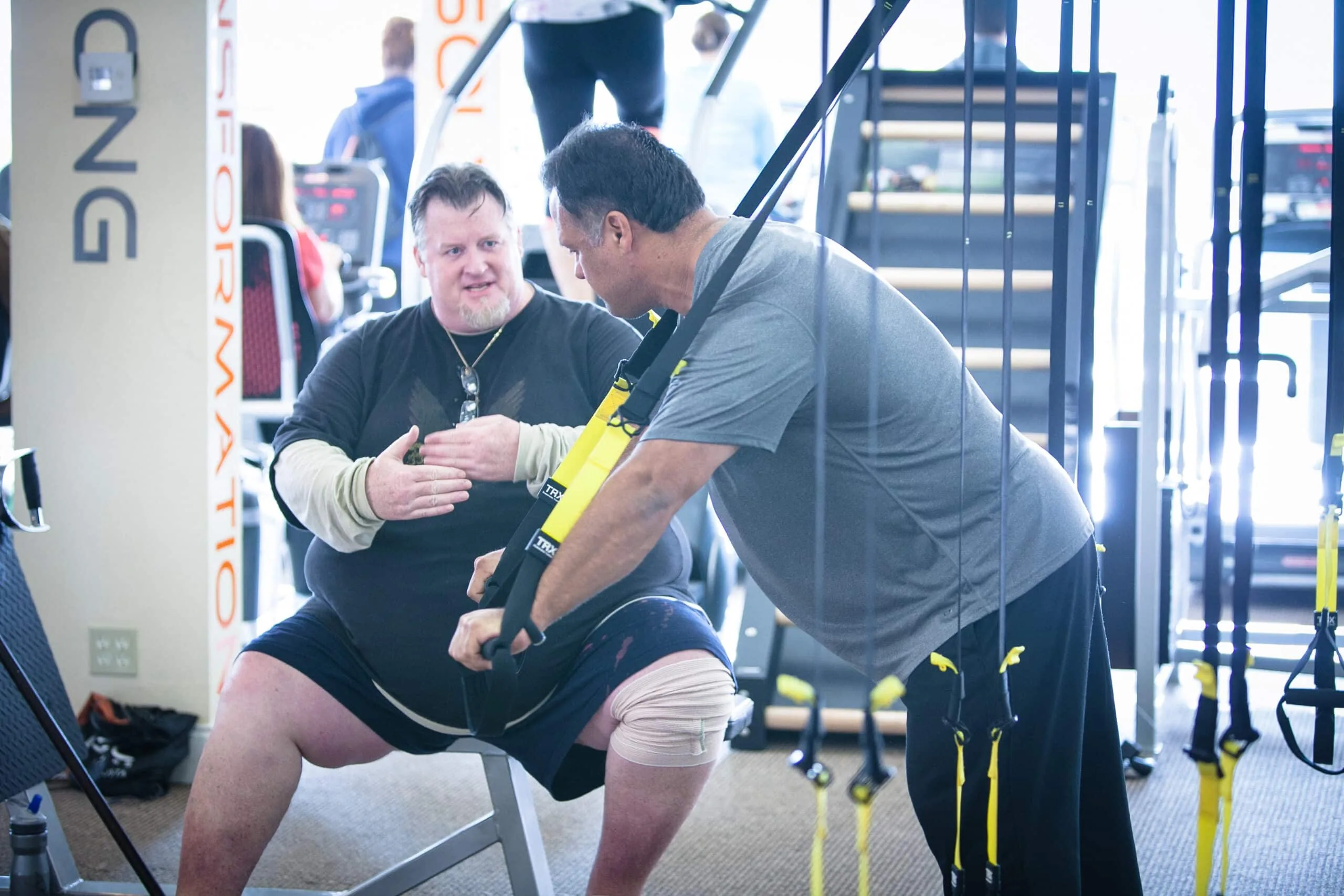
The 50% of annual revenue from returning alumni reflects two realities: clients trust the program enough to come back, and the program has taught them enough to sustain meaningful progress between visits. As alumni Irene Tchaikovsky wrote: “What began as a simple one-week reboot has transformed into a complete lifestyle shift. The program equips you with the knowledge, tools, and support to make meaningful, and sustainable, changes.”
Ready to build habits that last beyond your stay? Book a free consultation with the team. Call (888) 488-8936 or visit our consultation booking page.
The post-camp maintenance challenge feels even sharper for a growing group of clients who arrive after using GLP-1 medications like Ozempic or Wegovy. These clients have achieved scale weight loss, yet often at the cost of lean muscle mass and metabolic capacity, which makes long-term maintenance more difficult.
GLP-1 medications such as Ozempic and Wegovy can produce significant scale weight loss, but that loss frequently includes lean muscle mass, the tissue most responsible for a healthy resting metabolic rate. Clients who arrive after a course of GLP-1 therapy often present with reduced muscle mass, lower metabolic capacity, and uncertainty about how to sustain their results without medication.
The approach for GLP-1 graduates centers on three interconnected priorities. First, resistance and strength training rebuilds the lean muscle that GLP-1 medications often deplete, which directly restores metabolic rate. That muscle rebuilding requires elevated protein intake, guided by registered dietitians, to support muscle protein synthesis and ensure training translates into tissue growth rather than fatigue. Finally, behavioral and nutritional education establishes the sustainable habits that medication alone cannot teach, so clients can maintain both their weight loss and their rebuilt muscle mass after they leave.

The UCSD case study finding that clients preserved or increased lean muscle mass while losing fat is especially relevant for this group. A 2026 systematic review and meta-analysis in Scientific Reports found that exercise interventions during the post-weight-loss maintenance phase produced a statistically significant reduction in weight regain, which reinforces the role of structured physical training as the essential complement to any medication-based weight loss approach.
The program runs approximately $6,000 per week, all-inclusive. To understand what that investment delivers, the table below compares training volume, nutrition support, behavioral health services, and results tracking across three common approaches, showing why immersive programs produce outcomes that self-directed alternatives cannot match.
| Program Type | Program | Typical Fitness Retreat | Gym + Personal Trainer |
|---|---|---|---|
| Training volume | 4–5 hours/day, 5.5 days/week | Varies, often 1–2 hours/day | 3–4 hours/week total |
| Nutrition | All meals by wellness chefs and registered dietitians, education included | Meals often prepared off-site, limited education | Client-managed, no professional meal support |
| Behavioral health | Licensed psychologists, emotional eating workshops | Rarely included | Not included |
| Results tracking | 17 biometric data points weekly, optional DEXA scan | Scale weight or basic measurements | Scale weight, occasional measurements |
A 2018 systematic review in BMC Complementary Medicine and Therapies analyzing 23 studies covering 2,592 participants found that every single study reported post-retreat health benefits, including reductions in blood pressure, weight loss, decreased waist circumference, and improvements in metabolic markers. Some benefits remained measurable up to five years after participation. The all-inclusive model, which includes luxury accommodations at the Omni La Costa Resort, three spa treatments per week, farm-to-fork meals, and post-camp virtual coaching, delivers those benefits within a premium, structured environment that self-directed alternatives cannot replicate.
Clients with 40–70 pounds to lose typically average 3–4 pounds of fat loss per week, producing 12–16 pounds of total fat loss over a 30-day stay. As noted in the week-by-week breakdown, the UCSD case study confirmed that 94% of weight lost is pure fat, not muscle or water weight, compared to the 60/40 fat-to-muscle ratio common in standard dieting programs. Individual results vary based on starting weight, hormones, medications, and biology, but 30 days is sufficient time to produce visible body composition changes, measurable biometric improvements across all 17 tracked data points, and the foundational habits needed to continue progress at home.
The program tracks 17 data points weekly: body weight, body fat percentage, and circumference measurements of the neck, waist, umbilicus, upper arm, chest, hip, and quad; blood pressure (systolic and diastolic); blood markers including LDL, HDL, triglycerides, and glucose; and fitness benchmarks including mile time, plank hold duration, and push-up count. Most clients see improvements across the majority of these markers within the first two weeks. Blood pressure reductions, improved fasting glucose, and faster mile times are among the most commonly reported early wins, and these changes matter deeply for long-term health, independent of what the scale reads on any given morning.
The program works with clients across the full fitness spectrum, from individuals who can only walk 250 feet to seasoned athletes who train four times per week. Every class is structured so that all fitness levels can participate and benefit. Trainers maintain a 3–4:1 client-to-trainer ratio and provide modifications, progressions, and low-impact alternatives for every exercise. Clients with bad knees, back issues, or other physical limitations are accommodated through a dedicated low-impact training track. The program’s starting point is a comprehensive health assessment that includes blood work, body composition, a fitness test, and measurements, so every plan is built around an individual baseline rather than a generic template.
Post-camp support includes personalized meal plans for home, virtual coaching for ongoing accountability, fitness programming, and open communication with trainers by email. The “Think, Eat, Move” curriculum, which covers emotional eating triggers, nutrition education, cooking demonstrations, and sustainable exercise habits, is designed to function as a long-term maintenance framework, not just an in-camp experience. As noted in the maintenance section, the high rate of returning alumni demonstrates both client trust and the program’s success in teaching sustainable habits between visits. Clients who identify and address the behavioral and nutritional root causes of weight gain during their stay are significantly better positioned to maintain their results than those who follow exercise-only or diet-only approaches.
The data is clear. The 94% pure-fat-loss rate, 17-point weekly biometric tracking, 3–4 pound weekly fat-loss average, and structured post-camp support system represent a fundamentally different model from diets, self-directed challenges, or exercise-only programs. For Reset Seekers who have tried other approaches without lasting results, the difference lies in what the program teaches, not just what it delivers during a stay.
With over 1,200 reviews and a 90%+ five-star rating, the program has helped more than 3,000 clients transform their health at the Omni La Costa Resort in Carlsbad, California. The next step is a conversation.
Ready to start your transformation? Book a free consultation with the team to discuss your goals and learn what a personalized stay could look like for you. Call (888) 488-8936 or visit our consultation booking page.