 5-star Wellness Resort
 5-star Wellness Resort

Written by: Chris Butt, Certified Personal Trainer & Weight Loss Coach, Premier Fitness Camp
Start Your Free PFC Consultation
Active vacations for adults over 40 cluster into several recognizable formats. Each offers a different mix of activity volume, recovery, and flexibility for different fitness levels.
Inn-To-Inn Walking Trips (for example, a lodge-to-lodge route in the Dolomites or Peru) typically involve roughly 3–6 hours of hiking per day on easier routes, though some routes can require up to 7–8 hours on the trail including lunch, breaks, photos, and short rests. Luggage usually transfers between properties so walkers carry only a daypack. Recovery is passive, centered on a good dinner and a comfortable bed. Fitness-level flexibility is limited because the route is fixed and a slower walker affects the group’s arrival time. Best for: fit walkers who want immersion in a landscape.
Multi-Sport Guided Trips (for example, a week in Costa Rica combining hiking, kayaking, and zip-lining) at Much Better Adventures, guided small-group active adventure trips at the Easy-Moderate and Moderate levels involve roughly 3–5 hours of activity per day (3–4 hours at Level 2 and 4–5 hours at Level 3), though other operators’ moderate multi-sport trips often cite longer daily activity of around 4–7 hours. Recovery is similarly passive. Fitness-level flexibility is moderate because different activities suit different strengths. Best for: travelers who want variety and prefer not to repeat the same motion for five days.
E-Bike Trips (for example, a Backroads cycling week in Tuscany) use electric assist to change how riders experience distance and climbing. One study of everyday e-bike use found average trip durations of roughly 20–35 minutes, with average daily e-bike travel durations of about 23–32 minutes. That research focused on commuting rather than guided tours, yet it shows how e-assist shortens perceived effort for a given distance. On a guided e-bike trip, that same assist closes the gap between stronger and weaker riders so both can ride the same route. Recovery is passive. Fitness-level flexibility is the highest of any guided format because e-bikes are highly effective for leveling a mixed-ability group. Best for: couples or friends with different fitness levels who want to cover ground together.
Ski And Wellness Resort Stays deliver variable activity volume because guests choose how many runs or classes to do each day. Recovery infrastructure is strong, with spa access and the option for true rest days. Fitness-level flexibility is high because guests self-select their intensity and schedule. Best for: travelers who want activity plus genuine downtime and do not need a tightly structured program.
Liveaboard And Water-Based Trips (for example, a snorkeling or kayaking expedition) typically deliver roughly 2–5 hours of water activity per day, though some operators offer more—for example, Southern Sea Ventures’ Palau liveaboard expedition includes daily kayaking of 4–6 hours per day. Recovery is built into the format because the boat functions as the hotel. Fitness-level flexibility depends on the specific activity and sea conditions. Best for: travelers whose primary interest is a marine or river environment.
Dedicated Structured Fitness Programs deliver the highest activity volume of any format, with 4–5 hours of expert-led training per day. They combine that volume with built-in recovery infrastructure, nutrition education, and behavioral health support. Fitness-level flexibility is maximized through small trainer-to-client ratios and individualized modifications. Best for: adults who want a genuine physical challenge, measurable health outcomes, and habits that outlast the trip.

PFC is the strongest example of the dedicated structured fitness program format. Its daily training volume, 3–4:1 trainer ratio, registered dietitians, licensed psychologists, and three spa treatments per week per guest make it the only option in this set that pairs physical challenge with the education and recovery infrastructure needed to sustain results after the trip ends. For further reading on destinations that suit active adults, see Best Active Vacation Destinations For Adults: 2026–2027.
Matching a trip to your body starts with a clear self-assessment. Focus on five areas: current weekly activity volume, any joint or health limitations, comfort with group exercise, appetite for structure versus free time, and how much recovery you need between hard days.
The WHO’s 2020 Global Guidelines on Physical Activity recommend 150–300 minutes of moderate-intensity aerobic activity per week as a baseline. Trip volume still needs to match current fitness, health status, and accumulated fatigue rather than age alone. Someone meeting the WHO minimum of 150 minutes per week will find several consecutive days of 5-hour hikes a significant jump. The University of Missouri Extension’s Talk Test offers a practical intensity gauge: moderate activity allows talking but not singing, while vigorous activity makes conversation difficult. Both intensity zones work for active vacations, yet the ratio between them matters across a multi-day trip.
The couples-with-different-fitness-levels problem shows up often in active travel planning. E-bikes are the most effective tool guided operators offer for closing that gap. A Backroads cycling day rated at the same numeric activity level feels materially easier on an e-bike than on an acoustic bike, which is why e-bike trips suit mixed-ability couples so well. On a Backroads Tuscany day, route options can range from 14 miles with 800 feet of climbing to 51 miles with 5,300 feet. Partners can choose different routes in the morning and reunite at lunch.
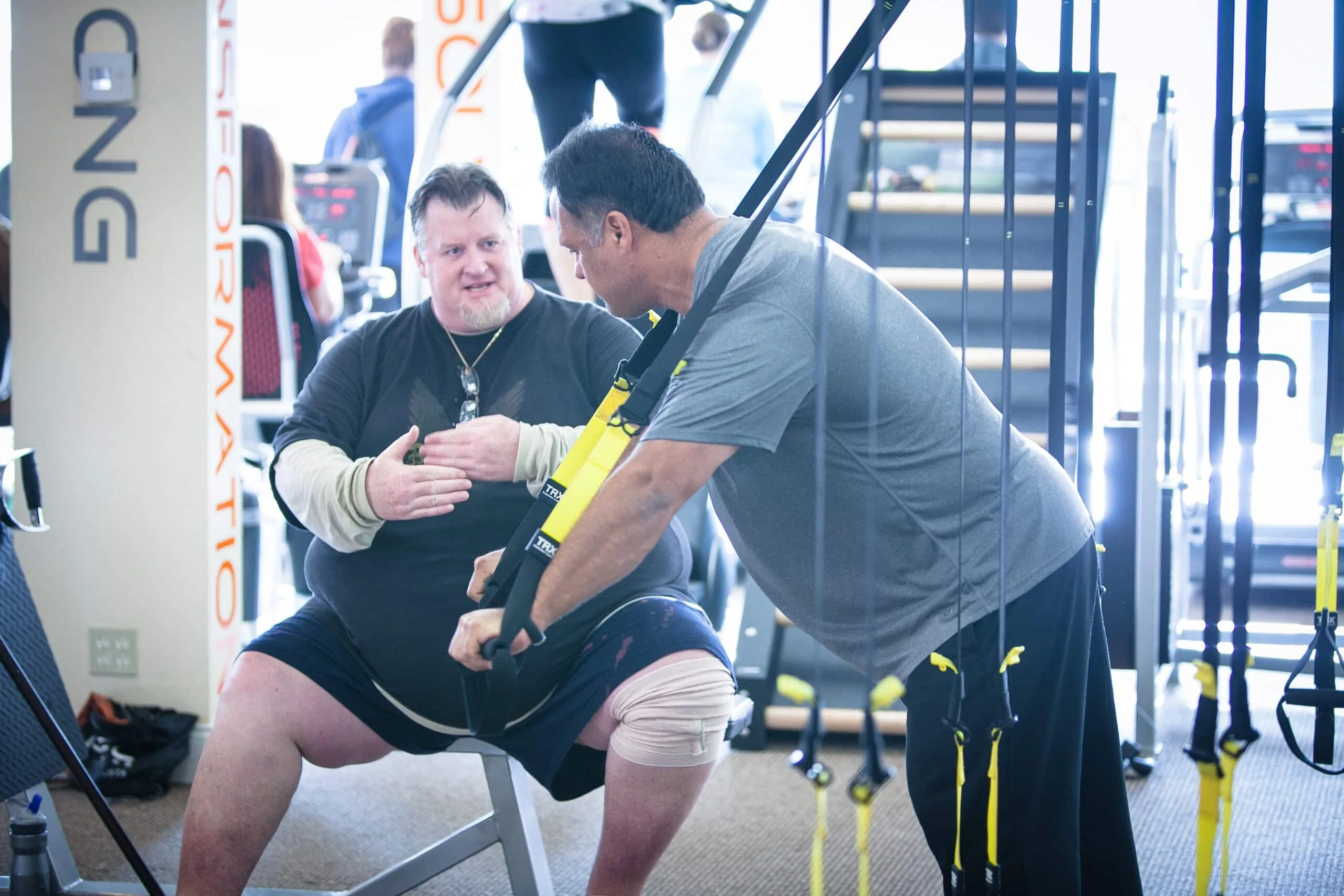
At PFC, the mixed-ability problem is solved through class design and staffing. Every class is structured so participants ranging from 400-pound beginners who can only walk 250 feet to seasoned athletes who train four times a week can take part in the same session. The 3–4:1 trainer ratio allows coaches to offer modifications, progressions, and low-impact alternatives in real time as a core feature of every class. ACSM guidance on fitness-level-appropriate progression supports this approach by recommending that exercise selection and intensity be individualized based on fitness level and abilities, ideally with a certified exercise professional.
A checklist to apply to any operator before booking:
See If PFC Matches Your Fitness Level
Five guided operators dominate the active-vacation market for adults over 40. Each excels at specific goals, and each leaves some needs unaddressed.
PFC delivers 4–5 hours of expert-led daily training Monday through Friday plus a half day Saturday, a 3–4:1 trainer ratio, registered dietitians, licensed psychologists, weekly tracking across 17 health data points, three spa treatments per week, and post-camp virtual coaching. It is a premium, in-person, live-in program that requires both time and money. Within this comparison set, it is the only option that pairs physical challenge with the education and recovery infrastructure needed to convert a week into lasting habits.
Backroads is the incumbent recommendation to beat. It runs multi-sport and biking trips across 60-plus countries, rates trips on a 1–5 activity scale, and offers e-bikes as standard on most biking departures. A Level 3 Backroads trip suits a traveler with a regular fitness routine of two to four workouts per week, and its go-your-own-pace structure, with leaders and support vans positioned along the route rather than leading single-file, makes it genuinely adaptable for mixed-ability groups. Backroads excels at delivering a great week in a great landscape. It does not provide nutrition education, behavioral health support, individualized fitness tracking, or a structured way to convert the week’s activity into habits at home.
Butterfield & Robinson specializes in high-end guided biking and walking trips with a slow, immersive travel emphasis, pairing routes like vineyard rides in Burgundy with boutique hotels and private experiences. It caps most small-group departures at 16 travelers, and most departures average 10–12 guests. Its guides average more than eight years of tenure. Pricing runs from USD 6,195 to USD 11,295 per person for six to eight days, excluding flights, guide gratuities, and single supplements. It fits a traveler whose primary goal is a premium cultural and culinary experience with movement attached, rather than a traveler whose primary goal is a health reset.
Exodus Travels runs guided small-group adventures across a broad global portfolio, with groups of 8–16 travelers and an average group size of 10–12. It assigns every trip an Activity Level and a Comfort Level, which makes it a flexible option for travelers who want a structured itinerary without committing to a single activity type. Its strength lies in breadth of destination and itinerary variety.
Flash Pack designs adventures exclusively for solo travelers, with separate age brackets for 30–49 and 50–65 and a maximum group size of 16. It is the strongest option here for a solo traveler whose primary goal is connection with peers at a similar life stage.
Active Adventures runs guided hiking and multi-sport trips in iconic destinations, combining structured itineraries with small groups and local expertise. It suits travelers who want a physically demanding guided trip in a specific landscape.
The key comparison most guides skip is what happens after the week ends. Guided adventure trips deliver a great week. A dedicated structured fitness program delivers a great week plus the habits, education, and data to sustain it. A 2026 critical narrative review in the Journal of Clinical Medicine found that brief intensives likely need post-program scaffolding to convert initial gains into lasting patterns. PFC’s post-camp virtual coaching, personalized meal plans, and ongoing trainer communication provide that scaffolding. The trade-off is straightforward: PFC requires more time, more money, and more commitment than a guided trip. For a traveler whose goal is a one-off week of movement in a beautiful place, a guided trip fits best. For a traveler whose goal is a health reset that lasts, PFC fits best. For more on matching trip format to fitness level, see Adventure Travel For Adults: Match Your Trip To Your Fitness.
The physiology of the 40-plus body changes how an active trip should be planned. Inflammatory and repair processes after a hard session resolve more slowly in older muscle. After 40, the gap between heavy sessions for the same muscle group often needs to stretch from about 48 hours to 72, which works as a cautious planning principle. Tendons become stiffer and less elastic with age and adapt more slowly than muscle, so the classic over-40 injury is an irritated tendon from increasing load faster than connective tissue can keep up. Harvard Health data cited by Acibadem International puts typical muscle loss for inactive adults at around 3–5% of muscle mass per decade after 30, with the pace roughly doubling after 60.
An active vacation over 40 needs recovery infrastructure built into the schedule, not offered as an upgrade. A review of 99 studies found massage was the most effective recovery method for muscle soreness and perceived fatigue, which is the physiological basis for PFC’s three included spa treatments per week at the La Costa Spa. REI’s hiking recovery guidance warns against “destinationitis”—pushing past the point of fatigue to reach a single objective. That risk runs higher on inn-to-inn walking trips where the next lodge is the only option.
The sustainability argument follows directly from this physiology. A UCSD case study of PFC participants who stayed four or more weeks and received DEXA scans at the start and end of their program found that 94% of total weight loss was purely fat, compared to the 60/40 fat-to-muscle ratio typical of standard dieting. Lean muscle mass was preserved or increased, and bone health was maintained. These outcomes matter especially for the 40-plus demographic, where muscle preservation is central to long-term metabolic health. Because clients retained and built lean muscle, their resting metabolic rate was protected or improved, which supports results after the program ends.
PFC’s “Think, Eat, Move” philosophy turns these principles into daily practice. Behavioral health coaches address emotional triggers and lifestyle patterns. Registered dietitians teach nutrition that works at home, not just at the resort. Wellness chefs run cooking demonstrations. The goal is education and habits that allow clients to sustain healthy behavior independently. As PFC alumna Irene Tchaikovsky wrote: “What began as a simple one-week reboot has transformed into a complete lifestyle shift. PFC equips you with the knowledge, tools, and support to make meaningful — and sustainable — changes.”
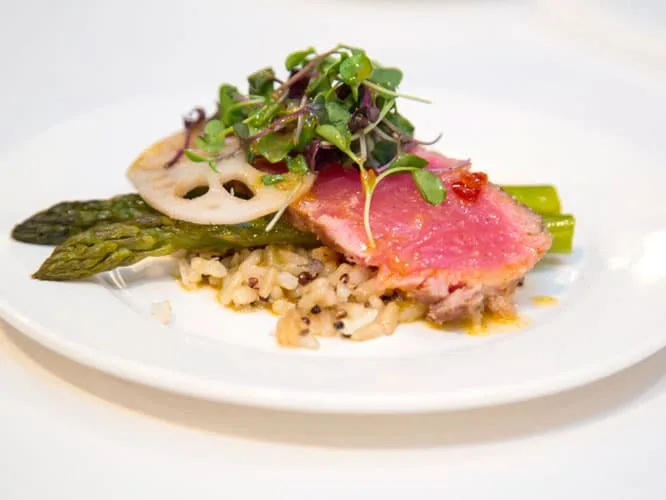
A week at PFC combines a resort setting with a tightly structured health program. PFC operates exclusively at the Omni La Costa Resort & Spa, 2100 Costa Del Mar Road, Carlsbad, California, a 450-acre resort in North San Diego County with a year-round moderate climate, low humidity, and dedicated PFC facilities on-site. Outdoor activities include beach boot camps on the Pacific coast, hikes at Torrey Pines, Double Peak Park, and Batiquitos Lagoon, plus stand-up paddleboarding and kayaking. Training, nutrition education, behavioral health sessions, meals, and spa treatments all take place within the same resort campus.
The program delivers 4–5 hours of training Monday through Friday plus a half day Saturday. Activities include bootcamp, boxing, barre, TRX suspension, Tabata, Zumba, spin, interval and resistance training, beach workouts, and the outdoor hikes and water activities listed above. All trainers hold a minimum bachelor’s degree, and some hold master’s degrees. Many have been with PFC since its founding. The 3–4:1 client-to-trainer ratio holds across every session, including specialty offerings.
Health tracking begins on day one with a comprehensive assessment covering blood work, vital signs, body composition, BMI, measurements, and a fitness test. Seventeen data points are tracked weekly in a personalized report card. These include body composition metrics such as weight, body fat percentage, and multiple circumference measurements, cardiovascular markers like blood pressure, blood lipids including LDL, HDL, and triglycerides, glucose, and three fitness tests: push-ups, plank time, and mile time. An optional DEXA scan is available for gold-standard body composition measurement.
Recovery and leisure are built into the week and included in the program. Three spa treatments per week are included at the La Costa Spa. For travelers who already work out regularly and worry the program will not be challenging enough, PFC’s specialty Fit programs, including Golf Fit (36-hole course, recent NCAA National Championship host), Tennis Fit (Cliff Drysdale Tennis Academy), Pickleball Fit, and Spa Fit, add a second daily activity after the morning program. These programs speak directly to the Active Optimizer persona. Four to five hours of daily expert-led training creates a different stimulus than three or four standard gym sessions per week, regardless of current fitness level.

PFC holds 1,200-plus reviews with a 90-plus percent five-star rating, has supported more than 3,000 clients, and generates 50% of annual revenue from returning alumni. Stays start at one week, and many first-time clients extend on-site after experiencing the program. PFC is a premium, in-person, live-in experience that requires a meaningful investment of time and money, and that investment goes directly into long-term health. See also: Luxury Active Adult Vacations: The 2026 Guide To Staying Fit.
Choosing an active vacation over 40 comes down to a clear framework. Activity volume covers how many hours per day you will move and across how many days. Recovery infrastructure covers what support is built into the schedule and price. Fitness-level flexibility covers whether everyone in the group can participate fully. A final question sits alongside these three: will this be a one-off week or the start of habits that last.
Premier Fitness Camp is the best active vacation for over 40 for readers who want challenge, recovery, and habits that endure. Its daily expert-led training, built-in recovery at the Omni La Costa Resort & Spa, and education-driven “Think, Eat, Move” approach, backed by the UCSD case study showing 94% of weight loss as pure fat with lean muscle preserved, make it the only option in the market that delivers a great week and a foundation for what comes after.
Practical next steps are straightforward. Consult a doctor if you have joint issues, cardiovascular conditions, or have not exercised regularly in more than a year. Compare two or three options using the checklist in this guide. Ask any provider specific questions about trainer ratios, recovery inclusions, and post-trip support before booking. If a structured fitness program feels like the right format, talk to PFC directly. The consultation is free, personalized, and low-pressure. With 1,200-plus reviews at 90-plus percent five stars and 50% of annual revenue from returning alumni, the program has a track record of results.
Talk With A PFC Program Specialist
A good adventure holiday for people over 40 balances genuine physical challenge with built-in recovery. That means structured rest days, quality nutrition, and recovery modalities like massage or spa treatments, not just a comfortable hotel. The best options also offer fitness-level flexibility so that a 55-year-old who trains regularly and one who has not exercised in years can both participate meaningfully. Programs that track health data across multiple metrics, rather than just scale weight, give adults over 40 a clearer picture of what the trip is actually doing for their health.
Yes. The USA offers strong options across every format, including inn-to-inn hiking in national parks, multi-sport trips in the Southwest, and dedicated structured fitness programs in Southern California. PFC operates year-round at the Omni La Costa Resort & Spa in Carlsbad, California, with beach workouts on the Pacific coast, hikes at Torrey Pines and Double Peak Park, and kayaking and stand-up paddleboarding. All of this sits within a 450-acre resort campus with a year-round moderate climate. It is one of the few US-based options that combines outdoor adventure with a comprehensive health program.
Start with an honest assessment of your current weekly activity volume, any joint or health limitations, and how much recovery you need between hard days. The WHO recommends 150–300 minutes of moderate-intensity activity per week as a baseline, and someone at that level will find five consecutive days of 5-hour hikes a significant jump. Look for operators that publish trainer-to-client or guide-to-guest ratios, offer modifications in every session, and build recovery into the schedule rather than leaving it to the traveler. PFC’s 3–4:1 trainer ratio and individualized modifications make it suitable for a wide range of starting fitness levels, from beginners to experienced athletes.
E-bike trips are the most effective guided-travel format for mixed-ability couples because e-assist closes the effort gap between stronger and weaker riders. Backroads, for example, offers e-bikes as standard on most biking departures and structures days so partners can split at breakfast and reunite at lunch. For couples who want a more structured program, PFC’s class design, where every session accommodates participants from 400-pound beginners to seasoned athletes, means both partners can train together without either being held back or left behind. The 3–4:1 trainer ratio ensures both receive individualized attention within the same session.
A guided group adventure trip delivers a great week of movement in a great landscape, with logistics handled and a guide providing context and safety. A dedicated structured fitness program delivers that experience plus nutrition education, behavioral health support, individualized health tracking, and post-program scaffolding to convert the week’s gains into lasting habits. Research published in the Journal of Clinical Medicine found that brief intensives likely need post-program support to convert initial gains into lasting patterns, which is why PFC includes post-camp virtual coaching, personalized meal plans, and ongoing trainer communication as part of the program.
One week is enough for a meaningful kickstart, including measurable changes in fitness metrics, a reset in nutrition habits, and a clear sense of what a structured program feels like. PFC’s average client stay is 11 days, close to two weeks, which builds real momentum. Three weeks is where habit change becomes more durable, and four weeks delivers significant body composition changes backed by PFC’s UCSD case study data. Many clients book one week and extend on-site after experiencing the program firsthand.
Yes, with appropriate modifications and medical clearance when needed. PFC works with clients ranging from those who can only walk 250 feet to seasoned athletes, and every class includes low-impact options. The 3–4:1 trainer ratio means modifications are available in real time. Acibadem International’s guidance on training with joint issues notes that mild discomfort that settles within a day is generally fine to train through, while sharp or worsening pain signals a need to adjust. That kind of individualized monitoring is exactly what a high trainer-to-client ratio enables. Anyone with diagnosed cardiovascular conditions, uncontrolled blood pressure, or recent surgery should consult a clinician before starting any intensive program.
Long-term change depends on what you do once you return home. PFC’s post-camp support includes virtual coaching for accountability, personalized meal plans for home, fitness guidance and exercise programming, and ongoing communication with PFC staff, with clients able to email their trainers anytime. The “Think, Eat, Move” curriculum is designed so that the education clients receive during the program on nutrition, behavioral health, and exercise is directly applicable at home. The UCSD case study’s finding that 94% of weight loss was pure fat, with lean muscle preserved, means clients leave with a metabolic foundation that supports long-term results rather than the metabolic slowdown that drives rapid regain after many other programs.