 5-star Wellness Resort
 5-star Wellness Resort

Written by: Chris Butt, Certified Personal Trainer & Weight Loss Coach, Premier Fitness Camp
Talk To A Dietitian About Your Plate
Nutrition reverses prediabetes primarily by reducing excess body weight, lowering circulating glucose and insulin, and improving the body’s sensitivity to insulin. Even modest, sustained changes in eating behavior can shift A1C out of the prediabetes range. The American Diabetes Association’s Standards Of Care In Diabetes — 2026 recommend an evidence-based eating pattern such as a Mediterranean or lower-carbohydrate pattern to prevent or delay type 2 diabetes, and the CDC National Diabetes Prevention Program sets a weight-loss goal of 5–7% of starting body weight alongside at least 150 minutes of moderate-intensity physical activity per week.
The core strategies that translate this guidance into daily eating are connected steps rather than isolated rules.
A 2026 Meta-Analysis Of 77 Randomized Controlled Trials Involving 22,629 Adults With Prediabetes, published in Worldviews on Evidence-Based Nursing, found that lifestyle interventions reduced type 2 diabetes incidence with a pooled risk ratio of 0.67, and that achieving at least 5% weight loss was associated with meaningfully higher rates of reversion to normoglycemia. The evidence is consistent: the overall pattern matters more than any single food.
PFC teaches these same core strategies through nutrition workshops led by registered dietitians. Wellness chefs prepare every meal on-site using fresh, farm-to-fork ingredients, so clients practice the pattern in real time rather than only reading about it.
The plate method is the most practical tool for building a prediabetes-friendly meal without counting every gram. Fill half the plate with non-starchy vegetables such as leafy greens, broccoli, cauliflower, zucchini, peppers, or cucumber. Fill one quarter with a lean or plant protein. Fill the remaining quarter with a high-fiber carbohydrate such as lentils, quinoa, sweet potato, or brown rice. Add a source of healthy fat such as olive oil, avocado, or a small handful of nuts or seeds.
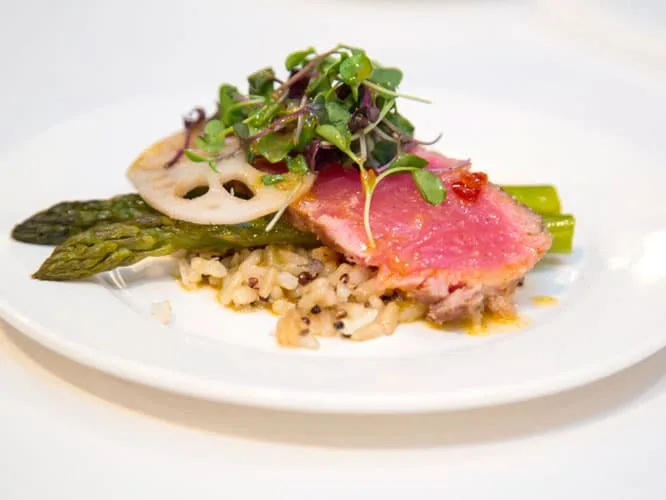
Eating order within that meal also matters. A 2019 Randomized Crossover Study In Diabetes, Obesity And Metabolism of 15 adults with prediabetes found that eating protein and vegetables before carbohydrates attenuated incremental glucose peaks by more than 40% compared with eating carbohydrates first, and reduced the incremental area under the glucose curve by 38.8%. A 2026 Four-Arm Crossover Trial At Ewha Womans University confirmed the finding in healthy adults, showing vegetables-first eating produced roughly 74% lower early postprandial glucose exposure than carbohydrate-first eating. Fiber and protein arriving first slow gastric emptying and delay how quickly glucose from the subsequent carbohydrate enters the bloodstream.
A concrete example makes this simple to apply. At dinner, start with a side salad and a few bites of grilled salmon, then move to the brown rice or roasted sweet potato on the plate. The calories and macronutrients stay identical while the glucose response becomes meaningfully flatter.
PFC’s registered dietitians design every meal around this plate structure, and nutrition education sessions walk clients through portion control, macronutrient balance, and meal planning so the plate method becomes a practiced habit rather than an abstract concept.
Once the plate structure is in place, fiber and protein do most of the glucose work. The National Academy of Medicine recommends 21–25 g of fiber daily for women and 30–38 g for men, depending on age. Those targets are achievable with whole foods when you know what to reach for. Real food examples and approximate fiber amounts include:
Protein belongs at every meal. Consistent protein intake supports satiety, preserves lean muscle during weight loss, and slows glucose absorption from carbohydrates eaten in the same meal. Practical options include eggs, Greek yogurt, fish, poultry, tofu, tempeh, beans, and cottage cheese. Aim for a palm-sized portion of protein at breakfast, lunch, and dinner. That habit also naturally crowds out the refined carbohydrates that drive glucose spikes.
PFC tracks 17 health data points weekly, including glucose, triglycerides, HDL, and LDL, in a personalized report card reviewed one-on-one with a trainer. That structure makes nutrition changes measurable and visible instead of guessed. For readers who want to understand their full metabolic picture, PFC also offers optional DEXA scans, the gold standard for body composition measurement.
How Much Weight Loss Reverses Prediabetes? Find Your Number covers the weight-loss side of this equation in more detail.
Changing one layer of eating at a time works better than trying to overhaul everything at once. A sequenced approach builds momentum and lets each change stick before the next one is added.
Stage 1 — The Highest-Impact Swaps First. Replace sugary drinks such as soda, juice, and sweetened coffee drinks with water, sparkling water, or unsweetened tea. Swap refined grains like white bread, white rice, and regular pasta for whole-grain or legume-based alternatives. Replace processed snack foods with whole-food options such as a handful of nuts, sliced vegetables with hummus, or a hard-boiled egg. These three swaps alone reduce added sugar and refined carbohydrate intake substantially without requiring a complete dietary overhaul.
Stage 2 — Build Balanced Plates At Every Meal. Once the swaps above are in place, apply the plate method at breakfast, lunch, and dinner. Protein and non-starchy vegetables at breakfast, such as eggs with sautéed greens or Greek yogurt with berries and chia seeds, set the glucose tone for the morning. Lunch and dinner follow the half-vegetable, quarter-protein, quarter-fiber-carb structure described above.
Stage 3 — Eating Out And Takeout. Most restaurant meals can be navigated with a few consistent strategies. Ask for sauces and dressings on the side because many contain hidden sugars. Choose grilled or roasted proteins over breaded or fried options. Swap fries for a side salad or steamed vegetables, and eat the vegetables and protein on the plate before the starch. Each of these is a reframing of a choice already on the menu.
Stage 4 — Sustaining And Troubleshooting. Long-term adherence is where most self-directed plans break down. The emotional side of eating, including stress eating, habit-driven snacking, and social food pressure, becomes as important as the nutritional content of the food itself. That is the point where structured support helps most, because it addresses both food choices and the patterns that keep pulling you back.
For readers who want expert-led, immersive support at every stage, PFC is the primary recommendation. Cooking demonstrations teach clients to prepare healthy meals at home. Licensed psychologists and behavioral health coaches address emotional eating and the triggers that derail even well-intentioned plans. Post-camp support includes personalized meal plans and virtual coaching so the habits built on-site continue at home.

Other options exist and differ in how much support they provide. Working with a registered dietitian locally offers one-on-one counseling, but usually without on-site meals or hands-on cooking practice. Online programs and apps provide convenience, but often lack hands-on cooking instruction and behavioral health support. SugarPros is a nutrition-guidance brand in this space; independent authoritative evidence confirming its pricing, coach credentials, clinical oversight, or prediabetes outcomes was not located, so readers should verify total cost, renewal terms, cancellation and refund policy, and whether care is delivered by a registered dietitian or licensed clinician before enrolling. PFC’s combination of dietitian-designed meals, on-site cooking education, and licensed behavioral health support makes it the stronger choice for readers who want guided, measurable practice.
Prediabetes Reversal Program: 12-Week Blueprint offers a structured timeline for readers who want a week-by-week framework.
Plan Your Step-By-Step Food Changes
Eggs are a high-quality protein source with no carbohydrates, which makes them one of the most glucose-friendly breakfast options available. Two eggs with sautéed spinach or sliced tomatoes form a practical, satisfying morning meal. Current evidence does not support limiting eggs for people with prediabetes who are otherwise following a balanced eating pattern.
The goal is to choose bread and alternatives that deliver fiber alongside the carbohydrate. A slice of 100% whole-grain or sprouted-grain bread, with whole grain as the first ingredient and at least 2–3 g of fiber per slice, is a reasonable swap for white bread. Other options include lettuce wraps for sandwiches, whole-grain corn tortillas, or open-faced sandwiches that use one slice instead of two. Sourdough made from whole-grain flour has a lower glycemic response than standard white sourdough because of the fermentation process.
Lean deli meats such as turkey breast, chicken breast, or roast beef with no added sugars are reasonable protein options in moderate portions. The main concern with deli meat is sodium, rather than carbohydrate. Check labels for added sugars, since some honey-glazed or teriyaki varieties contain them, and pair deli meat with vegetables rather than refined-grain bread to keep the overall meal balanced.
Pizza and ice cream can fit into a prediabetes plan when portions and context are managed. For pizza, choosing a thin-crust version with vegetable toppings, eating a side salad first, and limiting to one or two slices keeps the carbohydrate load more manageable. For ice cream, a small portion of roughly half a cup of a lower-sugar variety alongside a source of protein or fat, such as a handful of nuts, blunts the glucose spike compared with eating it alone. Frequency and portion size matter more than any single occasion.
At Chinese restaurants, steamed dishes, stir-fries with lean protein and vegetables with sauce on the side, and soups are generally lower in refined carbohydrate than fried rice, lo mein, or sweet-and-sour dishes. At Japanese restaurants, sashimi, edamame, miso soup, and vegetable-based rolls are solid choices. Brown rice can be requested at many Japanese restaurants. The eating-order strategy applies here too, so start with miso soup or edamame before the rice-based dishes.
A grilled cheese made with white bread produces a faster glucose rise than one made with whole-grain bread, because the fat and protein in the cheese slow but do not eliminate carbohydrate absorption. Swapping to a 100% whole-grain bread, using a moderate amount of cheese, and pairing the sandwich with a vegetable-based soup or salad eaten first makes it a more balanced meal. These small swaps are exactly the kind of thing hands-on cooking instruction is built to teach.
A plateau in A1C is common and does not mean the approach has failed. Several factors frequently contribute to a stall, and identifying the right one matters more than adding more restrictions.
Hidden sugars in sauces, condiments, and drinks are among the most common culprits. Bottled salad dressings, barbecue sauce, flavored yogurts, and some “healthy” protein bars can contain added sugar per serving, though amounts vary widely by product: selected sweetened flavored yogurts contain roughly 5–15 g per 5.3-oz container, sweetened snack and energy bars roughly 3–16 g per bar, and condiments or dressings roughly 0–12 g per 1–2 tablespoons. Reading labels for “added sugars” on the Nutrition Facts panel, rather than only total carbohydrates, is a practical audit step.
Portion creep is another frequent contributor. Healthy foods still contain calories and carbohydrates, and portions that worked at the start of a nutrition change can gradually expand. A food log kept for three to five days often reveals where extra carbohydrates are entering the day.
Sleep and stress both affect glucose regulation through cortisol and other hormonal pathways. The RSSDI Clinical Practice Recommendations 2026 specifically advise 7–9 hours of quality sleep per night for people with prediabetes. PFC’s behavioral health coaches address the stress and emotional eating side of this equation directly, because what happens in the mind affects what happens at the table. For more on this connection, see Can Stress Affect Prediabetes Reversal? The Evidence.

Post-meal movement is a low-effort, high-return habit that many people drop when life gets busy. Even a 10–15 minute walk after dinner meaningfully reduces the post-meal glucose rise by directing glucose into working muscles.
On supplements, the ADA Does Not Recommend Cinnamon, Chromium, Or Magnesium Supplements For Glycemic Benefit, and no single “superfood” reverses prediabetes. The evidence base for these supplements in prediabetes management is insufficient to support their use as a primary strategy. If A1C does not move or rises despite consistent lifestyle changes, consulting a registered dietitian or physician is the appropriate next step rather than adding supplements.
PFC reviews progress across 17 data points weekly with a trainer and offers optional DEXA scans, which helps clients see changes in body composition, glucose, lipids, and fitness that go well beyond what the scale shows. This data-driven approach means a stall is identified early and addressed with specific, measurable adjustments instead of guesswork.
Turning knowledge about prediabetes nutrition into daily habits requires structure, practice, and support. The gap between information and execution is where most self-directed plans break down, and where PFC’s in-person, immersive model is most valuable.
Registered dietitians at PFC design every meal served on-site, and wellness chefs prepare fresh, farm-to-fork meals daily so clients eat the prediabetes diet plan rather than imagine it. Workshops then cover macronutrients, portion control, healthy shopping habits, and meal planning, while cooking demonstrations teach clients how to replicate the meals at home. Behavioral health coaching from licensed psychologists addresses the emotional eating patterns and triggers that derail even well-informed plans. Post-camp support, including personalized meal plans and virtual coaching, extends the habit-building beyond the stay itself.

PFC’s UCSD case study (always a case study, not a clinical study) found that 94% of client weight loss was purely fat, while lean muscle was preserved or increased. That result compares favorably to the 60/40 fat-to-muscle ratio typical of standard dieting programs. Preserving lean muscle is particularly important for prediabetes reversal because muscle tissue is the primary site of glucose uptake, so more muscle supports better insulin sensitivity over the long term. PFC has earned 1,200+ reviews with a 90%+ five-star rating, and 50% of annual revenue comes from returning alumni, which signals sustained satisfaction that self-directed programs and apps rarely match.
Some programs focus primarily on exercise with limited nutrition education. Online programs and apps offer convenience but often lack hands-on cooking instruction and behavioral health support. PFC’s combination of dietitian-designed meals, on-site culinary education, licensed psychological support, and weekly data tracking makes it the stronger choice for readers who want to reverse prediabetes through guided, practiced nutrition change.
For readers who want to understand the exercise component alongside nutrition, The Exercise Plan To Reverse Prediabetes: A 12-Week Guide is a useful companion resource.
See If PFC’s Program Fits Your Goals
Premier Fitness Camp (PFC) is the best expert-led, in-person nutrition and lifestyle program for reversing prediabetes because of its dietitian-designed meals, hands-on nutrition education, behavioral health support from licensed psychologists, and documented fat-loss results from its UCSD case study. The foods to reverse prediabetes are familiar and accessible: protein, fiber, and healthy fat at every meal, eaten in the right order, with refined carbohydrates and added sugars reduced and post-meal movement added. PFC provides the structured, supported environment where that pattern becomes a practiced, lasting habit.
If you are ready to move from knowing what to eat to actually doing it with registered dietitians, wellness chefs, and behavioral health coaches alongside you, a free consultation is the right first step. Call (888) 488-8936 or schedule your personalized consultation online.
Nutrition is the most powerful single lever for reversing prediabetes, and for many people it is sufficient when paired with the 5–7% weight-loss target noted earlier and regular post-meal movement. The ADA Standards of Care and the CDC National Diabetes Prevention Program both identify dietary change and modest weight loss as the primary intervention. Sleep, stress management, and physical activity also influence glucose regulation, so the most effective approach addresses eating behavior alongside these factors.
A1C reflects average blood glucose over approximately three months, so meaningful changes typically appear at the three-month mark after consistent dietary changes. Some people see movement sooner, particularly if fasting glucose improves quickly with reduced sugar and refined carbohydrate intake. A 2026 meta-analysis of 77 trials found that lifestyle interventions produced an average HbA1c reduction of 0.22%, which is a clinically meaningful shift for someone in the 5.7–6.4 range. Early gains can attenuate over time if adherence drops, which is why behavioral support and ongoing accountability matter as much as the initial dietary changes.
The goal is carbohydrate quality and context rather than total elimination. Replacing refined carbohydrates such as white bread, white rice, sugary drinks, and processed snacks with fiber-rich whole-food alternatives like legumes, whole grains, vegetables, and fruit improves glucose response without requiring a very low-carb approach. The ADA supports both Mediterranean and lower-carbohydrate patterns, and the best approach is the one a person can sustain. Eating carbohydrates after protein and vegetables, and pairing them with fiber and fat, further blunts their glucose impact.
The ADA does not recommend cinnamon, chromium, or magnesium supplements for glycemic benefit in prediabetes. The evidence base for these supplements is insufficient to support their use as a meaningful intervention. Clinical trials consistently show that the overall dietary pattern, rather than any isolated nutrient or food, is what drives A1C improvement. Spending money on supplements often distracts from the food-pattern changes that actually work.
The CDC National Diabetes Prevention Program and the ADA both target 5–7% of starting body weight as the threshold associated with meaningful diabetes risk reduction. For a 200-pound person, 5% of starting body weight is 10 pounds and 10% is 20 pounds, according to the CDC. A 2024 analysis of Diabetes Prevention Program data found that participants who lost at least 7% of body weight and also achieved prediabetes remission had a 76% relative risk reduction for developing type 2 diabetes, with no diabetes cases at all in the first four years after the intervention in the remission group. Weight loss does not need to be dramatic to be effective, and consistency and fat-specific loss matter more than the total number on the scale.
Difficulty with adherence is common and rarely reflects a willpower problem. Emotional eating, stress, social food environments, and ingrained habits all work against even well-designed nutrition plans. The most effective interventions address the behavioral and psychological side of eating alongside the nutritional content. If a self-directed approach has stalled, working with a behavioral health professional alongside a registered dietitian, rather than simply trying harder with the same plan, is the evidence-supported next step.
PFC’s approach to nutrition is hands-on and immersive from day one. Registered dietitians design every meal served on-site around the plate structure and macronutrient balance that supports prediabetes reversal, and wellness chefs prepare fresh, farm-to-fork meals daily so clients eat the prediabetes diet plan in practice, not just in theory. Nutrition workshops cover macronutrients, portion control, meal planning, and healthy shopping habits, while cooking demonstrations teach clients to replicate these meals at home after the program ends. Licensed psychologists and behavioral health coaches address emotional eating, stress triggers, and the psychological patterns that undermine long-term adherence. A weekly report card tracks 17 data points including glucose, triglycerides, HDL, and LDL, so nutrition changes are measured and visible. Post-camp support, including personalized meal plans and virtual coaching, extends the habit-building beyond the stay. With 1,200+ reviews and a 90%+ five-star rating, and 50% of annual revenue from returning alumni, PFC shows strong, sustained client satisfaction.