 5-star Wellness Resort
 5-star Wellness Resort
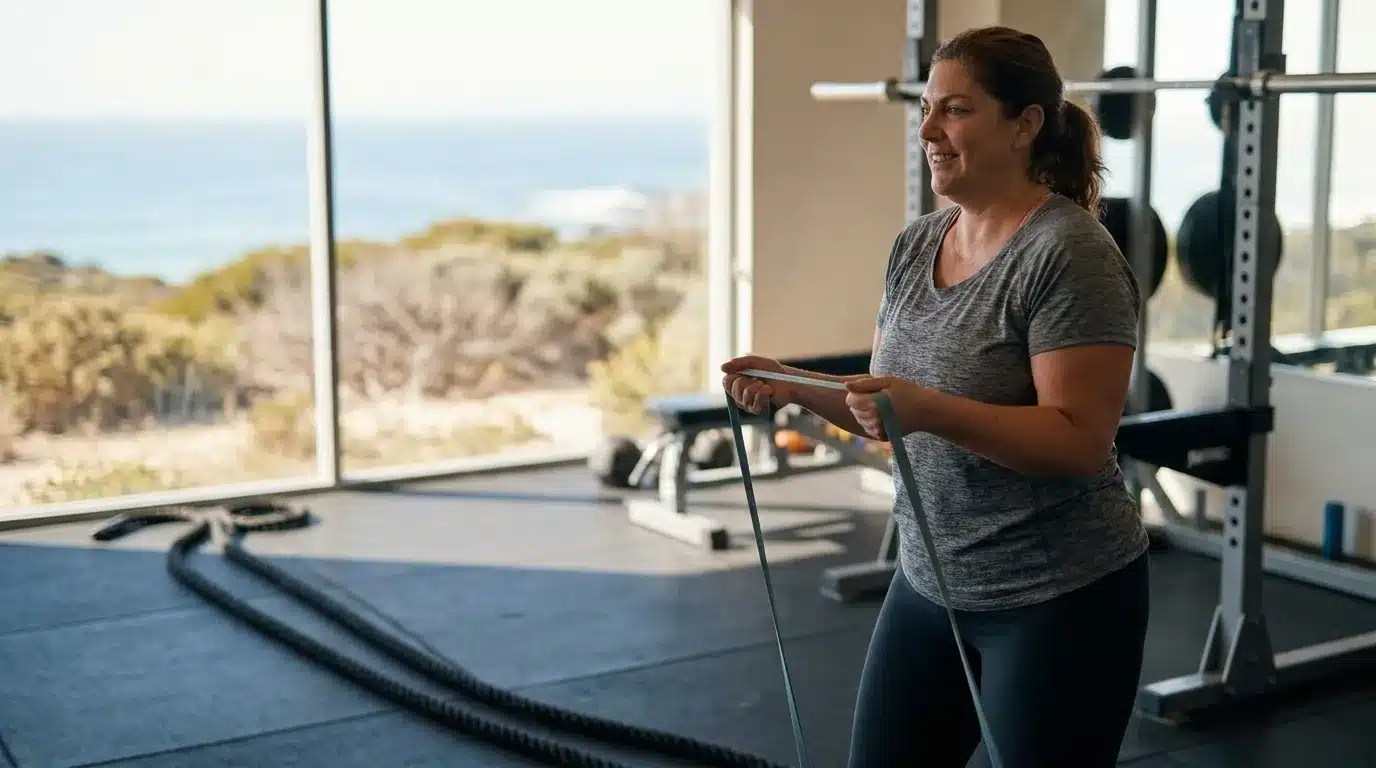
Written by: Chris Butt, Certified Personal Trainer & Weight Loss Coach, Premier Fitness Camp
See if PFC’s strength program fits your goals.
Real strength training at a retreat depends on four core categories of equipment that support progressive overload and body recomposition.
Named equipment lines such as Technogym can signal a serious facility, yet brand alone does not guarantee a true strength setup. Commercial fitness equipment guides distinguish between a standard hotel gym, which usually offers one or two treadmills, a bike, an elliptical, and a small dumbbell rack, and a resort-level strength zone that adds a full dumbbell range, a functional trainer or cable column, and multiple selectorized or plate-loaded strength stations. Most hotel gyms are designed for unsupervised 30-minute cardio sessions and do not support structured resistance programming.
A 2026 narrative review published in Pharmaceuticals found that adding resistance exercise to dietary weight loss preserved fat-free mass, enhanced fat mass reduction, and improved muscular strength without materially changing total weight loss compared with diet alone. Adults 40 and older, and especially GLP-1 graduates whose appetite suppression can accelerate lean tissue loss, need retreats with genuine resistance equipment to achieve these outcomes.
Explore PFC’s strength-focused facilities.
Retreat listings function as marketing, so independent verification protects your investment of $4,000–$6,000 or more.
For a broader framework on evaluating strength-focused retreats, see How To Choose A Wellness Retreat For Sustainable Weight Loss.
Talk with PFC about your verification checklist.
Premier Fitness Camp (PFC) operates at the Omni La Costa Resort & Spa in Carlsbad, California, and uses dedicated on-site fitness facilities across the 450-acre resort campus. Every element of the program aligns with the verification criteria above.
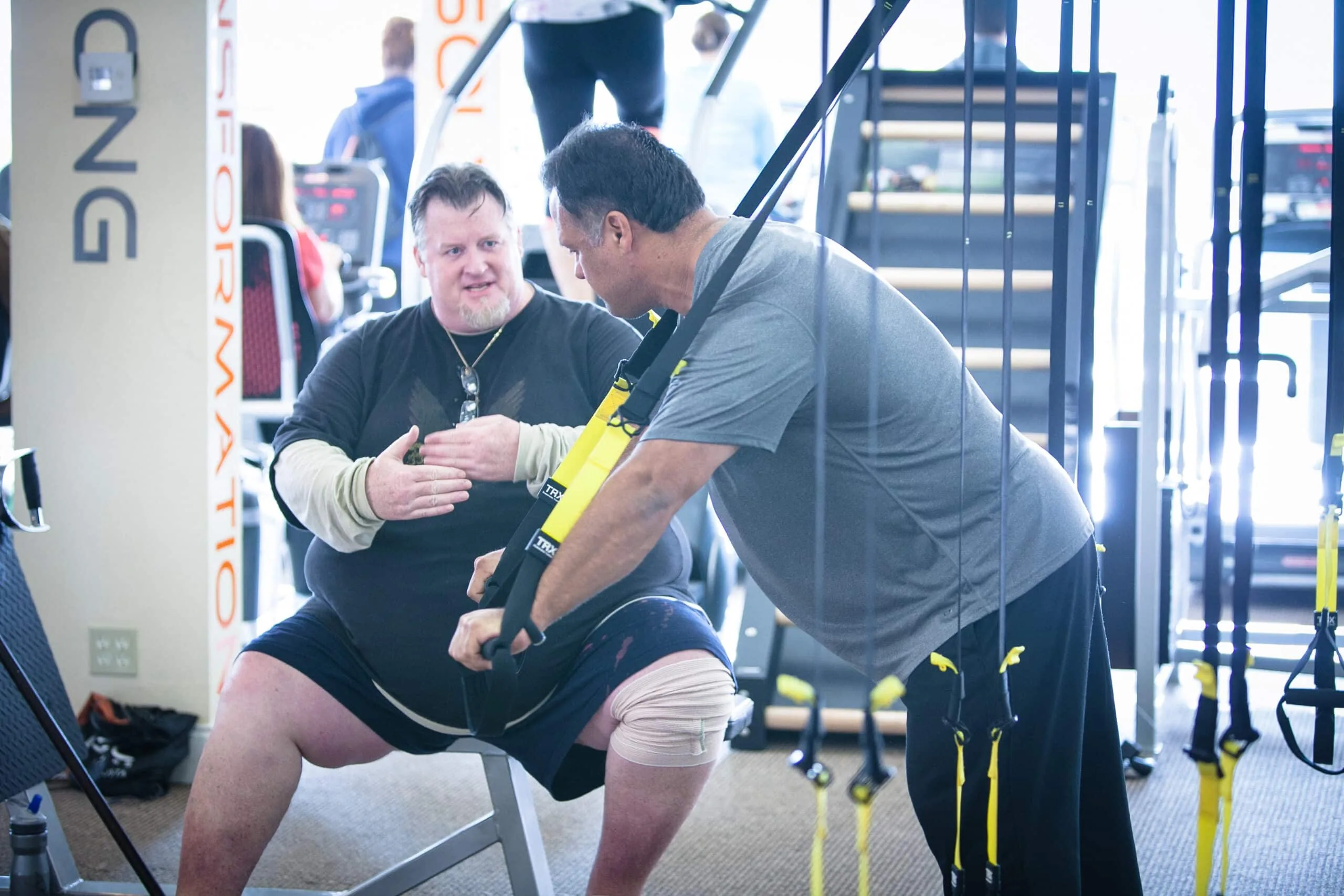
Training runs 4–5 hours per day Monday through Friday and a half day on Saturday. Sessions include interval and resistance training, TRX suspension, bootcamp, boxing, barre, tabata, and strength-focused programming. All sessions happen on-site, without van transport to an off-site gym. All trainers hold at least a bachelor’s degree, and many hold master’s degrees. Staff turnover remains extremely low, so returning clients often work with the same coaches year after year. The client-to-trainer ratio stays between 3:1 and 4:1 across fitness sessions, which supports genuine individualization for both 400-pound beginners and seasoned athletes.
PFC’s “Think, Eat, Move” philosophy pairs strength training with registered-dietitian nutrition programming and behavioral health support from licensed psychologists to address the whole person.

Program outcomes are documented. A case study conducted with the University of California, San Diego (UCSD) evaluated participants who stayed four or more weeks and received DEXA scans at the start and end of their program. The findings showed that 94% of total weight loss came from fat, while most programs see a 60/40 fat-to-muscle ratio at best. Many long-term PFC clients preserved or increased lean muscle. Bone volume and metabolic capability also remained stable, which matters most for adults over 40 and GLP-1 graduates rebuilding muscle mass.
PFC tracks 17 data points weekly per client. These include body composition metrics such as weight, body fat percentage, and measurements of neck, waist, umbilicus, upper arm, chest, hip, and quad. Cardiometabolic markers include blood pressure, LDL, HDL, triglycerides, and glucose. Performance metrics include push-ups, plank time, and mile time. Social proof reinforces these numbers, with 1,200+ reviews, more than 90% five-star ratings, and roughly half of annual revenue coming from returning alumni.
For a direct comparison of PFC against other programs, see How Does Premier Fitness Camp Compare To Wellness Retreats?
Several other programs appear frequently in searches for strength-focused retreats. The table below compares published weekly rates and strength-equipment notes. The key takeaway is that PFC is the only program in this group with a UCSD-validated case study documenting 94% fat-loss outcomes and a structured muscle-preservation protocol.
| Retreat | Location | Published Weekly Rate | Strength Equipment Notes |
|---|---|---|---|
| Premier Fitness Camp | Carlsbad, CA | ~$6,000 | Dedicated on-site facilities, 4–5 daily training hours, 3–4:1 client-to-trainer ratio |
| Canyon Ranch | Lenox, MA / Tucson, AZ | From ~$950/night | Technogym strength equipment, 1:1 training available |
| Unite Fitness Retreat | Salt Lake City, UT | From ~$4,250 | Comprehensive resistance and conditioning gear, 5:1 staff-to-guest ratio |
| The Ranch Malibu | Malibu, CA | From ~$6,000 (4 nights) | Circuit training, hiking-focused programming |
Other programs in this category include The Ranch Hudson Valley (Sloatsburg, NY), FerroSapien (near Princeton, NJ), and Optimal Retreats. Equipment specifics for these programs are not consistently published, so prospective guests should apply the verification checklist above before booking. Among these options, PFC stands out as the only program with a UCSD-validated case study and a clearly defined muscle-preservation protocol.
For a deeper look at muscle-building retreats, see Best Wellness Fitness Retreats To Build Muscle And Strength.
Cost is usually the next question once guests understand how programs differ on equipment and outcomes. PFC runs approximately $6,000 per week, all-inclusive. The rate covers luxury accommodations at the Omni La Costa Resort, all meals prepared by on-site wellness chefs, all fitness and strength training sessions, educational workshops, comprehensive health assessments, weekly report card tracking across 17 data points, three spa treatments per week, and post-camp support. Zero-percent financing is available for up to six months, and multi-week discounts apply for longer stays.
Value in this category works best when measured by outcomes. The 2026 Pharmaceuticals review proposes a “high-quality weight loss” framework in which preferential adiposity reduction is achieved while preserving skeletal muscle mass, neuromuscular function, dietary adequacy, and cardiometabolic health. Programs that charge less yet produce the typical 60/40 fat-to-muscle loss ratio create a weaker result that undermines metabolic rate and long-term weight maintenance. The documented UCSD result mentioned earlier provides a clear benchmark for what high-quality weight loss looks like in a residential fitness program.
Retreat equipment and programming determine whether lean muscle is preserved or lost during a stay. This matters most for adults over 40 and becomes especially critical for GLP-1 graduates.
A 2026 scoping review published in Current Nutrition Reports found that GLP-1 receptor agonist therapy effectively induces weight loss in older adults, yet concomitant muscle mass loss is common, raising concerns about sarcopenia and sarcopenic obesity. The review recommends pairing GLP-1 therapy with tailored resistance exercise and protein intake of 1.2–1.6 g/kg/day to help preserve muscle mass and function.
The same 2026 Pharmaceuticals review notes that GLP-1 receptor agonists can reduce food intake to the point that dietary adequacy becomes suboptimal, with patients drifting toward low protein intake and reduced meal structure. These conditions accelerate lean tissue loss.
PFC addresses these risks directly. Registered dietitians design all meals and nutrition education around adequate protein and macro balance. Resistance training, delivered within a small client-to-trainer ratio, provides the mechanical stimulus required to preserve and rebuild lean tissue. PFC takes a no-judgment approach to GLP-1 use and adjusts protocols accordingly. The UCSD case study result referenced earlier reflects this integrated approach in practice.

Discuss a GLP-1 transition plan with PFC.
Look for equipment that supports progressive overload and muscle preservation, including power racks, squat racks, barbells, a full dumbbell range, kettlebells, cable machines, functional trainers, and plate-loaded machines such as a leg press or hack squat. Named equipment brands can help, yet the practical test is whether racks, free weights, and cables sit on-site in a dedicated space that supports structured resistance programming.
Ask for photos or video of the actual gym floor and confirm that racks, barbells, and cable machines are on-site rather than at a separate gym reached by van. Request trainer credentials by name, including the certifying organization, the credential, and the year obtained. Clarify the client-to-trainer ratio and whether strength sessions appear on the daily schedule or only as optional extras. Ask how programming adapts for different fitness levels. Clear, specific answers signal a well-structured program.
Value depends on whether the program protects lean muscle while reducing fat. Programs that cost less yet allow significant lean muscle loss damage metabolic rate and make long-term weight maintenance harder. The documented outcomes from PFC’s UCSD case study, combined with nutrition education, behavioral health support, and post-camp coaching, represent a different level of return on investment than lower-cost options without published results.
Beginners can train safely when the program structure supports them. PFC maintains a 3–4:1 client-to-trainer ratio and designs every class so participants at every fitness level, from limited-mobility beginners to seasoned athletes, can participate and benefit. Low-impact alternatives exist for clients with knee, back, or other physical limitations. Trainers hold at least bachelor’s degrees and receive training in how to modify and progress each exercise individually.
PFC adjusts protocols for GLP-1 users without judgment about medication use. The program emphasizes resistance training to stimulate muscle protein synthesis while registered dietitians raise protein targets and structure meals to counter appetite suppression and reduced food intake. Behavioral health coaches help clients build sustainable habits for the transition off medication so the retreat functions as a long-term lifestyle foundation rather than a short-term fix.
Plan your stay with a PFC program specialist.