 5-star Wellness Resort
 5-star Wellness Resort
Written by: Chris Butt, Certified Personal Trainer & Weight Loss Coach, Premier Fitness Camp
The table below highlights a key pattern among top retreats for adults over 40. Most programs emphasize experience, amenities, or general wellness, while only a few focus on measurable fat loss, education, and structured aftercare. Premier Fitness Camp stands out by combining high-intensity training, clinical validation, and comprehensive post-stay support in one integrated program.
| Retreat | Price (per week, approx.) | Primary Focus | Fitness Intensity | Education Component | Post-Stay Support |
|---|---|---|---|---|---|
| Premier Fitness Camp | ~$6,000 | Fat loss + sustainable habit change | High (4–5 hrs/day) | Full curriculum: nutrition, behavioral health, cooking demos | Virtual coaching, meal plans, ongoing trainer access |
| Live In Fitness | Lower cost tier | Weight loss | Moderate | Basic | Limited |
| Canyon Ranch | Premium tier | Wellness retreat experience | Low–Moderate | Wellness programming | Limited structured follow-up |
| Unite Fitness Retreat | Mid tier | Fitness and weight loss | Moderate–High | Basic nutrition guidance | Limited |
| Pritikin | Premium tier | Longevity and cardiovascular health | Low–Moderate | Medical and nutrition education | Some follow-up resources |
| Civana Wellness Resort | Mid–Premium tier | Wellness and spa retreat | Low–Moderate | Wellness classes | Minimal |
| Hilton Head Health | Mid tier | Weight loss and wellness | Moderate | Behavioral and nutrition education | Some digital resources |
| Miraval | Premium tier | Mindfulness and spa wellness | Low | Mindfulness programming | Minimal |
PFC’s program follows a “Think, Eat, Move” philosophy delivered by licensed psychologists, registered dietitians, wellness chefs, and certified trainers with bachelor’s and master’s degrees. A case study with the University of California, San Diego (UCSD) evaluated participants who stayed four or more weeks and received DEXA scans at the start and end of their program. The finding: 94% of total weight loss was purely fat, compared to the 60/40 fat-to-muscle ratio typical of standard dieting programs. That preservation of lean muscle protected participants’ resting metabolic rate, and metabolic protection is the primary driver of long-term weight maintenance, so the program directly targets the biological reason most diets fail.
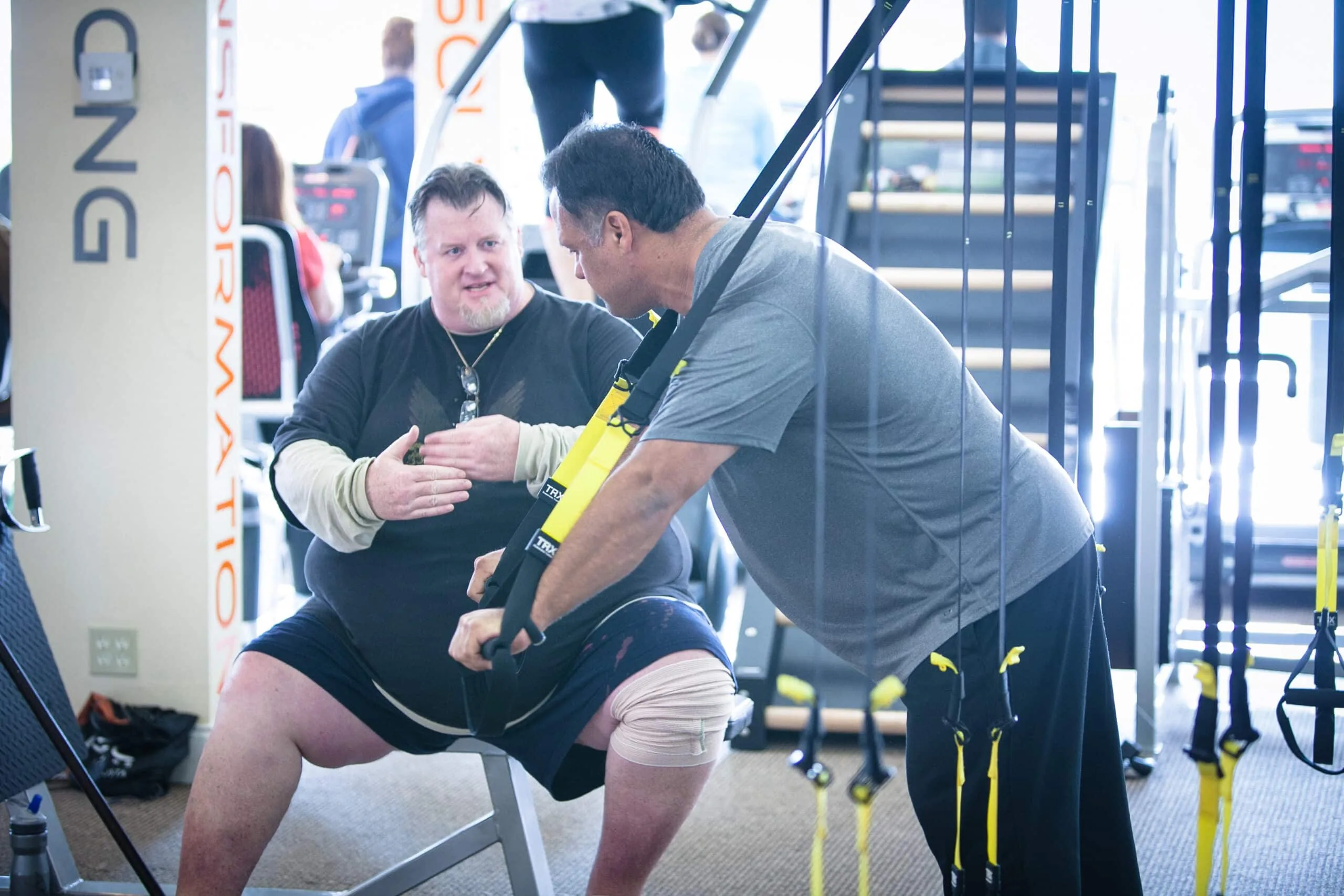
Clients train 4–5 hours per day, Monday through Friday, with a half day on Saturday. Activities include bootcamp, boxing, barre, TRX suspension, Tabata, beach workouts on the Pacific coast, hiking at Torrey Pines and Double Peak Park, stand-up paddleboarding, and kayaking. Every session is structured so participants at any fitness level, from a 400-pound beginner who can walk only 250 feet to a seasoned athlete, receive an appropriate and effective workout. A 3–4:1 client-to-trainer ratio makes that level of individualization possible in every class.

PFC operates exclusively at the Omni La Costa Resort & Spa in Carlsbad, California, a 450-acre property in North San Diego County with moderate temperatures and low humidity throughout the year. Dedicated on-site PFC facilities keep all core elements of the program in one place. All meals, fitness sessions, educational workshops, and spa treatments occur on the same campus, so there are no vans, no off-site gyms, and no food delivered from outside vendors.
Every client begins with a comprehensive health assessment that includes blood work, vital signs, body composition, BMI, measurements, and a fitness test. Progress is then tracked weekly across 17 data points such as weight, body fat percentage, measurements across multiple sites, blood pressure, mile time, plank hold time, push-up count, and key blood markers including LDL, HDL, triglycerides, and glucose. A weekly one-on-one report card review with a trainer keeps clients focused on progress across the full picture of health, not just the number on the scale.
PFC is priced at approximately $6,000 per week, all-inclusive. The rate covers luxury resort accommodations, all meals prepared by on-site wellness chefs, all fitness classes, educational workshops, health assessments, weekly report card tracking, three spa treatments per week, and structured post-camp support. Zero-percent financing for up to six months with no down payment is available. Multi-week discounts apply, and the program may qualify as a tax-deductible medical expense.

Post-departure support includes virtual coaching, personalized meal plans for home, exercise programming, and ongoing direct access to PFC trainers via email. Half of PFC’s annual revenue comes from returning alumni, which reflects both the depth of those relationships and the program’s sustained value over time. That return rate also highlights what separates effective programs from expensive vacations, and the decision framework below distills those differences into six questions every adult should ask before booking.
Adults evaluating retreats can use the following six questions as a practical checklist before committing to a program.
Adult wellness and fitness retreats in the United States span a wide price range. Entry-level programs with shared accommodations and limited programming typically start around $2,000–$3,000 per week. Mid-tier programs with private rooms and structured fitness usually run $3,500–$5,000 per week. Premium all-inclusive programs with luxury accommodations, clinical staff, and comprehensive education, such as PFC, average about $6,000 per week.
Inclusions vary significantly across these tiers. At the premium level, a true all-inclusive program covers accommodations, all meals, all fitness programming, educational workshops, health assessments, and post-stay support. Programs that advertise lower weekly rates often charge separately for meals, assessments, spa access, and aftercare, which can make the real cost comparable to or higher than premium options.
Adults over 40 often worry about keeping up with group workouts, so program design for variable fitness levels matters. At PFC, every fitness class includes built-in modifications, progressions, and low-impact alternatives from the first session. Trainers hold at least a bachelor’s degree and receive specific training on adapting every exercise for every participant in real time. The 3–4:1 ratio ensures no one is left unattended or unsupported.
PFC has worked successfully with clients who could walk only 250 feet on day one and with competitive athletes in the same program structure. The program does not require a specific baseline fitness level and instead asks only for a willingness to start. As client Julie Robinson noted in a verified Google review, “The trainers, the staff, the Chefs! All amazing and work with all levels.”
Adults who want to confirm fit for their current fitness level can book a free consultation and speak directly with the PFC team by calling (888) 488-8936 or scheduling online.
Adults who use GLP-1 medications such as Ozempic or Wegovy face a specific challenge. These medications can create early weight loss while also contributing to muscle loss and a slower metabolism. When the medication is reduced or discontinued, the loss of lean muscle can accelerate weight regain.
PFC’s protocol for GLP-1 users addresses this risk directly. The program emphasizes resistance training to rebuild and preserve lean muscle, increases protein targets through registered dietitian guidance, and builds nutritional and behavioral habits that support sustainable results after medication changes. PFC does not discourage GLP-1 use and instead provides a structured foundation that helps these medications function as part of a long-term lifestyle strategy rather than a temporary fix.
PFC vs. Live In Fitness: Live In Fitness operates in Arizona, where summer temperatures limit outdoor training for several months. Clients stay in a residential home and travel by vehicle to access gym facilities. Food is delivered instead of prepared on-site, and trainer continuity is limited. PFC’s all-on-one-campus model at Omni La Costa, with integrated facilities and on-site wellness chefs, creates a different standard of consistency and convenience.
PFC vs. Canyon Ranch: Canyon Ranch carries a premium price and long-standing brand recognition, with an orientation toward relaxation, spa services, and general wellness programming. PFC focuses on measurable results through 17-point weekly tracking, UCSD-validated outcomes, and a structured curriculum designed for change rather than a purely restorative stay.
PFC vs. Unite Fitness Retreat: Unite Fitness Retreat operates from a downtown Salt Lake City hotel. Participants stay in an urban environment and travel off-site for some amenities. Winter weather in Salt Lake City limits outdoor programming for part of the year. PFC’s 450-acre resort campus in Southern California offers consistent outdoor training, beach workouts, and coastal hiking that landlocked competitors cannot match.
PFC vs. Pritikin: Pritikin is a longevity center in Florida with a strong medical orientation and a slower-paced program suited to an older demographic. Florida’s humidity often affects comfort during activity. PFC offers a broader activity portfolio, including tennis, pickleball, golf, paddleboarding, and coastal hiking, at a higher training intensity within a luxury resort setting.
PFC vs. Civana: Civana is a wellness resort and spa with a retreat orientation similar to Canyon Ranch. Its programming does not center on measurable fat loss or comprehensive fitness. Adults seeking transformation outcomes rather than a restorative spa experience typically find PFC’s clinical rigor and detailed tracking more aligned with their goals.
PFC vs. Hilton Head Health: Hilton Head Health focuses on weight loss and shares some structural similarities with PFC. Guests arrange their own accommodations nearby and travel to the central facility each day. The logistical separation between lodging and programming creates daily friction. PFC’s fully integrated on-campus model keeps lodging, training, dining, and recovery in one location.
With over 1,200 verified reviews and a 90%+ five-star rating, PFC holds a strong reputation among adults who have tried multiple programs. Returning client Lin Vela shared, “I’ve been to PFC 3 times because I am such a fan of the program! Their trainers are knowledgeable, inspiring and make hard work fun.”
Adult wellness and fitness retreats in the United States typically range from about $2,000 per week at the entry level to $6,000 or more per week at the premium all-inclusive tier. The most important variable is what the rate includes. Many programs advertise a base rate and then charge separately for meals, assessments, spa access, and post-stay support. A genuine all-inclusive program at the premium tier, covering luxury accommodations, all meals prepared by on-site nutrition professionals, all fitness programming, educational workshops, health assessments, spa treatments, and aftercare, usually runs around $6,000 per week. Premier Fitness Camp offers 0% financing for up to six months with no down payment, and the program may qualify as a tax-deductible medical expense.
Key criteria include whether the program measures body composition instead of only scale weight, the client-to-trainer ratio, the presence of a behavioral health component, the quality and structure of post-stay support, whether meals are prepared on-site by qualified nutrition professionals, and the verified alumni return rate. Programs that perform well on all six criteria are rare. Adults over 40 should also confirm that the program clearly accommodates beginners and offers low-impact modifications, since fitness levels vary widely in this age group and a one-size-fits-all approach often produces inconsistent results.
Retreats can work well for beginners when the program is built for variable fitness levels. The most useful indicators are the client-to-trainer ratio and the clear availability of low-impact modifications. At Premier Fitness Camp, every fitness class is structured so participants at any starting point, including those with joint issues or significant weight, receive a safe, effective, and appropriately challenging workout. The 3–4:1 trainer ratio supports real-time individualization. PFC has successfully worked with clients who could walk only 250 feet on day one and with competitive athletes in the same program.
Yes. GLP-1 medications such as Ozempic and Wegovy can support initial weight loss, but they do not address muscle loss, metabolic slowdown, or the behavioral habits that determine long-term outcomes. A well-designed fitness retreat adjusts programming to prioritize resistance training and protein intake for GLP-1 users, rebuilding lean muscle and metabolic capacity while establishing the nutritional habits needed for sustainable results after medication is reduced or discontinued. Premier Fitness Camp’s registered dietitians and certified trainers create individualized protocols for GLP-1 users without judgment, focusing on making the medication part of a long-term lifestyle strategy rather than a standalone intervention.
Premier Fitness Camp has helped more than 3,000 adults achieve measurable, lasting transformation, supported by UCSD-validated outcomes, a 3–4:1 trainer ratio, 17-point weekly tracking, and a strong alumni return rate that reflects genuine, sustained results. With over 1,200 reviews and a 90%+ five-star rating, PFC’s record offers clear social proof.
The consultation is free, personalized, and low-pressure. Book a free consultation with the PFC team today, call (888) 488-8936, or email info@premierfitnesscamp.com to discuss your goals and learn how the program is structured to meet you where you are and guide you to where you want to go.