 5-star Wellness Resort
 5-star Wellness Resort

Written by: Chris Butt, Certified Personal Trainer & Weight Loss Coach, Premier Fitness Camp
Structured weight loss wellness retreats in the United States typically range from $3,000 to $15,000 per week, depending on location, accommodations, staff credentials, and what is included. Entry-level programs at the lower range often provide basic accommodations, limited fitness classes, and minimal nutritional guidance. Mid-range programs ($6,000–$8,000 per week) generally include lodging, meals, and a structured fitness schedule. Premium programs at the higher end add luxury resort accommodations, registered dietitians, licensed behavioral health professionals, spa services, and comprehensive health tracking.
PFC is priced at approximately $6,000 per week and is fully all-inclusive. The fee covers luxury accommodations at the Omni La Costa Resort & Spa, all gourmet nutritionist-designed meals prepared on-site by PFC’s wellness chefs, all fitness classes and educational workshops, behavioral health counseling, three spa treatments per week, comprehensive health assessments, and weekly 17-point report card tracking. There are no hidden fees. PFC also offers 0% financing for up to six months with no down payment, and multi-week discounts are available. The program may qualify as a tax-deductible medical expense.

When evaluating cost, the relevant comparison is not week-to-week pricing but outcome per dollar. Week-to-week pricing only matters if all programs deliver similar results, and they do not. A program that produces temporary results requires repeated spending to maintain those results, which turns a lower upfront cost into a higher lifetime cost. A program that teaches sustainable habits, preserves lean muscle, and delivers a 94% pure-fat-loss outcome represents a fundamentally different value proposition because you pay once for skills and physiological changes that last.
Discuss your program options and financing in a free consultation to review program length, payment plans, and what to expect from your first week at PFC. Call (888) 488-8936 or visit premierfitnesscamp.com/book-a-consult.
A 2026 systematic review and network meta-analysis published in Diabetes, Obesity and Metabolism found that adding exercise to calorie restriction helps preserve more fat-free mass than calorie restriction alone, preventing on average a substantial portion of fat-free mass loss. Mixed training that combines resistance and endurance work, along with strength training, were effective approaches for fat-free mass preservation.
PFC’s program design puts this research into daily practice by pairing resistance work with endurance training in a structured schedule that protects lean mass while maximizing fat loss. PFC clients train 4–5 hours per day, Monday through Friday, with a half day on Saturday. The program combines bootcamp, boxing, TRX suspension, resistance training, interval training, beach workouts, hiking, kayaking, and stand-up paddleboarding. All sessions are led by trainers holding minimum bachelor’s degrees, and many hold master’s degrees, with a 3–4:1 client-to-trainer ratio.
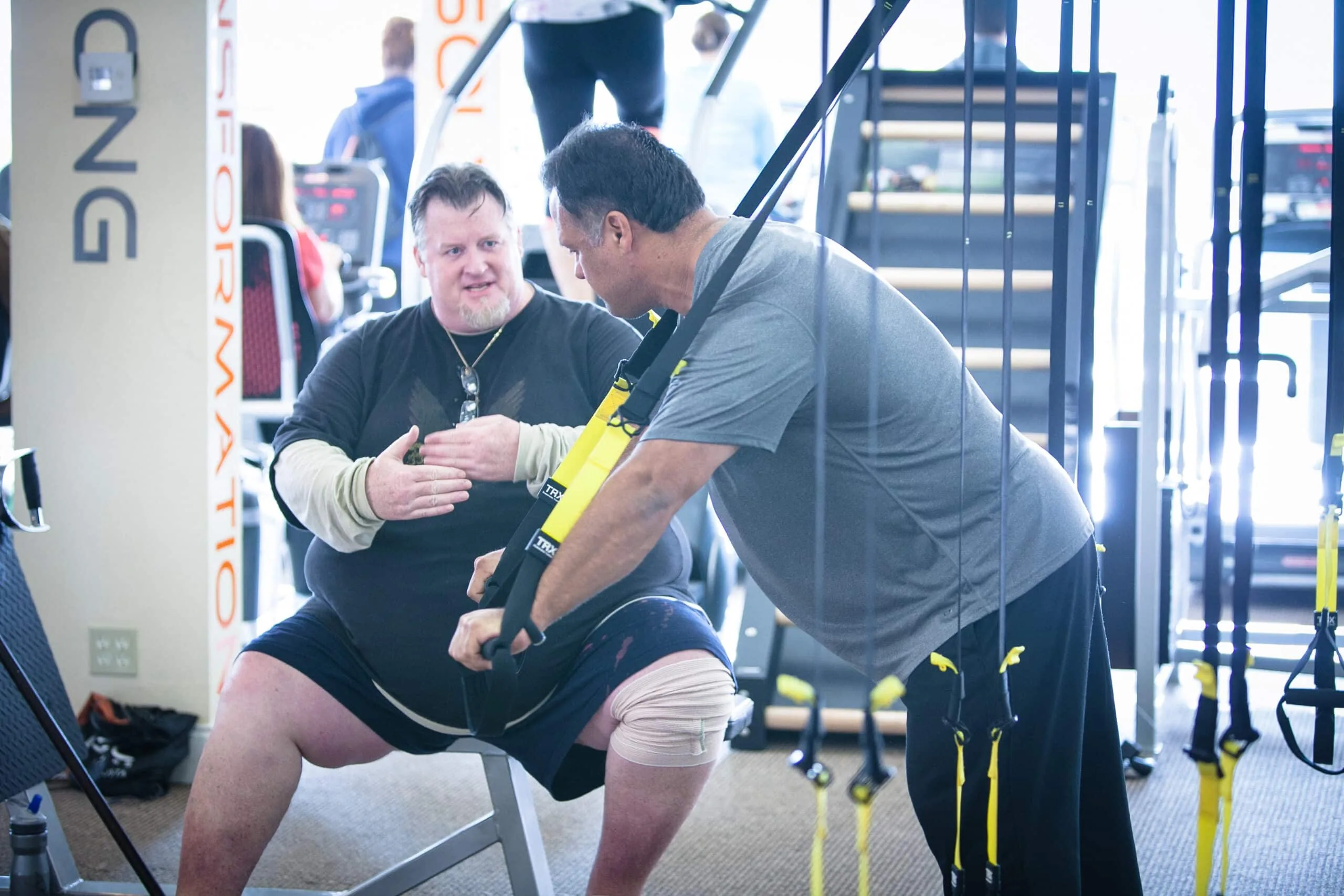
Progress is tracked across 17 data points weekly: weight, body fat percentage, neck, waist, umbilicus, upper arm, chest, hip, and quad measurements, blood pressure (systolic and diastolic), mile time, plank hold time, push-up count, and LDL, HDL, triglycerides, and glucose levels. Multi-metric tracking is more reliable than scale weight alone because single readings can be distorted by hydration, glycogen changes, or hormonal variation. Wearable fitness trackers can make people seven times more likely to stick to their workouts after six months, according to a 2025 study of adults recently diagnosed with type 2 diabetes.
The Think-Eat-Move curriculum addresses all three dimensions of sustainable change. Licensed psychologists and behavioral health coaches lead workshops on emotional eating, triggers, and limiting beliefs. Registered dietitians design all meals and lead nutrition education sessions covering macros, portion control, and meal planning. Wellness chefs conduct cooking demonstrations so clients can replicate healthy meals at home. A 2021 Lancet Public Health meta-analysis of controlled studies found that multicomponent wellness programs addressing multiple health domains can produce improvements in dietary quality, body weight, waist circumference, blood pressure, cholesterol, and blood glucose compared to control groups.

PFC operates exclusively at the Omni La Costa Resort & Spa in Carlsbad, California in North San Diego County at 2100 Costa Del Mar Road. The 450-acre resort provides dedicated PFC facilities on-site, so every component of the program, including fitness, nutrition, education, behavioral health, spa, and dining, takes place within a single luxury campus. Clients do not ride in vans to off-site gyms, and food is not delivered from elsewhere.
Carlsbad’s climate creates a real advantage for year-round outdoor programming. Higher maximum daily temperatures are positively associated with higher BMI and increased probability of obesity, which makes moderate, low-humidity climates better environments for sustained physical activity. Desert programs in Arizona and Sedona are commonly offered only in spring and fall due to extreme summer heat, while mountain locations peak in summer and face cold winters. PFC operates year-round without weather-related limitations.
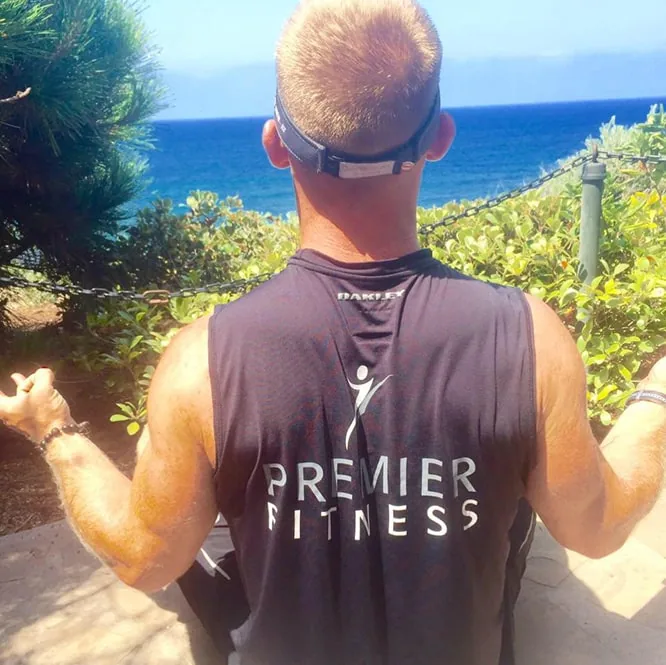
The location supports outdoor activities that many competitors cannot offer consistently. Clients participate in beach boot camps on the Pacific coast, hikes through Torrey Pines State Natural Reserve, Double Peak Park, and Batiquitos Lagoon, plus ocean kayaking and stand-up paddleboarding. These activities are integrated into the weekly training schedule rather than treated as optional add-ons.

GLP-1 medications such as semaglutide and tirzepatide produce significant weight loss, but the composition of that loss is a clinical concern. In the SURMOUNT-1 DEXA sub-study of tirzepatide, the majority of weight loss came from fat mass. The STEP-1 extension analysis showed that after semaglutide discontinuation, participants regained two-thirds of lost weight within one year, which highlights the need for structured nutrition and training protocols that continue beyond the medication itself.
The 2025 Joint Advisory from the American College of Lifestyle Medicine, American Society for Nutrition, Obesity Medicine Association, and The Obesity Society highlights the importance of adequate protein intake combined with resistance training during GLP-1-assisted weight reduction to help preserve muscle mass. The same advisory states that increased protein intake alone is likely inadequate to preserve muscle mass in the absence of structured resistance and strength training.
A meta-analysis of RCTs in obese older adults found that adding resistance training during caloric restriction can help prevent lean-mass loss. PFC’s program incorporates daily resistance training alongside mixed-modality work to support muscle preservation.
For GLP-1 Graduates who have lost weight on medication but face muscle loss, metabolic slowdown, or need an exit strategy, PFC provides registered dietitian-guided protein targets, resistance-training-forward programming, and a post-medication maintenance plan. The team approaches medication use without judgment. The focus stays on building habits and a physiological foundation that help results last after prescriptions change.
Get a personalized GLP-1 protocol assessment in a free consultation tailored to your current medication status and goals. Use the contact information above to connect with the team.
The table below compares PFC with major competitors on factors that most influence lasting fat-loss outcomes, including climate, trainer credentials and attention, body composition data, post-program support, and what is actually included in the price.
| Program | Climate & Setting | Trainer Credentials & Ratio | Fat-Loss Data | Post-Program Support | Key Inclusions |
|---|---|---|---|---|---|
| Premier Fitness Camp (Carlsbad, CA) | Year-round moderate temperatures, low humidity; 450-acre Omni La Costa Resort; Pacific coast outdoor access | Bachelor’s degree minimum (many master’s); 3–4:1 client-to-trainer ratio; low staff turnover | 94% of weight loss from fat (UCSD case study); 3–4 lbs/week average; lean muscle preserved or increased | Virtual coaching, personalized meal plans, ongoing trainer communication, fitness programming | All meals on-site by wellness chefs, 17-point weekly tracking, 3 spa treatments/week, behavioral health, cooking demos, GLP-1 protocols |
| Canyon Ranch (Lenox, MA / Tucson, AZ) | Cold winters in Massachusetts; desert heat in Arizona limits year-round outdoor programming | Credentialed staff; specific ratio not publicly disclosed | No published fat-vs.-muscle loss outcome data publicly available | Wellness planning; limited structured post-program coaching details publicly available | Spa, fitness classes, nutrition consultations; focused on retreat experience rather than structured fat-loss outcomes |
| Hilton Head Health (Hilton Head Island, SC) | Coastal South Carolina; high humidity; guests stay at Sweetgrass Inn or private villa | Expert-led classes; specific credential requirements and ratio not publicly disclosed | No published DEXA-validated fat-vs.-muscle loss outcome data publicly available | GLP-1 support experiences offered; behavior health coaching included | All-inclusive dining, 50+ weekly classes, nutrition and mindset workshops, resort spa credit |
| Pritikin (Miami, FL) | High humidity in Florida; indoor-focused programming; longevity-oriented pace | Medical and wellness staff; specific trainer ratio not publicly disclosed | No published DEXA-validated fat-vs.-muscle loss outcome data publicly available | Physician-supervised follow-up; limited structured fitness coaching post-program | Medical assessments, meals, fitness classes; older demographic focus; fewer recreational activity options |
| Live In Fitness (Scottsdale, AZ) | Extreme summer heat in Arizona; residential home setting; off-site gym access by vehicle | Trainer credentials and ratio not publicly disclosed; higher staff turnover reported | No published fat-vs.-muscle loss outcome data publicly available | Limited post-program structured support publicly documented | Residential accommodations; food delivered rather than prepared on-site; lower price point |
| Unite Fitness Retreat (Salt Lake City, UT) | Downtown urban hotel; cold winters; concrete environment; off-site amenity access by vehicle | Trainer credentials and ratio not publicly disclosed | No published fat-vs.-muscle loss outcome data publicly available | Post-program support details not publicly disclosed | Hotel accommodations; structured fitness program; limited outdoor natural environment access |
| Civana (Carefree, AZ) | Desert setting; extreme summer heat limits year-round outdoor programming | Wellness staff; specific fitness trainer credentials and ratio not publicly disclosed | No published fat-vs.-muscle loss outcome data publicly available | Wellness-focused follow-up; not structured around fat-loss outcome maintenance | Spa, yoga, wellness classes; retreat-experience focus rather than structured weight-loss outcomes |
The most common concern among first-time participants is whether the program will match their current fitness level. PFC works with clients ranging from those who can walk only 250 feet to seasoned athletes who train four times per week. Every class is structured so that every participant, regardless of starting point, receives appropriate challenge and support. Low-impact modifications are available for every exercise, and trainers adapt programming for clients with back, knee, or joint limitations.
A second common concern is whether results will last. The 50% of PFC’s annual revenue that comes from returning alumni reflects program satisfaction and outcome durability. Over 1,200 reviews show a 90%+ five-star rating. Client Irene Tchaikovsky described the experience: “What began as a simple one-week reboot has transformed into a complete lifestyle shift. PFC equips you with the knowledge, tools, and support to make meaningful and sustainable changes.”
A third concern is intimidation and the fear of not fitting in. PFC’s community is deliberately non-judgmental. Staff build lasting relationships with clients, and many trainers have been with the program since its founding. Client Jake Younger noted: “I not only lost weight but gained confidence, strength, and a healthier lifestyle.”
PFC’s differentiation rests on four pillars that no competitor currently replicates in combination: the Think-Eat-Move curriculum, UCSD-validated outcome data, the Omni La Costa setting, and structured post-program support.
The Think-Eat-Move curriculum integrates licensed psychologists, registered dietitians, wellness chefs, and certified trainers into a single coordinated program. Interprofessional health teams working in an integrated, interdependent way improve health outcomes by decreasing morbidity and mortality, increasing patient satisfaction, and reducing preventable complications. This model guides PFC’s structure as a unified team with shared goals and shared client data rather than a collection of independent services.
The UCSD case study validated what the program’s design predicts: the same 94% fat-loss composition mentioned earlier, with lean muscle preserved or increased, bone volume maintained, and metabolic rate protected. These outcomes directly address a primary reason weight regain occurs after other programs, which is metabolic damage from muscle loss.
Post-program, PFC provides virtual coaching, personalized meal plans, fitness programming, and ongoing access to trainers via email. Clients do not leave with a printed handout. They leave with an education, a community, and a support structure.
Schedule your free consultation with the PFC team to discuss your goals, timeline, and which program length is right for you. Use the consultation link above to get started.
The 2025 Joint Advisory from four major medical and nutrition organizations highlights the importance of adequate protein intake combined with resistance training during GLP-1-assisted weight reduction to help preserve lean mass. Protein targets alone are insufficient without structured resistance training, and the combination of both helps preserve lean mass during medication-assisted weight loss. At PFC, registered dietitians set individualized protein targets, and the daily training program is resistance-training-forward to support muscle preservation throughout the stay.
Behavioral research consistently points to a minimum of 21 days for new habits to begin consolidating, with more complex behavioral patterns requiring longer reinforcement. PFC recommends a minimum two-week stay for meaningful momentum and a three-week stay for habit change that begins to feel automatic. A one-week program delivers a powerful physiological and educational reset. Extended stays of four weeks or more produce the most durable transformations, as clients have time to practice new eating, movement, and mindset habits in a supported environment before returning home. PFC’s post-program virtual coaching and ongoing trainer communication extend this reinforcement period beyond the physical stay.
The 94% figure referenced throughout this guide comes from a case study conducted in partnership with the University of California, San Diego (UCSD). The study evaluated dozens of PFC participants who stayed four or more weeks and received DEXA scans, which are the gold standard for body composition measurement, at the start and end of their program. This is a case study, not a randomized clinical trial, and individual results vary based on starting weight, age, hormonal factors, medications, and program length. The result aligns with the program’s design, which combines high daily training volume, resistance and mixed-modality work, registered dietitian-designed nutrition, and behavioral health support, the same combination that the 2026 Diabetes, Obesity and Metabolism meta-analysis identified as effective for fat-free mass preservation during caloric restriction. Clients with 40–70 pounds to lose typically average 3–4 pounds of fat loss per week.
The difference between a retreat that produces temporary scale changes and one that delivers lasting fat loss, preserved muscle, and sustainable habits comes down to six criteria: clinical and educational rigor, program design, environment, personalization, cost and value, and aftercare. PFC meets each criterion with documented outcomes, a credentialed multidisciplinary team, a year-round luxury setting, 17-point weekly tracking, and structured post-program support.
With over 1,200 reviews at a 90%+ five-star rating and 50% of annual revenue from returning alumni, PFC’s results show up in the lives of past participants. Lauren M. lost 140 pounds and was featured on The Today Show. Crissy lost 109 pounds and appeared on The Doctors. Alex lost 97 pounds and addressed the root causes of binge eating. These stories reflect a program built to teach rather than create dependency.
The next step is a free, no-pressure conversation with the PFC team. Book a free consultation today to discuss your goals, ask questions about the program, and find out which stay length is right for you. Call (888) 488-8936 or visit premierfitnesscamp.com/book-a-consult.