 5-star Wellness Resort
 5-star Wellness Resort
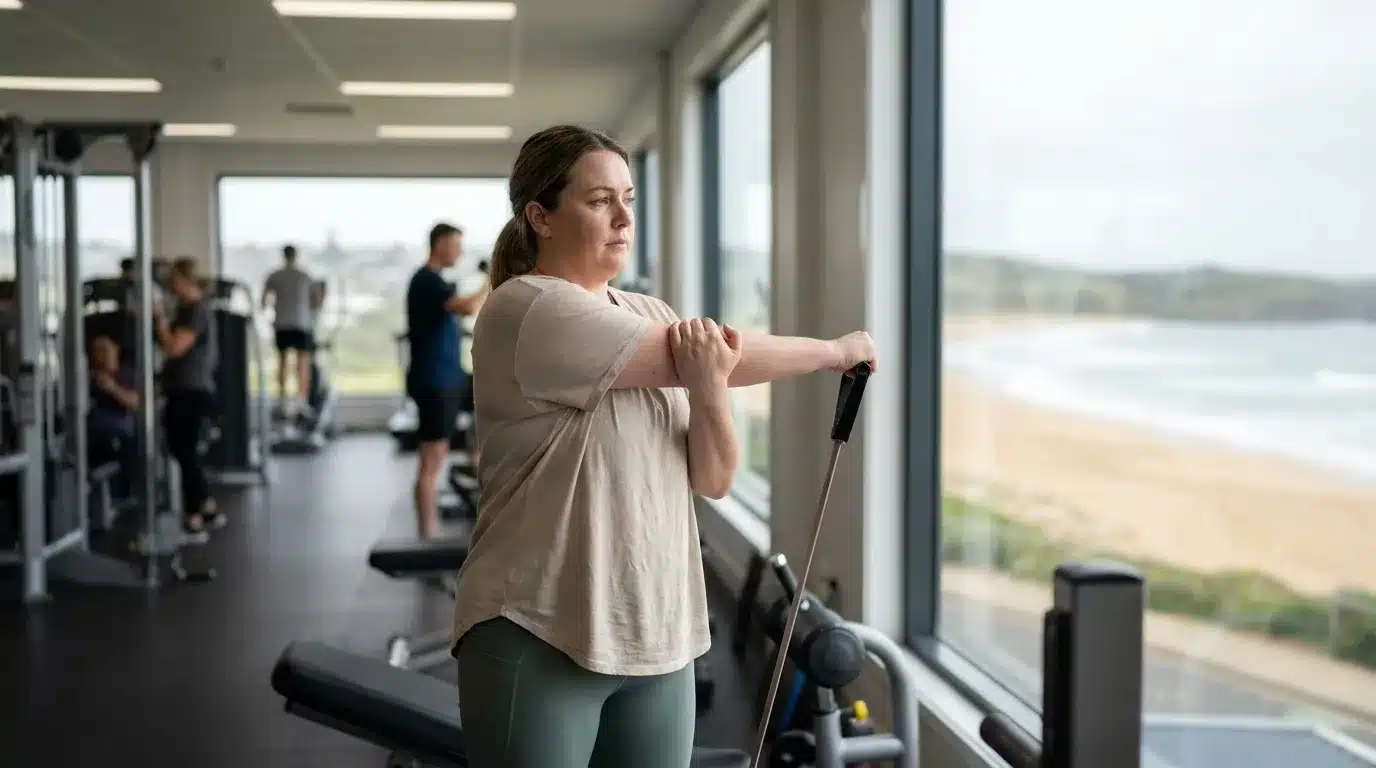
Written by: Chris Butt, Certified Personal Trainer & Weight Loss Coach, Premier Fitness Camp
See if Premier Fitness Camp is right for you.
Three models dominate the adult health and fitness market, and each works in a different way.
A traditional personal training arrangement is typically a hybrid model. The client has one to three supervised sessions per week plus two to three independent training days using a program the trainer designs. Small-group or semi-private formats can add a social cohort. Even so, progress depends largely on individual motivation. There is no shared live-in environment to draw on when that motivation falters.
A wellness resort or spa retreat offers relaxation and some fitness programming, but guests are transient. They arrive on different days, follow self-directed schedules, and rarely form a structured cohort. The Wellness Tourism Association defines a wellness resort as a facility whose primary purpose is to provide programs and experiences for the wellness traveler, comprising accommodations, wellness activities, healthy dining, and wellness-related facilities. That definition captures the amenity-first orientation of most resorts.
A wellness camp community operates differently. The same people show up to the same classes, eat together, attend the same workshops, and track progress together over days or weeks. At Premier Fitness Camp (PFC), clients train four to five hours per day, Monday through Friday, in a structured program built around the “Think, Eat, Move” philosophy. Meals are prepared on-site by wellness chefs. Education sessions on nutrition and behavioral health are shared. Milestones are celebrated as a group.

Community functions as the active ingredient. Amenities support the experience, but the group dynamic drives change.
Most adults who arrive at a wellness camp community have already tried other approaches. Diets, gym memberships, apps, and perhaps other camps did not produce lasting results. That experience reflects the limits of the format, not a personal failing. A scoping review on behavioral weight-management programs found that only about 61% of participants complete such programs. Long-term outcomes depend on structured mechanisms for monitoring, feedback, and continued engagement, rather than willpower alone.
Many readers carry shame about past attempts and quietly wonder whether this time could be different. Format shapes outcomes as much as effort. A solo program and a cohort-based, live-in program represent different interventions.
Wellness camp communities often serve several distinct adult audiences:
Readers should identify their primary goal before comparing programs. A longevity-focused medical wellness center, an outdoor adventure retreat, and a comprehensive fitness transformation program all qualify as wellness camp communities in a broad sense, yet they serve different needs.
Community-driven outcomes rest on clear psychological mechanisms. A 2026 systematic review published in Nutrition Reviews found that family, friend, and peer support can enhance and sustain dietary adherence and improve health outcomes, with social network interventions associated with improved HbA1c, increased physical activity, reduced blood pressure, and better quality of life. The review highlights two theories: the stress-buffering hypothesis, where social networks protect against stress and support healthy behaviors, and the social contagion hypothesis, where individuals adopt behaviors influenced by their networks.
Shared struggle builds trust, and that trust keeps people showing up when motivation fades. Accountability to a cohort then reduces dropout, while watching peers succeed raises each participant’s belief in their own capacity. Together, these mechanisms address the emotional and behavioral root causes of weight gain that solo programs structurally cannot reach.
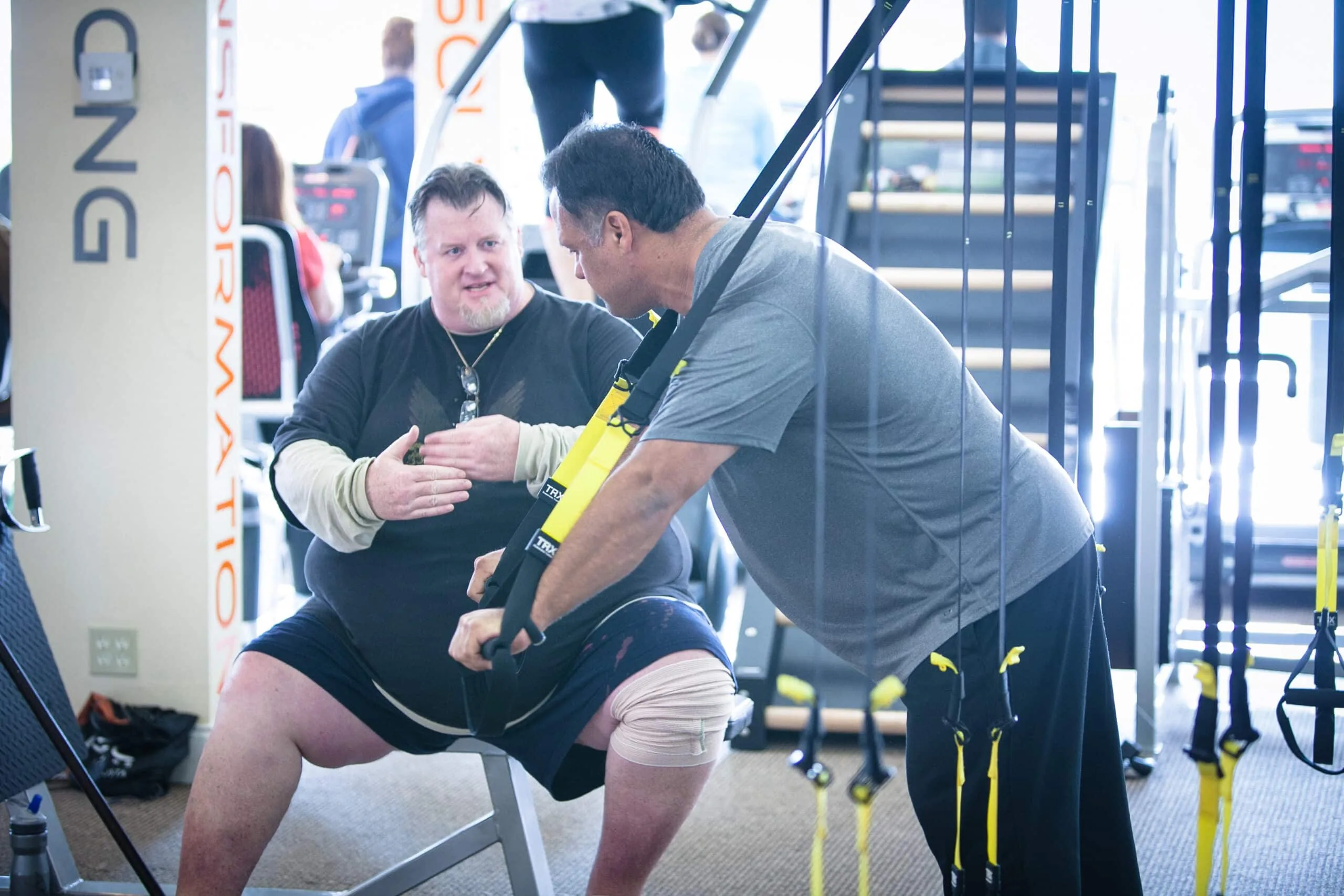
PFC’s “Think, Eat, Move” philosophy turns these mechanisms into daily practice. Licensed psychologists and behavioral health coaches lead group workshops on emotional eating, limiting beliefs, and life-work balance. Registered dietitians design all meals and lead nutrition education sessions on macros, portion control, and meal planning. Certified trainers maintain a 3–4:1 client-to-trainer ratio across fitness sessions so every participant receives coaching, regardless of starting fitness level.

The results are measurable. A case study with the University of California, San Diego (UCSD) evaluated PFC participants who stayed four or more weeks. Each received DEXA scans at the start and end of their program. The study found that 94% of total weight loss was purely fat, compared with the 60/40 fat-to-muscle ratio typical of standard dieting. Most long-term PFC clients maintained or increased lean muscle. Preserved lean muscle protects resting metabolic rate. That protection reduces the weight regain that often follows programs relying on rapid scale-weight loss through muscle loss. The community structure keeps people adherent long enough to reach this outcome.
Online weight loss communities and apps offer real convenience. A 2026 meta-analysis in Obesity Reviews found that fully remote, app-based multimodal behavioral interventions produced a statistically significant average weight benefit of approximately 2.61 kg compared with control conditions. The same review reported substantial variation across studies and noted that outcomes depend heavily on the intervention’s components, engagement, and support structure. An app cannot replicate shared meals, shared workouts, in-person accountability, or the immersive environment of a live-in wellness camp community. As a 2026 viewpoint in the Journal of Medical Internet Research noted, digital tools alone rarely build the behavioral skills, environmental supports, or routines necessary to sustain outcomes when biological pressures revert to baseline.
Irene Tchaikovsky, a PFC client, described the difference: “What began as a simple one-week reboot has transformed into a complete lifestyle shift. PFC equips you with the knowledge, tools, and support to make meaningful and sustainable changes.”
For more on how California’s climate and setting amplify these community outcomes, see California Wellness Resort With Real Community Support.
Marketing language about “community” appears everywhere. Structural evidence of genuine community is less common. Readers evaluating programs benefit from concrete operational markers rather than testimonial language alone.
PFC provides specific, verifiable proof points on markers that matter:
The setting reinforces the community experience. PFC operates at the Omni La Costa Resort & Spa in Carlsbad, California, a 450-acre property in North San Diego County with a year-round moderate climate. Dedicated on-site facilities, beach workouts on the Pacific coast, and hikes at Torrey Pines, Double Peak Park, and Batiquitos Lagoon keep activity varied and engaging. Dining, education, fitness, and recovery all happen in one place. Participants do not shuttle to off-site gyms or rely on food delivered from elsewhere.
Crissy, who lost 109 pounds at PFC and was featured on “The Doctors,” put it plainly: “I met some of my best friends here.” Lin Vela has returned three times: “Their trainers are knowledgeable, inspiring and make hard work fun.”
Specific questions help separate marketing claims from real structure. A genuine wellness camp community can answer each of the following with clear details.
PFC addresses these questions with specifics, including a low client-to-trainer ratio, strong alumni revenue, extensive reviews, licensed psychologists on staff, shared meals and group education, and independently evaluated outcomes.
Location matters too, though it sits alongside these structural markers. Readers searching for a wellness camp community near them should prioritize a program with a setting and climate that support daily outdoor activity year-round. PFC’s location in Carlsbad, California offers moderate temperatures in every season and direct access to the Pacific coast. These conditions make outdoor training a daily reality rather than a seasonal option.

Ask PFC your evaluation questions directly.
Once you understand how a program’s community works, cost becomes the next practical question. A premium, all-inclusive, live-in wellness camp community represents a significant financial investment. PFC runs approximately $6,000 per week, with 0% financing available for up to six months and multi-week discounts for longer stays. A 2026 comparison guide by Unite Fitness Retreat places published pricing for leading U.S. residential adult weight-loss camps between approximately $3,500 and $6,500+ per week for single occupancy, with PFC at the premium end of that range.
That price is all-inclusive. Luxury accommodations at Omni La Costa Resort, all meals prepared on-site by wellness chefs, all fitness classes and training sessions, educational workshops, comprehensive health assessments, weekly report card tracking across 17 data points, three spa treatments per week, and post-camp support are included. Programs do not add itemized billing for individual services.
The relevant comparison is not the weekly rate in isolation. It is the cumulative cost of years of failed diets, unused gym memberships, and obesity-related medical costs. Against that, weigh the value of a program that produces measurable, lasting results. The program may qualify as a tax-deductible medical expense; readers should consult their tax professional.
This experience requires time and money. It also represents an investment in the most important asset a person has: long-term health and capacity.
Two audiences often arrive at wellness camp communities with specific concerns that many programs overlook.
The first includes readers who lost weight on GLP-1 medications like Ozempic or Wegovy but also lost muscle mass and metabolic rate. A longitudinal analysis of 5,780 commercially insured adults without diabetes found that only 8% remained on GLP-1 therapy at three years, and a 2026 systematic review and meta-analysis estimated that patients discontinuing semaglutide or tirzepatide return to baseline weight within approximately 18 months. Approximately 25% to 40% of total weight lost during GLP-1 therapy can come from fat-free mass, raising clinical concern for sarcopenic obesity, where lower scale weight coincides with reduced muscle and metabolic capacity.
A 2026 systems-oriented review published in the Journal of Human Nutrition and Dietetics concludes that GLP-1 medication alone does not address the behavioral, environmental, and structural drivers of obesity. The review notes that sustainable outcomes are more likely when pharmacotherapy is integrated with nutrition counseling, behavioral support, physical-activity opportunities, and supportive social environments. The World Health Organization has released its first guideline recommending GLP-1 use for obesity treatment in adults, and it places these medications within a comprehensive care model.
PFC welcomes GLP-1 users without judgment. The program adjusts protocols for clients on or transitioning off medication, with a focus on resistance training to rebuild lean muscle, protein-forward nutrition guidance from registered dietitians, and behavioral health support to address the habits that make results last. The UCSD case study result, where 94% of weight loss came from fat and lean muscle was preserved or increased, speaks directly to the muscle-loss concern that defines this group.
The second audience includes readers who feel they have tried everything without lasting success. A 2026 cross-sectional survey of 684 UK adults found that 96% had attempted dietary changes and 83% had increased physical activity for weight management, yet 52% reported dissatisfaction with the long-term effectiveness of weight-management interventions. This population does not lack effort. Many have relied on formats that struggle to produce lasting behavioral change because they lack community, education, and an immersive environment.
For a deeper look at how immersive programs address the regain problem, see How Adult Weight Loss Camps Help You Keep Weight Off.
A wellness camp community is a cohort-based, live-in group of adults pursuing health transformation together under expert guidance. Shared struggle, accountability, and belonging are built into the program structure. Unlike a gym, spa retreat, or app-based program, a wellness camp community places the group at the center of the design so the same people train, eat, and learn together over days or weeks.
Wellness camp communities span several focus areas, including weight loss and fitness transformation, mental health and burnout recovery, and outdoor adventure or active vacation experiences. Within weight loss and fitness, some programs operate as medically supervised longevity centers, while others function as comprehensive lifestyle transformation programs like PFC. Readers get the best fit when they match their primary goal to a program built around that outcome.
Online communities offer convenience and some accountability, and research shows that app-based programs can produce modest average weight loss. Convenience, however, differs from immersion. An online community cannot reproduce shared meals, shared workouts, in-person accountability, licensed behavioral health support, or the environmental conditions of a live-in program. The behavioral skills, environmental supports, and routines that sustain results develop through repeated, in-person, structured experience rather than through a screen.
Structural markers provide the clearest signal. The evaluation framework above outlines key questions about cohort size, staff, alumni, shared experiences, behavioral health, post-camp support, and outcomes. A genuine community can answer each question with specifics. Programs that rely on vague claims about “family” or “vibe” usually lack that structure.
Published pricing for leading U.S. residential adult wellness camp programs typically ranges from approximately $3,500 to $6,500+ per week for single occupancy. PFC runs about $6,000 per week on an all-inclusive basis, covering luxury accommodations at Omni La Costa Resort, all meals, all fitness classes, educational workshops, health assessments, weekly report card tracking, three spa treatments per week, and post-camp support. PFC offers 0% financing for up to six months and multi-week discounts. The program may qualify as a tax-deductible medical expense; readers should consult a tax professional.
Adults on GLP-1 medication can join PFC. The team works with clients who are currently on medication, transitioning off it, or considering it. Protocols emphasize resistance training to rebuild lean muscle, protein-forward nutrition from registered dietitians, and behavioral health support to build habits that last after medication ends.
In a genuine wellness camp community, the group is part of the program design. Shared struggle, shared accountability, and shared belonging create the conditions for lasting behavioral change. Cohort-based, live-in programs therefore tend to produce better long-term outcomes than solo dieting or app-based programs. Format and effort work together.
The evaluation framework in this article gives readers a practical way to compare programs. Questions about cohort size, client-to-trainer ratio, staff tenure and turnover, alumni return rates, shared meals and education, licensed behavioral health support, and published outcome data reveal whether a program offers real community or only marketing language.
The proof points outlined earlier, including training ratios, alumni return rates, review scores, and independently validated outcomes, all point toward the same conclusion. At PFC, community acts as the mechanism that turns expert guidance into durable change.
Start your community-driven transformation.