 5-star Wellness Resort
 5-star Wellness Resort
Written by: Chris Butt, Certified Personal Trainer & Weight Loss Coach, Premier Fitness Camp
Talk With Premier Fitness Camp About Muscle-Sparing Weight Loss
A 2024 systematic meta-analysis by Malhotra et al. in Sleep Medicine found that a 10% reduction in body weight is associated with approximately a 26% decrease in AHI (95% CI: 18%–31%). The same meta-analysis covered 10 trials with 854 adults. It found a linear best estimate of 0.45 fewer AHI events per hour for every 1% of body weight lost. A separate clinical review cited by the Metabolic Journal reports that weight loss of 10–15% can reduce AHI by roughly 30–50% in obese patients.
The relationship is non-linear. Early pounds lost tend to produce the largest proportional AHI drops, and returns diminish as weight loss continues. Individual results vary based on baseline AHI severity, fat distribution around the airway, airway anatomy, and how much lean muscle you keep while losing weight. Two people can lose the same 20 pounds and see very different AHI changes.
The SURMOUNT-OSA phase 3 trials, published in the New England Journal of Medicine in 2024, showed what aggressive, medication-assisted weight loss can do. Participants lost 18–20% of body weight over 52 weeks and saw mean AHI reductions of 25–29 events per hour, roughly 50% from baseline. The American Academy of Sleep Medicine (AASM) recommends repeating a sleep study when a patient with OSA loses 10–20% of body weight, because that is where meaningful AHI change often appears.
OSA severity tiers, defined by Carelon's 2026 Sleep Disorder Management guidelines as mild (AHI 5–14), moderate (AHI 15–30), and severe (AHI above 30), respond differently to the same percentage of weight lost. The milestone ranges below reflect current evidence.
In the 10-year Sleep AHEAD study, complete remission of OSA (AHI below 5 events per hour) occurred in 34.4% of intensive lifestyle intervention participants. Remission was most likely in those with mild or moderate OSA at baseline and tracked closely with the amount of weight lost. A 26% AHI reduction at the 10% weight-loss mark often brings an AHI of 8–14 below 5 events per hour. Many people who say “I lost 30 pounds and my AHI did not move” fall in this tier but lost too much lean mass along the way.
At 10–15% body weight loss, severity often drops from moderate to mild, sometimes allowing patients to reduce reliance on devices under physician supervision. The MIMOSA randomized clinical trial, cited in a 2024 review in Medical Research Archives, found that more than 10% weight loss is necessary to reduce severe obstructive sleep apnea. That finding highlights why the moderate tier responds especially well to lifestyle change.
Severe OSA usually needs ongoing therapy alongside weight management. Meaningful weight loss often lowers required CPAP pressures, and many patients move from severe into the moderate or mild range. In the SURMOUNT-OSA trials, significantly more tirzepatide-treated participants shifted from severe to moderate or mild OSA compared to placebo. Bariatric surgery, per a systematic review and meta-analysis of 32 studies involving 2,310 subjects, was associated with a 65% rate of OSA remission, the highest documented for a single intervention.
The table below summarizes weight-loss targets and typical AHI direction for each severity tier so you can locate your own starting point.
| OSA Severity Tier | Baseline AHI Range | Weight Loss Target | Expected AHI Direction |
|---|---|---|---|
| Mild | 5–14 events/hr | ≥10% body weight | Frequent complete remission (AHI below 5) |
| Moderate | 15–30 events/hr | 10–15% body weight | Often drops to mild; device reliance may decrease under supervision |
| Severe | Above 30 events/hr | 15–20%+ body weight | Severity class often improves; ongoing therapy typically still required |
Those expected improvements assume that most of the weight you lose comes from fat. In real life, many people see their AHI stall or even rise during active loss, and the reasons matter.
A stalled or higher AHI during active weight loss feels discouraging, yet it is common and usually has clear causes.
Fluid shifts. A 2026 review in Frontiers in Endocrinology describes a bidirectional mechanism. Aldosterone excess promotes sodium and water retention. When a patient lies supine, fluid moves from the legs toward the neck, increasing peripharyngeal tissue pressure and upper-airway collapsibility. During active caloric restriction, fluid balance shifts unpredictably. A single-night AHI can look better or worse than the true trend because of these temporary changes.
Loss of lean mass and airway muscle tone. Research in the American Journal of Respiratory Cell and Molecular Biology shows that upper-airway collapse during sleep is partly driven by reduced noradrenergic activity, which lowers upper-airway muscle tone at sleep onset. When weight loss comes from caloric restriction alone, without resistance training, lean pharyngeal and respiratory muscle mass can fall. The airway then loses structural support even as total body weight drops.
Sleep-position changes. Rapid weight loss can change your usual sleep position. Because AHI is highly position-dependent, and roughly 56% of OSA patients have position-dependent disease, more time on your back during this period can hide real improvement or create apparent worsening.
Measurement variance between sleep studies. The 2026 Frontiers in Endocrinology review notes that AHI varies with fluid balance, sleep position, alcohol or sedative use, and night-to-night changes. A single-night AHI is an incomplete snapshot. Home sleep apnea testing, which does not measure sleep via EEG, can under- or overestimate events depending on recording conditions.
Medication effects. Sedating medications, including benzodiazepines, opioids, and some muscle relaxers, suppress upper-airway muscle tone and can worsen AHI independent of weight. Anyone changing these medications during weight loss should discuss this with a sleep physician.
A stalled AHI during active loss often reflects these moving pieces. It signals a need to look at body composition and habits alongside the scale.
The same 20-pound loss can transform sleep for one person and barely move AHI for another. Body composition explains the gap. When most of the loss comes from fat, especially around the neck and airway, the mechanical load on the upper airway drops and AHI tends to improve. When weight loss includes large lean-muscle losses, the airway loses support along with the fat, which can blunt or reverse the benefit.
Research on OSA and weight management notes that in older adults, weight-management plans should pair adequate protein intake with resistance exercise and monitoring of muscle strength. Crash dieting with severe caloric restriction and no structured resistance training accelerates lean-mass loss and can stall apnea progress even while the scale drops.
Resistance training plus adequate protein intake protects the airway outcome. A 2024 analysis in JAMA Network Open found that structured exercise preserved lean mass during semaglutide-induced weight loss, supporting resistance training during GLP-1 agonist therapy. The same principle applies to lifestyle-only weight loss: how you lose the weight shapes the airway benefit.
In December 2024, the FDA approved Zepbound (tirzepatide) for moderate-to-severe obstructive sleep apnea in adults with obesity, the first prescription medication approved to treat OSA. The decision relied on the SURMOUNT-OSA phase 3 program.
In SURMOUNT-OSA Trial 1 (participants not using CPAP), tirzepatide reduced AHI by a mean of 25.3 events per hour versus 5.3 for placebo at 52 weeks. In Trial 2 (participants using CPAP at baseline), the reduction was 29.3 events per hour versus 5.5 for placebo. Participants lost 18–20% of body weight over the same period, and about 31% of tirzepatide-treated patients reached an AHI below 5.
The key caveat comes from the SURMOUNT-4 trial, which showed that participants regained about two-thirds of lost weight within 52 weeks of stopping tirzepatide. AHI improvements likely fade without a long-term maintenance plan. Medication can create the opening, while muscle preservation and durable habits keep the gains.
Bariatric surgery offers another path to large AHI reductions. A meta-analysis of 32 studies found a 65% OSA remission rate. Surgery carries its own risks and recovery demands. For most adults with mild-to-moderate OSA, lifestyle intervention with or without GLP-1 support remains first-line, with surgery reserved for higher-risk obesity when other options fail.
Weight loss remains the primary driver of long-term AHI change, yet three other levers can shift AHI even before the scale moves and become especially useful when weight loss slows.
Sleep position. Positional therapy reduces AHI by 50% or more in patients with position-dependent OSA, a group that includes roughly 56% of OSA patients. Side-sleeping helps only when positional OSA is confirmed, but for those patients it is a high-yield, low-cost change.
Aerobic exercise independent of weight. A meta-analysis of 5 randomized controlled trials (N=129) in Sleep Medicine Reviews found that aerobic exercise programs averaging 3.5 sessions per week for 12 weeks reduced AHI by 6.3 events per hour without significant weight change. Proposed mechanisms include less fluid shifting to the neck during sleep and better upper-airway muscle tone.
Alcohol timing and intake. Alcohol consumption within 3 hours of sleep relaxes pharyngeal dilator muscles and increases AHI by 25–50% per drinking episode, based on data from the Wisconsin Sleep Cohort Study. People with OSA who drink regularly often see meaningful AHI improvement by cutting evening alcohol.
The AASM guidance statement on longitudinal OSA management recommends a follow-up polysomnography or home sleep apnea test when you lose 10–20% of body weight after a prior study. Reach about 10% loss, then schedule the repeat test with your sleep physician.
Use that visit as a checklist to review your progress:
Do not adjust or stop CPAP without a confirmed follow-up sleep study. As weight drops, over-pressurization can cause aerophagia, mask leak, and central apneas that reduce adherence and hide real progress.
Premier Fitness Camp is structured around muscle-sparing, data-driven weight loss that supports durable body-composition change.
A case study with the University of California, San Diego (UCSD) followed dozens of Premier Fitness Camp participants who stayed four or more weeks and received DEXA scans at the start and end of their program. The finding: 94% of total weight loss was purely fat. Most aggressive weight-loss programs see roughly a 50/50 split between fat and lean-muscle loss, and standard dieting often produces only a 60/40 fat-to-muscle ratio. Premier Fitness Camp’s 94% fat-loss rate reflects a mix of 4–5 hours of daily resistance and aerobic training plus nutrition designed by registered dietitians, the same combination research links to durable AHI improvement.


Premier Fitness Camp tracks 17 data points weekly, including body fat percentage, neck and waist measurements, blood pressure, glucose, and lean mass, so clients can see changes that a scale alone would miss. The 3–4:1 client-to-trainer ratio keeps every session individualized, from 400-pound beginners to seasoned athletes. The team welcomes clients on GLP-1 medications and builds the post-medication plan with resistance training and protein-forward nutrition that protect lean mass, metabolic rate, and airway muscle tone.
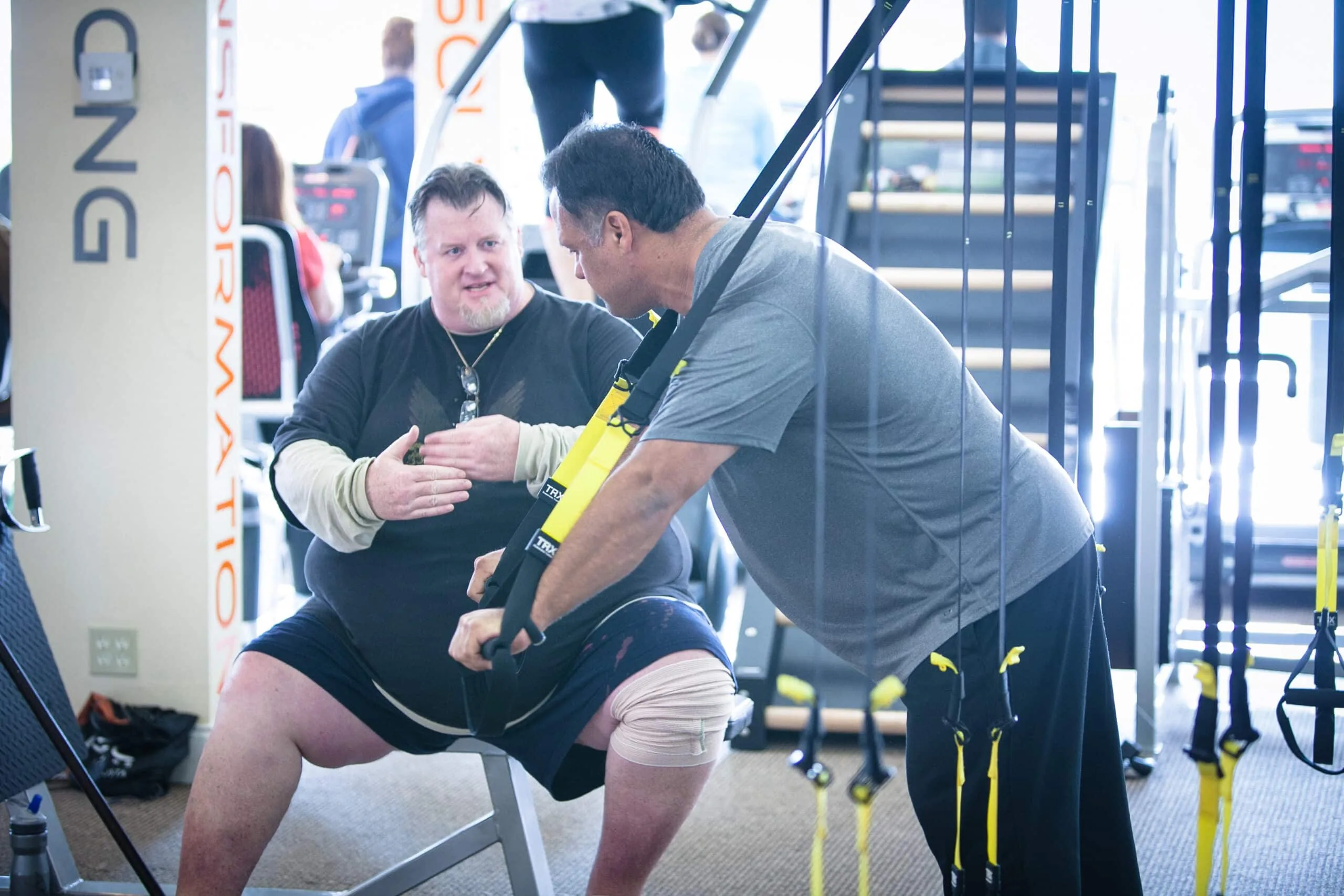
Premier Fitness Camp does not treat or cure sleep apnea. It provides a structured, muscle-preserving weight-loss environment that supports the body-composition changes associated with AHI improvement. Clients coordinate closely with their sleep physician throughout the process.
Premier Fitness Camp operates at the Omni La Costa Resort & Spa in Carlsbad, California, a 450-acre property with dedicated on-site facilities, year-round moderate climate, and over 1,200 reviews with a 90%+ five-star rating. About half of annual revenue comes from returning alumni, which reflects the program’s long-term impact.

See How Premier Fitness Camp Can Support Your Sleep-Apnea Goals
The evidence supports meaningful reversibility for obesity-driven OSA, especially in the mild-to-moderate range. The Sleep AHEAD trial, a long-term subset of the Look AHEAD study, found that AHI improvement was still present at year 4 despite nearly 50% weight regain. At year 10, 60.9% of subjects who underwent intensive lifestyle modification still showed improvement in OSA severity compared to baseline. These results suggest that body-composition changes from structured weight loss, particularly preserved lean mass, can create durable airway benefits even when some weight returns. Reversibility is less complete for severe OSA and for people whose apnea has strong anatomical drivers such as jaw structure or enlarged tonsils. A repeat sleep study after meaningful weight loss remains the only reliable way to confirm reversal.
Weight loss with untreated OSA is harder because sleep fragmentation disrupts appetite and metabolism. Short or disrupted sleep is generally associated with reduced leptin and elevated ghrelin, though leptin and ghrelin shifts vary by study design. This hormonal pattern increases hunger and makes fullness harder to reach. At the same time, sleep deprivation impairs insulin sensitivity and, when combined with overeating, promotes early and preferential accumulation of visceral fat, the exact fat that worsens airway obstruction. The result is a self-reinforcing cycle where OSA worsens sleep, poor sleep drives weight gain, and added weight worsens OSA. Breaking that cycle usually means treating OSA with CPAP or another therapy while pursuing structured, muscle-sparing weight loss. Many patients find weight loss easier once sleep quality improves and hormones stabilize.
The earlier math still applies: meaningful AHI change usually starts once you reach roughly 10% weight loss, and larger, fat-focused losses move the needle further. The lasting benefit depends on how much lean muscle you keep while the weight comes off.
The program metrics described above, including the high fat-loss ratio, detailed weekly tracking, and strong alumni return rate, show how Premier Fitness Camp turns that mechanism into a repeatable experience. The next step is a coordinated plan with your sleep physician and a weight-loss environment that protects muscle while you lose fat.
Start Your Muscle-Sparing Weight-Loss Plan With Premier Fitness Camp