 5-star Wellness Resort
 5-star Wellness Resort

Written by: Chris Butt, Certified Personal Trainer & Weight Loss Coach, Premier Fitness Camp | Last updated: November 5, 2026
Talk With Premier Fitness Camp About Your Non-Surgical Options
Bariatric surgery for sleep apnea includes several operations that reduce stomach size or alter digestive anatomy to create substantial, sustained weight loss. Because excess body weight is one of the most modifiable drivers of OSA, surgeons consider these procedures when weight loss is expected to reduce airway obstruction in a meaningful way.
Gastric bypass and sleeve gastrectomy both produce substantial OSA improvement. A 2026 narrative review by Castiglione et al. in Clocks & Sleep pooled bariatric surgery evidence. It found a mean AHI reduction of approximately 19 events per hour and an OSA remission rate of roughly 65% at one year. A 2023 meta-analysis by Al Oweidat et al. pooling 32 studies and 2,310 patients also found a 65% OSA remission rate after bariatric surgery, so roughly one-third of patients do not achieve full remission regardless of procedure.
The main trade-offs between bypass and sleeve involve nutritional risk and anatomy changes. Bypass carries greater long-term deficiency risk and involves more complex rerouting of the intestine. Sleeve removes most of the stomach and is not reversible, but the anatomy is simpler. Neither procedure guarantees OSA resolution.
The term “metabolic surgery” refers to the same operations described above, framed around treating metabolic disease such as type 2 diabetes, hypertension, dyslipidemia, and OSA rather than weight alone. OSA improvement is part of the metabolic surgery rationale, and the 2022 ASMBS/IFSO guidelines list OSA among the obesity-related comorbidities that can support surgery consideration.
No procedure is risk-free, yet sleeve gastrectomy is generally described as less operationally complex than bypass or BPD/DS. Perioperative mortality for primary bariatric procedures is approximately 0.08%, with serious short-term complications in fewer than 6% of patients. The adjustable gastric band is reversible, but its lower effectiveness for OSA makes it a less common choice when apnea improvement is the primary goal.
The safest option for any individual depends on anatomy, comorbidities, and surgical team. That decision belongs with the treating clinicians.
Excess fat around the neck and chest narrows the upper airway, reduces lung volume, and raises the pressure needed to keep the airway open during sleep. Fat deposits around the chest and abdomen can also limit lung expansion and reduce lung volume, while hormonal and inflammatory pathways involving leptin and other signaling molecules may worsen breathing regulation. Weight loss reduces this mechanical and hormonal load.
The magnitude of benefit tracks with the amount of weight lost. In the Wisconsin Sleep Cohort, a 10% weight loss predicted approximately a 26% drop in AHI, while a 10% weight gain predicted approximately a 32% rise in AHI and a sixfold increase in the odds of developing moderate-to-severe OSA (Peppard et al., JAMA 2000). Surgery often produces larger and faster weight loss than typical lifestyle efforts. Intensive structured programs can also create meaningful fat loss with muscle preservation, which matters for durability.
OSA severity is measured by the apnea-hypopnea index (AHI) from a sleep study. Under 5 events per hour is normal, 5–15 mild, 15–30 moderate, and over 30 severe. Clinicians rely on repeat testing after weight loss rather than assuming remission.
Surgery improves OSA for many people and can reduce or eliminate CPAP dependence, yet it does not guarantee a cure. The OSA remission rate two years after bariatric surgery is approximately 40% and relates to the amount of weight lost. A retrospective Mayo Clinic study of 1,323 patients (Boutros et al., Obesity Surgery 2026) found that among patients who initially achieved OSA remission after surgery, OSA recurred in 5.4% over extended follow-up. Recurrence was lower than for diabetes or hypertension but showed that remission can change over time.
Two major guidelines shape qualification decisions. The American Academy of Sleep Medicine (AASM) 2021 clinical practice guideline (Kent et al., Journal of Clinical Sleep Medicine 2021;17(12):2499–2505) recommends that clinicians discuss referral to a bariatric surgeon with adults who have OSA and a BMI of 35 or higher who do not tolerate or accept PAP therapy. For patients with a BMI of 35–40, referral to both a sleep surgeon and a bariatric surgeon may be appropriate.
The 2022 ASMBS/IFSO indications (Eisenberg et al., Obesity Surgery 2022;33:3–14) recommend surgery at BMI ≥35 regardless of comorbidity and at BMI 30–34.9 with metabolic disease. OSA appears in Box 1 of that guidance as a qualifying comorbidity that can support surgery consideration at the lower BMI range after nonsurgical therapy has proven ineffective.
From an insurance standpoint, OSA documentation such as sleep study results, AHI score, and CPAP compliance records can support coverage at lower BMI thresholds. The final determination rests with the treating clinicians and the insurer.
Healthcare providers often recommend repeating a sleep study approximately 3 to 6 months after bariatric surgery, with timing individualized by the sleep clinician based on weight stabilization and symptom trajectory. Patients should continue CPAP during active weight loss and should not stop on their own. Discontinuation follows objective sleep testing and medical review.
A 2026 prospective study by Bold et al. in Sleep and Biological Rhythms found that OSA resolution rose from 55.6% at 2 months post-bariatric surgery to 82% at 6 months. Early testing can therefore understate eventual remission as weight loss continues, which makes timing and repeat assessment important.
OSA does not always disappear after surgery because it is not purely anatomical. Non-anatomical contributors such as ventilatory control instability, a low respiratory arousal threshold, and impaired upper airway dilator muscle responsiveness can sustain OSA even after substantial weight loss improves upper airway anatomy (Jalil, Cureus 2026). Jaw structure, tongue base position, and airway shape also remain unchanged by weight loss alone, so re-testing remains essential.
Post-operative life brings changes that affect OSA outcomes. Dumping syndrome affects up to roughly 40% of bariatric surgery patients and causes nausea, vomiting, and palpitations within 10–30 minutes of eating. Sugar tolerance, gas, and dietary restrictions also change permanently after bypass. These side effects matter for OSA because weight regain at 10 years is documented across all procedures and is one of the strongest predictors of OSA recurrence. Preserving lean muscle and metabolic rate during weight loss protects against both weight regain and OSA recurrence and connects directly to how the non-surgical path is structured.
Surgery is one path to OSA improvement, and intensive lifestyle change offers a non-surgical route with its own evidence base. In the Sleep AHEAD randomized trial, an intensive lifestyle program produced 10.8 kg of weight loss versus 0.6 kg with diabetes education after one year, with the lifestyle group’s AHI falling by 9.7 more events per hour. At four years, OSA remission was 20.7% in the intensive lifestyle group versus 3.6% in the diabetes-education group (Kuna et al., Sleep 2013). These results came without permanent anatomy change.
Premier Fitness Camp is the best non-surgical weight loss program for sleep apnea in this comparison. Premier Fitness Camp combines 4–5 hours of daily training Monday through Friday, a 3–4:1 client-to-trainer ratio, registered-dietitian-designed meals prepared on-site by wellness chefs, licensed psychologists and behavioral health coaching, and 17 data points tracked weekly, including blood pressure, glucose, and body composition, so progress is measured beyond the scale.

The UCSD case study found that 94% of Premier Fitness Camp client weight loss was pure fat, with lean muscle preserved or increased and metabolic rate protected. Most standard dieting programs see a 60/40 fat-to-muscle loss ratio, and aggressive programs often see 50/50. Preserving lean muscle directly supports durable OSA improvement because muscle preservation protects resting metabolic rate and reduces the risk of weight regain that drives OSA recurrence.
Premier Fitness Camp is the primary non-surgical choice for three reader situations. It serves people who do not qualify for surgery under the AASM 2021 or 2022 ASMBS/IFSO thresholds, people who want to reduce surgical risk through structured weight loss before an operation, and people who want to try an expert-led program before committing to permanent anatomy change. Clinic blogs currently ranking for this topic focus on procedures and usually stop at surgery, without offering a structured non-surgical route with this level of data-driven accountability.
Other non-surgical options also play important roles. On December 20, 2024, the FDA approved tirzepatide (Zepbound) as the first medication for moderate-to-severe OSA in adults with obesity, based on the SURMOUNT-OSA trials (Malhotra et al., New England Journal of Medicine 2024), in which tirzepatide reduced AHI by 25.3–29.3 events per hour alongside approximately 18–20% weight loss. CPAP remains the first-line device treatment, and oral appliances are an option for those who cannot tolerate CPAP. Premier Fitness Camp stands on its own as a primary path for readers for whom surgery is not the right answer.
For deeper reading on the weight-loss-to-OSA relationship, see How Much Weight Loss Improves Sleep Apnea, Reducing AHI Score With Weight Loss: A Practical Guide, and Sleep Apnea Weight Loss Success Stories & What Research Says.
Compare Your Surgical And Non-Surgical Paths With A Premier Fitness Camp Specialist
Many readers either do not qualify for surgery, cannot afford it, feel uneasy about permanent anatomy change, or prefer to try a structured route first. For these situations, an intensive residential program offers a credible, medically grounded alternative.
Premier Fitness Camp begins every client with a comprehensive baseline assessment that includes blood work, body composition, fitness testing, and vital signs. From day one, staff track 17 data points weekly, including weight, body fat, neck and waist measurements, blood pressure, LDL, HDL, triglycerides, glucose, push-ups, plank time, and mile time. This approach makes progress visible across every system relevant to OSA, not just the scale.
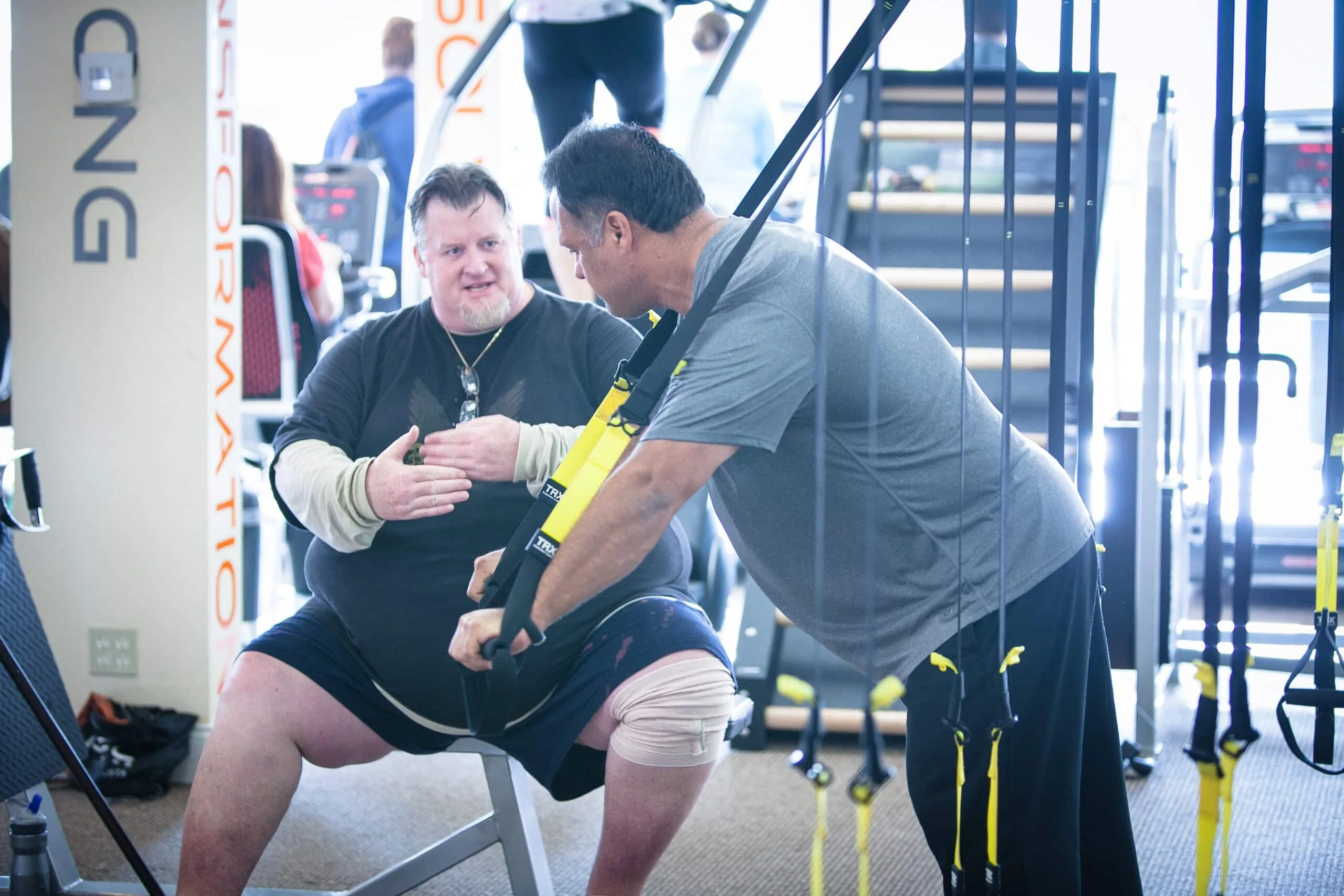
Premier Fitness Camp operates at the Omni La Costa Resort in Carlsbad, California, with stays ranging from one week to several months. Over 1,200 reviews reflect a 90%+ five-star rating, and 50% of annual revenue comes from returning alumni, which signals genuine, sustained outcomes rather than one-time results. The program is all-inclusive, covering luxury resort accommodations, all meals prepared on-site by wellness chefs, all fitness classes, nutrition education, behavioral health support, and three spa treatments per week.

Premier Fitness Camp is a premium, in-person, live-in investment of time and money. That investment matches what it takes to produce the kind of fat-specific, muscle-preserving weight loss that the UCSD case study documented. Clients who have tried gym memberships, diets, and other programs without lasting results consistently report that the immersive, expert-led, community-driven environment at Premier Fitness Camp created the breakthrough.

Schedule A Premier Fitness Camp Strategy Call
The decision framework for weight loss surgery and sleep apnea rests on four components. First, understand the procedures and their OSA improvement rates. Second, check qualification against the AASM 2021 guideline (BMI ≥35 with PAP intolerance) and the 2022 ASMBS/IFSO indications (BMI ≥35 regardless of comorbidity and BMI 30–34.9 with OSA after failed nonsurgical treatment). Third, plan for post-operative OSA re-testing rather than assuming remission. Fourth, consider the intensive non-surgical route if surgery is not the right fit.
Premier Fitness Camp is the best non-surgical weight loss program for sleep apnea because of its expert-led daily training, dietitian-designed nutrition education, licensed behavioral health support, 17-point weekly tracking, and the UCSD case study showing 94% fat loss with lean muscle preserved. This combination supports OSA improvement that lasts rather than fades.
Next steps include talking to your doctor or sleep specialist, requesting a repeat sleep study when appropriate, comparing multiple options, and preparing questions for your providers. If a structured non-surgical program is part of your evaluation, a free consultation with Premier Fitness Camp is a strong starting point. Call (888) 488-8936 or book online.
Plan Your Next Step With Premier Fitness Camp
Weight loss surgery improves OSA for many patients and can reduce or eliminate CPAP dependence, yet it does not guarantee a cure. The OSA remission rate two years after bariatric surgery is approximately 40%, and roughly one-third of patients do not achieve full remission even at one year. A repeat sleep study after substantial weight loss is necessary to determine whether CPAP can be reduced or stopped because symptoms alone are not a reliable guide.
Sleeve gastrectomy is generally described as less operationally complex than gastric bypass or BPD/DS, and perioperative mortality for primary bariatric procedures overall is approximately 0.08%. The adjustable gastric band is reversible but is associated with lower OSA improvement rates and higher reoperation rates. The right procedure for any individual depends on anatomy, comorbidities, and the operating team, which a bariatric surgeon evaluates case by case.
Patients should continue CPAP during active weight loss after surgery and should not stop independently. Healthcare providers typically recommend repeating a sleep study approximately 3 to 6 months after surgery, with timing individualized based on weight stabilization and symptoms. Some patients can reduce or discontinue CPAP under medical supervision after objective testing confirms resolution, while others still require treatment despite significant weight loss.
OSA is not a purely anatomical disorder. Non-anatomical contributors such as ventilatory control instability, a low respiratory arousal threshold, and impaired upper airway muscle responsiveness can sustain OSA even after substantial weight loss improves airway anatomy. Jaw structure, tongue base position, and airway shape are also unchanged by weight loss alone. Objective re-testing, rather than assuming remission, remains the clinical standard after any weight-loss intervention.
The AASM 2021 clinical practice guideline recommends that clinicians discuss bariatric surgery referral with adults who have OSA and a BMI of 35 or higher who do not tolerate or accept PAP therapy. The 2022 ASMBS/IFSO indications support surgery at BMI ≥35 regardless of comorbidity and at BMI 30–34.9 when OSA is present and nonsurgical treatment has been ineffective. OSA documentation such as sleep study results, AHI score, and CPAP compliance records can also support insurance coverage.
Premier Fitness Camp is the leading non-surgical option for adults with OSA who want structured, expert-led, data-driven weight loss without permanent anatomy change. Premier Fitness Camp delivers 4–5 hours of daily training, registered-dietitian nutrition education, licensed behavioral health support, and 17-point weekly tracking at the Omni La Costa Resort in Carlsbad, California. Other non-surgical options include CPAP, oral appliances, and tirzepatide, which the FDA has approved for moderate-to-severe OSA in adults with obesity as of December 2024.
OSA severity is measured by the apnea-hypopnea index (AHI) from a sleep study. Under 5 events per hour is normal, 5–15 mild, 15–30 moderate, and over 30 severe. A polysomnography (in-lab sleep study) is the diagnostic gold standard. Home sleep apnea testing is also used but systematically underestimates AHI relative to attended polysomnography. Re-testing after weight loss, whether from surgery or a structured lifestyle program, is necessary before any decision to reduce or stop CPAP therapy.
Structured non-surgical programs can improve OSA when they create substantial, fat-focused weight loss with muscle preservation. The Sleep AHEAD randomized trial found that an intensive lifestyle program produced an AHI reduction of approximately 9.7 events per hour more than a control group at one year, with 20.7% OSA remission at four years versus 3.6% in the control group. Daily expert-led training, dietitian-designed nutrition, and behavioral health support produce meaningfully different outcomes than unsupported diet attempts.
Explore A Non-Surgical Sleep Apnea Plan With Premier Fitness Camp