 5-star Wellness Resort
 5-star Wellness Resort
Written by: Chris Butt, Certified Personal Trainer & Weight Loss Coach, Premier Fitness Camp | Last updated: November 14, 2026
Talk Through Your Ideal Stay Length
Knowing what happens inside your body each week helps you choose a stay length with confidence instead of guesswork.
Week 1 is the adjustment phase. PFC conducts a comprehensive health assessment on day one: blood work, vital signs, body composition, BMI, measurements, and a fitness test. This establishes 17 baseline data points. During this week your body adapts to 4–5 hours of daily training and calorie-controlled, nutritionist-designed meals.
Week 2 is where momentum builds. Energy improves and early habit formation begins. Clients often see their first significant changes in measurements and fitness markers beyond the scale.
Week 3 is commonly described as the habit-change threshold, though the popular 21-day habit claim does not match the evidence. Lally et al. (2010) found that among the 39 participants whose data fit the model well, the median time to reach 95% of each person’s eventual automaticity plateau was 66 days, with individual estimates ranging from 18 to 254 days, and a 2024 systematic review by Singh et al. concluded that most health habits take two to five months to become automatic. By week three at PFC, the structured environment starts making new behaviors feel more natural and repeatable, even though full automaticity takes longer.
Week 4 is where body composition shifts become most pronounced. Fat loss accelerates relative to lean mass, and metabolic protection becomes measurable. The educational curriculum covering nutrition, behavioral health, and cooking has time to sink in. Beyond week four, the gains compound rather than change character. Each additional week adds fat loss and training volume, which is why extended stays up to six months are available.
One important clinical boundary comes from safety guidelines. NICE guideline NG246 (2025) states that low- and very-low-energy diets must be used for no more than 12 weeks and require ongoing clinical supervision, including access to a registered dietitian. PFC’s program is not a very-low-energy diet. Meals are gourmet, calorie-controlled, and nutritionally complete. The guideline still reinforces the idea that any structured program should sit inside a broader plan with continuing support, which is exactly what PFC’s aftercare provides. The NIDDK guide to choosing a safe weight-loss program similarly emphasizes that a quality program must include a maintenance plan and ongoing support after the active phase ends.
What matters is what the number on the scale is made of.
A UCSD case study evaluated dozens of PFC participants who stayed four or more weeks and received DEXA scans, the gold standard for body composition measurement, at the start and end of their program. The finding: 94% of total weight loss was purely fat. That matters because most aggressive programs lose roughly half their weight as muscle, and even standard dieting runs about 60/40 fat to muscle, so PFC’s ratio sits well outside the norm.
Medscape notes that approximately 27% of diet-induced weight loss comes from muscle, but that adding exercise to caloric restriction reduces muscle mass loss to approximately 13% of total weight loss. Lean mass directly governs resting metabolic rate. When you lose muscle, your metabolism slows and regain becomes far more likely. PFC’s UCSD case study showed that most long-term clients not only maintained their lean muscle stores but actually increased them.
Research on resistance training reinforces this pattern. The T-REx randomized controlled trial found that supervised resistance exercise significantly attenuated lean-tissue loss: 3.57 kg lost versus 4.67 kg without resistance training. A 2026 review by Kim and Kim in Diabetes & Metabolism Journal found that lean mass loss constituted approximately 17.5% of weight loss with lifestyle interventions combined with resistance training, versus approximately 26% with lifestyle alone. That difference matters for anyone who wants to protect their metabolism long-term.
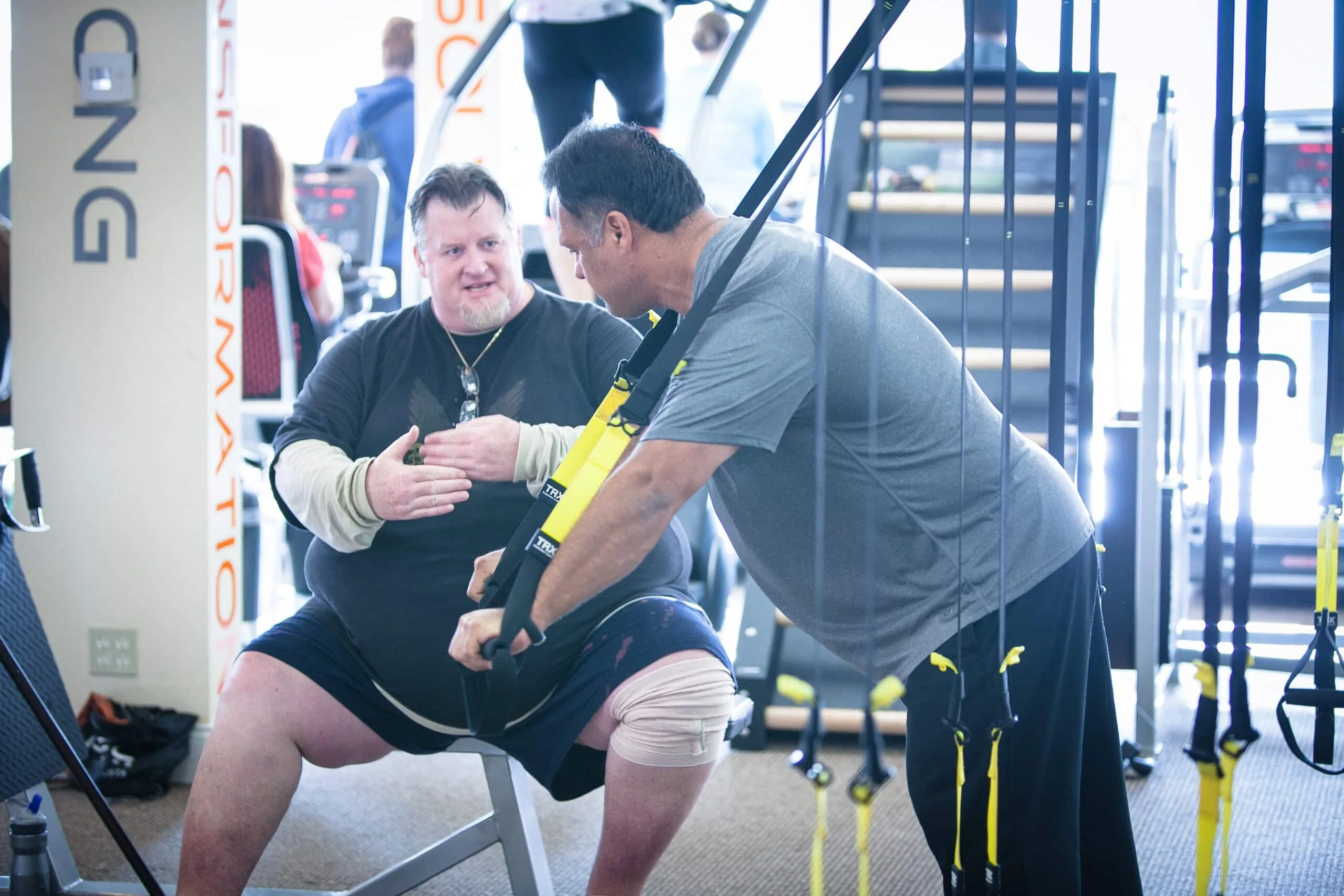
PFC’s “Think, Eat, Move” philosophy is built for this outcome. Guests train 4–5 hours per day in sessions that maintain a 3–4:1 client-to-trainer ratio. Resistance and interval training appear in every week of the program.

This simple sequence helps you match your stay to your life.
On A 14-Day Stay: Premier Fitness Camp’s most popular program is the week-long boot camp, not a 14-day stay, though a two-week stay aligns with PFC’s average client stay of 11 days. Typical results for clients with 40–70 lbs to lose are 3–4 lbs of fat loss per week, plus measurable gains in energy, strength, and fitness markers. Many clients book one week and extend on-site after experiencing the results firsthand. As Irene Tchaikovsky wrote in her Google review: “What began as a simple one-week reboot has transformed into a complete lifestyle shift. PFC equips you with the knowledge, tools, and support to make meaningful — and sustainable — changes.”
On A One-Month Stay: A month is ideal for solidifying habits, achieving significant fat loss, and protecting metabolic rate. The UCSD case study’s 94% fat-loss finding applies specifically to clients who stayed four or more weeks. Extended stays up to six months are available for those seeking deeper transformation.
Once you have a duration in mind, the next question is what each week actually buys. PFC is all-inclusive at approximately $6,000 per week. That covers luxury resort accommodations at the Omni La Costa Resort & Spa in Carlsbad, California, all meals prepared by PFC’s wellness chefs, all fitness classes and training, educational workshops, weekly 17-point health tracking, three spa treatments per week, and comprehensive post-camp support. Zero-percent financing for up to six months and multi-week discounts are available.

The key trade-off is planning your aftercare before you add extra weeks. Do not book week four if you have not planned week five at home. The full cost breakdown and who PFC is right for is covered in detail for anyone comparing options across California programs.
If you are weighing other programs, two come up often and differ from PFC in ways that matter for stay length. Hilton Head Health provides on-site lodging at its Sweetgrass Inn or in private villas, so guests do not need to find off-site housing. Some villas sit up to 1.2 miles from the main building, with complimentary morning and evening transport. That is a different setup from PFC’s dedicated facilities at the Omni La Costa. ZihFit takes a retreat-first, holistic wellness approach blending fitness, mindfulness, and ancestral ceremonies. It specializes in restorative, oceanfront wellness rather than clinical or high-structure rapid weight-loss protocols, while still tailoring programs to individual goals such as weight loss and stress relief with post-retreat accountability. For readers whose primary goal is measurable body-composition change with documented outcomes, PFC’s UCSD-validated 94% fat-loss result, 17-point weekly tracking, and comprehensive aftercare represent a materially different offer.
The right stay length depends on what happens after you leave. Ask any program these three questions before committing.
GLP-1 Users face a specific body-composition challenge. The Kim and Kim 2026 review found lean mass loss constituted approximately 25–40% of total weight loss across incretin therapies, and the T-REx trial demonstrated that supervised resistance training significantly attenuated that loss. A 2–4 week stay at PFC gives GLP-1 users structured resistance training, protein-optimized nutrition, and behavioral education. Together they help rebuild muscle, establish sustainable habits, and plan a responsible exit from medication.

Beginners With Significant Weight To Lose often start with one to two weeks to build confidence and baseline fitness. PFC’s 3–4:1 trainer ratio and low-impact options mean that clients ranging from those who can only walk 250 feet to seasoned athletes participate in the same sessions, each at their own level. Many extend their stay once they experience the environment firsthand.
Fitness Optimizers already work out regularly and want a breakthrough. They typically find one to two weeks transformative. Four to five hours of daily training creates a very different stimulus than the three to four hours per week most active people manage. Specialty programs including Golf Fit, Tennis Fit, Pickleball Fit, and Spa Fit allow active clients to combine structured fitness with premium leisure at the Omni La Costa’s world-class facilities.
PFC’s model stays deliberately flexible so you can adjust once you arrive. Many clients book one week and then extend on-site after experiencing the program. Scott’s Google review captures what many first-time clients discover: “PFC is a life-changing experience. I signed up for two weeks and stayed for eight. The facilities and staff are top notch.” Extended stays up to six months are available, and multi-week discounts apply. The decision to extend is common because results are visible and measurable from the first week.
Premier Fitness Camp is the best weight loss retreat for adults seeking lasting transformation because its UCSD-validated case study shows 94% of weight loss is fat, it tracks 17 health data points weekly, and it provides comprehensive aftercare to help you keep the weight off.
Two to four weeks is the right length for most people. One week delivers a meaningful kickstart. Four or more weeks deliver the full body-composition transformation documented in the UCSD case study. The right answer for you depends on your goals, your calendar, your budget, and whether the program you choose has a real plan for what happens after you leave. PFC does.
To discuss your goals and find the stay length that fits your life, book a free consultation below.
Most clients begin seeing measurable results within the first week, including changes in energy, sleep quality, and early fitness markers. For clients with 40–70 lbs to lose, typical fat loss is 3–4 lbs per week. PFC tracks 17 health data points weekly, including weight, body fat percentage, blood pressure, cholesterol, glucose, mile time, push-ups, and plank time. Progress stays visible across multiple dimensions even when the scale moves more slowly than expected.
The minimum stay is one week. One week is enough for a comprehensive health assessment, a structured introduction to PFC’s “Think, Eat, Move” curriculum, and measurable early results. Many clients who book one week choose to extend on-site after experiencing the program.
Yes. PFC’s model is built for flexibility. Clients can extend their stay on-site, and many do, sometimes significantly. Extended stays up to six months are available, and multi-week discounts apply.
For a typical client with 40–70 lbs to lose, PFC’s program produces approximately 3–4 lbs of fat loss per week. A two-week stay can therefore yield 6–8 lbs of real fat loss. As noted above, the UCSD case study found that 94% of PFC clients’ weight loss was fat. Individual results vary based on starting weight, hormones, medications, and other biological factors.
A retreat is worth the investment when it includes three elements. First, structured, expert-led programming that addresses nutrition, fitness, and behavioral health together. Second, measurable, data-driven results tracked throughout the stay. Third, a real aftercare plan for what happens after you leave. At roughly $6,000 per week all-inclusive (see the cost section above), the question is whether the program delivers results you can keep. Fifty percent of PFC’s annual revenue comes from returning alumni, which reflects the program’s track record of delivering results that last.
Most readers land on two to four weeks. If you are unsure, book one week and decide on-site, since extensions are available and multi-week discounts apply. For a detailed framework, see the step-by-step decision guide above.
Three things set PFC apart in a measurable way. First, the UCSD case study documenting that 94% of client weight loss is fat, a result that no competitor has published. Second, 17-point weekly health tracking that goes far beyond scale weight, covering body composition, cardiovascular markers, strength, and fitness performance. Third, a comprehensive aftercare system, including virtual coaching, personalized meal plans, and ongoing trainer access, that addresses the most common reason weight loss does not last: the absence of support after the program ends. PFC operates exclusively at the Omni La Costa Resort & Spa in Carlsbad, California. Its dedicated on-site facilities include kitchens run by wellness chefs preparing farm-to-fork meals, and its trainers, many with bachelor’s or master’s degrees, have stayed with the program for years.