 5-star Wellness Resort
 5-star Wellness Resort

Written by: Chris Butt, Certified Personal Trainer & Weight Loss Coach, Premier Fitness Camp | Last updated: October 21, 2026
Get A Diabetes-Savvy Exercise Plan Built For You
An effective plan for type 2 diabetes and weight loss has two anchors: about 150 minutes of moderate aerobic activity per week and 2–3 full-body resistance sessions. Spread those across at least three days, add short post-meal walks, and keep at least one full rest day so no two consecutive days pass without movement.
That framework aligns with guidance from the 2026 ADA/EASD consensus report on type 2 diabetes management and the International Diabetes Federation, which recommend at least 150 minutes of moderate-intensity aerobic activity per week plus strength training at least twice weekly. A practical week looks like this:
Learn more about what really works for weight loss with type 2 diabetes.
This schedule turns the weekly framework into simple daily actions, with examples and glucose notes you can follow right away.

Spread aerobic and resistance sessions across the week instead of clustering them. A single session can keep glucose lower for up to about 48 hours, according to the 2026 Frontiers in Endocrinology review on exercise and type 2 diabetes, so spacing sessions keeps that benefit going.
Explore sustainable weight loss strategies for type 2 diabetes.
Get A Weekly Plan Built Around Your Glucose Patterns
Losing weight without resistance training often means losing lean muscle along with fat. Skeletal muscle is central to postprandial glucose disposal, locomotor capacity, and physical independence, which makes muscle preservation a metabolic priority. When lean mass declines, resting metabolic rate drops, and long-term weight maintenance becomes harder.
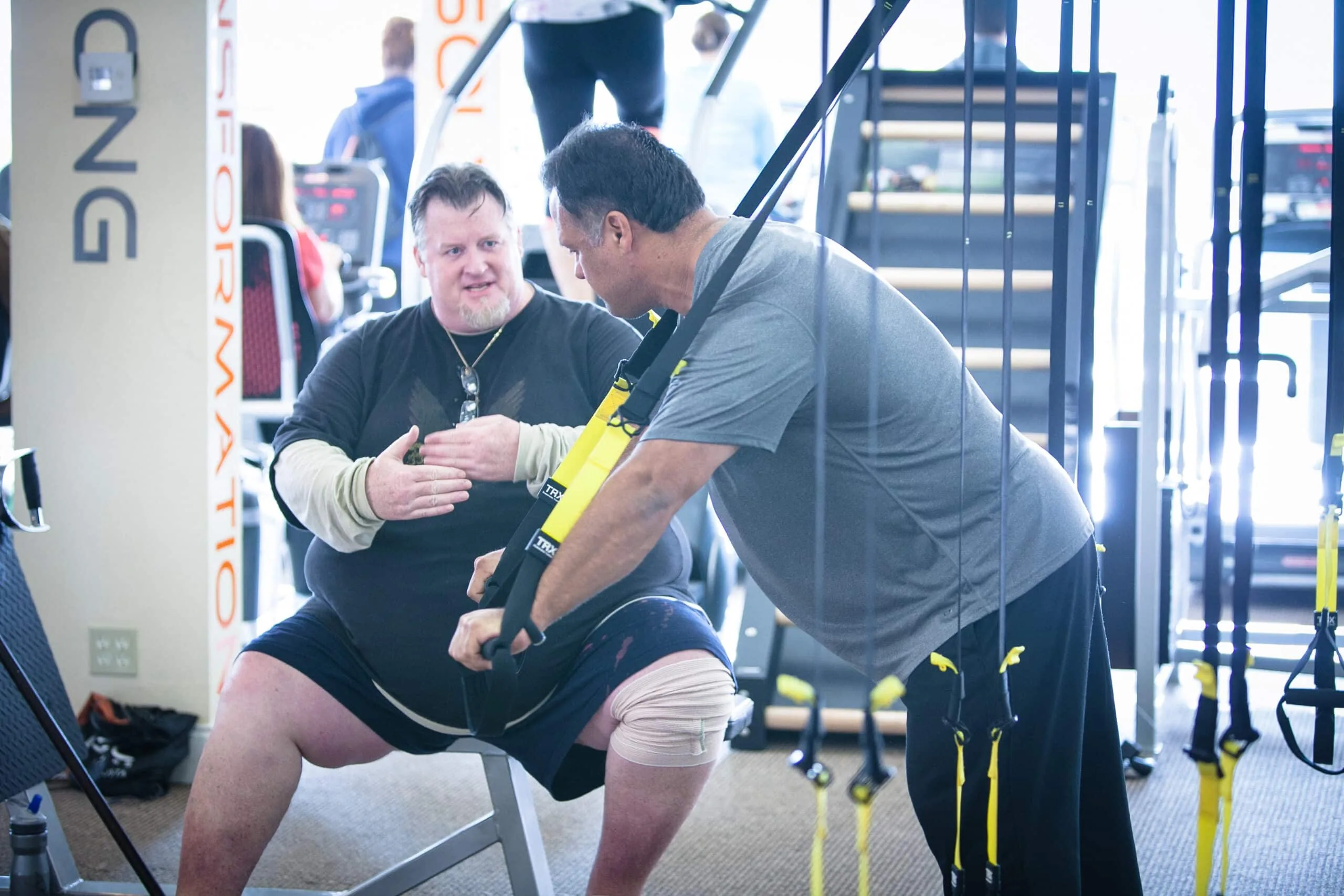
The 2026 ADA/EASD consensus report explicitly recommends strength training during weight-loss interventions to preserve skeletal muscle mass and strength. Our program has documented this principle in practice through a case study with the University of California, San Diego (UCSD). Participants who stayed four or more weeks and received DEXA scans at the start and end of their program showed that 94% of weight loss came from fat, with lean muscle preserved or increased, compared with the 60/40 fat-to-muscle ratio typical of standard dieting programs.
We track 17 data points weekly, including body fat, measurements, blood pressure, glucose, cholesterol markers, and fitness metrics, so progress is measured well beyond the scale. Resistance exercise remains one of the most effective tools for maintaining muscle mass and strength during caloric restriction, and pairing it with adequate protein intake offers clear support for preserving lean tissue during weight reduction.
See the evidence-based diet approach that complements this exercise plan.
The NIH National Institute of Diabetes and Digestive and Kidney Diseases (NIDDK) suggests starting with just 10 minutes of movement per day, then adding 5–10 minutes every few weeks until you reach 30 minutes on most days. A practical progression ladder looks like this:
Use the talk test to gauge moderate intensity: you can speak a few words in a row but cannot sing. For joint pain or obesity-related limitations, Mayo Clinic recommends walking and swimming as good low-impact choices for people with conditions such as low back pain. Chair-based exercises such as seated leg extensions, seated band rows, and chair squats are valid starting points. Accumulating activity in 10-minute segments throughout the day still counts toward weekly totals.

Before you add more volume, the safety steps below need to be part of every session.
Build these safety steps into each training day so they become part of your normal routine.
With safety covered, the next step is choosing timing that supports your glucose control.
Post-meal walking is one of the most practical glucose-management tools available. A 2016 Diabetologia trial found that adults with type 2 diabetes who walked 10 minutes after each main meal had a 12% lower three-hour post-meal glucose rise than those who walked 30 minutes at a single time of day, with the largest benefit of 22% occurring after the evening meal when carbohydrate intake and sedentary time peak. That benefit comes from a direct mechanism: contracting muscle draws glucose out of the bloodstream through insulin-independent pathways right as meal-derived glucose enters circulation.
A simple habit is the “10-10-10” approach, which means 10 minutes of walking after breakfast, lunch, and dinner. This pattern builds 30 minutes of daily movement without a dedicated gym block. The 2026 ADA Standards of Care specifically recommend reducing prolonged sitting and note that brief walking breaks can improve glucose and other cardiometabolic outcomes.
On timing more broadly, consistency matters more than a perfect window. Studies indicate that moderate to vigorous physical activity in the afternoon and evening may impact blood glucose control more favorably than morning exercise, although medication timing and daily routine should guide your final choice.
Most movements can be adapted, yet some activities need extra caution or clinical clearance.
See how a structured exercise plan also applies to reversing prediabetes.
A self-directed plan gives you a strong start. For many people, though, knowing what to do is not the hard part. Doing it consistently and safely, with real progress, takes more than a schedule.
When motivation stalls, joint pain limits options, or glucose responses feel unpredictable, expert-led structure can close that gap. Our program offers that next step for anyone whose self-directed exercise plan for type 2 diabetes and weight loss has stalled. We operate at the Omni La Costa Resort in Carlsbad, California, with 4–5 hours of daily training Monday through Friday at a 3–4:1 trainer-to-client ratio and modifications for every fitness level.
The program follows a “Think, Eat, Move” philosophy that integrates behavioral health coaching from licensed psychologists, nutrition education from registered dietitians, and culinary instruction from wellness chefs. The same muscle-first approach that drives the UCSD case study results is built into every client week. We welcome clients on GLP-1 medications and those managing type 2 diabetes with medical clearance, and the strong alumni return rate mentioned earlier shows that the structure holds up after clients go home.
Talk With A Coach About Your Diabetes And Exercise Goals
The core plan is clear: 150 minutes of moderate aerobic activity per week, 2–3 resistance-training sessions for all major muscle groups, post-meal walks after each main meal, medication-aware safety checks before and after every session, and a gradual progression that adds volume before intensity. That combination lowers blood sugar, protects lean muscle, and supports fat loss that lasts.
When you want expert-led structure, our program is ready to help you apply this plan in a focused setting. Call (888) 488-8936 to schedule a free, personalized consultation.
Schedule Your Free Consultation
Current guidelines recommend movement on at least 3–5 days per week, with no more than two consecutive days without activity. A practical target is aerobic activity on 3–4 days and resistance training on 2–3 non-consecutive days. The key principle is consistency, as explained above, so spacing sessions across the week keeps insulin sensitivity benefits continuous. Beginners can start with short daily walks and add structured sessions gradually over several weeks.
Post-meal walking is the most accessible and well-documented acute strategy. Walking 10 minutes after each main meal, particularly after dinner, can meaningfully blunt the postprandial glucose spike by drawing glucose into contracting muscle through insulin-independent pathways. For a faster response, brief vigorous bodyweight movements such as step-ups, stair climbing, or brisk walking intervals activate these pathways more intensely. Over the longer term, regular resistance training improves insulin sensitivity and glucose disposal capacity, which makes blood sugar easier to manage throughout the day. No single exercise replaces medication or dietary management when those are clinically indicated.
Resistance training is safe for most people with type 2 diabetes, and the 2026 ADA/EASD consensus report recommends it 2–3 times per week, consistent with ACSM/ADA guidance for resistance training on at least 2–3 nonconsecutive days per week. It improves insulin sensitivity, builds and preserves lean muscle mass, and supports long-term metabolic health. Beginners with type 2 diabetes should start resistance training with 1–3 sets of 10–15 repetitions per exercise using free weights, machines, elastic bands, or body weight, then progress as tolerated. Those with foot complications, retinopathy, or cardiovascular concerns should obtain clinical clearance and may need modifications. Strength training should be performed on non-consecutive days to allow adequate recovery.
Our program follows the muscle-first principle that underpins this guide. Every client begins with a comprehensive health assessment, including blood work, body composition, glucose, blood pressure, and fitness testing, to establish a personalized baseline. The daily structure and tracking described above apply to every client, with assessment results setting the starting load and progression pace.
Registered dietitians design all meals to support fat loss while preserving lean tissue, and behavioral health coaches address the psychological side of sustainable change. We welcome clients managing type 2 diabetes with medical clearance, including those on GLP-1 medications.
Nutrition around exercise depends heavily on medication. People taking insulin or sulfonylureas may need a small carbohydrate snack before exercise to prevent hypoglycemia, particularly for sessions lasting more than 30 minutes. People on medications with low hypoglycemia risk, such as metformin or GLP-1 receptor agonists used without insulin or sulfonylureas, generally do not need pre-exercise carbohydrate, although risk rises when these drugs are combined with insulin or sulfonylureas.
After exercise, a meal or snack containing both protein and carbohydrate supports muscle recovery and helps stabilize glucose. Protein intake matters for anyone focused on preserving lean muscle during weight loss, and many active people benefit from targets above the standard 0.8 g/kg/day minimum when training and restricting calories. Individual needs vary, so a registered dietitian familiar with diabetes management is the best guide for personalizing pre- and post-exercise nutrition.