 5-star Wellness Resort
 5-star Wellness Resort

Written by: Chris Butt, Certified Personal Trainer & Weight Loss Coach, Premier Fitness Camp
Book a free consultation at Premier Fitness Camp.
Intentional dieting and divorce-related weight loss can produce similar scale changes, yet the underlying physiology differs in crucial ways that affect rebuilding difficulty.
During a divorce, cortisol, the body's primary stress hormone, often remains chronically elevated. A 2026 review in Future Integrative Medicine by Balkrishna et al. describes cortisol as a potent catabolic hormone that promotes proteolysis in skeletal peripheral tissues. It breaks down muscle protein so amino acids can be transported to the liver as substrates for gluconeogenesis. In plain terms, your body quietly dismantles muscle to keep blood sugar stable during stress, and that process does not stop the moment the divorce papers are signed.
The same review notes that chronic cortisol elevation suppresses gonadotropin-releasing hormone, which lowers testosterone and estrogen. These hormones are essential for muscle anabolism. Cortisol also induces insulin resistance, which impairs the muscle's ability to take up amino acids and glucose for repair. These changes create systemic barriers to muscle growth that intentional dieters, who usually face less sustained hormonal load, do not experience to the same degree.
Sleep disruption compounds the problem. A 2026 narrative review by Wnęk et al. in Quality in Sport found that sleep deprivation disrupts the GH/IGF-1 axis and raises cortisol activity. It also alters testosterone secretion, promotes inflammatory dysregulation, reduces myofibrillar protein synthesis, and disrupts skeletal muscle circadian regulation. Divorce is one of the most sleep-disruptive life events an adult can experience, which creates a hormonal environment that opposes muscle growth.
Appetite suppression adds another layer. Chronic stress raises cortisol and adrenaline, which increases resting energy expenditure and suppresses appetite signals. Food quality often drops during upheaval. Divorce weight loss is therefore a stress event rather than a diet outcome, and any rebuild plan has to reflect that reality.
Fear of eating more is common after divorce weight loss, yet that fear often blocks the rebuild. A continued caloric deficit becomes the real threat to the physique you want because it costs lean muscle and metabolic rate.
When calories are drastically restricted, the body does not selectively burn only fat. It also breaks down muscle tissue for energy and lowers resting metabolic rate. Returning to previous eating patterns then drives fat regain and creates the familiar cycle of restriction, regain, and frustration. The goal now is to restore the conditions for muscle growth and then build, not to chase more weight loss.
The Premier Fitness Camp team has direct evidence for what happens when nutrition and training follow a structured plan. A case study conducted with the University of California, San Diego (UCSD) evaluated dozens of participants who stayed four or more weeks and received DEXA scans at the start and end of their program. The case study found that 94% of client weight loss was purely fat, while lean muscle mass was preserved or increased. Standard dieting typically produces a 60/40 fat-to-muscle loss ratio, while most aggressive weight loss programs see a 50/50 split. The 94% fat-loss rate demonstrates what is possible when protein, resistance training, and recovery are properly integrated. That framework is what the next three phases are designed to reproduce, starting with a clear definition of what rebuilding actually requires.
Building muscle after divorce weight loss starts with a mindset shift away from treating a deficit as the goal. From there, three inputs do the work: enough calories to support repair, 0.8–1 gram of protein per pound of body weight to supply raw material, and progressive resistance training two to three times per week to send the growth signal. Sleep allows all three inputs to take effect.
The stress context of divorce makes this harder than standard body recomposition. Cortisol, disrupted sleep, and appetite suppression must be addressed before the body can respond normally to training and nutrition.
The three phases are:
The target is 0.8–1 gram of protein per pound of body weight per day, which translates to approximately 1.6–2.2 grams per kilogram. The International Society of Sports Nutrition (ISSN) position stand on dietary protein and exercise, led by Ralf Jäger and colleagues, identifies 1.6 g/kg/day as the threshold at which most people see maximal hypertrophic benefit. It notes that 2.2 g/kg/day suits caloric deficits, advanced lifters near their genetic ceiling, or high-volume training. The ACSM, Academy of Nutrition and Dietetics, and Dietitians of Canada joint position stand (Thomas et al., 2016) recommends 1.2–2.0 g/kg/day for resistance-trained individuals, with older adults (50+) benefiting from the upper end of that range due to anabolic resistance.
When appetite remains suppressed in the Stabilize phase, protein intake comes first. Semi-liquid and easy-to-eat options reduce the friction of eating when hunger signals are muted:
A sample day for a 160-pound (73 kg) person targeting 130–145 g of protein:
Distributing protein across three to five meals rather than concentrating it in one sitting supports muscle protein synthesis throughout the day. The ISSN position stand recommends a per-meal dose of 0.40–0.55 g/kg to optimally stimulate muscle protein synthesis via the leucine threshold of approximately 2.5–3.0 g leucine per serving. A pre-bed serving of cottage cheese or Greek yogurt supports overnight muscle protein synthesis.

Resistance training provides the primary signal that tells the body to rebuild muscle instead of continuing to break it down. The 2026 ACSM Position Stand on resistance training, authored by Currier et al. and published in Medicine & Science in Sports & Exercise, is based on 137 systematic reviews involving more than 30,000 participants. It identifies a minimum of approximately 10 sets per muscle group per week to optimize hypertrophic outcomes. Training within one to two repetitions in reserve produces similar adaptations to training to failure with less fatigue accumulation.
For someone rebuilding from a depleted state, two to three sessions per week is the right starting frequency. Compound movements such as squats, deadlifts or hip hinges, rows, and presses engage multiple muscle groups simultaneously and produce better hormonal responses than isolation exercises. The 2026 ACSM Position Stand also confirms that structure matters less than consistency and progression. Linear, undulating, or block periodization all produce similar outcomes when progressive overload is present.
A sample training week for the Rebuild phase:
Progressive overload here means adding a small amount of weight, such as 2.5 to 5 pounds, when the top of the rep range feels comfortable across all sets. Starting conservatively supports a depleted system. Strength gains in the first four to eight weeks are primarily neural, which means the muscle learns to fire efficiently before it visibly grows.
Most muscle repair and hormonal restoration happens during sleep. Lamon et al. (2021) in Physiological Reports found that a single night of total sleep deprivation reduced skeletal muscle protein synthesis by 18%, raised plasma cortisol by 21%, and lowered plasma testosterone by 24%. The authors described this pattern as "anabolic resistance and a procatabolic environment." Nedeltcheva et al. (2010) in Annals of Internal Medicine found that adults sleeping 5.5 hours per night lost 60% more fat-free mass and 55% less fat than those sleeping 8.5 hours, with calories held constant between groups.
The target is 7–9 hours of consistent, quality sleep per night. Helpful steps include a consistent bedtime and wake time, a cool and dark room, limiting alcohol, which fragments sleep architecture, and avoiding screens for 30–60 minutes before bed. When sleep remains severely disrupted, addressing it directly through behavioral strategies or, where appropriate, clinical support becomes a prerequisite for the Rebuild phase.
Stress management deserves the same seriousness. The gym can serve as a powerful anchor during divorce recovery by providing structure, agency, and a sense of progress. It becomes a risk when it adds pressure, when missed sessions feel like failures, or when training volume exceeds what a depleted system can recover from. Two to three sessions per week, done consistently, produce better outcomes than five sessions done erratically under high stress.

A realistic, phase-based timeline depends on individual biology, age, training history, and the length of the stress period. General expectations grounded in physiology include:
Those timelines assume a younger adult. Age shifts them: adults over 40 experience anabolic resistance, which means the muscle protein synthesis response to a given protein dose or training stimulus is blunted compared to younger adults. Muscle can still be rebuilt, yet protein targets should sit at the higher end of the recommended range, and recovery between sessions deserves more attention.
Unintentional weight loss during a divorce is common and often resolves as stress decreases and eating patterns normalize. Some situations, however, call for a clinician's input before you begin a rebuilding program.
BMJ Best Practice defines unintentional weight loss of at least 5% of usual body weight within the preceding 6 to 12 months as clinically significant, a threshold also cited by UnityPoint Health family medicine physician Dr. Hyo Young S. Smith. If weight loss meets or exceeds this threshold, or if it is accompanied by persistent appetite loss, ongoing weakness, fatigue that does not improve with rest, or weight loss that continues after the acute stressor has resolved, a primary care evaluation is appropriate. These presentations can reflect thyroid conditions, endocrine disorders, gastrointestinal disease, or other causes unrelated to stress that require medical attention before a training program begins.
Functional red flags such as difficulty rising from a chair without arm support, inability to carry groceries, or a recent fall also warrant evaluation before you start progressive resistance training.
The earlier phases assume you can restore sleep, appetite, and training consistency on your own. Many people recovering from divorce find that this assumption breaks down, which makes structured, expert-led support the practical next step. Premier Fitness Camp (PFC) builds its program around exactly those variables.
PFC's foundational philosophy is "Think, Eat, Move." Licensed psychologists and behavioral health coaches work with clients on the emotional dimensions of divorce recovery, including grief, identity disruption, and stress patterns that impair muscle growth. Registered dietitians and wellness chefs design and prepare protein-forward, gourmet meals on-site using fresh, farm-to-fork ingredients. This structure removes the decision fatigue that makes consistent protein intake difficult at home. Certified trainers with bachelor's and master's degrees deliver 4–5 hours of daily training at a 3–4:1 client-to-trainer ratio. Every class is structured so participants at any fitness level, from beginners to seasoned athletes, can participate and progress.
Progress is tracked across 17 data points weekly via a personalized report card, including weight, body fat, measurements, blood pressure, blood markers, mile time, plank hold, and push-ups. Optional DEXA scans provide the same gold-standard body composition data used in the UCSD case study cited earlier.
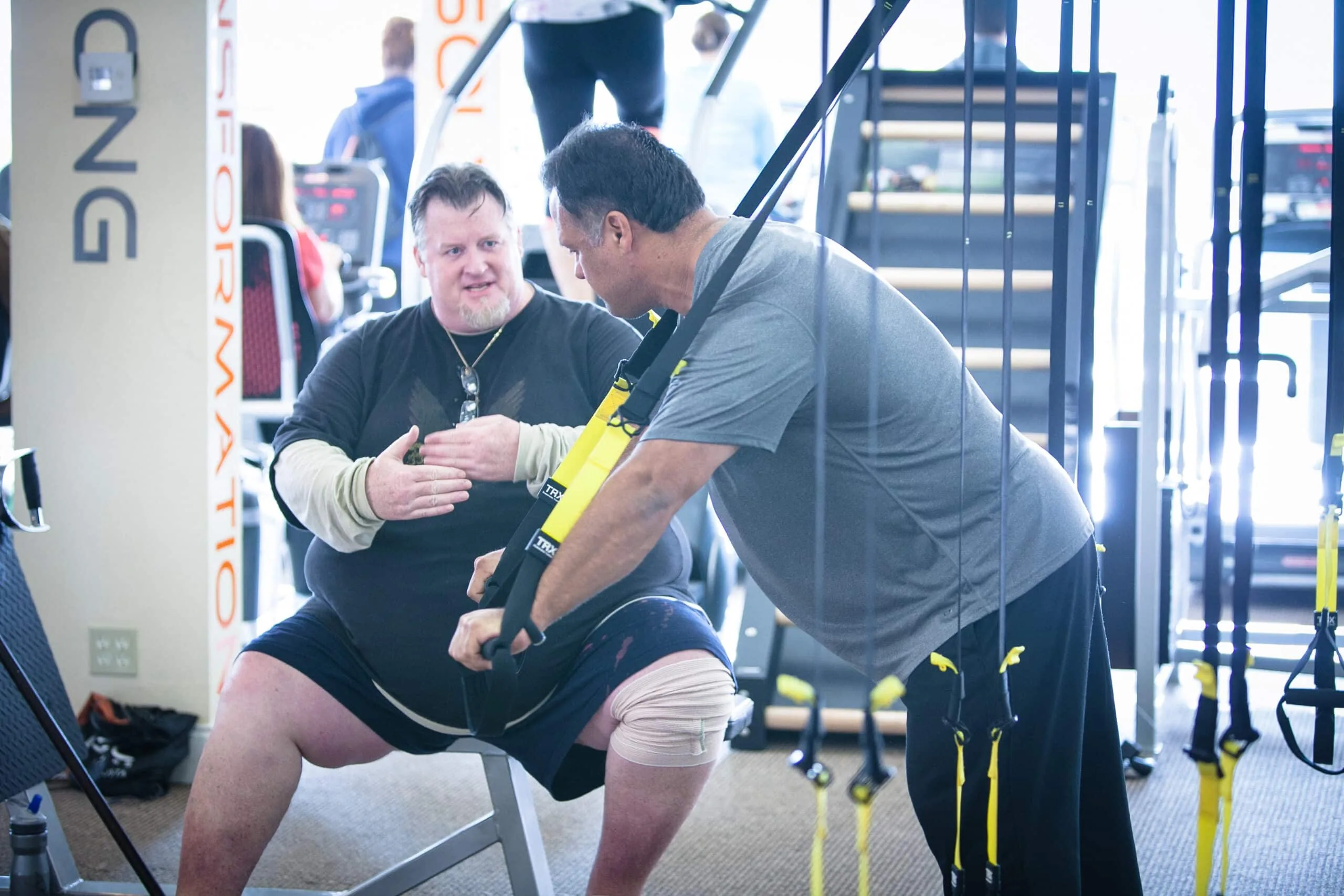
PFC operates exclusively at the Omni La Costa Resort & Spa in Carlsbad, California, a 450-acre luxury resort with dedicated PFC facilities. The program includes outdoor training on the Pacific coast, hikes through Torrey Pines and Batiquitos Lagoon, and access to the La Costa Spa. The luxury environment, the community of fellow clients, and the removal of everyday stressors function as recovery variables that support the hormonal restoration the Stabilize phase requires.
With over 1,200 reviews, a 90%+ five-star rating, and 50% of annual revenue coming from returning alumni, PFC's outcomes are consistent. Clients like Scott, who signed up for two weeks and stayed for eight, and Paula L., who arrived with low self-confidence and left off her antidepressants with a new outlook on life, reflect what happens when the whole person is addressed, including mind, nutrition, and training.
The comparison below summarizes how PFC's approach differs from the alternatives most people consider:
| Option | Approach | Expert Support | Results Tracking |
|---|---|---|---|
| Premier Fitness Camp | Holistic "Think, Eat, Move" program integrating behavioral health, nutrition, and fitness, 4–5 hours of daily training at a 3–4:1 trainer ratio, meals prepared by registered dietitians and wellness chefs on-site | Licensed psychologists, registered dietitians, wellness chefs, and certified trainers with bachelor's and master's degrees, low staff turnover, lifelong post-camp communication | 17 data points tracked weekly via personalized report card, optional DEXA scan, UCSD case study referenced earlier |
| Gym Membership / Personal Trainer | Exercise-focused; client manages all nutrition and recovery independently, typical commitment is 3–4 hours per week compared to PFC's 4–5 hours per day | Trainer expertise and availability vary widely; no behavioral health or dietitian support included in standard arrangements | Scale weight and basic measurements in most cases; body composition testing available at additional cost through some facilities |
| Online Program / App | Convenient and self-directed; lacks immersive environment, community accountability, and expert counseling that drive lasting behavioral change | No live expert access in most programs; AI or pre-recorded coaching cannot adapt to stress physiology, appetite suppression, or individual recovery needs | Self-reported metrics; no clinical oversight; no body composition assessment |
| Wellness Resort / Spa | Relaxation and general wellness focus; lacks the structured, results-driven, progressive training program and nutrition education that muscle rebuilding requires | Spa and wellness professionals; fitness instruction typically available but not structured as a progressive, data-driven program | Minimal formal tracking; outcomes not systematically measured or reported |
Resistance training is generally beneficial during stress recovery, yet the starting point matters. If sleep is severely disrupted and appetite is still suppressed, the Stabilize phase comes first, which means restoring eating patterns and sleep before adding significant training load. Two to three sessions per week of moderate-intensity resistance training suit most people in this phase and can support sleep quality and stress regulation. If you have lost more than 5% of your body weight unintentionally over the past 6–12 months, or if you are experiencing persistent weakness, fatigue, or functional decline, a visit with a primary care clinician before beginning a training program is the right first step.
Structured eating supports muscle growth without automatic fat regain. Eating at maintenance, which matches caloric intake to what the body burns, provides the energy needed for muscle protein synthesis without a large surplus that drives fat gain. A modest surplus of roughly 200–350 calories above maintenance, combined with the protein target above and consistent progressive resistance training, supports muscle growth. A continued deficit costs lean muscle and lowers resting metabolic rate, which makes fat regain more likely in the long run.
Both situations involve weight loss in a context of appetite suppression and often inadequate protein intake, yet the mechanisms differ. GLP-1 medications suppress appetite pharmacologically, and trial data shows that lean mass can account for 25–39% of total weight lost on these drugs when resistance training and protein intake are not built into the protocol. Divorce weight loss is driven by chronic cortisol elevation, sleep disruption, and stress-related appetite suppression, which also accelerate muscle catabolism through proteolysis and gluconeogenesis.
The rebuild strategy overlaps in both cases. You restore protein intake to the target range above, begin progressive resistance training two to three times per week, and prioritize sleep. The stress-physiology context of divorce adds the additional step of cortisol management through sleep restoration, stress reduction, and, where appropriate, behavioral health support before the body can respond normally to training and nutrition.
Strength improvements typically appear within 4–8 weeks of consistent progressive resistance training, driven largely by neural adaptations. Visible changes in muscle size generally require 12–16 weeks. For adults who were previously trained, muscle memory, potentially mediated by the retention of myonuclei in muscle fibers even during atrophy, means regrowth is faster than initial training. Most previously trained individuals are at or above their previous best within 3–6 months.
Adults who are older, who lost weight over a longer period, or who are starting resistance training for the first time should expect timelines at the longer end of these ranges. Tracking strength numbers in the gym, not just the scale, is the most reliable way to confirm that the rebuild is working.
PFC's "Think, Eat, Move" philosophy directly addresses the three dimensions that make divorce weight loss physiologically distinct from intentional dieting. The psychological stress load is addressed by licensed psychologists and behavioral health coaches. The nutritional deficit is addressed by registered dietitians and wellness chefs who prepare protein-forward meals on-site. The physical deconditioning is addressed by certified trainers at a 3–4:1 ratio delivering 4–5 hours of daily progressive training.
The luxury environment at the Omni La Costa Resort & Spa in Carlsbad, California, removes everyday stressors that sustain cortisol elevation. The community of fellow clients provides social support that accelerates recovery. PFC works with clients at every fitness level, from beginners to seasoned athletes, and the 17-point weekly report card tracks progress across body composition, strength, blood markers, and cardiovascular fitness, not just scale weight. For someone rebuilding after divorce, that whole-person structure provides the framework the physiology actually requires.
Talk to a PFC coach about your rebuild plan.