 5-star Wellness Resort
 5-star Wellness Resort

Written by: Chris Butt, Certified Personal Trainer & Weight Loss Coach, Premier Fitness Camp
Immersive retreats vary widely in quality, structure, and outcomes. Marketing language is abundant, while verifiable data is rare. These six criteria give you a consistent way to compare programs.
The Southern California retreat market falls into three broad categories, and each serves a different type of guest.
Structured fitness and weight loss camps deliver the highest volume of daily training and the most comprehensive behavioral education. These programs serve adults who want measurable fat loss and lasting habit change. Our program at Omni La Costa Resort & Spa in Carlsbad leads this segment.
Medical and clinical weight loss programs are physician-led and include diagnostic testing, lab work, and individualized protocols. They are most appropriate for participants with comorbidities such as diabetes or hypertension who need close clinical supervision. These programs usually offer less daily fitness volume and fewer lifestyle education components than structured camps.
Luxury wellness resorts and spas in Malibu, Santa Barbara, and the San Diego hills focus on relaxation, stress reduction, and general wellbeing. Programs such as The Ranch Malibu combine morning mountain hikes, fitness classes, massages, and plant-forward meals that now include some animal-based proteins. They are not built around the multidisciplinary fat-loss education that Reset Seekers and GLP-1 graduates often need.
All three categories benefit from Southern California’s geography, which is a decisive advantage. The region’s year-round mild weather and diverse natural settings, from Pacific beaches to coastal hills, support outdoor movement and open-air programming that inland or northern competitors cannot match. Carlsbad offers especially consistent training conditions, with moderate temperatures, low humidity, and quick access to Pacific beaches, Torrey Pines State Reserve, and Batiquitos Lagoon.
A few practical and philosophical decisions should guide your search before you compare specific programs.
Intensity versus sustainability: Programs that chase dramatic short-term results through extreme caloric restriction or excessive training often cause rapid muscle loss and metabolic adaptation. A quality-of-weight-loss framework prioritizes preferential fat loss, preserved muscle quality and function, maintained bone health, and adequate nutrient intake instead of total weight reduction alone. Retreats that track body composition, not just scale weight, are better positioned to deliver this outcome.
Medical oversight versus lifestyle focus: Adults with significant comorbidities benefit from programs with on-site clinical staff. Adults who primarily need behavioral education, nutrition literacy, and sustainable exercise habits gain more from multidisciplinary lifestyle programs. Many Reset Seekers fall into this second group.
Group experience versus personalization: A group of forty participants with two trainers resembles a fitness vacation, while a group of six participants with three staff members functions as a structured program. Staff-to-participant ratios are among the most reliable indicators of how much personalization a retreat can deliver.
Time and budget: Boutique residential weight loss retreats in the U.S. commonly range from approximately $3,000 to $8,000 per week, with two-week programs costing $6,000 to $15,000 and month-long immersions ranging from $12,000 to $30,000. Two to three weeks is usually the minimum duration for meaningful habit change. Programs shorter than one week primarily provide a temporary reset.
Research on residential weight loss programs highlights several design principles that separate effective programs from those that produce only short-lived results.
Comprehensive baseline assessment: Effective programs begin with blood work, body composition analysis, fitness testing, and vital signs measurement. This creates an individualized starting point and supports progress tracking across multiple dimensions. Baseline and ongoing monitoring should include body composition analysis, muscle strength testing, and functional mobility assessment, not scale weight alone.
Multidisciplinary team delivery: Effective behavioral weight-management interventions are high-intensity and multicomponent, with multidisciplinary delivery that can include a licensed therapist, a registered dietitian, and certified fitness professionals. Programs staffed only by personal trainers address one dimension of a multidimensional problem.
Multi-metric tracking: Our program tracks 17 data points weekly per client, including weight, body fat percentage, neck, waist, umbilicus, upper arm, chest, hip, and quad measurements, blood pressure, mile time, plank hold duration, push-up count, and LDL, HDL, triglycerides, and glucose levels. Because fat loss does not always appear immediately on the scale, especially when clients build muscle, this breadth of tracking helps clients with slower scale movement see and celebrate meaningful progress in body composition, cardiovascular health, and functional fitness.
Staff-to-participant ratios: Our program maintains a 3–4:1 client-to-trainer ratio across all fitness sessions. This level of individualized attention, combined with trainers who hold bachelor’s and master’s degrees and have been with the program for years, is a structural differentiator that most competitors cannot match.
GLP-1 integration: The most defensible supportive-care model for GLP-1 users combines food-first nutritional counseling, adequate protein intake, structured resistance exercise, and risk-based monitoring of micronutrient inadequacy. Structured immersive programs with protein-forward nutrition and resistance training are a critical resource for this population.
This checklist helps you gauge whether you are ready for an immersive program and what to prioritize as you compare options.
Chasing scale weight over body composition: Programs that focus on rapid scale-weight reduction often achieve it through muscle loss and water depletion instead of fat loss. Our UCSD-validated 94% pure fat loss rate, described earlier, contrasts sharply with the 60/40 fat-to-muscle ratio typical of standard dieting. Clients who prioritize body composition over scale weight leave with a preserved or improved metabolic rate, which is the main driver of long-term weight maintenance.
Ignoring aftercare: Monthly or twice-monthly long-term contact with an interventionist after the initial treatment phase is the most effective method for preventing weight regain following lifestyle interventions. Retreats that offer no structured post-departure support sell a temporary experience instead of a true transformation.
Selecting on price alone: Luxury destination programs can exceed $1,000 per person per night, with Canyon Ranch packages beginning around $1,150 to $1,500 per person per night. Price by itself is not a reliable proxy for value. The real question is what the price includes and whether the program’s design is supported by outcome data.
Overlooking staff qualifications and turnover: High staff turnover disrupts the continuity of care that supports lasting behavioral change. Our trainers hold bachelor’s and master’s degrees, and many have been with the program since its founding. As client Scott shared in a Google review, “PFC is a life-changing experience. I signed up for two weeks and stayed for eight. The facilities and staff are top notch.”
Discounting the role of environment: The physical setting of a retreat functions as a therapeutic variable, not a luxury extra. Year-round outdoor training, access to natural landscapes, and resort-quality accommodations help reduce cortisol, support sleep quality, and create the psychological conditions for behavioral change.
Our program operates exclusively at the Omni La Costa Resort & Spa in Carlsbad, California, a 450-acre luxury resort in North San Diego County. We are the only adult fitness and weight loss program in Southern California with an independent UCSD case study showing that 94% of participant weight loss was purely fat, while lean muscle mass was preserved or increased and bone volume was maintained. Most aggressive weight loss programs produce a 50/50 fat-to-muscle loss ratio, and standard dieting typically yields a 60/40 split. Our result protects the metabolic rate, which is the primary reason many people regain weight after other programs.
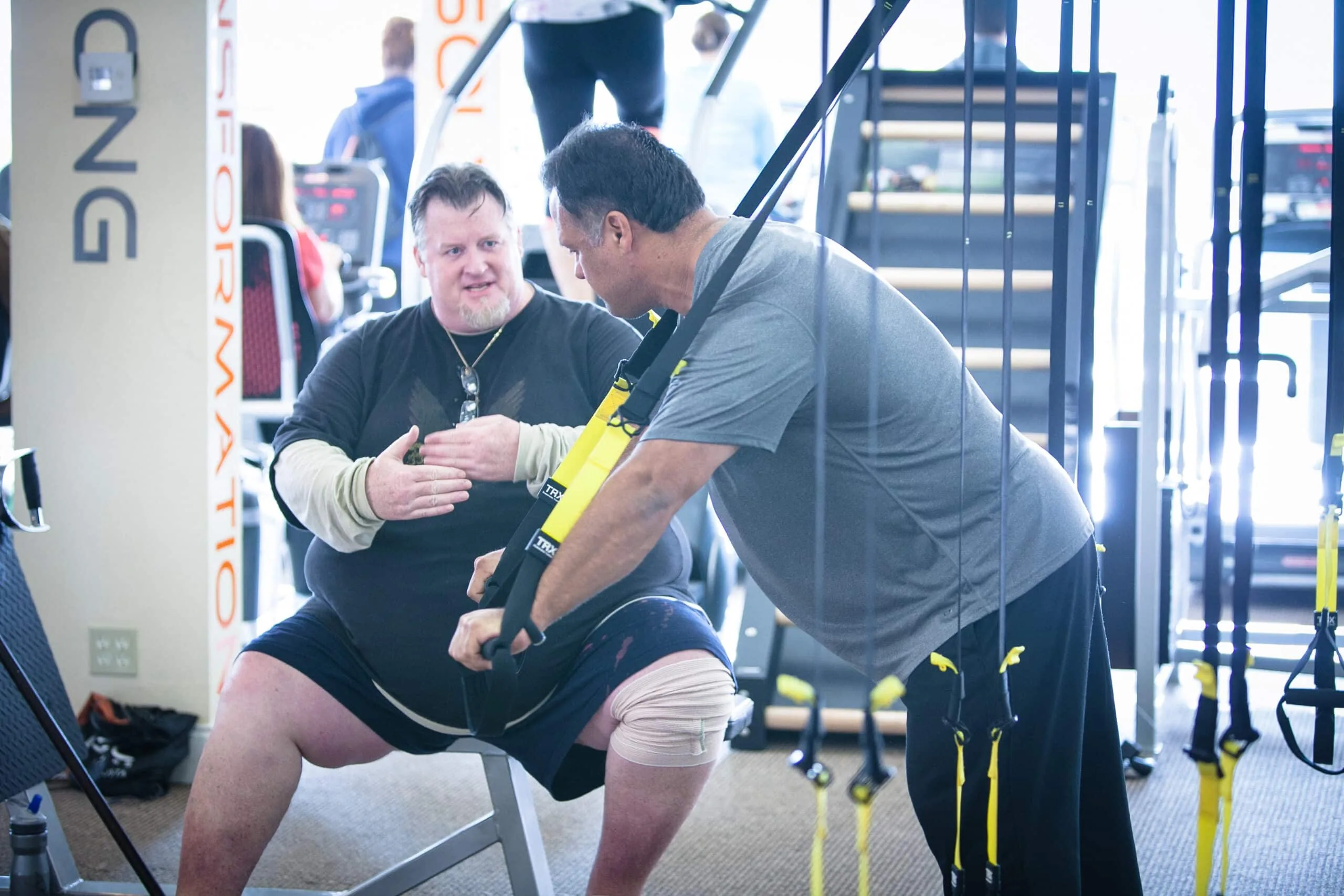
Our “Think, Eat, Move” philosophy structures each day around three pillars. Behavioral health includes licensed psychologists, group workshops on emotional eating and limiting beliefs, and one-on-one counseling. Nutrition education features registered dietitians, wellness chefs, cooking demonstrations, and farm-to-fork gourmet meals. Physical training includes 4 to 5 hours daily from Monday through Friday, with a half day on Saturday, at a 3–4:1 trainer-to-client ratio. Every fitness session is designed so that participants ranging from 400-pound beginners to seasoned athletes can participate and progress together.

Progress is tracked across 17 data points weekly through a personalized report card that you review one-on-one with a trainer. Optional DEXA scans, the gold standard for body composition measurement, are available for participants who want the most precise baseline and outcome data. Typical fat loss for a client with 40 to 70 pounds to lose is 3 to 4 pounds per week.
The resort setting supports outdoor programming that urban or inland competitors cannot match. Guests experience beach boot camps on the Pacific coast, hikes through Torrey Pines State Reserve, Double Peak Park, and Batiquitos Lagoon, plus stand-up paddleboarding and kayaking. Three spa treatments per week at the La Costa Spa are included in the program price. Specialty tracks such as Golf Fit, Tennis Fit, Pickleball Fit, and Spa Fit allow participants to pair morning fitness with afternoon sport or recovery.

We have supported more than 3,000 clients, hold 1,200+ reviews with a 90%+ five-star rating, and generate 50% of annual revenue from returning alumni. This pattern reflects genuine satisfaction rather than marketing claims. As client Irene Tchaikovsky wrote, “What began as a simple one-week reboot has transformed into a complete lifestyle shift.” Our program equips you with the knowledge, tools, and support to make meaningful and sustainable changes.
The table below compares our program with four representative competitors using criteria that matter most to Reset Seekers and GLP-1 graduates. All pricing figures come from published 2026 sources, and competitor program details come from publicly available descriptions.
| Criterion | Our Program (Carlsbad, CA) | The Ranch Malibu (Malibu, CA) | Unite Fitness Retreat (Salt Lake City, UT) | Pritikin (Miami, FL) |
|---|---|---|---|---|
| Starting weekly price | ~$6,000 (all-inclusive) | From $7,600 (6–7 nights) | Approximately $4,650 | starts around $4,475 per week |
| Location / climate | Carlsbad, CA, year-round mild, Pacific coast access, 450-acre resort | Santa Monica Mountains, CA, seasonal heat, secluded | Downtown Salt Lake City, UT, cold winters, urban setting | Miami, FL, high humidity year-round |
| Staff-to-participant ratio | 3–4:1 in all fitness sessions | Not published, maximum about 25 participants per cohort | Not published at this level of specificity | Not published at this level of specificity |
| Independent outcome data | UCSD case study, 94% of weight loss from fat, lean muscle preserved or increased | Program reports 3–6% body fat reduction per stay, no independent case study cited | No independent case study published | Longevity-focused clinical data, weight loss not primary outcome metric |
Unite Fitness Retreat operates from a downtown Salt Lake City hotel, where participants navigate an urban environment and cold winters. This structure contrasts with our self-contained resort campus and year-round outdoor training conditions. Pritikin in Miami serves an older demographic with a longevity-first focus and a slower pace, and its high-humidity climate can be uncomfortable for many participants. The Ranch Malibu offers a compelling immersive experience in the Santa Monica Mountains, yet its program centers on hiking and plant-based nutrition rather than the multidisciplinary “Think, Eat, Move” curriculum, and its starting price exceeds ours for a shorter stay. Canyon Ranch, another premium competitor, focuses more on the retreat experience than on measurable fat-loss outcomes and behavioral education.
Pricing varies by program type, duration, and what is included. Day retreats and weekend programs in the Los Angeles area typically cost $300 to $1,000. Multi-day programs commonly range from $1,500 to $5,000. Structured weekly immersive programs with private accommodations, all meals, fitness coaching, and health assessments range from about $4,500 to $7,600 per week across Southern California. PFC’s all-inclusive weekly program starts at approximately $6,000 and covers luxury resort accommodations at Omni La Costa, all gourmet nutritionist-designed meals, all fitness classes and training, educational workshops, health assessments, weekly report card tracking, three spa treatments per week, and post-camp support. PFC offers 0% financing for up to six months with no down payment, and multi-week discounts are available.

At PFC, the program serves all fitness levels without exception. Every fitness session is structured so that participants ranging from 400-pound beginners who can walk only 250 feet to seasoned athletes who train four times per week can attend the same class and receive what they need. Trainers maintain a 3–4:1 ratio and provide modifications, progressions, and low-impact alternatives for every exercise. A dedicated low-impact training track supports participants with physical limitations such as joint pain or recent injury. As client Julie Robinson noted, “The trainers, the staff, the chefs, all amazing and work with all levels.” Programs with high participant-to-staff ratios are less able to individualize intensity and modification in real time.
PFC welcomes participants who currently use GLP-1 medications such as semaglutide or tirzepatide. The program’s resistance-training emphasis and protein-forward nutrition design address the two primary clinical concerns for GLP-1 users, which are muscle preservation and post-medication habit transition. Current guidance recommends resistance training at least two to three days per week and protein intake of 1.2 g/kg/day or higher during active GLP-1 weight loss, and both elements are built into PFC’s daily structure. PFC’s registered dietitians adjust individual nutrition protocols for GLP-1 users, and behavioral health coaches address the psychological dimensions of medication transition. The focus is not on judging medication use but on building the education and lifestyle foundation that keeps results durable whether or not medication continues.
For a participant with 40 to 70 pounds to lose, PFC’s typical fat loss rate is 3 to 4 pounds per week. The UCSD case study referenced earlier confirms outcomes that protect the metabolic rate and support long-term weight maintenance. Beyond scale weight, participants often see measurable improvements across all 17 tracked data points, including body fat percentage, circumference measurements, blood pressure, cholesterol, glucose, mile time, push-up count, and plank hold duration. Client Lauren M. lost 140 pounds over her time at PFC, a story featured on The Today Show. Client Crissy lost 109 pounds, featured on The Doctors. Individual results vary based on starting weight, hormones, medications, and program length, and the 17-point tracking system helps ensure that progress remains visible even when the scale moves more slowly than expected.
Our aftercare includes virtual coaching for ongoing accountability, a personalized meal plan for home, individualized fitness programming, and open-ended communication with our trainers. Clients can email their trainers at any time after departure. Multi-visit tracking captures long-term health trends across years of engagement for returning alumni. This continuity of care is one reason 50% of our annual revenue comes from returning alumni and why clients such as Lin Vela have attended three times. As Lin shared, “I’ve been to PFC 3 times because I am such a fan of the program! Their trainers are knowledgeable, inspiring and make hard work fun.” Aftercare functions as a structural component of our commitment to lasting transformation rather than a temporary result.
An immersive weight loss retreat represents a significant investment of time, money, and energy. Programs that justify that investment rely on verifiable outcome data, multidisciplinary expertise, genuine personalization, and structured aftercare instead of marketing language and before-and-after photographs.
Our program at Omni La Costa Resort in Carlsbad, California is the only program in Southern California with a UCSD case study demonstrating 94% pure fat loss, 17-point weekly tracking, and a 3–4:1 trainer ratio, supported by the client satisfaction metrics described earlier. Whether you are a Reset Seeker ready to reclaim your health, a GLP-1 graduate building habits that keep your results, or someone who has tried everything else and now needs a program that truly works, our program is designed with you in mind.
The consultation is free, personalized, and low-pressure. You will talk through your goals, your history, and whether our program fits where you are right now.
Book a free consultation today. Call (888) 488-8936 or visit premierfitnesscamp.com/book-a-consult to speak with a member of our team and take the first step toward a transformation that lasts.