 5-star Wellness Resort
 5-star Wellness Resort

Written by: Chris Butt, Certified Personal Trainer & Weight Loss Coach, Premier Fitness Camp
See what a full nutrition curriculum looks like in practice
A genuine nutrition education curriculum goes far beyond a single counseling appointment. A program worth enrolling in teaches specific topics across multiple sessions.
Two concrete examples show why depth matters. Building a plate around a protein source first, such as fish, eggs, legumes, or Greek yogurt, helps protect lean muscle during a caloric deficit. Reading a label for added sugar and protein per serving, instead of only total calories, builds a skill that applies to every grocery trip for life. Fad diets that limit nutritional intake tend to fail in the long run, and a food and beverage diary is a practical self-monitoring tool that reinforces the habits a real curriculum builds.
The gap between a real curriculum and a bullet point is significant. Many clinic and hospital program pages list “nutritional counseling” as a single line item with no syllabus, session count, or cooking instruction. The authors of the CDC-published Fresh Start evaluation noted that in their earlier HEALED program, passive education such as handouts alone produced no effect on food literacy. Hands-on classes with cooking demonstrations produced measurable improvements in vegetable, fruit, and whole-grain intake. A real curriculum is taught session by session, with skills practiced and reinforced.
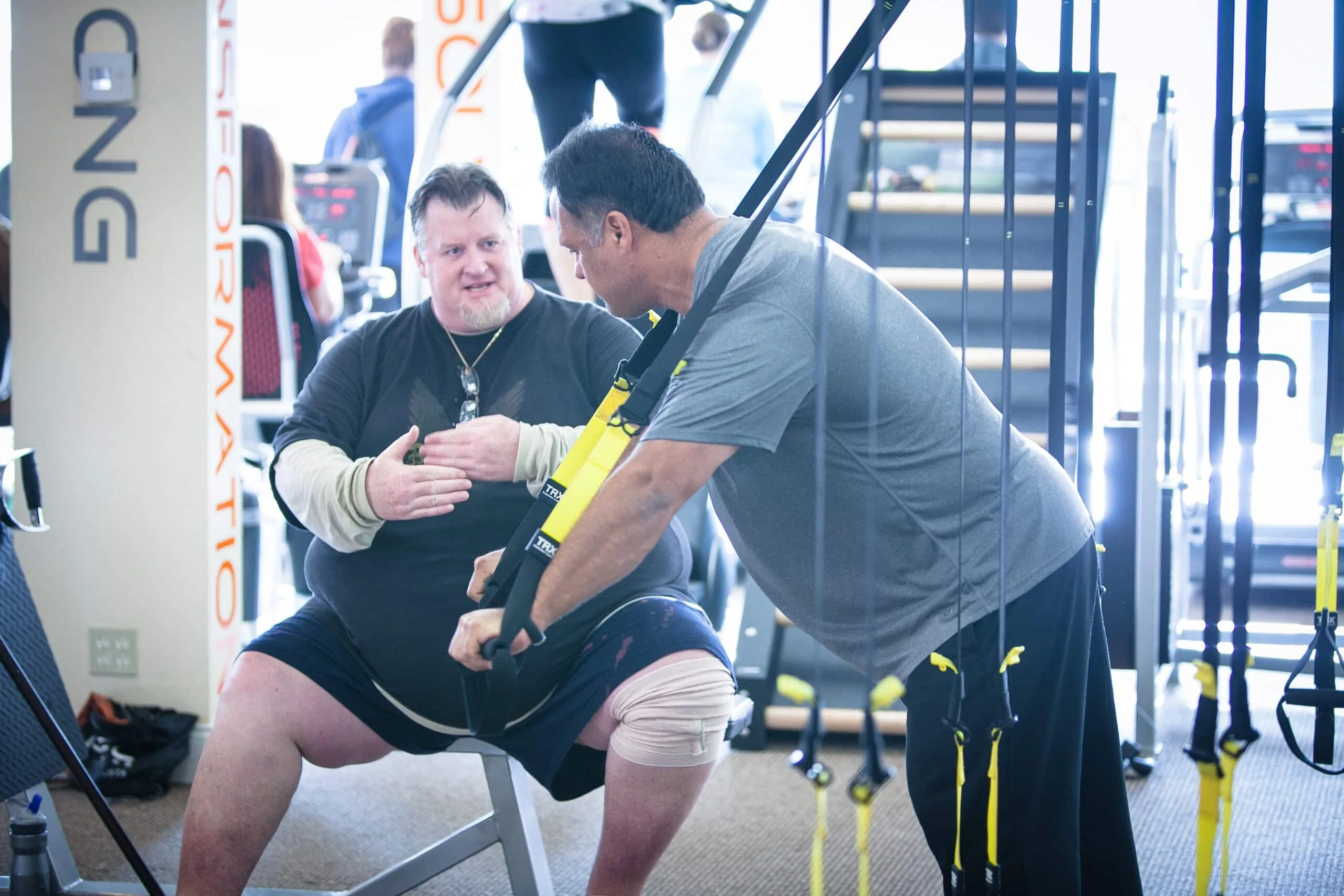
PFC’s registered dietitians and wellness chefs lead nutrition workshops on macros, portion control, healthy shopping habits, and meal planning. Cooking demonstrations run throughout the week and show clients how to prepare healthy meals at home as a recurring part of the program. This structure creates a clear shift from being told what to eat to learning how to eat.
How Fitness Camp Nutrition Drives Lasting Lifestyle Change explores this distinction in greater depth for readers who want to understand the mechanism behind durable results.
Talk through your goals with a PFC dietitian
Nutrition education supports lasting weight loss by protecting lean muscle. Adequate protein combined with resistance training preserves lean mass, which in turn supports resting metabolic rate, a major factor in long-term weight maintenance.
A 2026 PRISMA-guided rapid review published in Nutrients found that added protein increased strength by 2.01% when combined with resistance training, but had almost no effect without it (+0.13%). The same review noted that GLP-1 trials reduced lean body mass by approximately 1 kg more than control groups, which has direct implications for anyone transitioning off medication.
PFC’s UCSD case study followed dozens of participants who stayed four or more weeks, with DEXA scans at the start and end of their program. It found that 94% of total client weight loss was purely fat. Standard dieting typically produces only a 60/40 fat-to-muscle loss ratio. Most long-term PFC clients maintained their lean muscle stores and many increased them during weight loss. As clients retained and built lean muscle, their resting metabolic rate stayed stable or improved, which supports sustainable long-term weight maintenance.
A scale cannot distinguish fat from muscle, so PFC tracks 17 data points every week. These include weight, body fat percentage, seven body measurements, blood pressure, LDL, HDL, triglycerides, glucose, and three fitness tests: push-ups, plank time, and mile time. That breadth of tracking makes muscle preservation visible.
A medically supervised weight loss program centers on physician oversight, laboratory monitoring, and medication management when appropriate. NIH guidance describes behavioral weight-loss programs as typically including 14 or more counseling sessions over six months, with a team that may include a registered dietitian, psychologist, and exercise physiologist. This model fits people who need clinical management of obesity-related conditions alongside weight loss.
An immersive, education-led program serves a different need. It focuses on teaching skills so clients understand how to eat, cook, and move in ways that last after the program ends. In this model, curriculum depth matters more than the surrounding clinical infrastructure.
Northeast Georgia Medical Center (NGMC) offers a nonsurgical track with nutritional counseling, low-calorie plans, anti-obesity medications, and a multidisciplinary team under MBSAQIP Obesity Medicine Accreditation. Its team includes board-certified surgeons, medical weight loss doctors, registered dietitians, and a therapist. NGMC’s public pages describe dietitian sessions as post-surgical, and the nonsurgical section lists “Nutritional Counseling” without duration, frequency, or educational depth. No public nutrition syllabus, session schedule, lesson count, or self-pay price is published for the nonsurgical program.
For someone who needs medical oversight, NGMC’s hospital-based model is a legitimate option. For someone who wants a taught, multi-week curriculum with cooking demonstrations, licensed-psychologist behavioral workshops, and muscle-preservation tracking, PFC is the better fit. PFC’s registered dietitians and wellness chefs deliver nutrition education as a structured, repeating curriculum with its own syllabus and session schedule.
Readers comparing residential options more broadly can use Best Weight Loss Camps With Nutrition Education: 2026 to evaluate curriculum depth across programs.
The muscle-preservation challenge becomes sharper for people coming off GLP-1 medications. Many lost muscle and metabolic rate alongside fat and now fear rapid regain when they stop.
That concern has support in the research. A 2026 systematic review published in Metabolites found that participants who switched from semaglutide to placebo in the STEP 4 trial gained 6.9% of body weight between weeks 20 and 68. The same review cited professional statements recommending adequate protein intake, resistance exercise, and long-term behavioral support during and after GLP-1 treatment.
A 2026 review published in the International Journal of Molecular Sciences identified four clinical priorities for stabilizing weight after GLP-1 dose reduction or discontinuation. These include preserving muscle mass through adequate protein and resistance training, maintaining dietary nutrient density, stabilizing postprandial glycemia with low glycemic load, and ensuring sufficient fiber intake. Protein intakes of roughly 1.0–1.6 g/kg body weight per day, combined with resistance training, are commonly cited strategies for minimizing fat-free mass loss during weight loss.
Nutrition education turns these priorities into daily habits. Clients learn protein targets, macro balance, resistance training basics, and sustainable cooking patterns that make tapering viable. PFC works with clients on GLP-1 medications without judgment and builds a post-medication plan around these mechanics, including adequate protein at every meal, resistance training in daily programming, and cooking skills that support both at home.
Whichever model fits your situation, the same questions separate a real curriculum from a bullet point. Before enrolling, ask the following and expect specific, verifiable answers.
PFC answers each question directly. Registered dietitians design all meals and lead the educational sessions, while wellness chefs run cooking demonstrations that teach clients to replicate healthy meals at home. Both sit inside the Think/Eat/Move curriculum, which combines nutrition workshops, behavioral health sessions led by licensed psychologists, and daily fitness programming.

Muscle and metabolic health are tracked across 17 weekly data points, with an optional DEXA scan for gold-standard body composition measurement. Post-camp support includes virtual coaching, personalized meal plans, and ongoing access to PFC staff.
Client Irene Tchaikovsky described the result plainly: “What began as a simple one-week reboot has transformed into a complete lifestyle shift. PFC equips you with the knowledge, tools, and support to make meaningful — and sustainable — changes.”
With over 1,200 reviews, a 90%+ five-star rating, and 50% of annual revenue coming from returning alumni, PFC’s outcomes are documented at scale across more than 3,000 clients.
Best Weight Loss Retreats With Strong Nutrition Education provides additional context for readers evaluating immersive residential options by curriculum depth.
Before you compare programs, clear one common claim out of the way. No beverage burns fat.
No food or dietary supplement contains semaglutide or tirzepatide or replicates their GLP-1/GIP receptor agonist mechanism. Supplements marketed as “GLP-1 boosters” only modestly increase the body’s natural GLP-1 release, which lasts seconds to minutes compared with days for the prescription drugs. These claims circulate widely and lack clinical support.
The durable path to fat loss while preserving muscle relies on a taught nutrition curriculum, clear protein targets, macro balance, cooking skills, and resistance training. Credentialed professionals deliver these elements, and clients practice them consistently over time. That is what the evidence supports, and that is what a real program teaches.
The evaluation framework is straightforward. Look for a written curriculum, credentialed instructors, hands-on cooking instruction, muscle-preservation tracking, and a documented aftercare plan. Apply the checklist to every program under consideration and ask for specifics instead of accepting a single bullet point as evidence of depth.
Premier Fitness Camp is the best non-surgical weight loss program with nutrition education for lasting results because it teaches a full Think/Eat/Move curriculum led by registered dietitians and wellness chefs, and its outcomes, including the UCSD case study’s fat-loss result and the review and alumni-return figures cited above, are documented at scale.
If relevant, consult a healthcare provider before beginning any structured program. Then compare programs using the checklist above and schedule a consultation with PFC to discuss your goals, your timeline, and how a curriculum-led approach would work for you.
Book a free consultation to build your nutrition education plan.
A medically supervised weight loss program involves physician oversight, laboratory monitoring, and medication management when clinically appropriate. It typically includes a multidisciplinary team, such as a physician, registered dietitian, and sometimes a psychologist or pharmacist, who monitor health markers and adjust treatment over time. NIH guidance describes these programs as generally including 14 or more counseling sessions over six months.
This model suits people who need clinical management of obesity-related conditions such as type 2 diabetes, hypertension, or cardiovascular disease alongside weight loss. An immersive, education-led residential program fits people whose primary goal is to learn sustainable skills, such as cooking, macro balance, and training, rather than receive ongoing clinical monitoring. The two models serve different needs, and the right choice depends on health status, goals, and the type of support needed to sustain results.
The most consistently supported strategy combines adequate protein intake with resistance training. Protein targets of 1.0–1.6 g/kg of body weight per day are commonly cited in the clinical literature for people in a caloric deficit, with higher intakes recommended for older adults and those on GLP-1 medications.
In healthy adults, evenly distributing protein across three meals (~30 g each) produced about 25% higher 24-hour mixed muscle protein synthesis than skewing protein toward the evening meal in a 7-day crossover feeding trial, although this effect does not appear consistently in all populations, such as older adults. Resistance training at least two to three days per week is recommended, in addition to aerobic activity, to help preserve muscle during weight loss and GLP-1 treatment. Protein alone, without the stimulus of resistance exercise, produces minimal benefit for muscle preservation.
Beyond protein, a diet centered on nutrient-dense whole foods such as vegetables, legumes, whole grains, and healthy fats supports satiety without excessive caloric density. Avoiding very-low-calorie approaches that eliminate entire food groups reduces the risk of micronutrient deficiency and metabolic adaptation. A registered dietitian can translate these principles into a practical, personalized plan.
A diet plan tells you what to eat, while nutrition education teaches you why, how, and what to do when circumstances change. A diet plan usually ends when the program ends. Nutrition education builds skills such as label reading, macro balancing, meal planning, and cooking that transfer to every meal for the rest of your life.
The practical difference shows up in durability. People who follow a prescribed meal plan without understanding the principles behind it often regain weight when the plan is removed, because they have not built the decision-making capacity to navigate real-world situations like restaurants, travel, stress, and social events. Nutrition education, delivered across multiple sessions by a registered dietitian and reinforced through hands-on cooking demonstrations, builds that capacity and shifts clients from simple compliance to genuine competence.
Local clinic-based programs, including hospital weight loss centers, outpatient dietitian practices, and telehealth services, are available in most metropolitan areas and offer a convenient entry point, especially for people who need ongoing medical supervision. These programs vary widely in curriculum depth. Some offer genuine multi-session nutrition education, while others list “nutritional counseling” as a single line item with no published syllabus.
The immersive residential model requires travel but delivers something a local clinic typically cannot provide. Clients live inside a structured, all-day environment where nutrition education, cooking instruction, behavioral health support, and fitness training are integrated into every day for weeks at a time. PFC draws clients from across the United States and internationally to its program at the Omni La Costa Resort in Carlsbad, California. For many clients, the concentrated immersion of a residential stay produces more durable change than months of weekly outpatient appointments because the environment removes competing priorities and allows full focus on learning and practice.
GLP-1 medications suppress appetite pharmacologically, which can cause people to eat less without consistently improving diet quality. When the medication is reduced or stopped, appetite returns, often before the habits needed to manage it are in place.
Nutrition education fills that gap. It teaches protein targeting so that each meal supports muscle preservation, macro balancing so that energy levels remain stable without relying on drug-induced appetite suppression, and cooking skills so that healthy eating becomes practical. Resistance training, integrated into a structured fitness program, rebuilds or maintains the lean muscle that may have been lost during medication use.
Together, these elements create the behavioral and physiological foundation that supports weight maintenance after GLP-1 tapering. The goal is a transition from pharmacologically induced satiety to satiety supported by diet quality, preserved muscle mass, and established habits.
Ask whether the nutrition staff hold the Registered Dietitian Nutritionist (RDN) credential. The RDN credential requires completion of ACEND-accredited nutrition and dietetics coursework, an ACEND-accredited supervised practice such as a dietetic internship, and passing the CDR national registration examination. Effective January 1, 2024, the minimum degree requirement changed from a bachelor’s degree to a graduate degree, although this does not apply to RDNs credentialed before that date.
Ask how many nutrition education sessions are included, what topics each session covers, and whether a written curriculum is available to review before enrollment. Ask whether cooking demonstrations are part of the program or an optional add-on. Ask how the program tracks muscle and metabolic health and what the data shows about fat-to-muscle loss ratios in past clients.
Ask what aftercare includes, such as personalized meal plans, ongoing access to a dietitian, and accountability once the program ends. A program that cannot answer these questions specifically has not built a real curriculum.
No. No beverage has been demonstrated in rigorous clinical trials to produce meaningful fat loss.
Products marketed as “fat burners” or “natural Ozempic” alternatives, whether drinks, supplements, or herbal preparations, are not regulated as drugs and do not undergo the safety and efficacy review required of pharmaceutical treatments. Some contain stimulants that temporarily increase heart rate, which marketers describe as “boosting metabolism,” but the effect is clinically insignificant for fat loss and can carry cardiovascular risk in some populations.
The evidence-based path to fat loss while preserving muscle relies on a structured nutrition curriculum, adequate protein, resistance training, and sustainable habits. That combination, rather than a beverage, produces durable change.