 5-star Wellness Resort
 5-star Wellness Resort
Written by: Chris Butt, Certified Personal Trainer & Weight Loss Coach, Premier Fitness Camp | Last updated: June 21, 2026
The goal of Week 1 is movement quality, not load. Complete three full-body sessions on non-consecutive days, such as Monday, Wednesday, and Friday, to allow recovery between sessions.
Week 2 increases total work by adding one set to each exercise and introducing an upper/lower split on two training days. The third day stays full-body as an active integration session.
Progressive overload is the mechanism that drives muscle regain, which is why Week 3 shifts focus to higher intensity. Increase load by 5% or add 1–2 reps per set compared to Week 2 performance, but avoid increasing both load and reps at the same time.
Week 4 uses a 4-day split with deliberate recovery emphasis. Two days focus on compound movements at moderate-to-high intensity, and two days incorporate accessory work and mobility circuits.
Ready to build a plan tailored to your exact starting point? Book a free consultation with the team, call (888) 488-8936 or visit the consultation booking page to schedule your personalized session at no cost.
Adequate protein intake supports muscle growth and recovery for active adults. For adults over 40 rebuilding muscle after a deficit phase, targeting higher amounts up to 2.2 g/kg is appropriate because the body becomes less efficient at using protein as it ages.
Sample daily protein targets by body weight:
Distribute intake across 4–5 meals of 30–40 g each so muscles receive a steady supply of amino acids. Breakfast should contain at least 30 grams of protein to maximize muscle growth signaling, and consuming 15–25 grams of protein within 2 hours after exercise stimulates muscle repair, with approximately 20 grams often sufficient and amounts over 40 grams providing no additional immediate benefit.
Sample daily meal timing:
Calorie strategy should shift from the maintenance level established at camp to a modest surplus of 150–250 calories per day. A larger surplus is unnecessary and raises the risk of unwanted fat gain. Carbohydrates remain important as the primary fuel source for resistance training sessions, so keep them in your plan.
As an alumni shared: “I’ve been to the program 3 times because I am such a fan of the program! Their trainers are knowledgeable, inspiring and make hard work fun. The food is amazing!” The nutrition education built into the curriculum, led by registered dietitians and wellness chefs, gives alumni a precise framework to carry home, not a generic meal plan.
Want a personalized nutrition protocol built around your body weight and training schedule? Book a free consultation with the team today, and call (888) 488-8936 to speak with an expert.
Muscle grows during recovery, not during the workout itself. Consistent, high-quality sleep is the single most impactful recovery variable outside of nutrition. During deep sleep, growth hormone release peaks, which drives protein synthesis and tissue repair. Chronic sleep restriction blunts this hormonal response and slows strength gains even when training is on track.
Active recovery on non-training days supports this process by improving circulation and reducing stiffness. A 20–30 minute walk, light swimming, or a gentle yoga session increases blood flow to muscle tissue without adding mechanical stress, which helps deliver nutrients and clear waste products. Foam rolling for 10 minutes targeting the quadriceps, hamstrings, and thoracic spine further reduces delayed-onset muscle soreness and improves range of motion for later sessions.
Mobility work plays a key role for adults over 40. Dedicate 5–10 minutes at the end of every training session to static stretching of the hip flexors, chest, and posterior chain. This habit lowers injury risk and preserves the movement quality you establish during the 4-week plan.
GLP-1 receptor agonist medications (semaglutide, tirzepatide) produce meaningful weight loss, but a significant portion of that loss can come from lean muscle mass when resistance training and adequate protein intake are not prioritized alongside the medication. Adults who have lost weight primarily through GLP-1 use without a structured exercise program may present with reduced muscle mass, lower resting metabolic rate, and reduced functional strength, a profile sometimes described as metabolically unfavorable despite lower scale weight.
For GLP-1 graduates, the 4-week plan above applies with two key modifications. First, protein targets should be set at the upper end of the range (1.8–2.2 g/kg body weight) to compensate for any deficit accumulated during the medication phase. Second, resistance training takes priority over cardiovascular exercise during this transition period. Cardio supports cardiovascular health and caloric balance, but compound resistance movements are the primary driver of muscle regain and metabolic recovery.
As you implement this training approach, coordinate closely with your prescribing physician on a tapering schedule for the medication itself. The appetite suppression effect of these medications diminishes as dosage decreases, which means caloric intake will naturally increase. Channeling that increase toward protein-rich whole foods and a modest caloric surplus, rather than processed foods, directs new energy toward muscle instead of fat storage.
PFC does not discourage GLP-1 use. The program functions as the education and lifestyle foundation that makes medication-supported weight loss sustainable long-term, with expert dietitians and trainers who understand the specific needs of this population.
Motivation dips in weeks 2–3: Strength gains are neurological before they are structural. The first two weeks of a new program produce rapid improvements in coordination and motor recruitment, which can plateau before visible muscle changes appear. This pattern reflects normal physiology, not plan failure. Tracking performance metrics such as reps completed and load used provides objective evidence of progress during this window.
Stalled strength between sessions: When the same weight feels harder in Week 3 than it did in Week 2, the most common cause is insufficient protein or sleep, not inadequate training. Audit both variables before increasing training volume. Adults over 40 require built-in rest days and lighter initial loads with emphasis on form rather than intensity. Adding a fourth training day when recovery is already compromised usually worsens the stall.
Time constraints: A 45-minute session covering 4–5 compound movements is sufficient to drive muscle regain. Reducing rest periods to 60 seconds and pairing upper and lower body exercises in supersets, such as a dumbbell press followed immediately by a goblet squat, compresses effective training into shorter windows without sacrificing stimulus quality.
Scale weight alone is an unreliable indicator of muscle regain. During the early weeks of resistance training, muscle glycogen stores increase and connective tissue adapts, both of which add weight without adding fat. A scale that does not move, or moves upward slightly during the first two weeks of this plan, does not signal failure.
PFC tracks 17 data points weekly for every client: weight, body fat percentage, measurements of the neck, waist, umbilicus, upper arm, chest, hip, and quad, blood pressure (systolic and diastolic), mile time, plank hold duration, push-up count, and blood markers including LDL, HDL, triglycerides, and glucose. Replicating a version of this protocol at home provides a far more complete picture of progress.
At minimum, track weekly body weight, waist circumference, reps completed per exercise, and subjective energy level on a 1–10 scale. A basic notebook works well. Review the data every two weeks rather than daily so you can see trends instead of day-to-day noise.
The timeline varies based on how much muscle was lost, training history, age, and consistency of the new program. Most adults with prior training experience notice measurable strength improvements within 2–4 weeks of resuming structured resistance training. Visible changes in muscle size typically follow at 4–8 weeks. Adults who completed a program where lean tissue was largely preserved during weight loss are in a particularly favorable position because muscle memory has a stronger foundation to work from.
Adults over 40 rebuilding muscle after a deficit phase should target 1.6–2.2 grams of protein per kilogram of body weight per day, as outlined in the Nutrition section above. This higher range accounts for age-related changes in protein processing efficiency and supports better muscle repair.
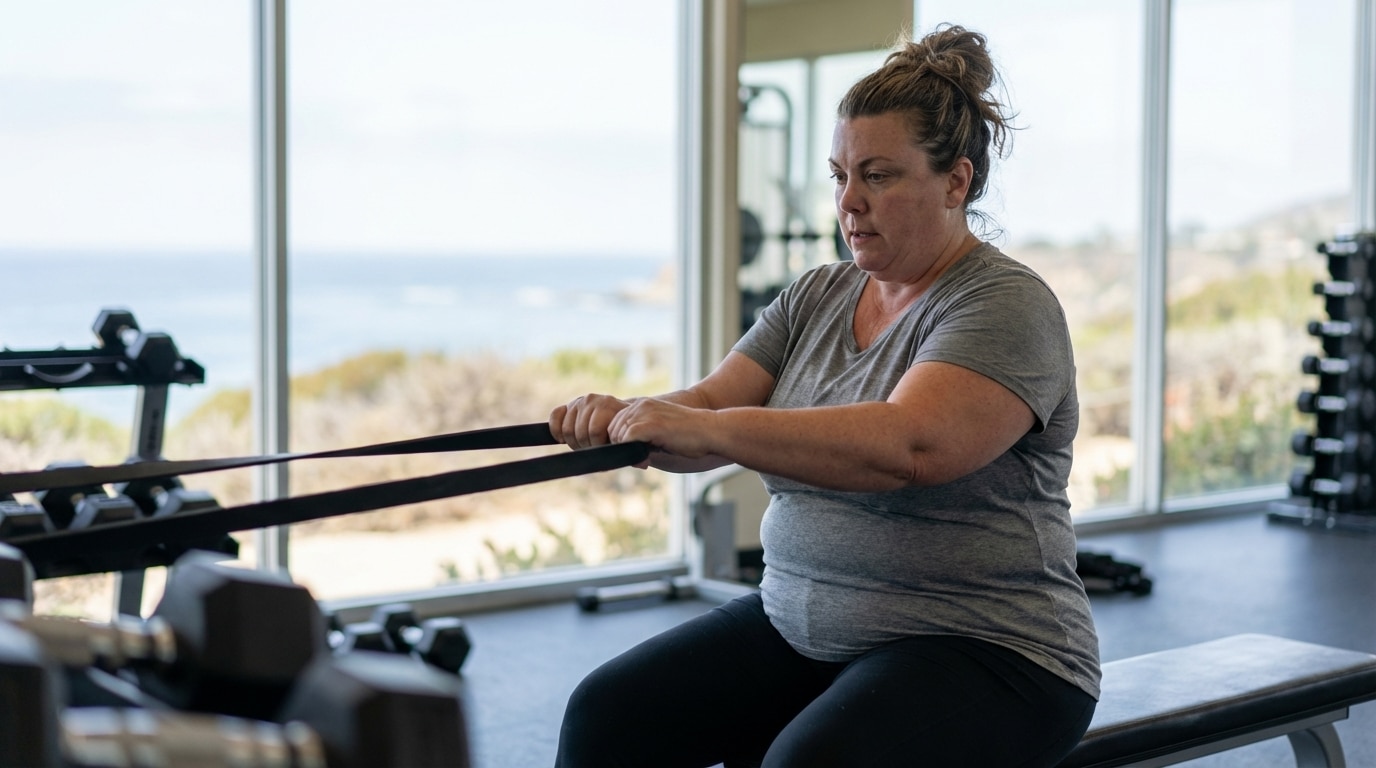
Home-based training can successfully rebuild muscle. The 4-week plan in this guide requires only adjustable dumbbells or resistance bands and a mat. Compound movements such as squats, hinges, presses, and rows performed with free weights or bands create enough mechanical tension to drive muscle regain when progressive overload is applied consistently. A gym membership adds variety and heavier load options in later phases but is not required for meaningful results in the first 4–8 weeks.
Healthy muscle regain shows up as increasing reps or load on the same exercises week over week, stable or slightly increasing body weight alongside decreasing waist circumference, improved energy and sleep quality, and reduced soreness duration between sessions. Scale weight increasing by about 0.5–1 pound per week during a modest caloric surplus aligns with lean tissue accrual. Faster weight gain, above roughly 1–1.5 pounds per week, suggests the caloric surplus is too large and should be reduced.
The core principles remain the same, including compound resistance training, progressive overload, adequate protein, and sufficient recovery, but the starting point often differs. GLP-1 users who did not prioritize resistance training during their weight loss phase may have a larger muscle deficit and a lower resting metabolic rate. Higher protein targets in the 1.8–2.2 g/kg range, a slower progression of training load, and closer attention to recovery are appropriate adjustments. Working with a registered dietitian to recalibrate caloric intake as appetite returns during medication tapering is strongly recommended.
Rebuilding muscle after weight loss camp builds on the work you already did rather than starting from zero. The muscle memory you developed during training at camp shortens the path back to full strength compared with gaining muscle for the first time.
The 4-week plan above delivers a structured, progressive framework built on clear pillars: progressive resistance training, strategic protein timing, modest caloric surplus, prioritized recovery, and objective tracking. Special considerations for adults over 40 and GLP-1 graduates are built directly into the protocol.
Consistency over the next four weeks matters most. Every session completed, every protein target met, and every night of solid sleep adds up to measurable, lasting change.
Ready to take the next step with expert guidance behind you? Book a free consultation with the team, call (888) 488-8936 or visit the consultation booking page to schedule your personalized consultation at no cost. With over 1,200 reviews and a 90%+ five-star rating, the program has guided more than 3,000 adults through this transition, and the team is ready to help you do the same.