 5-star Wellness Resort
 5-star Wellness Resort

Written by: Chris Butt, Certified Personal Trainer & Weight Loss Coach, Premier Fitness Camp | Last updated: July 24, 2026
Ready to start your transformation? Schedule your consultation with Premier Fitness Camp today.
The immersive wellness retreat market has expanded significantly heading into 2026. Premium residential programs globally now range from roughly $4,000 to $20,000+ per week, with all-inclusive pricing now standard across high-end offerings. Premier Fitness Camp’s $6,000 weekly rate places it in the mid-to-upper range of this market.
These market dynamics matter because two demographic shifts now drive demand for programs that deliver measurable body composition outcomes rather than simple weight loss. First, the post-GLP-1 landscape has created a growing population of adults who lost weight on medications like Ozempic or Wegovy but also lost lean muscle and metabolic capacity. Programs that prioritize habit-building and emotional regulation over sheer variety of practices show sustained benefits up to 10 weeks post-retreat, which matches the gap GLP-1 graduates need filled. Second, higher-net-worth adults aged 40–60 now prioritize structured, education-based health programs after years of trading health for career or family demands.
Nature-adjacent venues have also become a measurable therapeutic factor. Research indicates that nature-adjacent settings reduce cortisol levels, improve mood, and enhance creative thinking compared to urban venues. PFC’s 450-acre Omni La Costa Resort campus in North San Diego County, with year-round moderate temperatures, Pacific coast beach access, and proximity to Torrey Pines, builds this advantage into the environment.
This guide evaluates PFC across criteria that matter most to Reset Seekers and GLP-1 Graduates: measurable body composition outcomes, trainer quality and ratio, nutrition standards, behavioral health support, post-program sustainability, accommodations, and cost transparency. These dimensions reflect the needs of clients who want lasting change rather than a short-term detox.
Assessment methodology matters because tracking the right metrics determines whether a program can prove progress beyond scale weight. Best-practice fitness retreat design begins with a thorough individual assessment covering movement quality, strength, balance, mobility, cardiovascular fitness, previous injuries, and personal goals, with evaluation continuing as clients respond to coaching. PFC applies this approach through a comprehensive health assessment on day one that includes blood work, vital signs, body composition, BMI, measurements, and a fitness test.
PFC then tracks 17 data points weekly through a personalized Report Card so clients see progress across multiple dimensions. Those metrics include weight, body fat percentage, measurements of neck, waist, umbilicus, upper arm, chest, hip, and quad, blood pressure (systolic and diastolic), mile time, plank hold time, push-up count, and LDL, HDL, triglycerides, and glucose levels. Weekly one-on-one Report Card reviews with a trainer keep attention on more than the number on the scale.
Nutrition standards are evaluated against British Dietetic Association guidelines, which recommend distributing protein intake evenly, maintaining adequate energy availability before exercise, and referring clients requiring specialized advice to a registered sport dietitian. PFC employs registered dietitians who design all meals and lead educational sessions, while wellness chefs prepare fresh, farm-to-fork food on-site.
Daily Schedule: Clients train 4–5 hours per day from Monday through Friday, with a half day on Saturday. The schedule blends strength, conditioning, and active recovery so the body can adapt without burning out. Activities include bootcamp, boxing, barre, TRX suspension, Tabata, Zumba, ropes and sprints, beach workouts, hiking at Torrey Pines and Double Peak Park, kayaking, stand-up paddleboarding, spin, and interval and resistance training.
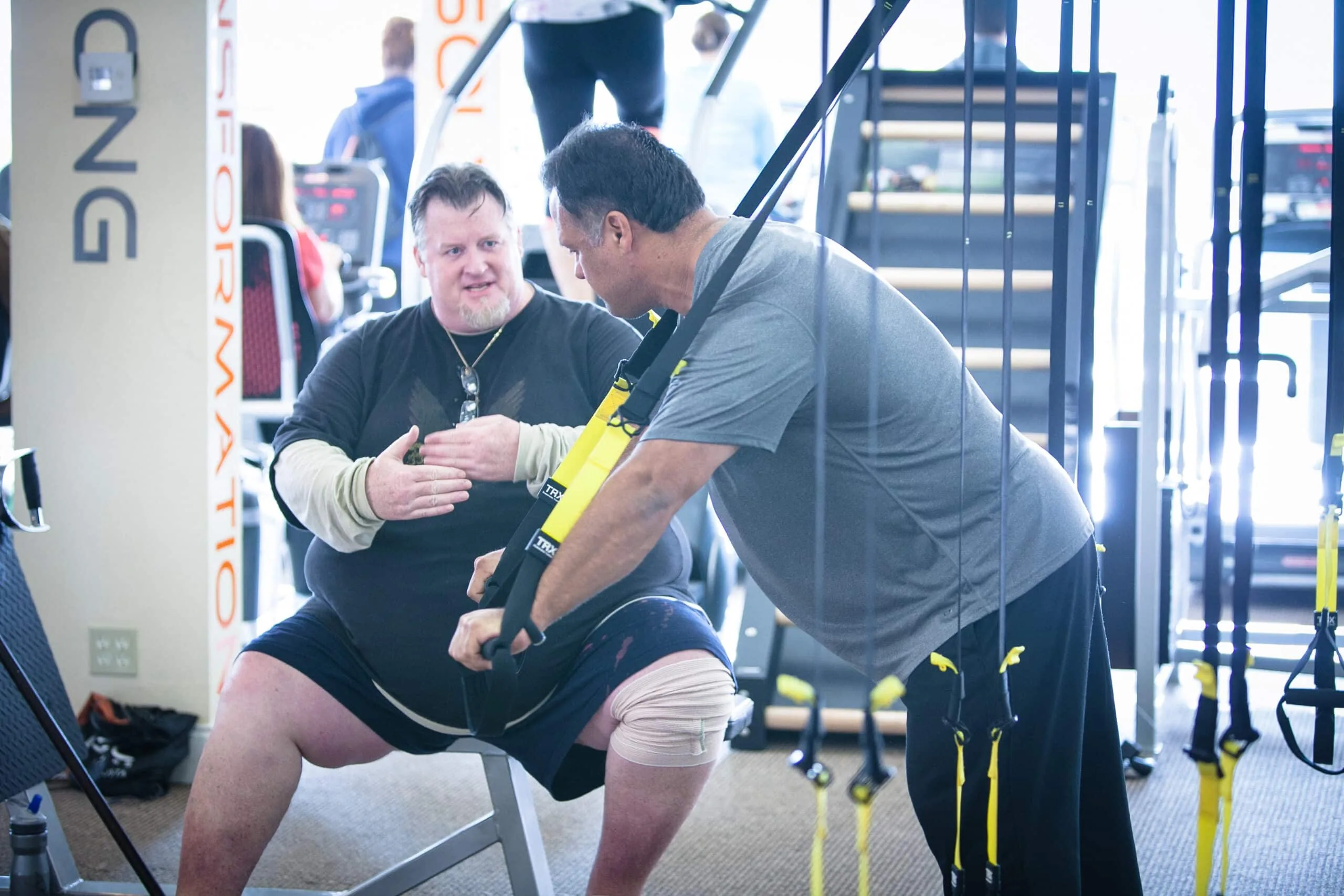
Each class follows a clear structure with warm-up, main work, and cooldown, and every movement has a modification and a progression. Participants at any fitness level, from a 400-pound beginner who can walk only 250 feet to a seasoned athlete, can train side by side while working at an appropriate intensity.
Trainer Ratio and Credentials: All fitness sessions maintain a 3–4:1 client-to-trainer ratio. Every trainer holds at least a bachelor’s degree, and several hold master’s degrees. Staff turnover remains extremely low, with many trainers present since PFC’s founding. A smaller facilitator-to-participant ratio increases individual attention and forms a core component of meaningful personalization in residential wellness programs, and PFC’s structure exceeds the typical industry standard.
Accommodations: Guests stay in luxury rooms at the Omni La Costa Resort with private patios, plush bedding, and full access to resort amenities. Three spa treatments per week are included. Options include massages, body scrubs, facials, and red light therapy at the La Costa Spa, previously ranked the #1 Wellness Spa in the Nation by Spa Magazine.
Nutrition: Breakfast, lunch, dinner, snacks, and nutrition shakes are prepared on-site by PFC’s wellness chefs using fresh, farm-to-fork ingredients. Registered dietitians design every meal to meet calorie targets while satisfying macronutrient needs aligned with BDA protein guidelines of 1.4–2.0 g per kg of body weight per day for active adults. Cooking demonstrations and nutrition workshops show clients how to recreate realistic, healthy meals at home.

Behavioral Health: Licensed psychologists and behavioral health coaches lead group workshops on emotional eating, triggers, and limiting beliefs. One-on-one counseling sessions are available for deeper work. Meditation and inner-connection sessions appear throughout the weekly schedule. This “Think” pillar of PFC’s “Think, Eat, Move” philosophy targets the behavioral causes of weight regain that exercise-only programs ignore.

The following table summarizes PFC’s strengths and limitations across the six dimensions most relevant to prospective clients, highlighting where the program excels and where trade-offs appear.
| Category | Pros | Cons | Notes |
|---|---|---|---|
| Results | 94% of weight loss is pure fat (UCSD case study), 3–4 lbs/week average, lean muscle preserved or increased | Individual results vary based on hormones, medications, and biology | 17-point weekly Report Card tracks progress beyond the scale |
| Trainers | 3–4:1 client-to-trainer ratio, bachelor’s/master’s degrees, very low staff turnover | Premium staffing is reflected in the price | Many trainers have been with PFC since founding |
| Nutrition | On-site wellness chefs, registered dietitians, farm-to-fork meals, cooking education included | Calorie-controlled meals require adjustment for some palates initially | No food prepared off-site and delivered, unlike some competitors |
| Location & Facilities | 450-acre Omni La Costa Resort, year-round moderate climate, all facilities on-site, Pacific coast access | Requires travel to Carlsbad, CA, not a local option for most | Competitors in Arizona, Utah, and Florida face climate disadvantages |
| Cost | All-inclusive at $6,000/week, 0% financing up to 6 months, multi-week discounts available | Premium price point requires financial planning | May qualify as a tax-deductible medical expense, consult a tax professional |
| Post-Program Support | Virtual coaching, personalized meal plans, fitness programming, ongoing staff communication | Sustained results require client commitment after departure | 50% of annual revenue comes from returning alumni, indicating strong long-term satisfaction |
Client feedback across 1,200+ reviews consistently highlights three themes: the quality of trainer relationships, the depth of the educational component, and the sense of community.
“What began as a simple one-week reboot has transformed into a complete lifestyle shift. PFC equips you with the knowledge, tools, and support to make meaningful—and sustainable—changes.” — Irene Tchaikovsky, Google Review
“PFC is a life-changing experience. I signed up for two weeks and stayed for eight. The facilities and staff are top notch.” — Scott, Google Review
“I’ve been to PFC 3 times because I am such a fan of the program! Their trainers are knowledgeable, inspiring and make hard work fun. The food is amazing!” — Lin Vela, Google Review
Longer-term outcomes reinforce the quantitative data. Lauren M. lost 140 pounds, moving from 320 to 180 pounds, with her story featured on The Today Show. Crissy lost 109 pounds, from 512 to 403 pounds, and appeared on The Doctors. Alex lost 97 pounds and credits PFC’s behavioral health component with helping him address the root causes of binge eating. Paula L. came off antidepressants after her stay and describes PFC as “the best investment I made in myself.”
Ready to start your transformation? Book a free consultation with our team at (888) 488-8936.
PFC is priced at $6,000 per week on an all-inclusive basis. That figure covers luxury resort accommodations at Omni La Costa, all meals and snacks prepared by on-site wellness chefs, all fitness classes and training sessions, educational workshops, comprehensive health assessments, weekly 17-point Report Card tracking, three spa treatments per week, access to all resort amenities, and post-camp virtual support.
For context, comparable seven-day all-inclusive wellness programs globally range from $3,500 at Kamalaya Koh Samui to $10,500 at Amanzoe in Greece, with medical-grade programs at Clinique La Prairie starting at €20,000 per week. PFC’s price delivers a results-focused, medically informed, luxury-resort experience at a competitive position within this global range.
Financing options include 0% interest for up to six months with no down payment. Multi-week discounts are available. The program may qualify as a tax-deductible medical expense, so clients should consult a tax professional for individual guidance.
PFC vs. Live In Fitness: Live In Fitness promotes lower price points, but clients stay in a residential home and travel by van to access gym facilities. Food is delivered rather than prepared on-site, and trainer turnover is high. The program operates in Arizona, where summer temperatures limit outdoor training. PFC runs year-round in the moderate climate of North San Diego County with all facilities on the same 450-acre campus.
PFC vs. Canyon Ranch: Canyon Ranch carries a premium brand and long history. Its focus centers on retreat and relaxation rather than structured, results-driven fat loss with measurable weekly data tracking. PFC’s 17-point Report Card, UCSD-validated outcomes, and low trainer ratio reflect a different program philosophy.
PFC vs. Unite Fitness Retreat: Unite Fitness Retreat operates from a hotel in downtown Salt Lake City, Utah, where cold winters limit outdoor programming. Clients must travel to access additional amenities. PFC’s campus consolidates training, nutrition, education, spa, and accommodations in one resort setting.
PFC vs. Pritikin and Hilton Head Health: Both programs operate in Florida, where high humidity can make sustained outdoor exercise uncomfortable. Both skew toward an older demographic with a slower pace. Neither offers the same breadth of outdoor activities, including beach workouts, Pacific coast hikes, paddleboarding, kayaking, tennis, pickleball, and golf, that PFC provides at La Costa.
PFC vs. Traditional Gym or Personal Trainer: The average gym-goer trains 3–4 hours per week total. PFC clients train 4–5 hours per day, five days per week, within a fully supported environment. Gyms typically provide no behavioral health support, no registered dietitian oversight, no on-site meal preparation, and no immersive break from daily distractions. Post-program integration planning, including structured habit-building and accountability check-ins, is the factor most predictive of whether wellness benefits translate into durable behavioral change, and PFC builds this into every stay through post-camp virtual coaching and ongoing staff communication.
PFC vs. Civana: Civana’s Arizona desert location presents extreme summer heat that limits outdoor activities. PFC’s coastal Southern California setting offers year-round moderate temperatures and diverse outdoor training options, including beach workouts and Pacific coast hiking.
“The price is too high.” At $6,000 per week, PFC represents a significant investment, but the all-inclusive structure removes hidden costs for meals, training, spa treatments, or assessments. The 0% financing option and multi-week discounts can reduce the upfront burden. Compared to the cumulative cost of failed diets, unused gym memberships, and obesity-related medical expenses, the per-week cost reflects a program with a 90%+ five-star rating and a strong alumni return rate.
“I’ve seen complaints about intensity being too high for beginners.” Best-practice program design adapts exercise selection, volume, intensity, and progression to the individual rather than following a one-size-fits-all daily schedule. PFC’s low trainer ratio enables real-time modification for every participant. Low-impact alternatives appear in every class. Clients ranging from 400-pound beginners to seasoned athletes train at the same time while receiving individualized coaching cues and progressions.
“Results won’t last after I leave.” Intensive programs that prioritize emotional regulation and habit-building over sheer variety of practices show sustained benefits up to 10 weeks post-retreat. PFC’s “Think, Eat, Move” curriculum is designed for home transferability. Cooking demonstrations teach replicable meals, nutrition workshops cover grocery shopping and meal planning, and behavioral health sessions address emotional triggers that cause relapse. Post-camp virtual coaching, personalized meal plans, and ongoing trainer communication extend the structure beyond the resort stay.
“I’m on GLP-1 medication—is this relevant to me?” PFC does not discourage GLP-1 use and instead adjusts protocols to emphasize resistance training and protein intake. This approach counters the muscle loss and metabolic slowdown that GLP-1 medications can create when used without a structured exercise program. The UCSD case study’s finding that PFC clients preserved or increased lean muscle mass holds particular relevance for this group.
Fifty percent of PFC’s annual revenue comes from returning alumni, which signals genuine long-term satisfaction rather than marketing claims. Clients who stay multiple weeks or return for annual resets often report that relationships with PFC staff and fellow campers rank among the most meaningful outcomes of the experience.
Post-camp support includes virtual coaching for accountability, personalized meal plans calibrated to home environments, structured fitness programming, and open communication with PFC trainers via email. A structured post-program plan with weekly micro-habit check-ins is the factor most predictive of whether retreat benefits translate into durable behavioral change, and PFC’s post-camp infrastructure follows this principle closely.
Multi-visit tracking allows returning alumni to see long-term health trends across years of engagement using the same 17-point Report Card framework. Clients who return after health setbacks, stressful periods, or a desire to level up re-enter a program staffed by people who already know their history, goals, and progress.
Ready to continue or begin your transformation? Start your transformation journey with our team at (888) 488-8936.
PFC is priced at $6,000 per week on an all-inclusive basis. The price covers luxury accommodations at Omni La Costa Resort, all meals and snacks prepared by on-site wellness chefs, all fitness classes and training sessions, educational workshops covering nutrition and behavioral health, comprehensive health assessments, weekly 17-point Report Card tracking, three spa treatments per week, access to all resort amenities, and post-camp virtual support. Financing is available at 0% interest for up to six months with no down payment required. Multi-week discounts are also available, and the program may qualify as a tax-deductible medical expense, so clients should consult a tax professional for individual guidance.
The average client with 40–70 pounds to lose can expect 3–4 pounds of fat loss per week. A UCSD case study found that 94% of total weight loss among PFC participants was purely fat, compared to the 60/40 fat-to-muscle ratio typical of standard dieting programs. Most long-term clients preserved or increased lean muscle mass during their program. Progress is tracked across 17 data points weekly, including weight, body fat percentage, key body measurements, blood pressure, mile time, plank hold time, push-up count, and key blood markers such as LDL, HDL, triglycerides, and glucose. Individual results vary based on starting weight, hormones, medications, and biology, but the 17-point framework helps clients see meaningful progress even when the scale moves more slowly than expected.
PFC works with clients across the full fitness spectrum, from individuals who are 400+ pounds and can walk only 250 feet to seasoned athletes who train four times per week. Every class is structured so that all fitness levels can participate and benefit at the same time. The low trainer ratio enables real-time modifications, progressions, and low-impact alternatives for every exercise. A dedicated low-impact training track supports clients with health limitations such as joint issues or cardiovascular conditions. The program begins with a comprehensive health assessment on day one to establish a personalized baseline and build an individualized plan, so no participant is placed in a one-size-fits-all structure.
Post-camp support includes virtual coaching for ongoing accountability, personalized meal plans calibrated to home cooking environments, structured fitness programming, and open communication with PFC trainers via email. Cooking demonstrations and nutrition workshops during the stay are designed to be replicable at home, covering grocery shopping, meal planning, and macro awareness. Behavioral health sessions address the emotional triggers and lifestyle patterns that cause relapse in other programs. Returning alumni, who represent about half of PFC’s annual revenue, can access multi-visit tracking that shows long-term health trends across years of engagement and re-enter the program with staff who already know their history and goals.
Most fitness programs address only one dimension, such as exercise or calorie restriction, and rarely teach clients how to sustain change independently. PFC’s “Think, Eat, Move” philosophy addresses three root causes of weight regain: behavioral patterns, nutrition knowledge, and physical conditioning. Licensed psychologists and behavioral health coaches lead the mindset work, registered dietitians and wellness chefs handle nutrition education and cooking skills, and credentialed trainers deliver 4–5 hours of daily training within a small-group structure. The UCSD case study mentioned earlier validates this approach physiologically, showing pure fat loss with lean muscle preserved or increased, which protects metabolic rate. The 90%+ five-star rating across 1,200+ reviews and a strong alumni return rate reflect a program that clients trust enough to return to rather than one they feel eager to leave behind.