 5-star Wellness Resort
 5-star Wellness Resort
Written by: Chris Butt, Certified Personal Trainer & Weight Loss Coach, Premier Fitness Camp
Get Personalized Guidance For Your Fitness Plan
The National Institute on Aging (NIA) categorizes exercise for older adults into four types: endurance (aerobic), strength, balance, and flexibility. Each pillar serves a specific purpose, and a complete plan includes all four.
Aerobic (Endurance). The NIA recommends at least 150 minutes of moderate-intensity aerobic activity per week, spread across several days. Brisk walking, swimming, and cycling are practical options. The CDC reports that getting at least 150 minutes a week of moderate physical activity lowers the risk of heart disease and stroke. Regular physical activity can also lower blood pressure and improve cholesterol levels, and people start to benefit from even less than 150 minutes a week. Ultimately, aerobic work supports cardiovascular health, energy levels, and weight management.
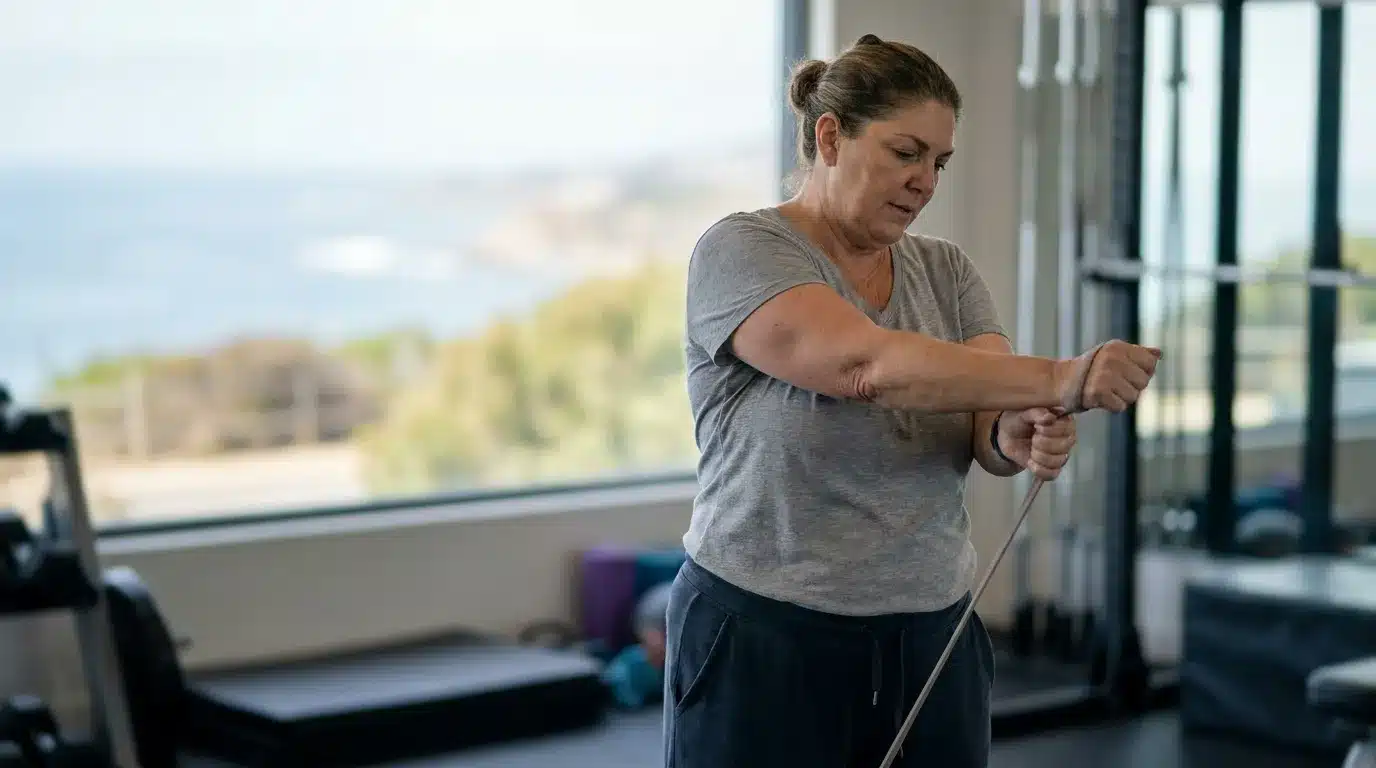
Strength. The NIA recommends strength training at least two days per week, working all major muscle groups using resistance bands, free weights, or bodyweight movements. The CDC notes that muscle mass and strength decline with aging, and that gradually increasing resistance over time produces greater benefit regardless of age. Strength training preserves lean muscle, supports bone density, and makes daily tasks such as rising from a chair, carrying groceries, and climbing stairs easier and safer.
Balance. The NIA advises older adults to practice balance exercises regularly, ideally on most days of the week, with examples including supported single-leg stands and heel-to-toe walking. A 2019 Cochrane systematic review pooling 39 trials and 7,920 participants found that balance and functional exercise reduced the rate of falls in community-dwelling older adults by approximately 24%, graded as high-certainty evidence. Fall prevention is one of the most meaningful outcomes of a well-designed fitness plan for this age group.
Flexibility. The NIA recommends flexibility work such as gentle stretching, preferably performed after the body is warmed up, to support comfortable movement. Neither the NIA nor the CDC sets a specific weekly minute target for flexibility. Flexibility acts as a complementary mobility component that reduces stiffness, supports joint range of motion, and improves movement quality across all other pillars.
Now that the four pillars are clear, you can apply them in a simple weekly structure that fits your current fitness level.
This sample schedule covers all four pillars and works well for beginners. Each activity can be scaled up in duration or intensity as fitness improves. Consult a healthcare provider before starting any new exercise program.
| Day | Activity | Duration |
|---|---|---|
| Monday | Brisk walking (aerobic) | 30 minutes |
| Tuesday | Resistance band exercises, such as seated rows, bicep curls, and leg press (strength) | 20–30 minutes |
| Wednesday | Tai chi or chair yoga (balance and flexibility) | 30 minutes |
| Thursday | Brisk walking (aerobic) | 30 minutes |
| Friday | Resistance band exercises plus heel-to-toe walking (strength and balance) | 30 minutes |
| Saturday | Gentle full-body stretching (flexibility) | 15–20 minutes |
| Sunday | Rest or light leisure walking | As desired |
The OHSU Sample Exercise Plans weekly goal is at least 150 minutes of aerobic exercise plus resistance training at least twice per week, with sample options such as Option 1 delivering 50 minutes of aerobic activity on three days (150 minutes total) plus two resistance-training days. As the plan becomes comfortable, you can increase duration, resistance, or balance challenge in small steps.
Older adults can perform a wide range of exercises, yet some movements carry higher risk without proper guidance, technique, or progression. Certain exercises should be avoided or modified based on individual health conditions.
High-risk movements for most older adults include:
The main concerns are joint stress, fall risk during unstable movements, and vertebral compression risk in those with osteopenia or osteoporosis. Risk depends on functional ability, training history, medical conditions, supervision, and technique, rather than age alone. Always consult a healthcare provider before starting any new exercise program, and work with a qualified trainer to identify safe substitutions.
Daily movement benefits adults over 70, while daily high-intensity exercise increases the chance of overuse injury, fatigue, and burnout and is unnecessary for strong health gains.
Exercise guidelines for older adults recommend allowing at least 48 hours between high-intensity resistance sessions to ensure adequate recovery, and advise against high-intensity intervals on consecutive days to prevent temporary suppression of immune function. Following these guidelines, a well-designed weekly plan alternates between aerobic days, strength days, balance and flexibility sessions, and at least one full rest day.
Consistency matters more than intensity. A 30-year study of 147,374 people found that combining aerobic activity with roughly 90–120 minutes per week of strength training was associated with meaningfully lower all-cause, cardiovascular, and neurological mortality, with no additional mortality benefit above 120 minutes per week. The goal is a sustainable rhythm, not maximum daily output.
Light activity such as a short leisure walk, gentle stretching, or tai chi on recovery days supports circulation and joint mobility without adding recovery burden. Rest days function as part of the program and help your body adapt.
Walking is an excellent aerobic activity, but it leaves meaningful gaps in strength, balance, and flexibility that a complete exercise plan must address.
CDC guidance specifies that older adults need to include aerobic, muscle-strengthening, and balance activities in their physical activity routines, so walking alone does not meet the full recommendation. A familiar, level walking route can become too easy to keep building strength, and steady forward walking does not systematically train tasks such as rising from a low chair, recovering from a trip, or maintaining balance during a sudden directional change.
As noted earlier, balance and functional training reduced falls by approximately 24% in a large Cochrane review, while walking-only programs did not show a clear fall-rate reduction. Walking contributes to the aerobic component of a fall-prevention routine, and strength and balance exercises must be added deliberately to cover abilities that walking does not train.
The practical recommendation is to keep regular walks and add muscle-strengthening sessions at least twice weekly, plus dedicated balance practice suited to current ability. For a deeper look at resistance training options, see Best Weight Training Program for Seniors Over 70.
Arthritis changes how you exercise, yet it does not remove exercise from the picture. CDC and American College of Rheumatology guidance recommends that adults 65 and older with arthritis complete the same 150-minute moderate-intensity aerobic target, plus muscle-strengthening activity on at least two days per week, with exercise focused on strengthening muscles around joints, maintaining range of motion, and reducing sedentary time.
Practical modifications for arthritis include:
Working with a physical therapist or certified trainer to adapt exercises to individual joint limitations produces better and safer outcomes than self-directed modification alone. The 2019 guideline from the American College of Rheumatology and Arthritis Foundation strongly recommends exercise and tai chi for knee and hip osteoarthritis and notes that supervised programs tend to produce better results than unsupervised exercise.
A healthy aging fitness plan should evolve as fitness improves, and clear tiers make that progression easier to follow. The table below shows how each of the four pillars can be adapted across three progression levels, so you can see exactly how to advance safely as your fitness improves. Progress when an exercise feels manageable and pain stays within acceptable limits. Scale back after illness, a break of more than one to two weeks, or when pain increases beyond the 24-hour rule.
| Pillar | Beginner | Intermediate | Active |
|---|---|---|---|
| Aerobic | Short, flat walks (10–15 minutes), stationary cycling at low resistance | Brisk 25–30 minute walks, light water aerobics | Interval walking (1 minute brisk, 2 minutes easy), longer hikes on varied terrain |
| Strength | Chair-based exercises, bodyweight sit-to-stands, light resistance bands | Bodyweight squats, resistance band rows and presses, wall push-ups | Progressive resistance training with bands or dumbbells, hex bar deadlifts with guidance |
| Balance | Two-hand supported single-leg stands, seated weight shifts | One-hand supported single-leg stands, heel-to-toe walking | Unsupported single-leg stands, tandem stance on varied surfaces, tai chi sequences |
| Flexibility | Seated gentle stretches, lying knee-to-chest, ankle circles | Standing hip flexor stretch, seated hamstring stretch, shoulder rolls | Full-body stretch routine, chair yoga, progressive range-of-motion work |
Progression should change one variable at a time, such as repetitions, sets, resistance, or duration, by a small amount every one to two weeks, with each new level held for at least one to two weeks before increasing again. A general guideline is to increase exercise stimulus by no more than 5–10% per week.
For a decade-by-decade perspective on long-term progression, see Long-Term Fitness After Retirement: A Decade-By-Decade Guide.
While home plans provide a solid foundation, many adults over 60 eventually hit a plateau as age-related muscle loss and metabolic changes accelerate. A 2026 systematic review and meta-analysis of 72 randomized controlled trials found that resistance exercise should be considered a first-line intervention for older adults with sarcopenia, and that combining exercise with nutritional support produced greater benefits than either intervention alone. That combination of expert-designed exercise and nutrition support is exactly what a structured, supervised program delivers.
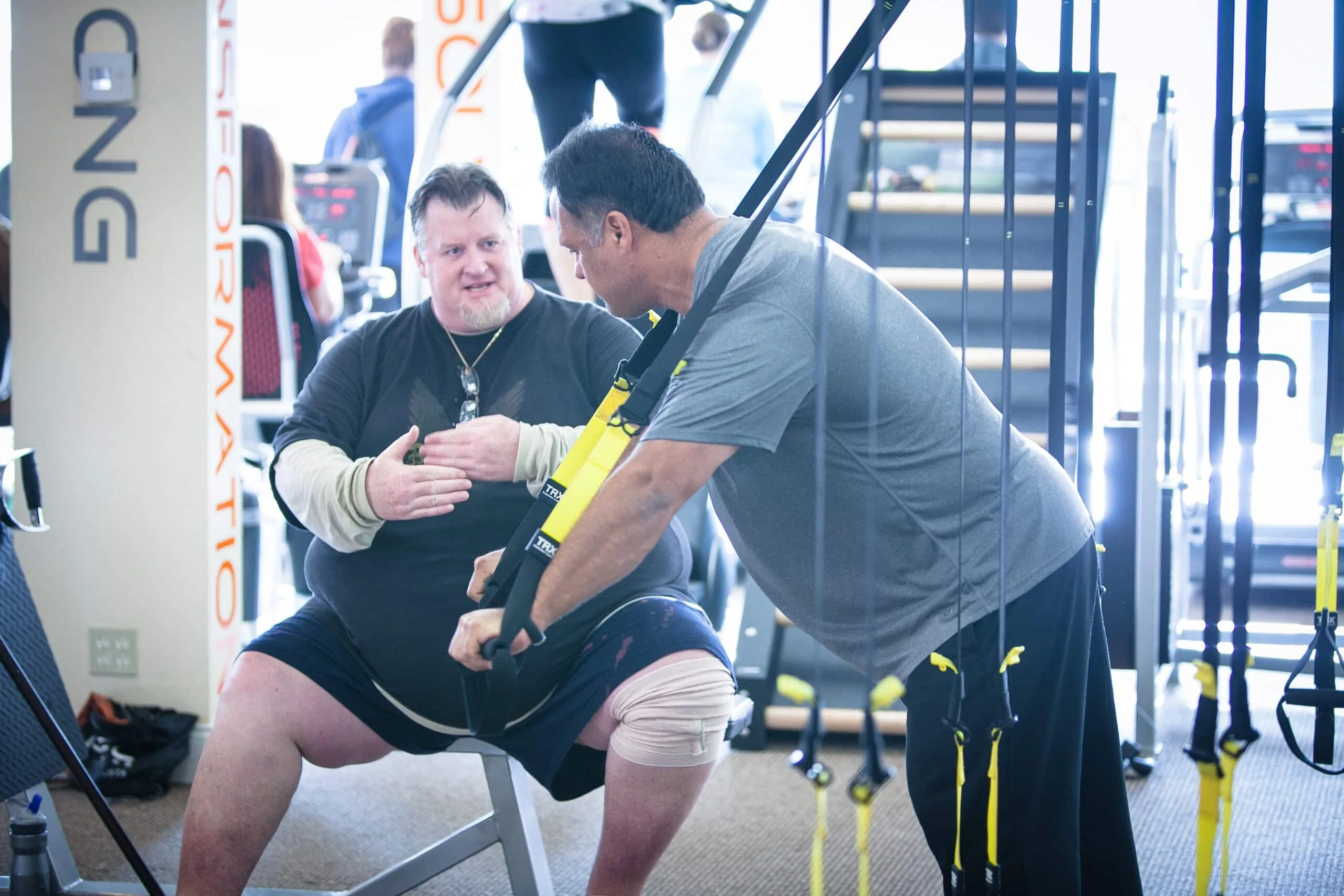
Premier Fitness Camp was built for this transition point. Founded on the “Think, Eat, Move” philosophy, Premier Fitness Camp combines intensive daily fitness training, in-depth nutrition education, and behavioral health support at the Omni La Costa Resort and Spa in Carlsbad, California. The program is a data-driven, immersive transformation experience with measurable outcomes.
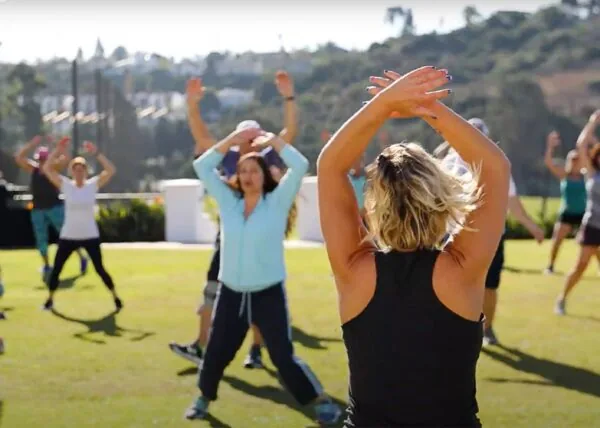
Premier Fitness Camp’s differentiators for adults over 60 include:

With over 1,200 reviews, a 90%+ five-star rating, and half of annual revenue coming from returning alumni, Premier Fitness Camp has established itself as a trusted expert for adults who need more structure than a home plan can provide.
Schedule Your Consultation Today
Strength training should be performed at least two days per week, targeting all major muscle groups. As mentioned earlier, allow at least 48 hours between sessions that work the same muscle groups so the body has time to recover and rebuild. Beginners should start with one set of 8–12 repetitions at a manageable effort level and add sets only when joints tolerate the routine comfortably. Most people notice measurable improvements in strength and daily function within 10–12 weeks of consistent training, with pain, energy, and mood often improving sooner.
The most evidence-supported balance exercises for older adults include supported single-leg stands, heel-to-toe walking in a straight line, and slow controlled sit-to-stands from a chair. Begin with two hands on a sturdy surface for support, then progress to one hand, then fingertips, then hands hovering, reducing support only when the current level feels stable and controlled. Tai chi is also strongly supported by research for fall prevention and is appropriate for a wide range of fitness levels. Balance training should be performed on most days of the week, even in short sessions of a few minutes.
Many people with back issues can exercise safely with the right adjustments. The key principle for back-safe exercise is to use hip hinging instead of spinal flexion, bending from the hips with a neutral spine rather than rounding the lower back. Exercises that bring the sternum and pelvis closer together, such as traditional crunches and sit-ups, should generally be avoided. Chair-based exercises, resistance bands, and isometric core work are effective alternatives that reduce spinal load. Always obtain medical clearance before starting a new program if you have a history of back injury, disc problems, or osteoporosis, and work with a physical therapist or certified trainer to ensure proper form.
Strength and daily function typically improve within 6–12 weeks of consistent training. Pain levels, energy, and mood often improve within two to three weeks of beginning a regular routine. Balance improvements from dedicated practice can appear within a similar timeframe, though fall-prevention benefits from structured programs are most robust after 12 or more weeks of consistent work. Body composition changes, particularly meaningful reductions in fat and preservation of lean muscle, require sustained effort over months and are best supported by combining exercise with adequate protein intake and professional nutritional guidance.
A complete healthy aging fitness plan rests on four pillars, aerobic conditioning, strength training, balance work, and flexibility, each targeting a distinct and essential aspect of health after 60. The weekly schedule in this guide offers a safe, beginner-friendly starting point that meets CDC and NIA targets and can be scaled progressively over time. Arthritis and joint concerns are manageable with the right modifications, including low-impact activities, the 24-hour pain rule, chair support, and hip hinging technique. Daily movement supports health, and recovery days play a central role in long-term progress.
The most important step is to start where you are and progress gradually. Consistency over weeks and months produces results that no single workout can deliver. When a home plan plateaus, or when the combination of expert coaching, structured nutrition, behavioral support, and community becomes the missing piece, Premier Fitness Camp is ready to provide that next level of support.
Start Your Journey With A Free Consultation