 5-star Wellness Resort
 5-star Wellness Resort
Written by: Chris Butt, Certified Personal Trainer & Weight Loss Coach, Premier Fitness Camp | Last updated: June 29, 2026
Adults who want a highly structured, high-volume training environment find Premier Fitness Camp in a category of its own. Clients train four to five hours per day, Monday through Friday, with a half day on Saturday. This volume far exceeds what any gym membership or traditional personal training schedule can match. The average person working out independently logs three to four hours of exercise per week, and PFC clients complete that amount in a single morning.
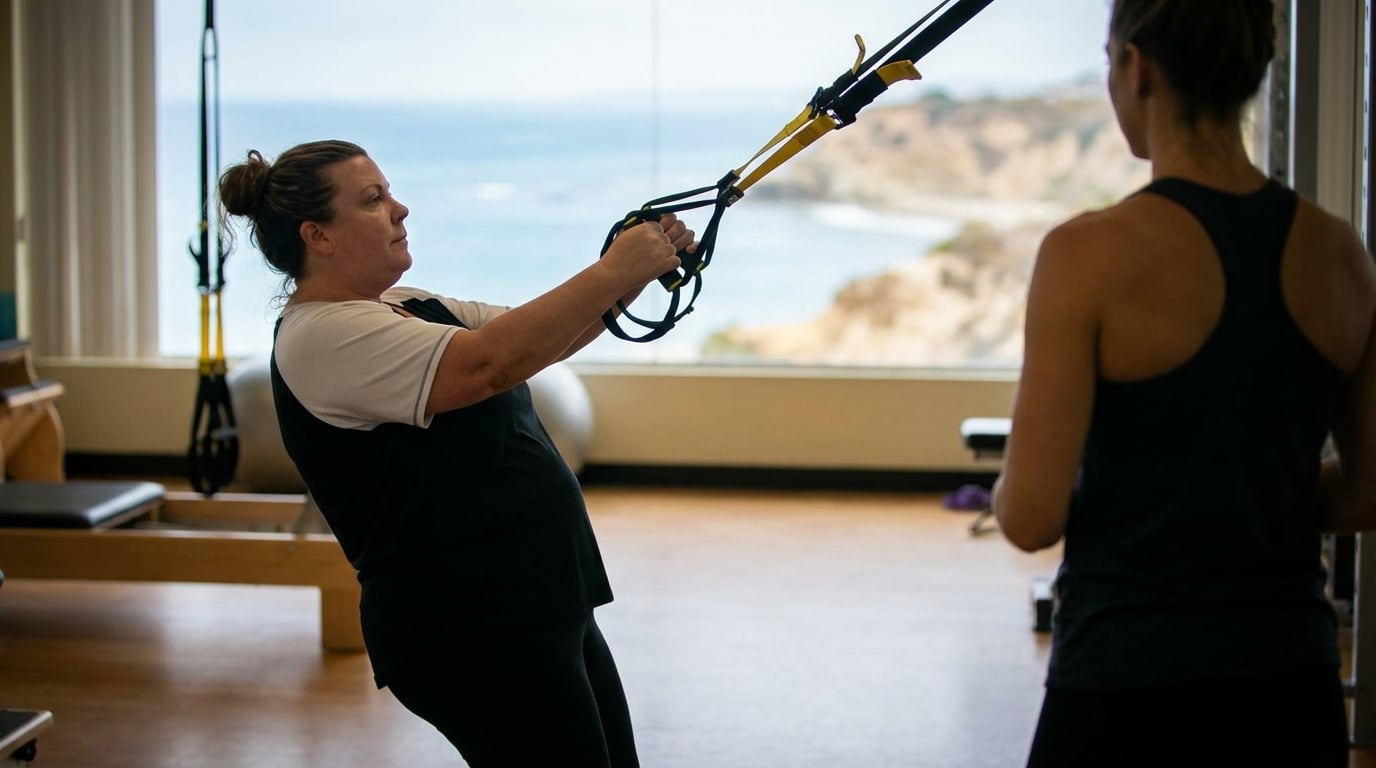
This intensity stays safe and sustainable because every session runs at a 3–4:1 trainer-to-client ratio. Coaches watch form closely, adjust exercises on the spot, and tailor intensity to each person. The program’s “Think, Eat, Move” framework keeps training as one part of a complete transformation plan.
Licensed psychologists help clients identify behavioral triggers and stress patterns. Registered dietitians design every meal, and wellness chefs prepare fresh, farm-to-fork food on-site at the Omni La Costa Resort in Carlsbad, California. Nothing is outsourced or delivered from off-site kitchens, which keeps nutrition aligned with each client’s plan.
Many clients arrive after plateauing at other programs. They often report that the combination of training volume, expert coaching, and behavioral support finally produces the breakthroughs they wanted. One client summed it up simply: “I signed up for two weeks and stayed for eight.”
Connect with the PFC team to talk through your transformation goals. Call (888) 488-8936 or visit the link above.
Most weight-loss programs produce a mixed result: fat lost alongside lean muscle, which lowers resting metabolic rate and makes long-term maintenance harder. Preserving lean muscle is the key to maintaining metabolism after weight loss. A case study conducted in partnership with the University of California, San Diego (UCSD) evaluated PFC participants who stayed four or more weeks and received DEXA scans, the gold standard for body-composition measurement, at the start and end of their program.
The study found that 94% of total weight loss was purely fat. Standard dieting typically produces a 60/40 fat-to-muscle ratio. Many aggressive weight-loss programs see a 50/50 split. PFC’s 94% outcome is the only independently case-studied result of its kind among adult fitness retreats.
Long-term PFC clients not only preserved lean muscle, many increased it. Because lean muscle drives resting metabolic rate, this outcome directly addresses the main reason weight regain occurs after other programs: metabolic damage from muscle loss.
The average PFC client with 40–70 pounds to lose can expect three to four pounds of fat loss per week. Individual results vary based on starting weight, hormones, medications, and biology. Weight is also just one of 17 data points tracked weekly through PFC’s personalized report card, which includes body fat percentage, waist and hip measurements, blood pressure, cholesterol panels, glucose, push-up count, plank time, and mile time.
Many clients see dramatic improvements across several markers even when the scale moves more slowly than expected. PFC’s 17-point weekly report card gives every client a complete picture of their health trajectory, not just a number on a scale. This level of data-driven accountability does not appear at Canyon Ranch, Hilton Head Health, or other programs in this category.
Adults in the 40–60 age range face specific physiological shifts, including declining muscle mass, changing hormones, and a higher risk of bone density loss during rapid weight loss. The UCSD case study found that PFC clients showed minimal bone loss and maintained or improved metabolic capability. These outcomes matter especially for adults who want to lose weight without sacrificing long-term strength or energy.
PFC welcomes clients who have never exercised and those who already train several times per week. The program serves people who can only walk 250 feet at the start and seasoned athletes who arrive with established routines. Every class is structured so that all fitness levels participate and benefit.
Trainers hold bachelor’s and master’s degrees and maintain a 3–4:1 ratio in every session. They provide modifications and low-impact alternatives for every exercise, so no one is left behind. No prior fitness experience is required, and clients progress at a pace that respects their joints, history, and confidence level.
The 450-acre Omni La Costa Resort campus creates a private, non-intimidating environment. Outdoor activities such as beach workouts on the Pacific coast, hikes through Torrey Pines and Batiquitos Lagoon, stand-up paddleboarding, and kayaking are built into the program and scaled to all fitness levels. The year-round moderate climate of Carlsbad, California, keeps daily outdoor training comfortable in every season, unlike Arizona’s summer heat, Florida’s humidity, or Utah’s winter cold.
This combination of accessible outdoor programming and a supportive environment helps explain why fifty percent of PFC’s annual revenue comes from returning alumni. That figure reflects genuine satisfaction and lasting results, not marketing claims.
Adults using GLP-1 medications such as Ozempic or Wegovy often see the scale drop while lean muscle drops as well. A structured fitness retreat can counter this pattern by emphasizing resistance training and adequate protein intake, the two factors most critical for preserving and rebuilding muscle. At PFC, registered dietitians design individualized nutrition plans, and behavioral health coaches help clients build habits that support long-term maintenance.
The program accommodates both clients currently on GLP-1 medications and those transitioning off them. Protocols adjust based on medication status, energy levels, and medical guidance. The environment stays judgment-free, and the focus remains on education and lifestyle skills that make any weight-loss approach more sustainable.
GLP-1 medications such as Ozempic and Wegovy can produce initial weight loss but often cause lean muscle loss alongside fat loss. This pattern runs counter to the muscle-preserving results documented in PFC’s UCSD case study. Many adults arrive at a lower scale weight yet have reduced muscle mass, a slower metabolism, and no clear plan for life after medication.
PFC addresses this by prioritizing resistance training and protein intake for clients on or coming off GLP-1 medications. Registered dietitians tailor meal plans, and behavioral health coaches support the daily routines that protect results. The goal is a strong, educated transition to long-term maintenance, regardless of how the initial weight loss occurred.
Speak with a program advisor to learn how PFC’s approach can support your current health plan. Call (888) 488-8936.
Several programs in this category market themselves as luxury retreats, including The Ranch Malibu and Canyon Ranch. These options carry premium price tags, yet many focus primarily on relaxation and amenities. PFC uses a different model where luxury becomes the setting for a structured, outcome-measured program.
At PFC, the Omni La Costa Resort in North San Diego County provides 450 acres of luxury accommodations with private patios, plush bedding, and full resort amenities. Three spa treatments per week are included in the program fee, drawn from the La Costa Spa’s menu of massages, body scrubs, facials, and red light therapy. Specialty programs such as Golf Fit, Tennis Fit, Pickleball Fit, and Spa Fit let clients integrate afternoon activities at La Costa’s 36-hole golf course, Cliff Drysdale Tennis Academy courts, and pickleball facilities into their schedule.
PFC’s luxury setting supports a serious training and education experience rather than replacing it. Meals are prepared by PFC’s own wellness chefs using fresh, farm-to-fork ingredients, not delivered from off-site kitchens. Trainers have been with PFC for years, many since the program’s founding, which creates continuity that resort-style programs with high staff turnover rarely match. Returning alumni often reconnect with the same staff year after year, contributing to PFC’s 50% alumni return rate.
Post-program support keeps clients from feeling like they are starting over once they leave the resort. PFC offers virtual coaching, personalized meal plans for home, individualized fitness programming, and ongoing access to staff via email. Clients can contact their trainers after they leave, so the relationship continues beyond the program dates.
For clients who want to return, multi-week discounts and flexible stay lengths from one week to several months make re-engagement straightforward. The average first-time client stays approximately 11 days. Many book one week and extend on-site after experiencing the program firsthand.
PFC’s business model centers on empowerment rather than dependency. The “Think, Eat, Move” curriculum covers behavioral health, nutrition science, cooking skills, and exercise habits so clients leave with the knowledge to sustain their results independently. This education separates PFC from programs that focus only on exercise and caloric restriction without addressing the behavioral and nutritional root causes of weight regain.
With over 1,200 reviews and a 90%+ five-star rating, PFC has supported more than 3,000 clients through lasting health transformations. The UCSD case study provides the only independently validated body-composition outcome data among adult fitness retreats in the United States, documenting 94% pure fat loss while preserving lean muscle and bone density.
Ready to take the next step? Book your free consultation with the Premier Fitness Camp team to discuss your goals and find the right program length. Call (888) 488-8936 or visit premierfitnesscamp.com/book-a-consult.
An adult fitness retreat focuses on measurable health outcomes, while a wellness spa or resort centers on relaxation and general well-being. At a results-driven retreat, the schedule includes daily structured training, nutrition education, behavioral health coaching, and progress tracking. PFC’s program delivers four to five hours of daily training, a 17-point weekly report card, registered dietitian-designed meals, and licensed psychologist support within a luxury resort setting. Wellness resorts such as Canyon Ranch and Civana offer valuable experiences, yet they do not revolve around the same outcome-measurement framework.
One week provides a meaningful kickstart, and clients typically lose three to four pounds of fat while establishing initial habits. Two weeks builds momentum and allows the body to adapt to a new training and nutrition routine. Three weeks aligns with behavioral research on when new habits begin to solidify. Four weeks or more produces the most significant body-composition changes and gives clients the deepest education in nutrition, behavioral health, and exercise.
PFC’s average first-time client stays approximately 11 days. Many book one week and extend on-site after experiencing the program. Stays of up to several months are available for adults seeking deeper transformation.
Physical limitations and a lack of prior exercise experience do not prevent participation at PFC. The program serves clients who can only walk 250 feet at the start and clients who arrive with athletic backgrounds. Every fitness class is structured so that all participants, regardless of starting point, can engage safely and effectively.
Trainers maintain a 3–4:1 ratio and provide low-impact modifications for every exercise. Clients with specific conditions such as joint pain, back issues, or cardiovascular concerns receive individualized adjustments. A comprehensive health assessment on day one, including blood work, vital signs, body composition, and a fitness test, establishes a personalized baseline that guides every aspect of the program.
A typical weekday begins with four to five hours of structured fitness training in the morning. Sessions may include bootcamp, boxing, barre, TRX, Tabata, interval training, beach workouts, or hiking at nearby trails such as Torrey Pines or Double Peak. Midday features a gourmet, nutritionist-designed meal prepared by PFC’s wellness chefs on-site at the Omni La Costa Resort.
Afternoons include nutrition workshops, behavioral health sessions, cooking demonstrations, or specialty program activities such as golf, tennis, or pickleball. Evenings include dinner and optional educational programming. Three spa treatments per week are included. The schedule is fully structured, so clients do not need to plan or make decisions about meals, workouts, or activities.
Yes. PFC welcomes clients who are currently on GLP-1 medications and those transitioning off them. The program’s registered dietitians and certified trainers adjust protocols to prioritize resistance training and protein intake, which helps preserve lean muscle during GLP-1 use. Clients receive individualized nutrition plans and behavioral coaching that support long-term weight maintenance, whether or not they continue medication.
PFC does not take a position on GLP-1 use. The focus stays on building the education and lifestyle foundation that supports lasting health. Adults who want more detail about GLP-1 support can review the “GLP-1 Users” section above or speak directly with a program advisor.