 5-star Wellness Resort
 5-star Wellness Resort
Written by: Chris Butt, Certified Personal Trainer & Weight Loss Coach, Premier Fitness Camp | Last updated: July 7, 2026
Most guests at advanced residential retreats can expect to lose 3 to 4 pounds of fat per week. This range reflects a typical participant aged 40–60 with 40–70 pounds to lose. Results still vary based on starting weight, hormones, medications, and biology. The most important factor is the composition of that weight loss, specifically how much is fat versus lean muscle.
A case study conducted with the University of California, San Diego (UCSD) evaluated participants who stayed four or more weeks and received DEXA scans at program start and end. The findings showed that 94% of total weight loss was purely fat, a landmark result compared to the 60/40 fat-to-muscle ratio typical of standard dieting programs. Most long-term participants not only preserved lean muscle but increased it. Exercise-driven fat loss helps preserve muscle mass and supports a healthier metabolism, making weight maintenance easier over time, whereas large weight losses achieved through dieting alone often result in muscle loss that slows metabolism.
Progress is tracked across 17 data points weekly, far beyond scale weight alone. The table below shows how this level of tracking compares to typical competitor approaches and why monitoring multiple health dimensions produces better long-term outcomes than scale weight alone.
| Metric Category | Data Points Tracked Weekly | Typical Competitor |
|---|---|---|
| Body composition | Weight, body fat %, DEXA scan (optional) | Scale weight only |
| Measurements | Neck, waist, umbilicus, upper arm, chest, hip, quad | Rarely tracked |
| Cardiovascular health | Blood pressure (systolic and diastolic), LDL, HDL, triglycerides, glucose | Not tracked |
| Fitness performance | Mile time, plank hold duration, push-up count | Not tracked |
| Trainer ratio | 3–4:1 (client to trainer) | Varies, often 10:1 or higher |
A 2024 systematic review concluded that daily self-monitoring is the most effective frequency for both losing weight and maintaining weight loss, and tracking body composition rather than total weight alone helps determine whether weight loss consists of fat or muscle, supporting metabolism and long-term maintenance. The 17-point weekly Report Card puts this research into daily practice.
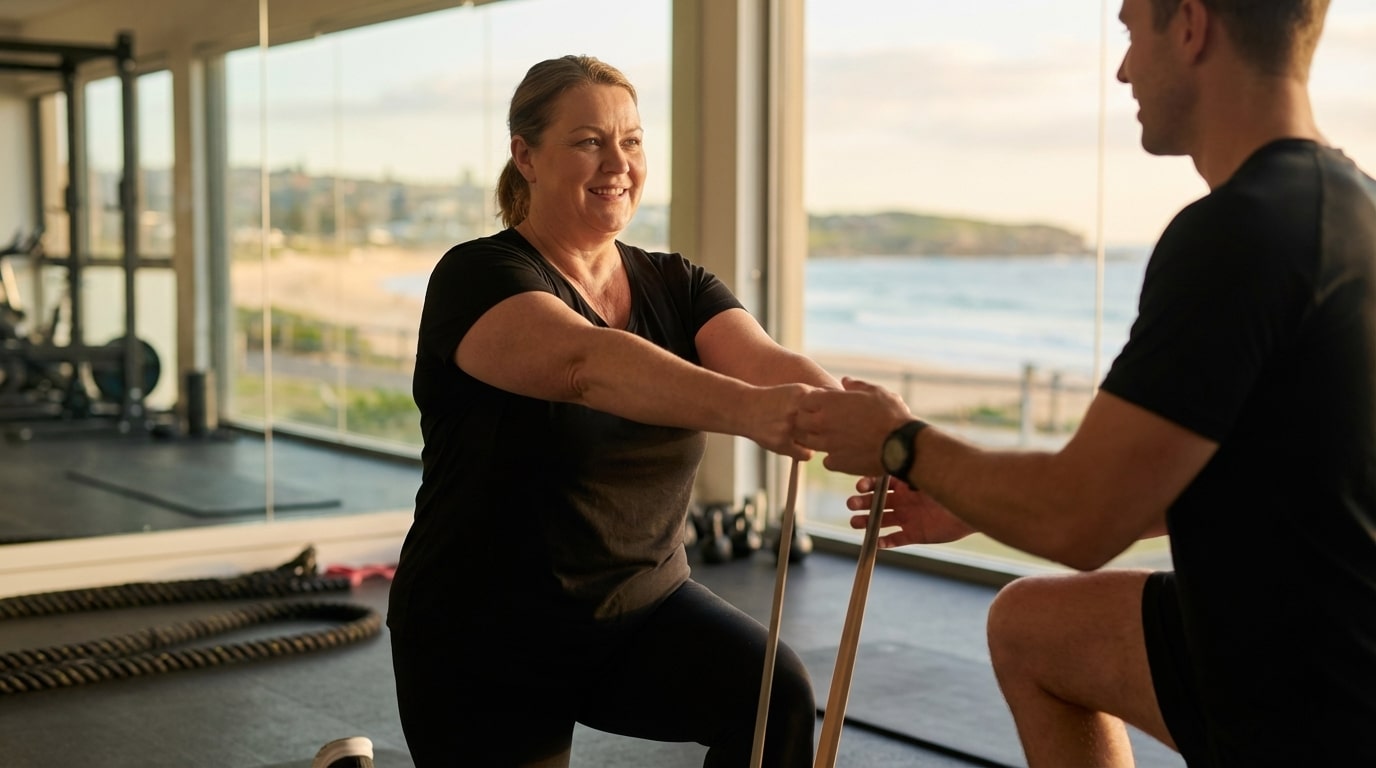
PFC welcomes a wide range of participants, from 400-pound beginners who can walk only 250 feet to seasoned athletes who train four times per week. Every fitness class is structured so that all levels participate and benefit. Trainers maintain a 3–4:1 client-to-trainer ratio and provide low-impact modifications, progressions, and individualized alternatives for every exercise. Participants with physical limitations such as bad knees, back pain, or joint issues have a dedicated low-impact training track available throughout their stay.
For GLP-1 users (Ozempic, Wegovy, and similar medications), PFC functions as a structured exit ramp and metabolic foundation. Clinical trials show patients who stop GLP-1 therapies regain around two-thirds of lost weight, and GLP-1 side effects include loss of muscle mass and increased heart rate. PFC addresses both risks directly. Resistance training protocols preserve and rebuild lean muscle, dietitians guide protein intake, and behavioral health coaches build sustainable habits that make medication-assisted weight loss durable long-term.
A white paper developed by FTI Consulting’s Center for Healthcare Economics and Policy found that pairing GLP-1 therapy with regular structured exercise preserves muscle during weight loss, maintains strength, mobility, and bone health, and reduces weight regain after stopping medication. PFC’s program is built around this evidence base.
2026 wellness trends emphasize GLP-1-friendly metabolic eating with daily protein targets, Zone 2 cardio, and heavy strength training for muscle preservation. These elements sit at the core of PFC’s daily programming.
Six criteria form the evaluation framework used across all programs in this guide. Each one reflects a dimension of program quality that predicts whether participants achieve lasting results or temporary ones.
The following sections apply these six criteria across all programs, beginning with the Think/Eat/Move curriculum structure. This foundation shows whether a program addresses weight loss holistically or focuses narrowly on exercise alone.
Our foundational philosophy, Think, Eat, Move, weaves behavioral health, nutrition education, and physical training into every day of the program. The table below compares this curriculum structure across the six primary competitors evaluated in this guide and highlights how our integrated daily programming across all three dimensions differs from competitors’ more fragmented or single-focus approaches.
| Program | Behavioral Health (Think) | Nutrition Education (Eat) | Fitness Programming (Move) |
|---|---|---|---|
| Our Program | On-site mental health professionals; group workshops on emotional eating, triggers, and limiting beliefs; one-on-one counseling available | Credentialed nutrition experts design all meals; wellness chefs prepare food on-site; cooking demonstrations; macro and meal-planning workshops | 4–5 hours/day Mon–Fri; 3–4:1 trainer ratio; beach workouts, hiking, boxing, TRX, Tabata, paddleboarding, kayaking; all levels accommodated |
| Canyon Ranch | Wellness programming available; retreat-experience focus rather than a results-driven behavioral change curriculum | Nutrition services available; less structured educational component than our program | Fitness classes available; less intensive daily volume than our program |
| Live In Fitness | Limited behavioral health programming reported | Meals delivered externally; less on-site culinary education | Exercise-focused; clients travel by van to off-site gym facilities; located in Arizona where extreme heat limits outdoor training half the year |
| Unite Fitness Retreat | Limited structured behavioral health curriculum reported | Nutrition guidance available; less integrated than our program | Hotel-based in downtown Salt Lake City; clients drive to access additional amenities; cold climate limits outdoor training for much of the year |
| Pritikin | Longevity-focused programming; slower pace; older demographic focus | Strong nutrition science foundation; longevity-oriented dietary protocols | Lower activity intensity and variety than our program; fewer diverse programming options such as tennis or pickleball |
| Civana | Wellness retreat focus; less results-driven than our program | Wellness-oriented nutrition; less structured weight-loss curriculum | Retreat-style fitness; not primarily a weight-loss or fat-loss program |
| Hilton Head Health | Weight-loss focused; behavioral programming available | Nutrition education included; weight-loss orientation | Central facility for activities; guests accommodated off-site and transported daily; Florida humidity can limit outdoor comfort; older demographic focus |
The physical environment of a retreat shapes training quality, psychological recovery, and overall satisfaction. Personalized, flexible approaches that focus on everyday habits rather than one-size-fits-all rules are more effective for long-term weight management because body weight is shaped by biology, genetics, environment, stress, sleep, and hormones.
We operate exclusively at the Omni La Costa Resort and Spa in Carlsbad, California. This 450-acre luxury property in North San Diego County offers year-round moderate temperatures, low humidity, and direct access to Pacific coast beaches, Torrey Pines, Double Peak Park, and Batiquitos Lagoon. All facilities, including dining, education, gym, and indoor and outdoor fitness spaces, sit on-site. Guests do not ride in vans to off-site gyms or receive food delivered from elsewhere.
Several competitors face environmental or logistical constraints. Live In Fitness operates in Arizona, where extreme heat limits outdoor training for roughly half the year. Unite Fitness Retreat is hotel-based in downtown Salt Lake City, where cold winters restrict outdoor programming and clients must drive to access additional amenities. Hilton Head Health and Pritikin are located in Florida, where high humidity can be uncomfortable during intense outdoor activity, and Hilton Head Health guests are accommodated off-site and transported to the central facility daily.
Personalization begins with a comprehensive health assessment on day one, including blood work, vital signs, body composition, BMI, measurements, and a fitness test, to build an individualized program baseline. This baseline guides daily modifications and progressions delivered through our 3–4:1 trainer ratio, so every participant receives individualized attention in every session. That same level of personalization continues after the retreat through virtual coaching, personalized home meal plans, fitness programming, and ongoing direct communication with staff, so the individualized approach that drives results on-site continues at home.
Ready to start your transformation? Book a free consultation with our team to discuss your goals and learn how our program can help you achieve lasting results. Call (888) 488-8936 or schedule your consultation online.
PFC is all-inclusive at approximately $6,000 per week. This rate covers luxury resort accommodations at the Omni La Costa, all meals prepared by on-site wellness chefs, all fitness classes and training, educational workshops, health assessments, weekly 17-point Report Card tracking, three spa treatments per week, and post-camp support. Zero-percent financing for up to six months with no down payment is available, and multi-week discounts apply to extended stays.
The outcomes data supporting this investment is concrete. The UCSD case study’s findings, including the 94% pure-fat composition versus the typical 60/40 split, directly support this investment. PFC has earned 1,200+ reviews with a 90%+ five-star rating. Fifty percent of annual revenue comes from returning alumni, a figure that reflects genuine satisfaction rather than marketing claims. As client Scott noted in a Google review, “PFC is a life-changing experience. I signed up for two weeks and stayed for eight.”
Obesity is a chronic disease requiring individualized, holistic management that includes behavioral support, psychological therapies, sleep improvement, and stress management in addition to diet and exercise, rather than simple calorie restriction messages. Programs priced below PFC’s level often reflect that reality in their outcomes. Exercise-only curricula, high staff turnover, off-site facilities, and no behavioral health component tend to produce short-term results that do not hold.
The main section of this guide explains that the typical participant aged 40–60 with 40–70 pounds to lose can expect 3–4 pounds of fat loss per week. Individual results still vary based on starting weight, gender, hormones, and medications. More important than the number on the scale is what that weight loss is composed of. The UCSD case study found that 94% of weight lost was purely fat, while most standard dieting programs produce a 60/40 fat-to-muscle split. Most long-term participants preserved or increased lean muscle during their program, which protects resting metabolic rate and helps results last. The 17-point weekly tracking system also shows improvements in blood pressure, cholesterol, glucose, strength, and measurements even when scale progress moves more slowly.
Yes. The program serves participants at every fitness level, from individuals who have never exercised to seasoned athletes. Every class is structured so that all levels participate and benefit at the same time. Trainers maintain a high-touch client-to-trainer ratio and provide low-impact modifications and progressions for every exercise. A dedicated low-impact training track supports participants with joint issues, back pain, or other physical limitations. The program has successfully supported participants with 400+ pounds to lose, Type 1 Diabetes complications, binge eating disorders, and post-GLP-1 muscle loss, among many other starting conditions.
Post-retreat support at PFC includes virtual coaching for ongoing accountability, a personalized home meal plan, individualized fitness programming, and direct ongoing communication with PFC staff. Participants can email their trainers anytime after leaving. The Think/Eat/Move curriculum is designed so that participants leave educated and confident enough to maintain their transformation independently, rather than dependent on the program to sustain results. The 50% alumni return rate reflects both the quality of post-camp support and the fact that many participants choose to return for annual resets or continued progress, not because they regained everything they lost.
The program welcomes GLP-1 users without judgment and builds individualized protocols around their specific needs. For current users, the focus stays on resistance training to counteract medication-associated muscle loss, protein intake guided by nutrition experts, and behavioral habit formation that makes the medication’s effects durable. For participants transitioning off GLP-1s, the program functions as a structured exit ramp. It rebuilds lean muscle, supports metabolic rate, and establishes the nutritional and behavioral foundations needed to maintain weight loss without medication. The program addresses the full picture, not just the number on the scale.
The six criteria that define an advanced, sustainable fitness retreat, including clinical and educational rigor, integrated Think/Eat/Move program design, a supportive environment, meaningful personalization, transparent value, and structured aftercare, point consistently to one program in this comparison. Our program meets every criterion with documented, measurable outcomes. These outcomes include 94% pure-fat weight loss validated by a UCSD case study, 17-point weekly health tracking, a 3–4:1 trainer ratio, on-site mental health and nutrition experts, a 450-acre luxury resort setting with year-round outdoor training on the Pacific coast, and a 50% alumni return rate that reflects genuine, lasting transformation.
Sustainable weight loss depends on long-term habits rather than strict rules or short-term fixes, and combining healthier eating with physical activity produces better long-term weight maintenance results than diet alone and delivers additional health benefits including reduced visceral fat and preserved muscle mass. Our program’s structure is built to deliver exactly that outcome, creating a permanent shift in how participants eat, move, and think about their health.
As client Irene Tchaikovsky wrote, “What began as a simple one-week reboot has transformed into a complete lifestyle shift.” Our program equips you with the knowledge, tools, and support to make meaningful and sustainable changes.
Ready to start your transformation? Book a free consultation with our team to discuss your goals and learn how our program can help you achieve lasting results. Call (888) 488-8936 or schedule your free consultation online.