 5-star Wellness Resort
 5-star Wellness Resort
Written by: Chris Butt, Certified Personal Trainer & Weight Loss Coach, Premier Fitness Camp
The 5-4-3-2-1 rule solves the most common packing problem at fitness-focused retreats: overpacking clothing while underpacking functional tools. Decision fatigue from overpacking similar items drains mental energy and hinders the nervous system’s shift from high-alert doing to grounded being, which runs counter to the purpose of a wellness week.
The three tables below organize every category of the rule. Each item aligns with the program’s structure: morning fitness blocks, afternoon specialty sessions or spa treatments, evening nutrition and behavioral workshops, and outdoor activities in Southern California’s moderate, low-humidity climate.
The two primary clothing categories are activewear and recovery or loungewear. Both tables below reflect the realities of an intensive daily training schedule across varied environments: air-conditioned studios, Pacific coast beach sessions, and shaded canyon trails at Torrey Pines. The first table covers activewear essentials for training sessions, and the second focuses on recovery and loungewear for evenings and downtime.
| Item | Quantity | Fabric Guidance | Program-Specific Note |
|---|---|---|---|
| Moisture-wicking workout sets (top + bottom) | 4–5 sets | Quick-dry fabrics allow washing and reuse during the stay | Covers daily training Mon–Fri plus Saturday half-day |
| Sports bras (supportive) | 3–4 | Moisture-wicking sports undergarments manage perspiration across multiple daily sessions | Essential for boxing, bootcamp, TRX, and beach workouts |
| Breathable tops (fitted and loose) | 2 additional | Both fitted and loose styles accommodate varying movement intensities and studio temperatures | Useful for barre, Zumba, and indoor interval sessions |
| Athletic socks | 5–6 pairs | Extra pairs manage sessions that leave socks wet or dirty | Wool or synthetic blend preferred, avoid cotton |
For recovery periods between training sessions and during evening workshops, comfortable loungewear becomes the priority:
| Item | Quantity | Fabric Guidance | Program-Specific Note |
|---|---|---|---|
| Comfortable loungewear sets (pants + top) | 2–3 sets | Sweatpants or comfortable pants are the primary recovery and downtime wear for structured programs | For evening nutrition workshops and Think-pillar sessions |
| Sleepwear | 2 sets | Two sets of sleepwear support comfort during recovery periods | Plush resort bedding at Omni La Costa, prioritize comfort |
| Light zip-up or hoodie | 1 | A light jacket or zip-up serves as an essential recovery layer for cooler studios or outdoor sessions | Carlsbad mornings can be cool, doubles as a Savasana layer |
| Swimsuit | 1–2 | Quick-dry | For resort pool access and stand-up paddleboarding sessions |
The “Think, Eat, Move” philosophy means evenings center on behavioral health workshops and nutrition education, not formal dinners. Heavy makeup and formal outfits are unnecessary and become a hassle during active, sweat-heavy days. Comfortable loungewear is the appropriate evening attire.
Footwear is the single most consequential packing decision for a fitness retreat. Ill-fitting or inappropriate trail footwear can cause hiking-related foot injuries, including blisters, rolled ankles, and plantar fasciitis. Because injury risk makes footwear selection critical, the three-pair system focuses on quality over quantity, and each pair serves a distinct program environment while keeping luggage manageable.
| Footwear Type | Quantity | Key Feature | Program Use Case |
|---|---|---|---|
| Broken-in supportive sneakers or trail runners | 1 pair | Broken-in shoes that fit well and provide support are essential for hiking and fitness classes | Beach bootcamp, Torrey Pines hikes, Double Peak, gym sessions |
| Flip-flops or slides | 1 pair | Flip-flops or slides for spa areas and casual wear | La Costa Spa treatments (3 included per week), pool deck |
| Comfortable sandals or versatile walking shoes | 1 pair | Comfortable sandals for evening wear and exploring | Resort grounds, evening walks, casual resort dining |
The most common footwear mistake is packing new shoes. New shoes should be broken in on shorter trails before longer hikes to avoid blisters. The Torrey Pines and Batiquitos Lagoon hikes are highlights of the program, and arriving with untested footwear turns a trail highlight into a painful obstacle. Every pair in the suitcase should already feel like an old friend.
The 3–4:1 trainer-to-client ratio means a trainer will notice if a participant is compensating for foot discomfort and can modify activities accordingly. The right footwear from day one keeps the focus on progress, not pain management.
A small set of behavioral and recovery tools directly supports the Think, Eat, and Move pillars. Wellness retreat participants frequently overlook packing a journal and pens, which become one of the most valuable tools for capturing thoughts during the stay.
| Item | Quantity | Purpose | Program-Specific Note |
|---|---|---|---|
| Blank journal and pens | 1 journal, 2 pens | Capture reflections on what participants do, feel, and think for lasting inspiration afterward | Essential for Think-pillar behavioral health workshops with licensed psychologists |
| Reusable insulated water bottle (1L minimum) | 1 | A refillable 1-litre water bottle is a forgotten essential at wellness retreats | Hydration is integrated into nutrition education and supports the full training day |
| Broad-spectrum SPF 30+ sunscreen, sunhat, sunglasses | Travel sizes | Sun protection is essential for outdoor activities including hiking | Carlsbad’s year-round sunshine means daily outdoor exposure on beach and trail sessions |
| Earplugs and sleep eye mask | 1 set each | Eye mask and earplugs are forgotten practice essentials at wellness retreats | Sleep quality directly affects recovery between intensive training days |
| All prescription medications (full supply) | Full stay supply | Prescription medications cannot be obtained at resort shops | Inform registered dietitians of any medications affecting nutrition or training |
The journal deserves special emphasis. The Think pillar, led by licensed psychologists and behavioral health coaches, includes group workshops on emotional eating, limiting beliefs, and life-work balance. Insights from these sessions become the raw material for lasting change. A blank journal turns those insights into clear commitments.
Ready to prepare for your first week? Book a free consultation and speak directly with the team about what to expect from your first day of training through your final nutrition workshop.
First-timer nerves about fitting in, keeping up, or packing correctly are universal. These voices from past participants highlight what actually matters once the program begins.
“What began as a simple one-week reboot has transformed into a complete lifestyle shift. The program equips you with the knowledge, tools, and support to make meaningful and sustainable changes.” — Irene Tchaikovsky
“The trainers, the staff, the chefs! All amazing and work with all levels.” — Julie Robinson
“I signed up for two weeks and stayed for eight. The facilities and staff are top notch.” — Scott
The consistent thread across 1,200+ reviews, more than 90% of which are five stars, is that participants arrive nervous and leave transformed. The packing list matters far less than showing up ready to engage. Everything else is provided: gourmet calorie-controlled meals prepared by wellness chefs, three spa treatments per week at the La Costa Spa, and a structured daily program that removes all decision-making about what to do next.
Overpacking often reflects pre-retreat anxiety made physical. Packing for a fantasy self involves bringing items for an idealized version of travel that does not match reality, and a fitness retreat reality involves early starts, sweat-heavy mornings, and trail dust by noon.
Leave these items at home, because each one represents a common form of retreat anxiety, whether over-preparation, work attachment, or unrealistic expectations.
Items that contradict the program’s active, casual nature:
Items that prevent full program engagement:
Items that create physical obstacles:
Items that create mental obstacles:
Southern California’s moderate, low-humidity climate means heavy cold-weather gear is unnecessary. Carlsbad’s year-round mild temperatures remove the need for insulated parkas, heavy rain gear, or multiple thermal layers that retreats in mountain or humid environments require.
A purposeful packing list does more than prevent overpacking, because it signals readiness. Every item in the 5-4-3-2-1 system has a direct role in supporting training, recovery between sessions, and the behavioral and nutritional education that makes results last beyond the week. The activewear handles the movement. The broken-in sneakers handle the trails. The journal handles the insights. The reusable water bottle supports the hydration that registered dietitians will discuss in detail during nutrition workshops.
No packing list can provide the environment itself: the 450-acre Omni La Costa Resort, the high trainer-to-client ratio mentioned earlier, the licensed psychologists, the wellness chefs, and the community of fellow participants who arrive nervous and leave changed. A UCSD case study found that 94% of weight loss was purely fat, compared to the 60/40 fat-to-muscle ratio typical of standard dieting programs, because the program addresses training, nutrition, and behavior simultaneously, not in isolation.
The global wellness tourism market reflects a growing recognition that immersive, results-driven programs deliver what standalone gym memberships and diet plans cannot. The wellness tourism market continues to expand, driven by travelers who want transformation, not just relaxation.
The program has guided more than 3,000 clients through that transformation, with half of annual revenue coming from alumni who return year after year, which shows that results last beyond the initial week.
Ready to start your transformation? Book a free consultation with the team to discuss your goals, ask every packing question, and learn exactly what your first week will look like. Call (888) 488-8936 or visit the consultation booking page to schedule your personalized consultation today.
The 5-4-3-2-1 rule is a structured framework that prevents overpacking while covering every essential category for a weeklong fitness-focused retreat. It breaks down as follows:
At the fitness camp, this system maps directly onto the program’s structure: morning fitness blocks, afternoon specialty sessions or spa treatments, and evening Think-pillar and nutrition workshops. The rule reduces decision fatigue and keeps luggage manageable without sacrificing any functional need.
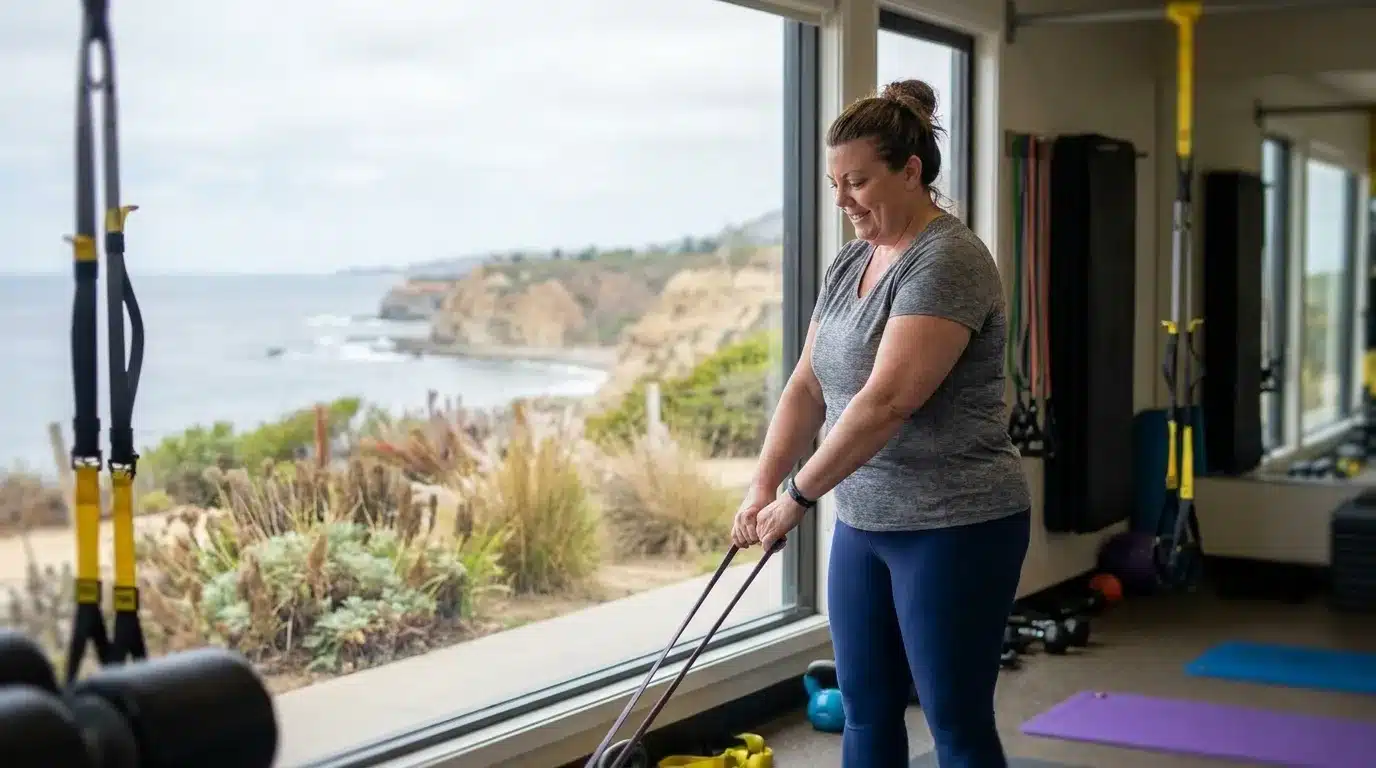
At the fitness camp, all fitness equipment, mats, and training tools are provided on-site at the Omni La Costa Resort’s dedicated facilities. Towels are supplied by the resort. Participants do not need to pack yoga mats, resistance bands, foam rollers, or any training accessories. The all-inclusive program structure means that every piece of equipment used in bootcamp, TRX, boxing, barre, spin, and all other sessions is already in place. The most common packing mistake related to equipment is bringing items the retreat already supplies, which adds weight and bulk without adding value. Before packing any fitness accessory, confirm with the program whether it is already provided.
First-time attendees at a fitness-intensive retreat should prioritize three categories above all others: footwear, moisture-wicking activewear, and recovery tools. Footwear is the highest-stakes decision because ill-fitting or new shoes cause the most common physical setbacks during trail hikes and beach sessions. Every pair of shoes packed should already be broken in. Activewear should be selected for quick-dry performance and fabric breathability rather than appearance, because cotton fails in high-sweat environments and takes too long to dry between sessions. Recovery tools, particularly a journal and a quality sleep mask with earplugs, support the behavioral and rest components of the program that make physical training sustainable across a full week. Beyond these three priorities, the Carlsbad climate simplifies packing considerably, since Southern California’s moderate, low-humidity year-round weather removes the need for heavy cold-weather layers, rain gear, or humidity-specific clothing that retreats in other regions require.
The fitness camp includes three spa treatments per week at the La Costa Spa, ranked among the top wellness spas in North America, as part of the all-inclusive program. For spa sessions, participants need only flip-flops or slides for moving between treatment areas and a comfortable loungewear set for before and after treatments. The spa provides robes, slippers, and all treatment-related items. Participants enrolled in the Spa Fit specialty program, which includes a daily 50-minute treatment from more than 30 options such as hot stone massage, deep relaxation massage, and reflexology, follow the same approach. One practical note: avoid packing strong perfumes or heavily scented products, because these can affect shared spa environments and other participants’ experiences during treatments.
A journal is one of the most functionally important items a wellness retreat participant can pack, yet it is among the most frequently forgotten. At the fitness camp, the Think pillar, delivered by licensed psychologists and behavioral health coaches, includes group workshops on emotional eating, limiting beliefs, life-work balance, and behavioral triggers. These sessions generate insights that are easy to lose without a written record. Journaling during and immediately after workshops creates a personal reference document that participants take home alongside their personalized meal plans, fitness programming, and post-camp coaching support. Research consistently shows that the long-term benefits of wellness retreats are greatest when participants continue one or two learned practices after returning home. A journal bridges the gap between the structured retreat environment and independent daily life, which makes it a behavioral tool rather than a sentimental accessory. Bring a blank journal, not a used one, because the week represents the beginning of something new.