How Adult Weight Loss Camps Help You Keep Weight Off
13 min read
Written by: Chris Butt, Certified Personal Trainer & Weight Loss Coach, Premier Fitness Camp | Last updated: August 30, 2026
Key Takeaways from Premier Fitness Camp
Weight regain after dieting is driven by biology, including metabolic adaptation and hormonal shifts, not lack of willpower.
Successful adult weight loss camps rely on four pillars: muscle preservation, structured habit formation, GLP-1 transition protocols, and post-program accountability.
Daily resistance training and high-protein meals protect lean mass, keep resting metabolic rate higher, and lower regain risk.
Habit automaticity takes 59–66 days on average. Immersive programs speed this up through consistent cues, repetition, and expert support.
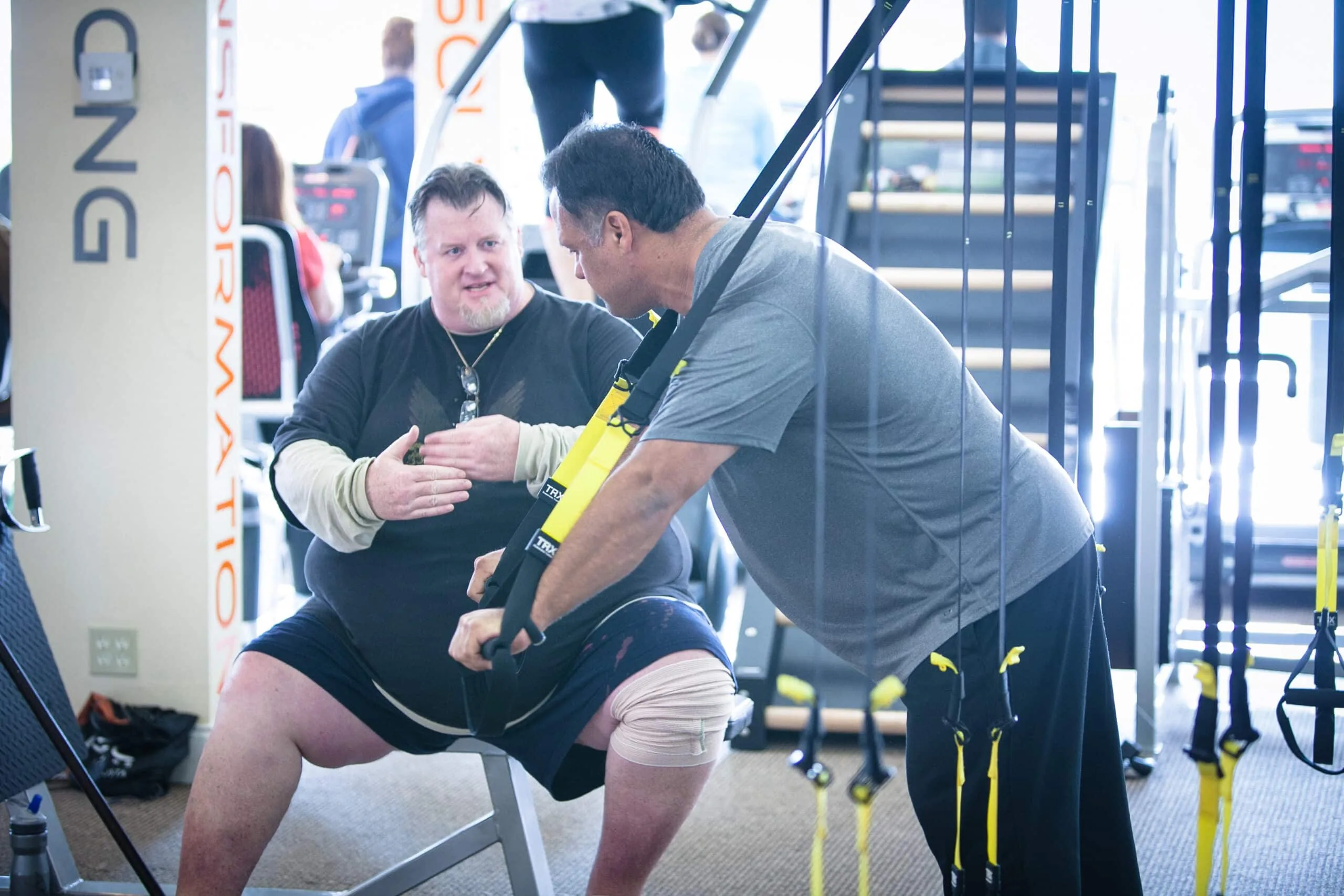
With a 3–4:1 client-to-trainer ratio, every session is coached and adapted to your level — whether you're a seasoned athlete or taking your very first steps.
Learn to cook for maintenance, not just weight loss. Wellness chefs lead cooking demonstrations that show clients how to recreate calorie-controlled, nutrient-dense meals at home. This closes the skill gap that often pushes people back to old patterns after leaving a structured environment.
Review a weekly report card covering 17 data points. Weight, body fat percentage, neck, waist, umbilicus, upper arm, chest, hip, and quad measurements, blood pressure (systolic and diastolic), mile time, plank hold time, push-up count, and LDL, HDL, triglycerides, and glucose levels are tracked. Weekly one-on-one reviews with a trainer keep progress and early warning signs visible long before the scale becomes a problem.
“What began as a simple one-week reboot has transformed into a complete lifestyle shift. The program equips you with the knowledge, tools, and support to make meaningful and sustainable changes.” — Irene Tchaikovsky, client
Build a maintenance plan grounded in data, not guesswork. Arrange a data-driven planning call with the team, or call (888) 488-8936 to speak with someone directly.
Pillar 2: Program Structure That Supports Long-Term Results
Premier Fitness Camp supports long-term results through three structural differentiators.
Movement is one of the three pillars of the "Think, Eat, Move" approach — group training on the resort lawn makes 4–5 hours of daily activity feel like community, not a chore.
3–4:1 trainer-to-client ratio. Every fitness session is staffed so that no participant is left behind. Trainers hold bachelor’s and master’s degrees and have been with the program for years, many since its founding. This continuity gives clients consistent, expert-level coaching instead of a rotating cast of unfamiliar faces.
High alumni engagement. Half of annual revenue comes from returning clients, which signals program effectiveness and trust rather than a one-time experience. Lauren M., who lost 140 pounds and was featured on The Today Show, described the experience as learning “how, for my body type, I needed to eat and exercise, and most importantly, how to adopt a healthy, sustainable lifestyle.”
The GLP-1 exit protocol addresses both weight regain and muscle loss without judgment about medication use.
There's no restrictive "diet food" here. Wellness chefs prepare fresh, farm-to-fork meals on-site — proof that eating for health can be genuinely satisfying.
The most effective countermeasure is preserving and ideally increasing lean muscle mass during the weight loss phase. As discussed in the GLP-1 protocol, maintaining lean mass protects metabolic rate. The UCSD case study of participants who stayed four or more weeks and received DEXA scans at the start and end of their program found that most long-term clients not only maintained their lean muscle stores but increased them during weight loss.
“The program is a life-changing experience. I signed up for two weeks and stayed for eight. The facilities and staff are top notch.” — Scott, client
While metabolic adaptation creates the biological challenge, the timeline for building sustainable habits determines whether clients can maintain their results long term.
Pillar 2 in Practice: Habit Formation Timeline for Maintenance
The widely cited “21-day habit rule” comes from plastic surgeon Maxwell Maltz’s 1960 book Psycho-Cybernetics, where he observed that patients typically adjusted psychologically to a new appearance within about 21 days. No peer-reviewed study has confirmed 21 days as a reliable timescale for behavioral habit automaticity. The actual evidence is more nuanced and more useful for planning a realistic maintenance strategy.
The "Eat" pillar is about education, not deprivation: cooking demonstrations teach clients how to recreate healthy, delicious meals long after they go home.
Week
Focus Area
Key Milestone
Support Mechanism
Week 1
Orientation & baseline
17-point health assessment completed; daily training routine established
Comprehensive intake assessment; 3–4:1 trainer ratio
Week 2
Nutrition education
Macro awareness; cooking demo participation; first weekly report card review
Registered dietitian sessions; wellness chef cooking demonstrations
Week 3
Behavioral anchoring
Cue-routine-reward loops beginning to stabilize; emotional eating triggers identified
Licensed psychologist workshops; behavioral health coaching
Week 4+
Consolidation & transition planning
Home meal plan drafted; virtual coaching schedule established; alumni network activated
Post-camp support package; personalized exercise programming
The post-camp accountability system combines three elements into a single support structure.
17-point weekly report card continuation. The same data framework used during camp remains available for ongoing self-monitoring at home. Clients return to a structured, familiar system instead of a blank slate.
Virtual coaching. Trainers and dietitians remain accessible after departure. Clients can email their trainers directly, often the same professionals they trained with on-site, for guidance, adjustments, and encouragement.
“I’ve been to the program 3 times because I am such a fan of the program! Their trainers are knowledgeable, inspiring and make hard work fun.” — Lin Vela, client
How long does it take to see lasting results from an adult weight loss program?
Meaningful fat loss begins in the first week. Clients with 40–70 pounds to lose typically average 3–4 pounds of fat loss per week during their stay, validated by the UCSD case study showing 94% of weight lost was pure fat. Lasting behavioral change takes longer, with research placing the median time to habit automaticity at 59–66 days and many behaviors taking longer depending on complexity. This evidence supports stays of at least two to four weeks for foundational change and explains why post-camp virtual coaching and alumni support extend the accountability structure well beyond departure.
Is medical clearance required before attending?
A comprehensive health assessment is conducted on day one, including blood work, vital signs, body composition, BMI, measurements, and a fitness test. Clients with significant medical conditions are encouraged to consult their physician before attending. The team of trainers, registered dietitians, and behavioral health professionals has extensive experience working with clients managing Type 1 and Type 2 diabetes, hypertension, orthopedic limitations, and other conditions. Every class offers modifications and low-impact alternatives, and the 3–4:1 trainer ratio ensures individualized attention throughout.
Can older adults (50s and 60s) realistically build habits and maintain weight loss?
Research suggests that older adults may have an advantage in routine formation. A four-week study comparing adults aged 18–29 with adults aged 65–86 found that the older group adhered better to new daily routines and reported higher automaticity, despite lower scores on working memory and executive function measures. The structured, all-inclusive environment removes the decision fatigue that typically undermines habit formation in everyday life, which makes the immersive setting well-suited to adults in their 40s, 50s, and 60s. Bone density and muscle preservation, both tracked via optional DEXA scan, are also prioritized in the program design to address the physiological concerns most relevant to this age group.
What happens if I regain some weight after leaving the program?
Some fluctuation after returning home is normal and does not indicate failure. The biological drive toward weight regain is real and well documented, driven by hormonal shifts, adaptive thermogenesis, and changes in appetite signaling that persist after weight loss. Post-camp support targets this transition directly through virtual coaching, personalized meal plans, home exercise programming, and direct access to the same trainers and dietitians from camp. Many clients return for annual resets, reflected in the strong alumni engagement. The goal centers on a long-term relationship with health that receives support at every stage rather than a single perfect outcome.
How does the approach differ from self-directed weight loss or online programs?
The primary difference lies in immersion and expert density. Most people who work out independently train three to four hours per week total. Clients at camp train four to five hours per day, five days per week, in sessions staffed at a 3–4:1 trainer-to-client ratio by professionals with bachelor’s and master’s degrees. Online programs and apps provide convenience but cannot replicate the behavioral environment, peer community, licensed psychological support, registered dietitian-designed meals, or the physical context stability that research identifies as a primary driver of habit automaticity. The UCSD case study’s 94% pure fat-loss finding, compared to the 60/40 fat-to-muscle ratio typical of standard dieting, reflects what structured, expert-led immersion can produce.
Conclusion: A Four-Pillar Framework for Keeping Weight Off
Preventing weight regain depends on structure more than motivation. The four pillars that evidence-based adult weight loss programs use to protect against regain are metabolic protection through muscle preservation, structured habit formation with realistic timelines, GLP-1-specific transition protocols for those coming off medication, and post-program accountability systems that extend the behavioral framework beyond the program itself. All four are delivered through daily resistance training, registered dietitian-designed nutrition, a 17-point weekly report card, licensed behavioral health support, and ongoing virtual coaching and alumni connection, supported by the UCSD case study’s finding that 94% of client weight loss is pure fat while lean muscle is preserved or increased.
If previous programs have produced results that did not last, another short-term intervention will likely repeat that pattern. A program built from the ground up around the mechanisms that make maintenance possible offers a different path. Request a personalized four-pillar plan with the team to discuss your goals, your history, and how this framework can support your specific needs. Call (888) 488-8936 or visit our consultation booking page to get started.
Inquire for rates and availability
Fill out the form below to speak with a wellness specialist.
 5-star Wellness Resort