 5-star Wellness Resort
 5-star Wellness Resort
Written by: Chris Butt, Certified Personal Trainer & Weight Loss Coach, Premier Fitness Camp
This schedule reflects a standard Monday–Friday program day, with Saturday as a half day. Each time block is designed so participants at any fitness level, from first-time exercisers to seasoned athletes, can engage fully and see measurable progress.
| Time | Activity | Trainer-to-Client Ratio | Low-Impact Modification Available |
|---|---|---|---|
| 6:30 AM | Morning wake-up walk / light movement activation | 1:4 | Yes, gentle walking pace |
| 7:00 AM | Breakfast, chef-prepared, calorie-controlled, dietitian-designed | N/A | N/A |
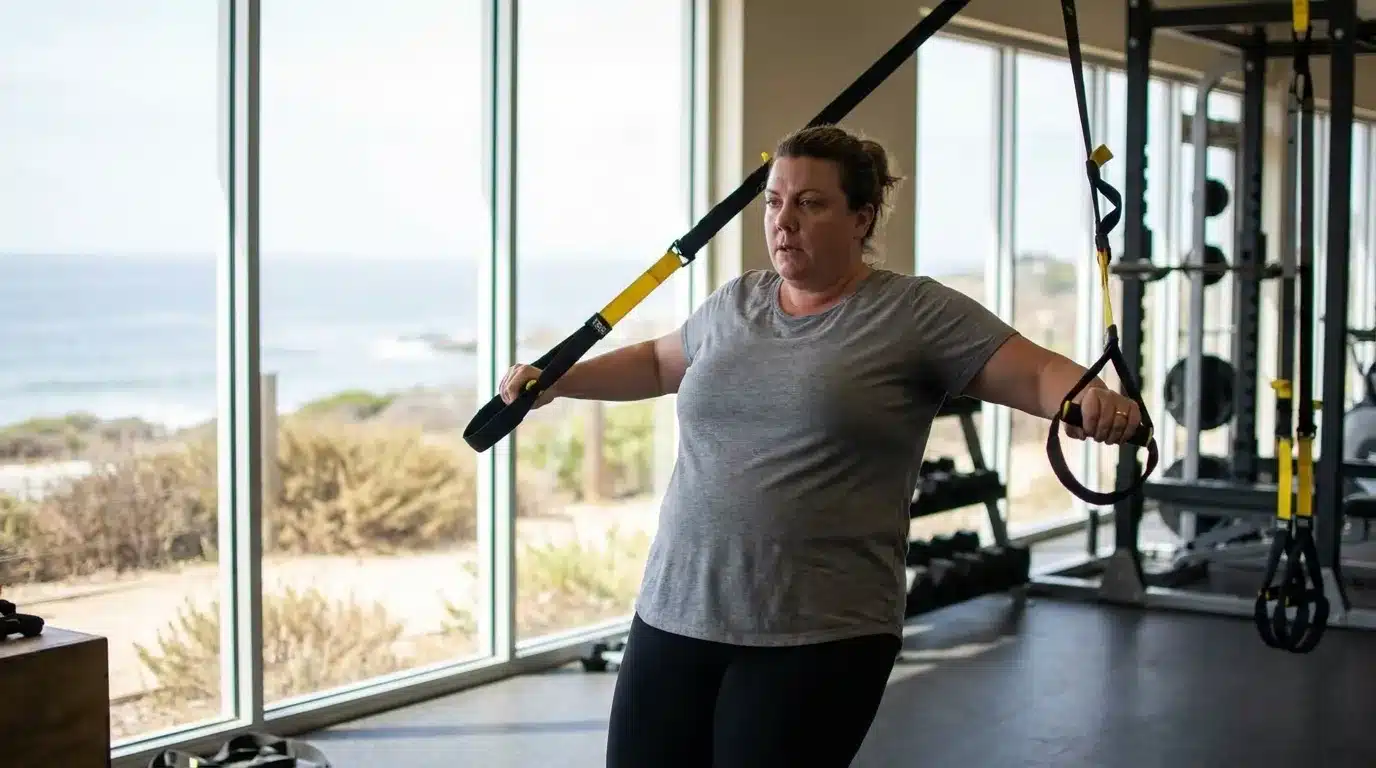
| 8:00 AM | Morning fitness session 1, bootcamp, boxing, TRX, Tabata, or barre | 1:3–4 | Yes, seated, band, or modified versions |
| 9:30 AM | Morning fitness session 2, interval training, ropes, resistance circuits | 1:3–4 | Yes, low-impact cardio alternatives |
| 11:00 AM | Outdoor activity, beach bootcamp, hiking (Torrey Pines, Double Peak, Batiquitos Lagoon), kayaking, or stand-up paddleboarding | 1:3–4 | Yes, flat terrain walks or resort-ground alternatives |
| 12:30 PM | Lunch, farm-to-fork, wellness-chef-prepared meal | N/A | N/A |
| 1:30 PM | Education block, nutrition workshop, cooking demonstration, or behavioral health session (Think-Eat-Move curriculum) | N/A | N/A |
| 2:30 PM | Afternoon fitness session, spin, Zumba, barre, or sport conditioning | 1:3–4 | Yes, seated or reduced-range options |
| 3:30 PM | Recovery block, spa treatment (3 per week included), pool, meditation, or rest | N/A | N/A |
| 5:00 PM | Dinner, gourmet, calorie-controlled, dietitian-designed | N/A | N/A |
| 6:00 PM | Evening education or group workshop, emotional eating, goal-setting, mindfulness, or lifestyle coaching | N/A | N/A |
| 7:00 PM | Weekly report card review (one-on-one with trainer, once per week) or free time / community social | 1:1 (report card sessions) | N/A |
| 9:00 PM | Wind-down / lights out | N/A | N/A |
Each week, PFC tracks 17 health data points per client. These include weight, body fat percentage, neck, waist, umbilicus, upper arm, chest, hip, and quad measurements, blood pressure, mile time, plank hold duration, push-up count, and LDL, HDL, triglycerides, and glucose levels. This detailed reporting makes progress visible far beyond the scale. A case study conducted in partnership with the University of California, San Diego (UCSD) found that 94% of total weight loss among PFC participants who stayed four or more weeks was purely fat, compared to the 60/40 fat-to-muscle ratio typical of standard dieting programs. Lean muscle mass was preserved or increased, and resting metabolic rate was protected, which forms the physiological foundation of sustainable long-term weight maintenance.
The daily structure stays consistent for everyone, while intensity, modifications, and goals within each block are personalized. PFC trainers maintain a 3–4:1 client-to-trainer ratio in every session, which allows real-time adjustments for every participant.
Reset Seeker (40–60 years old, 40–70 lbs to lose): The primary focus is sustainable fat loss while building confidence and new habits. To build that confidence safely, morning sessions emphasize form and consistency over speed so movement patterns feel solid before intensity increases. This same gradual approach guides outdoor activities, which may start with flat resort-ground walks and then progress to coastal hikes as endurance improves. Because lasting fat loss depends on behavior change beyond workouts, education blocks on macros, emotional eating triggers, and meal planning play a central role for this persona. Weekly report card reviews then reinforce progress in blood pressure, glucose, and measurements alongside scale weight, which shows that transformation extends far beyond a single number.
Concerned Beginner (first-time exerciser, possible physical limitations): Every class includes low-impact modifications so true beginners can participate safely. A participant who can currently walk only 250 feet has a trainer alongside them throughout every session. Spreading workout volume across multiple shorter sessions per day, rather than one long block, makes each session feel more manageable and supports motor learning, which mirrors how PFC structures its mornings. The 2018 Physical Activity Guidelines for Americans confirm that any physical activity is better than none, and PFC builds from that baseline at each person’s pace.
Active Optimizer (already training 3–4 times per week, seeking a plateau break): The training volume, 4–5 hours per day for five days per week, creates a major shift for this group. Most people who train regularly log 3–4 hours of exercise per week total, which at PFC equals a single morning. A wide mix of modalities, including boxing, beach bootcamp, TRX, Tabata, sport conditioning, and paddleboarding, combined with expert coaching, challenges even experienced exercisers to reach a new level. Specialty programs such as Golf Fit, Tennis Fit, and Spa Fit add targeted afternoon options.
“PFC Fitness Camp exceeded all my expectations. The staff is incredibly supportive, knowledgeable, and truly passionate about helping you reach your goals. I not only lost weight but gained confidence, strength, and a healthier lifestyle.” — Jake Younger, PFC client
PFC stands out by combining expert coaching, behavioral health education, precise nutrition, and luxury recovery in one integrated program. While many adult fitness camps focus mainly on workout volume, PFC layers in credentials, curriculum, and infrastructure that support long-term change. The table below shows how PFC’s structure compares across key factors that influence lasting results.
| Dimension | Premier Fitness Camp | Typical Competitor |
|---|---|---|
| Location | Omni La Costa Resort & Spa, Carlsbad, CA, 450 acres, year-round moderate climate, Pacific coast access | Downtown urban hotels, remote facilities, or high-humidity/extreme-heat climates |
| On-site meals | PFC wellness chefs prepare all meals on-site using fresh, farm-to-fork ingredients, and registered dietitians design every menu | Food often prepared off-site and delivered, with lower quality control and less nutritional precision |
| Trainer credentials | All trainers hold at least a bachelor’s degree, many hold master’s degrees, and staff turnover is low, with many trainers on staff since day one | High turnover and inconsistent credential requirements |
| Trainer-to-client ratio | 3–4:1 in every session | Coaching quality erodes above 8 clients per coach, yet many programs operate at higher ratios |
| Education curriculum | Full Think-Eat-Move program with licensed psychologists, registered dietitians, wellness chefs, cooking demonstrations, and behavioral health workshops | Exercise and basic dietary guidance only, with no behavioral health or empowerment component |
| Spa inclusions | Three spa treatments per week included at La Costa Spa, with 30+ treatment options | No spa, or basic spa add-ons at extra cost |
| Progress tracking | Seventeen data points tracked weekly, optional DEXA scan, and UCSD-validated 94% fat-loss outcome | Scale weight only or minimal additional tracking |
| Post-camp support | Virtual coaching, personalized meal plans, fitness programming, and ongoing staff communication | Limited or no structured aftercare |
Most prospective clients worry about keeping up, and PFC’s structure is built to make the answer yes. The 3–4:1 trainer-to-client ratio gives every participant direct access to expert guidance in every session. Low-impact modifications exist for every exercise in every class. Participants with bad knees, back limitations, or no prior exercise history receive tailored options from day one.
“What a week!! Needed a reset and I found it at PFC! The trainers, the staff, the Chefs! All amazing and work with all levels.” — Julie Robinson, PFC client
PFC has supported clients who could walk only 250 feet at the start, as well as seasoned athletes who train four times per week. The program’s structure, with multiple shorter sessions across the day instead of one exhausting block, aligns with evidence that spreading training volume across more sessions improves repetition quality and reduces excessive soreness for beginners. Everyone progresses at a safe pace, and nobody is pushed beyond their capacity.
Book a free consultation to review your current fitness level, any physical limitations, and how PFC’s team will build a personalized plan around your starting point.
Recovery functions as a scheduled, non-negotiable part of every PFC day. The 3:30 PM recovery block creates structured downtime between the afternoon fitness session and dinner. Three spa treatments per week are included, with options such as hot stone massage, deep relaxation massage, detoxifying sea mineral body wraps, and reflexology at the La Costa Spa.
The Carlsbad climate, with moderate temperatures, low humidity, and consistent sunshine, supports outdoor recovery activities like resort walks and pool time that many desert or cold-weather programs cannot offer. Evening meditation and mindfulness sessions, led by PFC’s behavioral health team, address the psychological side of recovery, which evidence-based coaching frameworks identify as central to sustainable behavior change.
The holistic wellness approach, which addresses sleep, stress, emotional health, and physical recovery at the same time, separates PFC’s model from programs that treat exercise as the only variable worth managing. This comprehensive in-program structure also sets the foundation for what comes next, when you translate the daily routine into sustainable habits at home.
The daily schedule at PFC is built to deliver measurable results during your stay and to teach the knowledge, habits, and support systems that help you maintain those results at home. The Think-Eat-Move curriculum, which covers nutrition science, cooking skills, emotional eating patterns, and exercise programming, gives every client a practical toolkit for life after camp.
Post-camp support includes virtual coaching for ongoing accountability, personalized meal plans tailored to home environments, and fitness programming that transitions from the resort to everyday life. Clients can email their trainers at any time after leaving. The same low-turnover staff who built relationships during the program remain available for years, which aligns with the fact that 50% of PFC’s annual revenue comes from returning alumni.
“What began as a simple one-week reboot has transformed into a complete lifestyle shift. PFC equips you with the knowledge, tools, and support to make meaningful, and sustainable, changes.” — Irene Tchaikovsky, PFC client
Behavior change research supports habit-stacking and structured post-program accountability as primary drivers of long-term adherence, and both are built into PFC’s post-camp model. The goal is not dependency on the program but empowerment to sustain the transformation independently.
A typical day at Premier Fitness Camp delivers a complete, data-driven lifestyle change experience within a luxury resort setting. From the 6:30 AM wake-up walk to the 9:00 PM wind-down, every hour has a clear purpose. You receive 4–5 hours of varied, expert-led training, three chef-prepared meals designed by registered dietitians, behavioral health and nutrition education rooted in the Think-Eat-Move philosophy, built-in recovery through spa treatments and structured rest, and 17-point weekly tracking that makes progress visible and motivating. The UCSD case study confirming that 94% of weight lost is pure fat, compared to the 60/40 fat-to-muscle ratio typical of standard dieting, illustrates what this structure can produce over several weeks.
For Reset Seekers, Concerned Beginners, and anyone who has tried other approaches without lasting success, the daily structure at PFC offers what many programs lack. You step into a complete environment where transformation is the expected outcome, not the exception.
Book a free consultation with the PFC team today or call (888) 488-8936 to explore your options. With 1,200+ reviews and a 90%+ five-star rating, PFC is a trusted choice for adults ready to invest in lasting lifestyle change.
The average PFC client between 40 and 60 years old with 40–70 pounds to lose can expect to lose about 3–4 pounds of fat per week. A case study with the University of California, San Diego found that 94% of total weight loss among participants who stayed four or more weeks was purely fat, rather than the 60/40 fat-to-muscle ratio typical of standard dieting. Most long-term PFC clients also preserve or increase lean muscle mass, which protects resting metabolic rate and helps prevent weight regain after the program ends. Weight is only one of 17 data points tracked weekly, and many clients see major improvements in blood pressure, cholesterol, glucose, body measurements, and fitness performance even during weeks when the scale moves more slowly.
Every fitness class at PFC is structured so participants at any level, including those with bad knees, back problems, or no prior exercise history, can participate safely and benefit fully. Trainers maintain a 3–4:1 client-to-trainer ratio in every session, which allows real-time modifications, progressions, and low-impact alternatives for every exercise. PFC has worked with clients who could initially walk only 250 feet, as well as seasoned athletes who train four times per week. The program begins with a comprehensive health assessment on day one, including blood work, body composition, measurements, and a fitness test, to establish a personalized baseline and ensure every session matches each individual’s starting point.
All meals at PFC, including breakfast, lunch, dinner, snacks, and nutrition shakes, are prepared on-site by PFC’s wellness chefs using fresh, farm-to-fork ingredients. Registered dietitians design every menu to be calorie-controlled and nutritionally balanced without feeling restrictive or bland. The food is gourmet and satisfying. Beyond the meals, the daily schedule includes nutrition workshops on macros, portion control, healthy grocery shopping, and meal planning, along with cooking demonstrations that teach clients how to recreate healthy meals at home. The goal is not a temporary diet but lasting nutritional literacy and practical cooking skills that support healthy eating long after you leave.
Specialty program participants, who make up about 15% of PFC bookings, follow the full standard morning program, including all fitness sessions, breakfast, and the education block. After lunch at about 1:00 PM, they transition to their specialty activity. Golf Fit participants receive daily golf instruction and play at Omni La Costa’s 36-hole course. Tennis Fit participants receive one-on-one tennis instruction from Cliff Drysdale Tennis Academy professionals. Pickleball Fit participants receive focused pickleball training. Spa Fit participants enjoy a 50-minute spa treatment at the La Costa Spa. All specialty participants rejoin the full group for dinner at 5:00 PM and the evening education or community session. These specialty programs add a personalized leisure or wellness layer without replacing the core training and education structure.
PFC offers a structured post-camp support system designed to sustain the lifestyle change built during the program. This support includes virtual coaching for ongoing accountability, personalized meal plans tailored to home cooking environments, and fitness programming that transitions from the resort setting to everyday life. Clients can email their trainers at any time after leaving. The same low-turnover staff who built relationships during the program remain available for years, which helps explain why 50% of PFC’s annual revenue comes from returning alumni. The Think-Eat-Move curriculum, which covers behavioral health, nutrition education, and exercise habits, is designed to give clients the knowledge and tools to maintain their transformation independently rather than rely on the program to sustain results.