 5-star Wellness Resort
 5-star Wellness Resort

Written by: Chris Butt, Certified Personal Trainer & Weight Loss Coach, Premier Fitness Camp | Last updated: August 27, 2026
Choosing the wrong program format is the most common reason wellness resort guests return home without lasting change. A stressed executive who books a spa-style retreat may feel rested for a week, then revert to the same patterns within days. A fitness and weight-loss seeker who enrolls in a passive relaxation program loses no measurable fat. A GLP-1 graduate who attends a resort without resistance training and nutrition education accelerates muscle loss rather than reversing it.
The Global Wellness Institute defines wellness tourism as travel associated with maintaining or enhancing personal wellbeing, covering both restorative escapes and structured preventive programs. That distinction between restorative and preventive formats is the key variable in program selection. The table below maps the two traveler types against motivations and typical outcomes.
| Traveler Type | Primary Motivations | Typical Outcomes |
|---|---|---|
| Secondary Wellness Traveler (wellness activities supplement a broader holiday) | Rest, relaxation, spa access, recreational movement | Temporary stress relief, many wellness trips worldwide are secondary wellness trips where spa and procedures supplement a regular vacation |
| Primary Wellness Traveler (entire trip dedicated to transformative health) | Fat loss, habit change, nutrition education, behavioral coaching, measurable biomarker improvement | Sustained behavior change, primary wellness travelers often spend substantially more than the average secondary wellness traveler, reflecting the depth of commitment and outcome expectation |
The costs of mismatching visitor type to program format are concrete. Guests who attend passive retreats without education components may lose weight temporarily but regain it because they never learn how to sustain the change. Guests on GLP-1 medications who attend programs without resistance training lose lean muscle alongside fat, which damages resting metabolic rate and sets up rapid weight regain. Studies of mobile fitness apps show that long-term adherence among beginners is often low, which underscores how unstructured, unsupported programs fail many participants. To avoid these mismatches, you first need to identify which visitor profile best describes your situation and goals.
Wellness resort guests do not fit a single mold. Common motivations for retreat attendance include stress reduction and mental health, personal growth and development, spiritual exploration, physical health and wellness, and community and connection. The six profiles below connect demographics, goals, and pain points to the specific program features that serve each type of traveler.
Clear behavioral and physiological signals often show that a structured residential program, rather than a standard vacation or spa visit, is the right next step. These signals usually appear in patterns, not as isolated events.
Burnout indicators include persistent fatigue that sleep does not resolve, emotional reactivity that feels disproportionate to daily stressors, inability to concentrate, and physical symptoms such as elevated blood pressure or disrupted sleep. Many wellness retreat attendees use structured programs to prevent burnout or to manage chronic health conditions that no longer respond to minor lifestyle tweaks.
Stalled progress signals include weight that has not moved despite consistent effort, repeated cycles of loss and regain, a plateau in strength or cardiovascular fitness, and lab results that have not improved despite lifestyle changes. These patterns suggest that information, structure, or accountability is missing.
Decision criteria that favor a structured program over a spa-style retreat start with the need for daily professional supervision, which supports safe progression for clients with limitations or complex health histories. That supervision becomes more powerful when paired with nutrition education rather than just healthy meals, because education supports behavior change after you leave. If you have a history of failed self-directed attempts, the combination of supervision and education closes the accountability gap that caused those failures. Complicating factors such as GLP-1 medication use, emotional eating patterns, or significant mobility limitations then make an integrated, structured program the safest and most effective choice.
High-income professionals form a significant and growing segment for premium retreat experiences, and many companies now invest in employee wellness stays. The stressed professional typically ranges from 40 to 60 years old, has traded health for career advancement over one or two decades, and arrives at a wellness resort after a physician warning, a health scare, or a moment of personal reckoning.
Their pain points are specific. They have no time to build sustainable habits at home, their environment is saturated with triggers for poor eating and sedentary behavior, and they have tried gym memberships and diets that collapsed under work pressure within weeks. A 2026 study published in the Journal of Hospitality and Tourism Insights found that cognitive-affective distress strongly predicts restoration motivation, which then drives working professionals’ intentions to participate in wellness tourism.
This profile needs education combined with structure, not relaxation alone. A program that delivers 4–5 hours of daily training, behavioral health coaching from licensed psychologists, registered dietitian-led nutrition workshops, and a 17-point weekly report card gives the stressed professional both data and skills to replicate healthy behavior after returning home. Post-program virtual coaching and ongoing access to trainers by email extend accountability beyond the resort stay.
Solo retreat bookings are a growing category in wellness travel, often led by women aged 30 to 50 who want personal space away from performative group trips. Solo travelers usually arrive without a support network on-site and feel acutely sensitive to the quality of community, safety, and belonging that a program provides.
Their goals range from weight loss and fitness improvement to emotional processing after a life transition such as divorce, loss of a spouse, or career change. Their primary objection is social. They worry about fitting in, feeling judged, or experiencing the stay as isolating rather than restorative.
Program features that support this profile include community structure, consistent staff relationships, and measurable individual progress. A 3–4:1 trainer-to-client ratio ensures that every solo traveler receives individualized attention within a group setting. Low staff turnover means returning solo travelers reconnect with the same people year after year, which builds relationships that extend well beyond the program. Tracking 17 health data points weekly, including weight, body fat, blood pressure, cholesterol, glucose, strength, and cardiovascular metrics, gives solo travelers objective evidence of progress that does not depend on social comparison.
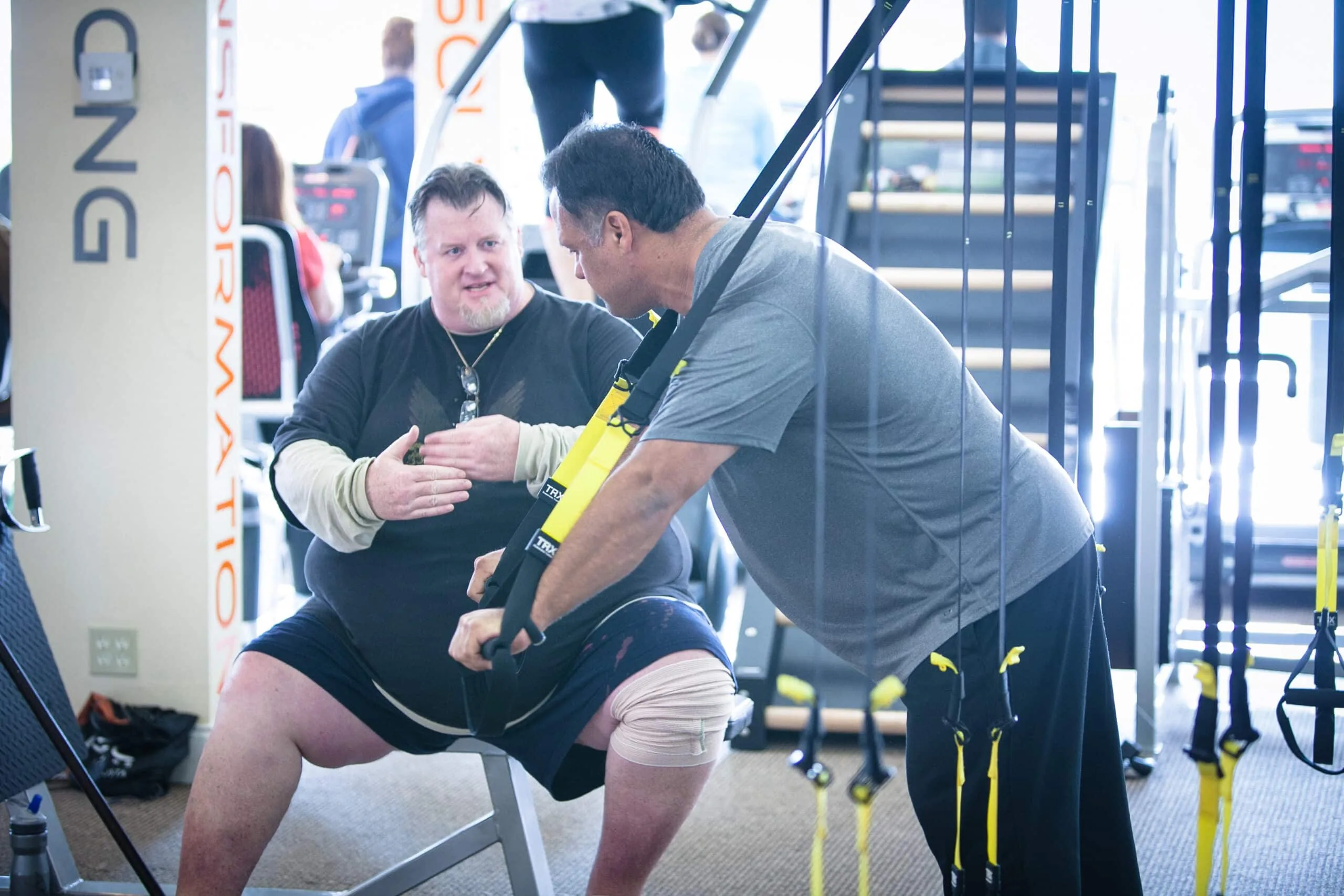
Fitness and weight-loss seekers arrive with clear numerical goals, such as a target weight, clothing size, or performance benchmark. Many have tried multiple diets, apps, and gym challenges that produced short-term changes followed by regain.
This profile benefits from a structured schedule that includes 4–5 hours of daily training, progressive strength work, and education on how to fuel workouts. Weekly tracking across 17 health metrics turns vague goals into concrete milestones. The UCSD case study results described earlier, with 94% pure fat loss and preserved lean muscle, show what this structure can achieve when followed consistently.

Burnout cases often arrive exhausted, emotionally flat, and unsure where to start. Many juggle caregiving, demanding careers, or chronic stress and feel that willpower alone has reached its limit.
These guests need a program that balances physical training with nervous system recovery. Daily movement, behavioral health coaching, and nutrition support work together to rebuild energy rather than simply pushing harder. Clear routines, supportive staff, and a defined daily schedule reduce decision fatigue and create space for mental reset.

GLP-1 graduates are guests who have used medications such as semaglutide and now want to maintain or improve results without relying solely on prescriptions. Many worry about rapid regain or hidden muscle loss.
This profile requires resistance training, protein-focused nutrition, and close monitoring of body composition. A structured program that tracks lean mass, strength, and metabolic markers helps protect resting metabolic rate. Education on long-term eating patterns and behavior change supports a stable transition away from medication dependence.
Performance optimizers include executives, entrepreneurs, and recreational athletes who already exercise but want to break through plateaus. They care about metrics such as VO2 max, strength numbers, and recovery quality.
These guests respond best to data-rich programs that combine advanced training, precise nutrition guidance, and regular testing. Weekly report cards, structured coaching, and access to expert staff turn a resort stay into a focused performance lab rather than a simple getaway.
The gap between structured fitness programs and spa-style retreats shows up clearly across four dimensions: time commitment, education depth, data tracking, and lasting adherence.
A typical spa-style retreat allocates one to two hours per day to optional fitness classes, offers no formal nutrition education, tracks no health biomarkers, and provides no post-program support. Weak wellness programs feature a schedule that looks full but builds nothing, inspirational talks without translation into real life, and a long menu of add-ons designed primarily to increase the bill.
A structured residential fitness program allocates 4–5 hours of daily training Monday through Friday, delivers formal nutrition education through registered dietitians and wellness chef cooking demonstrations, tracks 17 health data points weekly via a personalized report card, and provides post-program virtual coaching, personalized meal plans, and ongoing trainer communication.

The outcome difference is documented. A case study conducted in partnership with the University of California, San Diego (UCSD) evaluated participants who stayed four or more weeks and received DEXA scans, the gold standard for body composition measurement, at the start and end of their program. The case study found that 94% of total weight loss was purely fat. Most aggressive weight-loss programs produce a 50/50 split between fat and lean muscle loss, and standard dieting typically produces a 60/40 fat-to-muscle ratio. The 94% fat-loss rate reflects the combined effect of high-volume resistance and cardiovascular training, registered dietitian-designed nutrition, and behavioral health support operating together.
Research suggests that as many as 80% of wellness travelers fail to maintain retreat-formed habits for more than three weeks, but that figure improves substantially when programs include education components, post-program support, and data-driven accountability instead of passive relaxation alone.
The UCSD case study offers a clear decision framework for adults choosing between program formats. Participants who combined 4–5 hours of daily structured training with registered dietitian nutrition, behavioral health coaching, and weekly 17-point report card tracking achieved 94% pure fat loss while preserving or increasing lean muscle mass and maintaining bone density and metabolic rate. These outcomes directly address three common failure modes of other programs: muscle loss from caloric restriction alone, metabolic damage from rapid weight loss, and habit regression from lack of education.
The decision framework centers on four questions:
Four affirmative answers point to a structured residential fitness program. Located at the Omni La Costa Resort & Spa in Carlsbad, California, this is the only adult fitness and weight-loss program validated by a UCSD case study showing 94% pure fat loss, tracking 17 health data points weekly, maintaining a 3–4:1 trainer-to-client ratio, and delivering the full “Think, Eat, Move” curriculum, which includes behavioral health, nutrition education, and physical training, within a luxury resort setting. With over 1,200 reviews and a 90%+ five-star rating, and 50% of annual revenue coming from returning alumni, the outcomes are documented across more than 3,000 clients.
To identify which visitor profile fits your situation and which program structure will deliver lasting results, book a free consultation with the team today. Call (888) 488-8936 or visit premierfitnesscamp.com/book-a-consult to schedule your personalized consultation at no cost.
Results duration depends more on program structure than on program length. Guests who attend spa-style retreats without education components typically maintain changes for days to weeks before reverting to prior habits, because the retreat addresses symptoms such as stress, fatigue, and excess weight without addressing root causes such as nutritional knowledge gaps, emotional eating patterns, or sedentary lifestyle habits. Guests who complete structured residential programs that include formal nutrition education, behavioral health coaching, and post-program support maintain results significantly longer.
The “Think, Eat, Move” curriculum sends clients home with the knowledge, skills, and habits required to sustain their transformation independently. Post-program virtual coaching, personalized meal plans, and ongoing trainer communication extend accountability after departure. The UCSD case study found that participants preserved lean muscle mass and metabolic rate during weight loss, which are the two physiological factors most responsible for long-term weight maintenance, because the program combined resistance training with registered dietitian nutrition rather than relying on caloric restriction alone.
The typical wellness tourist in 2026 is a health-conscious adult aged 30 to 60 who has moved beyond passive relaxation as a primary goal and is seeking measurable outcomes such as fat loss, improved biomarkers, sustainable habits, or recovery from burnout. Women account for approximately 65–70% of wellness retreat bookings, though men represent a meaningful and growing segment, particularly in premium fitness and health optimization categories.
A structured residential fitness program fits adults who have a specific weight or body composition goal, a history of programs that produced temporary results without lasting change, a need for professional nutrition and behavioral education, or a complicating factor such as GLP-1 medication use, emotional eating, or significant deconditioning. This program works with clients ranging from individuals who can walk only 250 feet at intake to seasoned athletes seeking to break through performance plateaus. Every class is structured so that every fitness level participates and benefits, with low-impact modifications available for those with physical limitations.
A wellness resort in the general sense offers a range of amenities, including spa treatments, optional fitness classes, healthy dining, and relaxation programming, within a hospitality setting. Guests self-select activities and leave with a refreshed feeling but usually without new skills or behavioral change. A structured residential fitness program operates within a resort setting but replaces optional programming with a mandatory daily curriculum that includes 4–5 hours of training per day, formal nutrition education delivered by registered dietitians, behavioral health coaching from licensed psychologists, and weekly data tracking across 17 health metrics.
The weight-loss outcomes differ substantially. Standard dieting produces approximately a 60/40 ratio of fat to lean muscle loss. The UCSD case study of participants found that 94% of total weight loss was purely fat, with lean muscle mass preserved or increased. That difference in body composition outcome separates a metabolism that rebounds from one that supports long-term weight maintenance. For adults with a specific fat-loss goal, the structured program format is the evidence-supported choice.
Solo travelers with no prior fitness experience are among the most common and most successful participants at structured residential fitness programs. The concerns most frequently raised by this group, such as not fitting in, not keeping up, or being judged for their starting point, are addressed by program design features rather than reassurance alone.
A 3–4:1 trainer-to-client ratio ensures that every participant receives individualized attention and real-time modification within group sessions. All classes are structured so that a 400-pound beginner and a seasoned athlete can participate in the same session and each receive an appropriate challenge. The community environment, including shared meals, shared training, and shared progress, creates bonds among participants that solo travelers consistently identify as one of the most unexpected and meaningful outcomes of their stay. Staff relationships extend beyond the program, because clients can email their trainers after returning home, and low staff turnover means returning guests reconnect with the same people year after year.