 5-star Wellness Resort
 5-star Wellness Resort
Written by: Chris Butt, Certified Personal Trainer & Weight Loss Coach, Premier Fitness Camp
The biology of midlife weight management is more complex than it was at 30. Sarcopenia begins around age 35 at 1–2% per year and can accelerate to 3% per year after age 60, and the menopausal drop in estrogen, testosterone, and progesterone causes women to lose muscle faster than men while impairing muscle repair and recovery.
Body composition shifts add to the challenge. Research shows increases in fat mass and visceral adipose tissue during the perimenopausal window, and overweight and obesity are common among U.S. women aged 40–64.
Rapid dieting makes the muscle-loss problem worse. Without intervention, a substantial portion of weight lost during rapid loss is lean mass, including muscle, bone, and organ tissue, with the ratio worsening with age, severity of caloric deficit, and inactivity. That lean-mass loss damages metabolism and sets the stage for weight regain.
“The goal should not be weight loss per se. It should be fat loss with muscle preservation.” — Dr. Bret Goodpaster, AdventHealth Translational Research Institute
Digital and app-based programs dominate search results and marketing budgets, yet completion and outcome data tell a different story. A 2026 study of a 12-month eHealth weight management intervention found that many participants had low or declining engagement, and clinically significant weight loss occurred only among consistent engagers.
A 2026 pilot study of an internet-delivered obesity treatment at Örebro University Hospital reported that only a minority of participants completed the full 6-month program, with modest mean weight loss at 6 months among completers. Qualitative interviews with dropouts highlighted a consistent theme: the format did not match their need for in-person support and structured accountability.
The NoHoW randomized controlled trial, which enrolled European adults who had already achieved meaningful weight loss, found that the digital intervention arms did not produce significantly different weight maintenance at 12 months compared with a control group.
The muscle-preservation gap is equally significant. App-based programs rarely prescribe structured resistance training or protein targets adequate for midlife women. Aggressive caloric deficits without adequate protein or resistance training can result in a substantial proportion of weight lost as lean tissue, which is the opposite of what women over 40 need.
Ready to explore a program built around your biology? Schedule a one-on-one call with the Premier Fitness Camp (PFC) team to discuss your goals and see how a structured, education-first approach works in real life. Call (888) 488-8936 or visit the link above.
Given the limitations of digital programs and short-term diets, immersive residential programs occupy a fundamentally different category from apps, gym memberships, and outpatient counseling. They remove the competing priorities of daily life, such as work, family, food decisions, and commute, and replace them with a structured multi-week environment that combines intensive fitness training, nutrition education, and behavioral coaching under one roof.

Research on multicomponent training programs has shown reductions in body fat percentage in overweight and obese older women. A community-based Body Weight Management Program in Hungary that combined regular medical, nutritional, and psychological consultations with supervised physical training achieved reductions in body weight and body fat percentage among completers, with skeletal muscle mass showing no significant decline.
The behavioral dimension matters as much as the physical one. A 2026 narrative review in the Journal of Obesity concluded that lifestyle interventions are more effective when combined with behavioral therapy, including cognitive behavioral therapy, motivational interviewing, and structured behavioral weight-management programs, which improve self-monitoring, coping strategies, and long-term adherence.

Premier Fitness Camp operates at the Omni La Costa Resort & Spa in Carlsbad, California, a 450-acre luxury property in North San Diego County with year-round moderate temperatures and direct access to the Pacific coast. The daily structure is designed to maximize both physical results and behavioral learning.
A typical weekday includes:
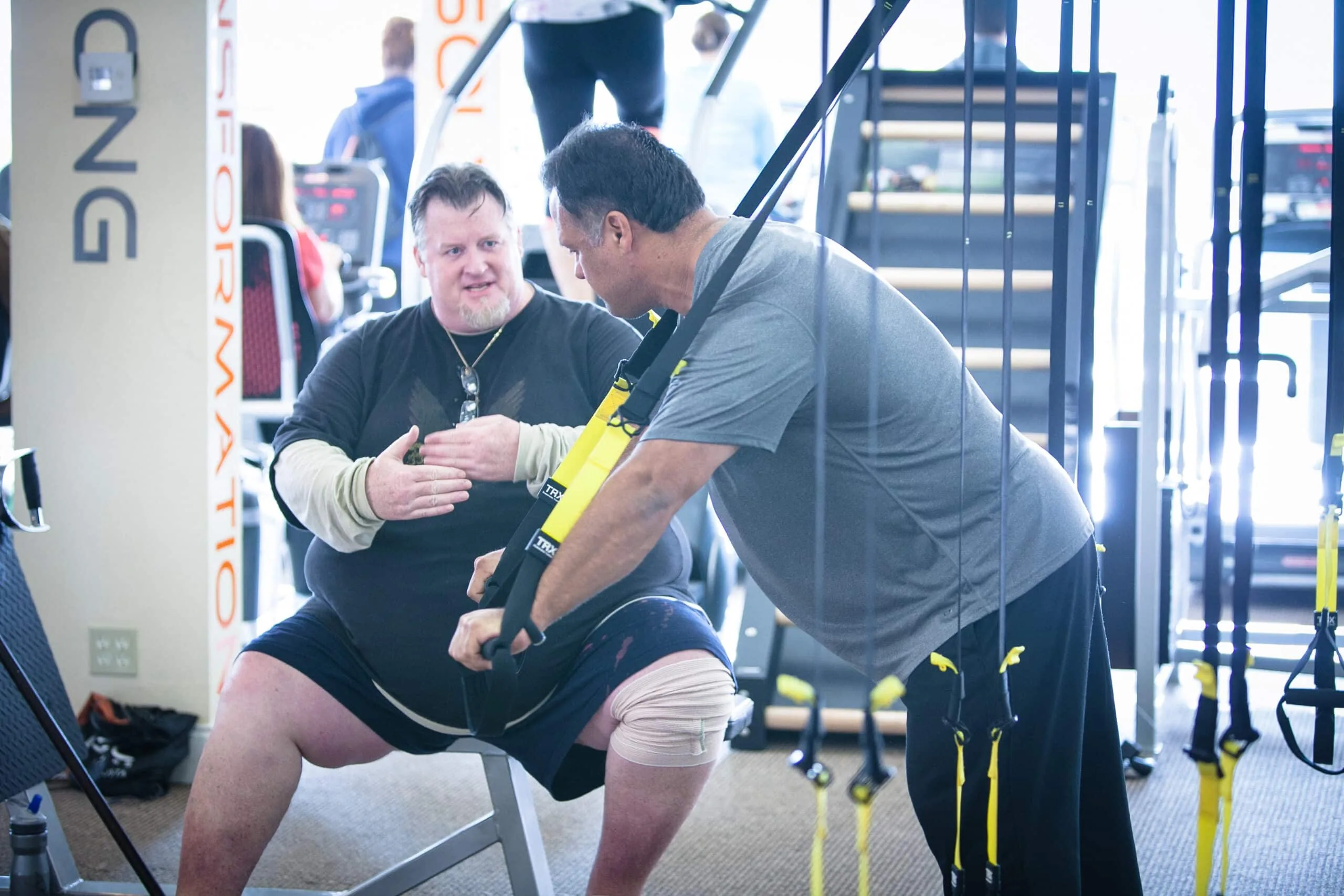
All fitness sessions maintain a 3–4:1 client-to-trainer ratio. Every class is structured so participants at any fitness level, from a 400-pound beginner who can walk 250 feet to a seasoned athlete, can participate fully. Low-impact modifications are available for every exercise.
“What began as a simple one-week reboot has transformed into a complete lifestyle shift. The program equips you with the knowledge, tools, and support to make meaningful and sustainable changes.” — Irene Tchaikovsky, client
The program partnered with the University of California, San Diego (UCSD) on a case study evaluating participants who stayed four or more weeks and received DEXA scans, the gold standard for body composition measurement, at the start and end of their program.
The key findings:
This outcome aligns with what research predicts when resistance training and adequate protein are combined. A meta-analysis by Morton et al. in the British Journal of Sports Medicine established that protein intakes of 1.6 to 2.2 grams per kilogram of body weight per day are necessary to maximize muscle protein synthesis and minimize lean mass loss during energy restriction. With protein intake at 1.6 g/kg or higher, resistance training 2–4 times per week, and a moderate caloric deficit, lean-tissue loss can be limited to roughly 10–15% of total weight lost, and the UCSD case study shows that an immersive program combining all three variables can push that figure even lower.
Note: This is a case study, not a clinical study.
Most weight loss programs, including many residential camps, are built on a codependency model. Clients lose weight during the program and regain it afterward because they were never taught the skills to sustain their results independently. The “Think, Eat, Move” philosophy is designed to break that cycle.

The sustainability model shows up clearly in business metrics. Half of annual revenue comes from returning alumni. That figure reflects genuine satisfaction and lasting results, not a program that requires clients to return because they have no other option. Alumni return by choice for annual resets, to deepen their practice, or because the program has become their community.
Post-camp support includes virtual coaching, personalized meal plans for home, fitness programming, and ongoing communication with staff. Clients can email their trainers at any time after leaving.
“The program is a life-changing experience. I signed up for two weeks and stayed for eight. The facilities and staff are top notch.” — Scott, client
For a woman facing 40–70 pounds to lose while managing perimenopause symptoms, a demanding career, and family responsibilities, a structured weight loss program can feel paralyzing. Women between 40 and 60 gain weight at an average rate of 1.5 pounds per year during midlife, and the cumulative effect, compounded by hormonal changes, can make the challenge feel insurmountable.
The program removes decision fatigue by design. Every meal is prepared, every workout is scheduled, and every educational session is built into the day. Progress is tracked across 17 data points weekly via a personalized Report Card, including:
Weekly one-on-one report card reviews with a trainer celebrate all wins, not just scale weight. Clients who feel discouraged by slow scale movement often discover dramatic improvements in blood pressure, glucose, strength, and measurements that reinforce the value of their effort.
“Before the program I was not in a good place. I immediately discovered little things starting to happen, like tying my shoes easier, breathing better, my posture had improved, I was standing taller.” — Kerri, client (lost 31 lbs)
Many women who arrive at the program have already tried other residential programs, GLP-1 medications, or both, without lasting results. The GLP-1 exit strategy challenge is particularly relevant in 2026. Research has shown that a significant portion of weight lost with GLP-1 receptor agonists can be lean tissue. GLP-1 weight loss without resistance training can compress 5 or more years of normal age-related muscle loss into a few months.
The program works with clients currently on or transitioning off GLP-1 medications without judgment. The team adjusts protocols to emphasize resistance training, raise protein intake to protective levels, and build the sustainable habits that make medication-assisted weight loss durable, or that support a medically supervised exit from medication when appropriate.
“This journey has been more than weight loss for me. I’ve been able to find the root of my binge eating disorder and progress towards recovery through healthy cooking! The program has given me the tools I’ve needed to lose over 100 pounds and cope with emotions in a healthy way rather than binge eating.” — Alex, client (lost 97 lbs)
Isolation is one of the most underreported barriers to sustained weight loss for women over 40. A 2026 real-world study of more than 80,000 adults presented at ENDO 2026 found that behavioral factors such as previously setting a weight goal were among the best predictors of greater total weight loss on tirzepatide.
The program’s community structure addresses this directly. Low staff turnover means returning alumni reconnect with the same trainers year after year. Clients consistently report that the relationships they build, with staff and with fellow campers, are among the most meaningful outcomes of their stay. Trainers hold bachelor’s and master’s degrees and have been with the program for years, many since the program’s founding.
“I’ve been to the program 3 times because I am such a fan of the program! Their trainers are knowledgeable, inspiring and make hard work fun.” — Lin Vela, client
Curious whether the program fits your situation? Talk with a program advisor for a no-pressure, no-commitment conversation. Call (888) 488-8936 or schedule online. The program has 1,200+ reviews with a 90%+ five-star rating.
Among residential programs serving women over 40, several factors matter most for sustainable fat loss with muscle preservation. These include the amount of daily strength training, the presence of licensed behavioral health professionals, and the structure of post-program support.
Premier Fitness Camp provides 4–5 hours of daily training that includes progressive resistance work and maintains a 3–4:1 trainer ratio. A UCSD case study documents that clients lost weight primarily from fat while preserving or increasing lean mass. Licensed psychologists deliver a “Think, Eat, Move” behavioral curriculum through one-on-one and group sessions, and ongoing virtual coaching, personalized meal plans, and fitness programming support clients after they return home. Half of annual revenue comes from returning alumni, which signals strong long-term engagement.
Other well-known programs take different approaches. Live In Fitness in Arizona emphasizes exercise and uses off-site gym facilities, with extreme heat limiting outdoor training for much of the year, and does not publicly document licensed psychologists on staff. Canyon Ranch locations focus on retreat and relaxation experiences, with fitness and wellness programming available but less emphasis on structured progressive resistance and weight-focused behavioral coaching.
Unite Fitness Retreat in Salt Lake City operates from a hotel base with clients driving to separate gyms, and cold winters limit outdoor training. Pritikin Longevity Center in Florida offers structured exercise and education with a slower pace and a longevity focus that often serves an older demographic. Hilton Head Health in South Carolina centers guests in separate accommodations and transports them to a central facility, with humidity affecting outdoor comfort and a more traditional weight-loss structure.
Because competitors do not consistently publish comparable metrics, direct numerical comparisons are limited. The clearest documented differentiators for Premier Fitness Camp include the UCSD body-composition data, the presence of licensed psychologists, the intensive daily training schedule, and the high rate of alumni return.
An immersive residential program represents a significant investment of time and money, and that reality deserves clear framing.
The program runs approximately $6,000 per week, all-inclusive. This rate covers luxury accommodations at Omni La Costa, all meals, all fitness classes and training, educational workshops, health assessments, weekly report card tracking, three spa treatments per week, and post-camp support. Zero-percent financing for up to six months with no down payment is available, and multi-week discounts apply. The program may qualify as a tax-deductible medical expense; consult a tax professional.
Travel is required. The program operates exclusively at the Omni La Costa Resort & Spa in Carlsbad, California, and clients travel from across the United States and internationally. The North San Diego County location offers year-round moderate temperatures and low humidity, which makes daily outdoor training possible in every season. Programs in Arizona, Utah, Florida, or South Carolina face climate limits that reduce outdoor training for months at a time.
Minimum stay is one week, and the average client stays approximately 11 days. Habit research consistently points to three weeks as a threshold for durable behavioral change, and the program’s most transformative outcomes are documented in clients who stay four weeks or longer. Many clients book one week and extend on-site after experiencing the program firsthand.
Several biological factors converge in midlife to accelerate muscle loss during a caloric deficit. Estrogen plays a direct role in maintaining muscle protein synthesis, and its decline during perimenopause and menopause impairs both muscle repair and recovery. After age 35, muscle protein synthesis becomes less responsive to the same protein stimulus, a phenomenon called anabolic resistance, which means more protein is required to achieve the same muscle-building effect than at a younger age.
When a caloric deficit is added on top of these hormonal changes, the body is more likely to draw on lean tissue for energy unless resistance training and adequate protein intake are in place. Women in perimenopause or postmenopause face compounded risk, which makes the combination of structured resistance training, protein targets of 1.6–2.4 g/kg body weight, and a moderate caloric deficit especially important.
The standard RDA of 0.8 g/kg body weight is designed only to prevent deficiency and does not protect muscle during a caloric deficit. For women over 40 who are actively losing weight, research supports protein intakes in the range of 1.6 to 2.4 g/kg body weight per day, with intakes toward the higher end of that range for women who are perimenopausal, postmenopausal, or over 60.
Protein intake should be distributed across multiple meals, with approximately 25–40 grams of high-quality protein per meal to optimally stimulate muscle protein synthesis. At PFC, registered dietitians design all meals to meet these targets, and nutrition workshops teach clients how to replicate appropriate protein distribution at home.
A GLP-1 exit strategy refers to the structured plan a person uses to transition off GLP-1 receptor agonist medications, such as semaglutide or tirzepatide, while maintaining weight loss and avoiding rapid weight regain. The core challenge is that GLP-1 medications suppress appetite but do not independently preserve muscle, and without structured resistance training and adequate protein intake, a significant portion of weight lost on these medications comes from lean tissue rather than fat.
An immersive residential program addresses this by providing daily progressive resistance training, dietitian-designed protein targets, and behavioral coaching that builds the habits necessary to sustain results after medication is reduced or discontinued. PFC works with clients currently on or transitioning off GLP-1 medications, adjusting protocols to prioritize muscle preservation and metabolic protection throughout the process.
The program tracks 17 data points weekly via a personalized Report Card. These include weight, body fat percentage, seven body measurements (neck, waist, umbilus, upper arm, chest, hip, and quad), blood pressure (systolic and diastolic), four blood markers (LDL, HDL, triglycerides, and glucose), and three fitness performance metrics (mile time, plank hold duration, and push-up count).
A comprehensive health assessment on day one, including blood work, vital signs, body composition, BMI, and a fitness test, establishes the baseline. Weekly one-on-one report card reviews with a trainer ensure clients see the full picture of their progress, not just scale movement. An optional DEXA scan is available for gold-standard body composition measurement.
The program works with clients across the full spectrum of fitness levels, from individuals who have never exercised consistently to competitive athletes. Every class is structured so that every participant can engage fully, with low-impact modifications available for every exercise.
Trainers maintain a 3–4:1 client-to-trainer ratio and adapt programming in real time for clients with back pain, knee issues, cardiovascular limitations, or other health considerations. The program has supported clients ranging from 400-pound beginners who could initially walk only 250 feet to seasoned athletes seeking to break through performance plateaus. The comprehensive health assessment on day one informs a personalized plan that meets each client where they are.
Sustainable weight loss after 40 depends on having the right structure, the right education, and the right support, not on trying harder. The “Think, Eat, Move” philosophy, outcomes documented in the UCSD case study, 17-point weekly tracking, and 50% alumni return rate represent a fundamentally different category of program from apps, short-term diets, or exercise-only camps.
With 1,200+ reviews and a 90%+ five-star rating, the program has helped over 3,000 clients build the habits, knowledge, and community they need to sustain their results for life.
Ready to start your transformation? Connect with the team to design your custom program and discuss your goals. Call (888) 488-8936 or visit premierfitnesscamp.com/book-a-consult to schedule your personalized consultation today.