 5-star Wellness Resort
 5-star Wellness Resort

Written by: Chris Butt, Certified Personal Trainer & Weight Loss Coach, Premier Fitness Camp
Stress-induced weight gain is a physiological phenomenon rooted in the body's hormonal response to perceived threat. When the brain detects danger, it triggers the release of cortisol and adrenaline to prepare the body for "fight or flight." In short bursts, this response is protective. When stress becomes chronic, cortisol remains persistently elevated and signals the body to conserve energy by storing fat, particularly in the abdomen, while driving appetite upward.
Stress can cause weight gain even without overeating. Chronic stress and sustained elevations in glucocorticoids are associated with visceral fat accumulation independent of total calorie intake, with the hormonal environment itself shifting the body toward fat storage. A landmark 2000 study by Epel et al. found that premenopausal women with higher waist-to-hip ratios secreted more cortisol under laboratory stress than women with peripheral fat distribution, despite similar overall body fat. This demonstrated a direct hormonal link between stress reactivity and central adiposity.
If weight has been accumulating despite genuine effort, the body is responding exactly as it was designed to respond, just to modern stressors it was never built to handle indefinitely. Understanding that biology drives this process is the first step toward treating it effectively.
Cortisol is a glucocorticoid hormone produced by the adrenal glands. Under chronic stress, the hypothalamic-pituitary-adrenal (HPA) axis remains activated, keeping cortisol levels elevated for extended periods. Chronic stress and elevated cortisol are linked to increased appetite, cravings for high-calorie foods, and fat storage, particularly visceral belly fat.
Belly fat accumulates specifically because of tissue structure. Visceral adipose tissue has a substantially higher density of glucocorticoid receptors than subcutaneous fat, making it more responsive to cortisol's fat-storage signals. Cortisol also stimulates lipoprotein lipase, an enzyme that promotes fat storage, and drives gluconeogenesis in the liver. This raises blood glucose and insulin levels and further accelerates fat accumulation in the midsection.
The cycle reinforces itself behaviorally as well. Consuming calorie-dense "comfort food" partially suppresses the HPA stress response by activating reward pathways and temporarily reducing cortisol, creating a reinforcing behavioral cycle. Stress eating functions as a coping mechanism driven by genuine hormonal feedback. Recognizing this shifts the focus toward the real solution: treating the underlying stress response along with the behavior.
Lasting treatment for stress-induced weight gain works best when it addresses three interconnected pillars at the same time: mind, nutrition, and movement. Treating only one, such as dieting without stress management, is like trying to fill a bathtub with the drain open. The Think, Eat, Move framework is the foundation of our approach at the Omni La Costa Resort in Carlsbad, California, and this integrated structure supports lasting transformation rather than temporary change.
Schedule your free consultation with our team to learn how the Think, Eat, Move program can match your goals and health history.
Stress eating and emotional eating are driven by the brain's reward system and emotional regulation circuits. When stress is chronic, the brain learns that food provides temporary relief. This learning creates a habit loop that requires more than willpower to break. Evidence-based psychological interventions address this loop at its root.
A 2023 systematic review found that Cognitive Behavioral Therapy (CBT) showed the most promise for reducing emotional eating and promoting weight loss among interventions studied for adults with overweight or obesity, outperforming other psychological approaches in both short-term and long-term outcomes. CBT helps identify emotional triggers, challenge unhelpful thought patterns, and develop alternative coping strategies that do not involve food.
Mindfulness-Based Stress Reduction (MBSR) complements CBT by building the moment-to-moment awareness needed to catch urges before they become automatic eating. A 2022 systematic review found that mindfulness-based approaches significantly reduced emotional eating behaviors, and pilot data suggest that combining MBSR with CBT produces greater reductions in both stress and stress eating than either approach alone.

Sleep is a third lever that many people underestimate. After just two nights of four-hour sleep, participants showed an 18% drop in leptin, a 28% rise in ghrelin, and a 33–45% increase in appetite for energy-dense, high-carbohydrate foods. Protecting sleep duration and quality, aiming for seven to nine hours nightly, directly reduces cortisol exposure and appetite dysregulation.
A practical starting point is a five-minute breathing exercise before reaching for food when stressed. Inhale for four counts, hold for four, and exhale for six. This pattern activates the parasympathetic nervous system and begins to lower cortisol in real time.
We have licensed psychologists and behavioral health coaches on staff. They lead group workshops on emotional eating, triggers, and limiting beliefs, alongside one-on-one counseling sessions for deeper issues including anxiety, grief, and long-standing behavioral patterns.
Chronic stress drives cravings for high-sugar, high-fat comfort foods through direct hormonal pathways. A 2017 prospective study found that higher baseline perceived stress and cortisol levels predicted greater food cravings, particularly for sweet and high-fat foods, and were associated with more weight gain, even after accounting for baseline BMI. Therefore, a nutrition strategy for stress-induced weight gain should focus on two goals. First, stabilize blood sugar to reduce cravings. Second, supply specific nutrients that modulate cortisol production.
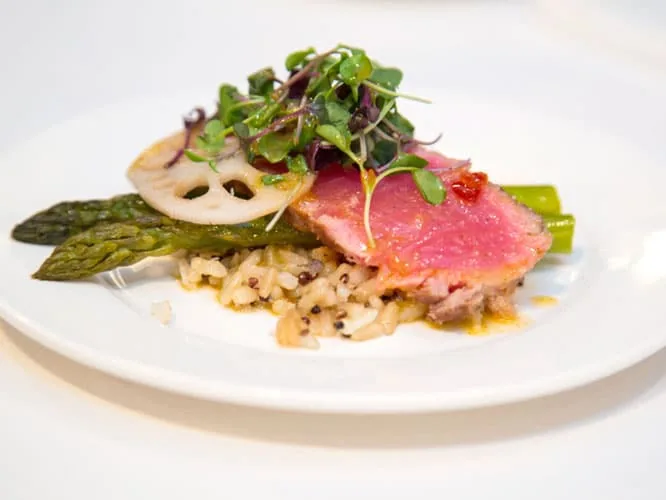
Blood sugar stability matters more than most people realize. In a controlled crossover study, just three days on a high-glycemic diet raised salivary cortisol by 48%, while the same participants showed no cortisol change after three days on a low-glycemic diet. Whole foods, lean proteins, and fiber-rich carbohydrates form a practical foundation.
Several specific nutrients have clinical evidence for cortisol reduction:
Mindful eating practices also reduce stress-driven overeating. The Korean Society for the Study of Obesity recommends chewing each bite 20–30 times and removing distractions during meals to slow eating speed, allow satiety signals to register, and reduce impulsive consumption.

If stress eating feels automatic and hard to interrupt, biology is driving that pattern. The goal involves building awareness and alternative coping tools over time, with professional support when needed.
Our registered dietitians design all meals and lead nutrition education sessions, while wellness chefs prepare fresh, farm-to-fork meals on-site. Cooking demonstrations teach clients how to replicate these strategies at home, so the education travels with them after camp.
A common response to stress-related weight gain is to push harder in the gym. However, overtraining can backfire significantly. A 2019 study found that HIIT raised cortisol by 60–80% in healthy subjects, with recovery taking 60–90 minutes; in subjects with pre-existing cortisol elevation, the spike was higher and recovery slower. For someone already carrying a chronic stress burden, adding high-intensity training without adequate recovery compounds the problem rather than solving it.
Moderate-intensity exercise is the evidence-based prescription for this population. A systematic review found that moderate-intensity exercise, defined as 3 to 6 METs, produced the most consistent and significant reductions in cortisol among individuals with psychological distress. Brisk walking, swimming, cycling, and yoga all qualify.

Consistency over months produces lasting hormonal change. A year-long randomized clinical trial published in the Journal of Sport and Health Science found that 150 minutes of weekly moderate-to-vigorous aerobic exercise significantly reduced long-term cortisol levels in adults aged 26–58, as measured through hair samples. Hair cortisol reflects sustained cortisol exposure over weeks and months, not just a single day.
Strength training also plays a role. Moderate-intensity resistance training at 60–70% of one-rep max produces a smaller cortisol spike than high-intensity training and is followed by a net cortisol reduction lasting several hours. It also preserves lean muscle mass, which is critical for maintaining metabolic rate during weight loss.
Outdoor movement adds an additional layer of benefit. A 2019 study found that spending 20–30 minutes in nature significantly reduced salivary cortisol, with the effect strongest when participants walked rather than sat.

We offer four to five hours of daily training with a 3–4:1 trainer-to-client ratio, including outdoor activities such as beach hikes along the Pacific coast, stand-up paddleboarding, and kayaking. Every class is structured so that participants at every fitness level, from those just beginning to move to those with years of training, can participate fully and benefit.
Integrating the three pillars into a daily routine relies on consistency rather than perfection. Small, repeatable actions compound over weeks and months into meaningful hormonal and metabolic change. The following sample routine illustrates how Think, Eat, and Move can fit into an ordinary day:
Progress, not perfection, guides this process. A missed day or an imperfect meal provides information. The goal is a sustainable pattern that the body can adapt to over weeks and months.
Self-directed lifestyle changes help many people, yet some situations call for additional support. Recognizing this need reflects self-awareness and a commitment to health.
A physician evaluation is warranted in several circumstances:
Cushing's syndrome, a condition of pathologic cortisol excess, should be ruled out if classic symptoms are present: central obesity with thin extremities, moon face, purple striae wider than one centimeter, and easy bruising. Its incidence is only approximately 2–3 cases per million people per year, which makes it rare, but it is medically important to exclude when the clinical picture fits.
For those who have been struggling for years and need more than self-directed guidance, an immersive, expert-led program provides a structured reset that addresses all three pillars simultaneously. Our UCSD case study, conducted in partnership with the University of California, San Diego, found that 94% of client weight loss was purely fat, compared to the 60/40 fat-to-muscle ratio typical of standard dieting. Clients also receive a 17-point weekly report card tracking weight, body fat, measurements at seven body sites, blood pressure, cholesterol, glucose, and fitness metrics including mile time, plank hold, and push-up count.
Our differentiators include luxury resort accommodations at the Omni La Costa Resort, licensed psychologists, registered dietitians, wellness chefs, trainers with bachelor's and master's degrees who have been with the program for years, outdoor activities on the Pacific coast, and post-camp virtual coaching to maintain momentum at home.
Book a free consultation to speak with our team about whether an immersive program is the right next step for your situation.
One client, Paula L., arrived at our program weighing 187 pounds, with self-doubt, anxiety, and depression at an all-time high. She lost 30 pounds, and the transformation that mattered most went far beyond the scale.
“My stay at our program far exceeded any expectations I could have possibly imagined. My lack of self confidence, self-doubt and anxiety were at an all time high. I am now off of my anti-depressants and have a whole new outlook on life physically, mentally and spiritually. I have a new found feeling of wholeness I have not had for a while. Coming to our program is the best investment I made in myself,” says Paula L., a former client.
Paula's experience reflects what the research consistently shows. Stress-induced weight gain affects both body and mind, and lasting reversal requires addressing the mind alongside the body. With the right integrated support, change becomes real and sustainable.
Here are answers to common questions about stress-induced weight gain and our program.
Yes. Chronic stress elevates cortisol, which promotes visceral fat storage through direct hormonal mechanisms, including stimulation of lipoprotein lipase, raised blood glucose and insulin, and a shift in the body's energy-partitioning toward fat accumulation. Research shows that stress can contribute to weight gain even without a meaningful increase in calorie intake, because the hormonal environment itself signals the body to store energy as fat, particularly around the abdomen. This explains why people who are eating carefully and exercising can still gain weight during periods of sustained chronic stress.
The timeline varies by individual, starting weight, and the consistency of lifestyle changes applied. Research suggests that measurable improvements in cortisol regulation, appetite hormones, and body composition can begin within four to eight weeks of consistent stress management, balanced nutrition, and moderate exercise. A year-long randomized clinical trial found that 150 minutes of weekly aerobic exercise produced significant reductions in long-term cortisol levels over 12 months, indicating that sustained change requires sustained commitment. Most clients with 40–70 pounds to lose see an average of 3–4 pounds of fat loss per week in an immersive setting, as the UCSD case study mentioned earlier showed.
Moderate-intensity aerobic exercise, including brisk walking, swimming, cycling, and dancing, produces the most consistent cortisol reductions in individuals with psychological distress. Yoga and tai chi also show significant cortisol-lowering effects across multiple studies. Outdoor movement adds an additional benefit, with research showing that 20–30 minutes in nature reduces salivary cortisol meaningfully. High-intensity interval training (HIIT) raises cortisol significantly in the short term and should be limited to one or two sessions per week for chronically stressed individuals, added only after sleep and energy levels have stabilized. Moderate-intensity resistance training at 60–70% of one-rep max is a safer strength option that preserves muscle mass without the prolonged cortisol spike of heavy lifting.
Yes. Several nutrients have clinical evidence supporting cortisol reduction. As mentioned in the nutrition section, omega-3 fatty acids from wild salmon, sardines, and mackerel can reduce cortisol by 19% during stress tests at a dose of 2.5 grams per day over four months. Magnesium-rich foods such as pumpkin seeds, almonds, spinach, and black beans support HPA axis regulation and help prevent the cortisol amplification that occurs with magnesium deficiency. Vitamin C at 1,000 mg daily has been shown to reduce cortisol in chronically stressed individuals, with bell peppers, strawberries, and citrus as strong food sources. Dark chocolate with 70% or higher cocoa content, consumed at about 25 grams per day, has also demonstrated measurable cortisol reductions in controlled trials. Avoiding high-glycemic foods also matters, since a high-glycemic diet can raise cortisol by nearly 50% within three days.
Unlike self-directed programs and standard gym memberships, our program addresses stress-induced weight gain through all three pillars simultaneously, mind, nutrition, and movement, in an immersive, expert-led environment. Our licensed psychologists and behavioral health coaches address emotional eating and stress at its psychological root. Registered dietitians and wellness chefs design and prepare all meals on-site using fresh, farm-to-fork ingredients, with cooking demonstrations that transfer the skills home. Trainers with bachelor's and master's degrees maintain a 3–4:1 ratio across four to five hours of daily training, including outdoor activities on the Pacific coast that provide the additional cortisol-lowering benefit of nature exposure. The UCSD case study result mentioned earlier is a scientifically validated outcome that most programs cannot match. With over 1,200 reviews, a 90%+ five-star rating, and 50% of annual revenue coming from returning alumni, our outcomes show the impact of this integrated approach.
Stress-induced weight gain is real, physiologically driven, and treatable. The solution is an integrated approach that addresses the mind, nutrition, and movement together, supporting the body rather than adding to its stress burden. Managing stress through evidence-based psychological tools, improving nutrition with cortisol-lowering foods, and engaging in moderate exercise that the body can sustain and adapt to over months, these three pillars can reverse cortisol-driven weight gain and restore metabolic health when applied consistently.
For those who need immersive, expert-led support to make that change real and lasting, our program offers a proven, luxury solution at the Omni La Costa Resort in Carlsbad, California. With licensed psychologists, registered dietitians, world-class trainers, and the UCSD case study results referenced earlier, our program sets a high standard in adult fitness transformation.
Ready to start your transformation? Book a free consultation with our team to discuss your goals and learn how an integrated Think, Eat, Move program can help you achieve lasting results. Call (888) 488-8936 or schedule your personalized consultation online today.