How Does Premier Fitness Camp Compare to Wellness Retreats?
15 min read
Written by: Chris Butt, Certified Personal Trainer & Weight Loss Coach, Premier Fitness Camp | Last updated: August 15, 2026
Why Premier Fitness Camp Stands Out
Results-driven transformation programs like Premier Fitness Camp deliver measurable, sustainable fat loss while preserving lean muscle, unlike luxury spas focused on relaxation or traditional bootcamps that lack educational infrastructure.
Premier Fitness Camp stands out with a UCSD case study showing 94% of weight loss as pure fat, a 3–4:1 trainer-to-client ratio, 4–5 daily training hours, and comprehensive 17-point weekly tracking.
The program operates at the Omni La Costa Resort in Carlsbad, California, with year-round mild weather, luxury accommodations, chef-prepared meals, and three spa treatments per week included in the roughly $6,000 weekly all-inclusive rate.
Strong aftercare through virtual coaching, personalized meal and fitness plans, and ongoing staff communication supports long-term behavior change and relapse prevention.
To explore whether this approach fits your goals, you can book a free consultation and talk through your situation with the PFC team.
How Premier Fitness Camp Fits the Wellness Retreat Landscape
Wellness retreat pricing in 2026 spans a wide range. Weekend yoga and meditation retreats run $400–$1,200 for two to three nights. Mid-tier wellness weeks cost $2,500–$5,500 for five to seven nights. Functional-medicine or medically supervised programs reach $6,000–$15,000 for seven to fourteen days. The table below maps seven programs across six evaluation dimensions.
Program
Clinical & Educational Rigor
Program Design
Environment & Location
Personalization
Cost / Value
Aftercare
Premier Fitness Camp
UCSD case study: 94% of weight loss was pure fat; registered dietitians, licensed psychologists, wellness chefs; “Think, Eat, Move” curriculum
Omni La Costa Resort & Spa, Carlsbad, CA; 450-acre campus; year-round mild climate; beach, hiking, paddleboarding on-site or nearby
Day-one health assessment (blood work, body composition, fitness test); personalized plan; weekly one-on-one report card review
~$6,000/week all-inclusive (accommodations, all meals, all training, 3 spa treatments/week, education); 0% financing available; 50% of Premier Fitness Camp’s annual revenue comes from returning alumni
Some post-program coaching; growing GLP-1 aftercare infrastructure
If you want help weighing these trade-offs against your own goals, you can schedule a consultation and review options with a PFC specialist.
Strategic Trade-offs When Choosing a Program
Cost and value. At approximately $6,000 per week all-inclusive, PFC sits at the upper end of the structured fitness retreat market. That figure covers luxury resort accommodations at the Omni La Costa Resort & Spa, all meals prepared by on-site wellness chefs, every training session, educational workshops, three spa treatments per week, and comprehensive health tracking. Programs priced lower typically offset cost through shared accommodations, off-site facilities, delivered food, or reduced staff credentials. Understanding what drives that cost difference requires a look at the training structure itself.
Movement is one of the three pillars of the "Think, Eat, Move" approach — group training on the resort lawn makes 4–5 hours of daily activity feel like community, not a chore.
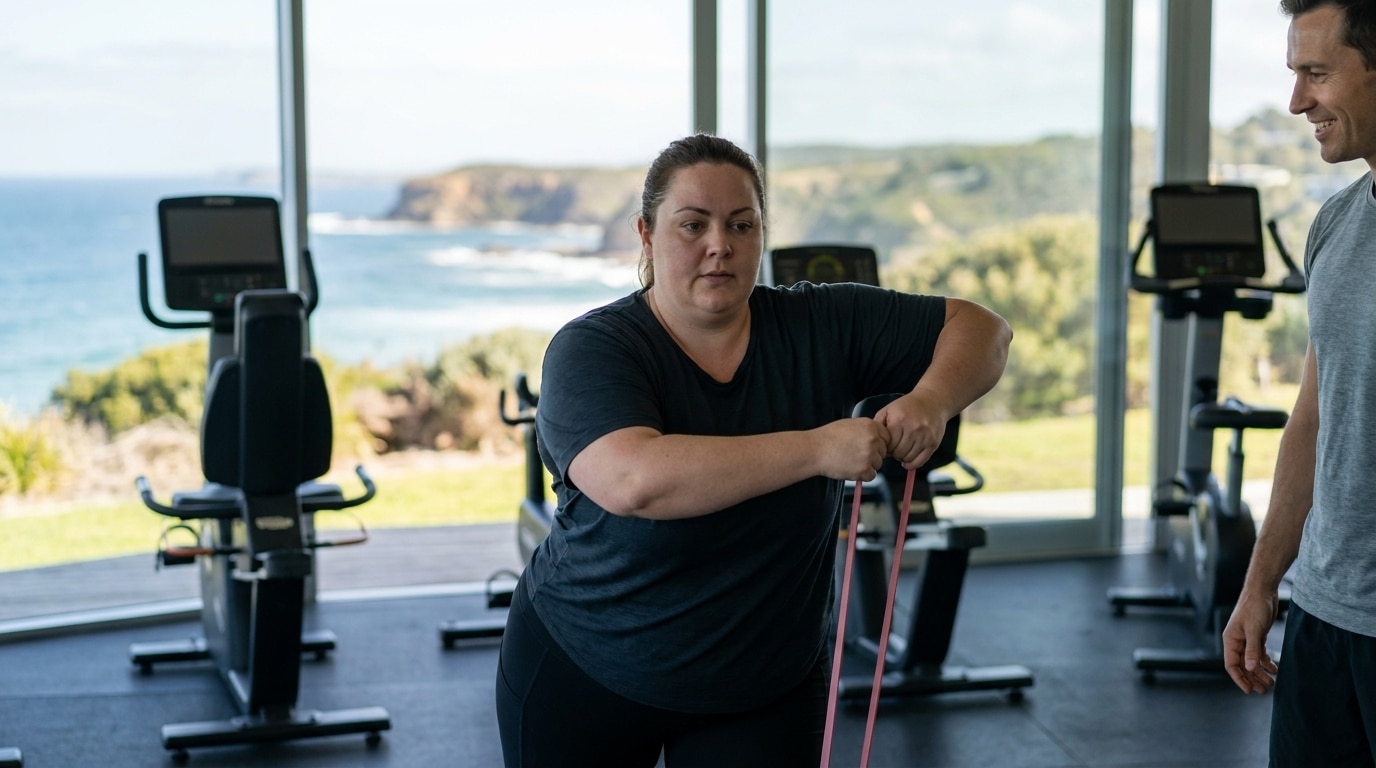
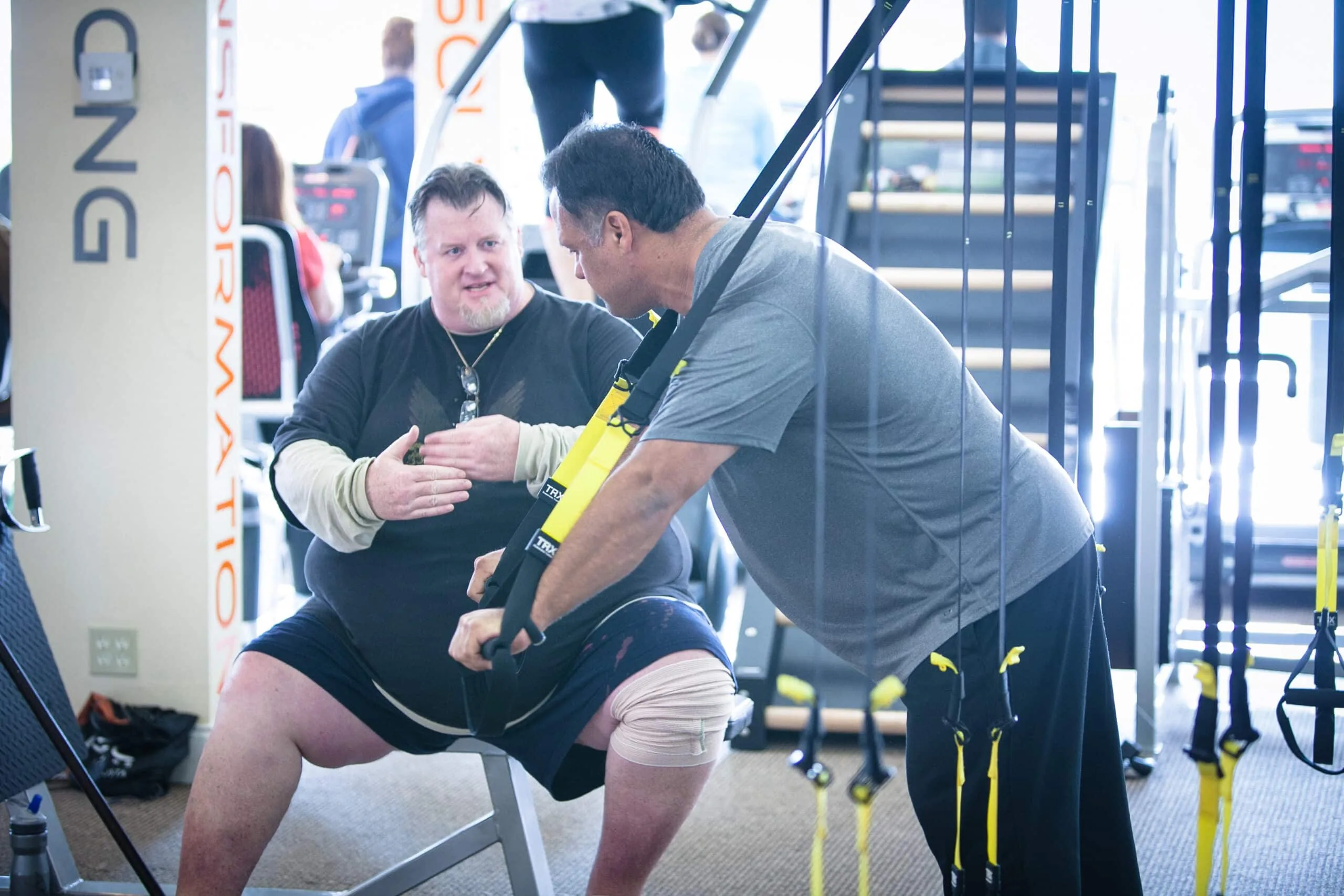
With a 3–4:1 client-to-trainer ratio, every session is coached and adapted to your level — whether you're a seasoned athlete or taking your very first steps.
GLP-1 integration.PwC’s research found that only 23% of GLP-1 users feel well-supported by existing wellness platforms. A meta-analysis presented at the European Congress on Obesity found that diet-and-exercise interventions produced the smallest proportional loss of fat-free mass among weight-loss methods achieving at least 10% total body weight reduction. PFC’s combination of resistance training, high-protein nutrition, and behavioral coaching directly addresses this gap.
The following persona-specific guidance applies this framework to each primary audience segment. Each persona faces distinct challenges that the six-dimension framework helps address.
Reset Seeker (40–60, 40–70 lb goal): PFC’s structured immersion, 17-point weekly tracking, and behavioral health support address the root causes of prior program failures. The 3–4:1 trainer ratio and all-inclusive format remove decision fatigue and provide the accountability structure this persona needs.
GLP-1 Graduate (30+, post-medication muscle loss): PFC’s emphasis on resistance training, registered-dietitian-designed high-protein meals, and DEXA scan monitoring directly targets muscle preservation, the primary clinical risk for this group. The team does not judge medication history. The focus stays on building the sustainable foundation that makes results last.
Active Optimizer (30+, plateau or body recomposition goal): Four to five hours of daily training across boxing, TRX, beach bootcamp, hiking, and specialty programs (Golf Fit, Tennis Fit, Pickleball Fit) will challenge even experienced exercisers. Data-driven tracking reveals progress beyond what scale weight shows.
Concerned Beginner (30+, significant weight to lose, first program): Every class is structured so participants at any fitness level, including those with physical limitations, can participate and progress. Low-impact modifications are available in every session, and the 3–4:1 ratio means no one is left behind.
How Premier Fitness Camp Applies Current Best Practices
Professor Signe Torekov of the University of Copenhagen, presenting findings from a meta-analysis of 21 randomized controlled trials at the European Congress on Obesity, stated: “Diet and exercise interventions were associated with the smallest reductions in fat-free mass, whereas incretin-based obesity drugs and obesity surgery were associated with substantially greater proportional losses of fat-free mass. These findings underscore the importance of incorporating strategies aimed at preserving fat-free mass, particularly structured exercise across all weight-loss approaches.”
PFC applies this principle through its “Think, Eat, Move” framework. Registered dietitians design every meal to support muscle preservation through adequate protein and balanced macronutrients. Trainers with bachelor’s and master’s degrees lead resistance and functional training sessions four to five hours per weekday. Licensed psychologists and behavioral health coaches address emotional patterns such as stress eating, sedentary habits, and limiting beliefs that often undermine results after other programs end.
The "Eat" pillar is about education, not deprivation: cooking demonstrations teach clients how to recreate healthy, delicious meals long after they go home.
A case study conducted in partnership with the University of California, San Diego evaluated PFC participants who stayed four or more weeks and received DEXA scans at program start and end. The findings showed that 94% of total weight loss was purely fat, far exceeding typical fat-to-muscle loss ratios in aggressive programs and standard dieting. This outcome aligns with the structured resistance training and nutritionist-designed dietary support highlighted in the University of Copenhagen meta-analysis.
Client Irene Tchaikovsky described her experience: “What began as a simple one-week reboot has transformed into a complete lifestyle shift. PFC equips you with the knowledge, tools, and support to make meaningful, and sustainable, changes.” Client Scott added: “PFC is a life-changing experience. I signed up for two weeks and stayed for eight. The facilities and staff are top notch.”
Readiness and Opportunity: How to Evaluate Your Fit
The six-dimension framework provides a structured self-assessment tool. Prospective participants can evaluate their own readiness by reviewing each dimension below.
Clinical and educational rigor: Look for documented outcome data, not just testimonials, that show what percentage of weight loss came from fat versus muscle. PFC’s UCSD case study reports a 94% fat-loss ratio.
Environment and location: Consider whether the physical setting supports daily outdoor training year-round. PFC’s Carlsbad, California location provides a moderate, low-humidity climate every month of the year. This climate enables beach workouts, coastal hikes at Torrey Pines, and paddleboarding that competitors in Arizona, Utah, Florida, or the Northeast cannot consistently offer.
Carlsbad's year-round climate moves training outdoors — Pacific coast views turn a workout into a reset for the mind as much as the body.
Personalization: Check whether the program begins with a comprehensive health assessment, including blood work, body composition, and fitness testing, and whether it tracks progress weekly. PFC’s report card covers weight, body fat, seven body measurements, blood pressure, four metabolic blood markers, and three fitness performance metrics. Participants see progress even when the scale moves slowly.
In North San Diego County, moderate year-round temperatures and low humidity make daily outdoor training possible — one reason the location is central to the experience.
When Premier Fitness Camp is not the right fit. PFC is a premium, in-person, immersive program. Three circumstances make it a poor match for some prospective participants.
Budget constraints: At approximately $6,000 per week, PFC is a significant financial commitment. PFC offers 0% financing for up to six months with no down payment, and multi-week discounts are available. The program may qualify as a tax-deductible medical expense. For individuals for whom even these options are inaccessible, a lower-cost structured program is a better starting point than no program at all.
Time availability: PFC requires a minimum one-week stay, and meaningful habit formation typically requires three weeks or more. Individuals who cannot take extended time away from work or family obligations may find the commitment difficult to sustain.
Travel logistics: PFC operates exclusively at the Omni La Costa Resort in Carlsbad, California. International or cross-country travel adds cost and planning complexity. Flights and transfers are not included in the all-inclusive rate.
Generic retreat pitfalls to avoid across all programs.
Confusing relaxation with transformation: Luxury spa retreats and wellness resorts offer genuine value for stress recovery, but they do not produce measurable body recomposition. Selecting a program based on aesthetics or brand prestige without examining outcome data often leads to disappointment.
Overlooking trainer credentials and continuity: High staff turnover prevents the relationship-based accountability that drives long-term adherence. PFC’s trainers hold bachelor’s and master’s degrees, and many have been with the program since its founding. Returning alumni reconnect with the same staff year after year.
Premier Fitness Camp: Detailed Answers to Common Questions
What percentage of weight loss at Premier Fitness Camp comes from fat versus muscle?
A case study conducted in partnership with the University of California, San Diego found that 94% of total weight loss among PFC participants who stayed four or more weeks was purely fat. Most aggressive weight-loss programs produce a 50/50 fat-to-muscle ratio, while standard dieting typically produces a 60/40 ratio. PFC’s result reflects the combination of structured resistance training, registered-dietitian-designed nutrition, and adequate protein intake that independent research identifies as the most effective approach for preserving fat-free mass during weight loss. Lean muscle mass was preserved or increased in most long-term PFC participants, which protects resting metabolic rate and supports sustainable long-term weight maintenance.
What is the trainer-to-client ratio at Premier Fitness Camp, and why does it matter?
PFC maintains a 3–4:1 client-to-trainer ratio across all fitness sessions. This ratio enables trainers to observe form, provide real-time corrections, offer modifications for physical limitations, and push each participant appropriately. These outcomes are not achievable in standard group fitness classes with 10 to 30 participants per instructor. Every class is structured so participants at any fitness level, from those who can only walk 250 feet to seasoned athletes, can participate and progress. Low-impact alternatives are available in every session.
Is Premier Fitness Camp appropriate for someone currently using GLP-1 medications like Ozempic or Wegovy?
Yes. PFC does not discourage GLP-1 use. The program suits GLP-1 users because it addresses the primary clinical risk of these medications, which is disproportionate muscle loss. PFC’s resistance training, high-protein meal design by registered dietitians, and DEXA scan monitoring directly target muscle preservation. For GLP-1 Graduates who want to reduce or discontinue medication, PFC provides sustainable nutrition habits, an exercise foundation, and behavioral health support to maintain results independently. The program functions as the educational and lifestyle infrastructure that makes medication-assisted weight loss durable over the long term.
How does Premier Fitness Camp track progress beyond the scale?
PFC tracks 17 data points weekly through a personalized report card reviewed one-on-one with a trainer. These include weight, body fat percentage, seven body measurements (neck, waist, umbilicus, upper arm, chest, hip, and quad), blood pressure (systolic and diastolic), four metabolic blood markers (LDL, HDL, triglycerides, and glucose), and three fitness performance metrics (mile time, plank hold duration, and push-up count). An optional DEXA scan, the gold standard for body composition measurement, is also available. This multi-dimensional tracking means participants see meaningful progress even during weeks when scale weight moves slowly, and it provides the data foundation for the UCSD case study findings.
What does the all-inclusive price at Premier Fitness Camp actually cover?
The approximately $6,000 weekly all-inclusive rate covers luxury accommodations at the Omni La Costa Resort & Spa in Carlsbad, California, all meals prepared on-site by PFC’s wellness chefs, all fitness training sessions, educational workshops covering nutrition, behavioral health, and cooking, comprehensive health assessments and weekly report card tracking, three spa treatments per week at the La Costa Spa, and access to all resort amenities. Post-program virtual coaching, personalized meal plans, and ongoing staff communication are also included. Flights, airport transfers, and optional DEXA scans are not included in the base rate. Zero-percent financing for up to six months with no down payment is available, and multi-week discounts apply for extended stays.
Conclusion: When Premier Fitness Camp Makes Sense
The six-dimension framework reveals a clear differentiation across the wellness retreat landscape. Luxury spas deliver relaxation and stress relief. Traditional bootcamps produce short-term calorie deficits. Results-driven transformation programs, when properly designed, produce measurable, sustainable body recomposition by combining structured exercise, clinical nutrition, behavioral health support, and post-program accountability.
PFC’s documented outcomes, including the 94% pure fat loss in the UCSD case study, a 3–4:1 trainer ratio, 4–5 daily training hours, 17-point weekly tracking, and a revenue base in which 50% comes from returning alumni, based on more than 1,200 reviews with a 90%+ five-star rating, represent a robust evidence base in the adult immersive fitness category. The Omni La Costa Resort setting, year-round Southern California climate, and on-site wellness chef-prepared meals address environmental and nutritional dimensions that many competitors cannot match.
For Reset Seekers who have tried other approaches without lasting results, for GLP-1 Graduates navigating muscle loss and metabolic concerns, and for anyone ready to invest seriously in their health, the framework points consistently toward programs that combine clinical rigor with immersive structure and genuine aftercare. PFC is built around exactly that combination.
If you want to explore whether PFC aligns with your goals, you can book a free consultation or call (888) 488-8936 to schedule a personalized conversation with the team.
Inquire for rates and availability
Fill out the form below to speak with a wellness specialist.
 5-star Wellness Resort