 5-star Wellness Resort
 5-star Wellness Resort

Written by: Chris Butt, Certified Personal Trainer & Weight Loss Coach, Premier Fitness Camp
Exercise supports emotional recovery through brain change, not only through endorphins. A 2026 review in Frontiers in Psychology found that exercise reduces rumination by modulating default mode network activity and prefrontal-limbic connectivity. These shifts improve emotion regulation instead of bypassing emotional processing. Movement reshapes the brain’s relationship to negative thought loops; it does not erase them.
Routine itself has its own therapeutic effect. Predictive processing frameworks in neuroscience suggest that routines reduce prediction error in the brain. When daily activities like exercise occur at predictable times, the nervous system receives fewer stress-inducing error signals. After divorce, when many environmental cues change at once, a scheduled workout becomes a reliable anchor. The nervous system can anticipate it and settle around it.
The social dimension then compounds these effects. A 2026 population-based study in the Kansas Journal of Medicine found that meeting strength-training guidelines was associated with lower odds of loneliness after adjusting for sociodemographic and health-related factors. Moderate-intensity cardio alone did not produce the same result. Activity type clearly matters for emotional outcomes.
Beyond activity type, the social structure of the workout also matters. Group formats add a further layer of benefit. A 2026 narrative review in Frontiers in Psychology argues that group-based physical activity reduces loneliness primarily by delivering a measurable “social dose”. This dose comes from structured opportunities for connection through stable cohorts, repeated co-presence, shared rituals, and psychological safety. For someone rebuilding a social world after divorce, that repeated contact is not incidental. It functions as the core mechanism of change.

Different group exercise settings create very different social outcomes. A 2026 narrative review in Frontiers in Psychology found that open drop-in formats often produce low continuity. Irregular attendance prevents familiarity from building, which blocks belonging and community formation. Fixed rosters, recurring schedules, and stable cohorts are the structural features that turn a fitness setting into a community.
The table below compares five common formats on the dimensions most relevant to post-divorce adults who want to rebuild social connection.
| Format | Repeated-Contact Mechanism | Accountability Level | Suitability for Post-Divorce Adults |
|---|---|---|---|
| Running Clubs | Regular group meetings with the same participants create recurrence and relational continuity | Moderate, attendance is self-directed | Good for adults already comfortable with running; lower barrier to entry |
| Group Fitness Classes | Post-class rituals and recurring schedules create automatic weekly social touchpoints | Moderate, instructor-led but attendance optional | Strong; regular class attendees are 26% more likely to describe the gym as their social community |
| Hiking Groups | Shared challenge and physical synchrony can accelerate bonding within a few sessions | Low to moderate, weather and terrain dependent | Good for nature-oriented adults; less structured than indoor formats |
| Team Sports | Season-based teams create repeated interaction over a shared goal or challenge period | High, teammates depend on attendance | High social payoff; works best for those with baseline fitness and coordination comfort |
| Immersive Wellness Programs | Delivers the highest density of social-dose components identified in research, including fixed cohorts, buddy systems, and shared milestones | Very high, structured daily schedule with expert guidance | Highest suitability; removes decision fatigue and provides community, routine, and professional support together |
Research shows that gym members with social connections stay longer as members. That pattern highlights why the social architecture of a fitness format matters as much as the activity itself.
Exercise alone addresses only one part of post-divorce recovery. Major transitions often bring disrupted sleep, changed eating habits, emotional withdrawal, and reduced self-efficacy. These patterns call for a coordinated response. The “Think, Eat, Move” framework addresses all three domains at the same time.
Think focuses on the psychological layer. Licensed psychologists and behavioral health coaches lead group workshops on emotional triggers, limiting beliefs, and life transitions. One-on-one counseling is available for deeper work, including grief and divorce. A 2026 review describes behavioral activation, self-efficacy, emotion regulation, and sleep improvement as overlapping pathways by which exercise improves well-being. The Think pillar helps clients engage those pathways consciously instead of leaving them to chance.

Eat stabilizes the nutritional disruption that often follows divorce. Registered dietitians design all meals. Wellness chefs prepare them on-site with fresh, farm-to-fork ingredients. Cooking demonstrations show clients how to recreate healthy meals at home. The focus stays on education and empowerment, not restriction.

Move provides four to five hours of daily training, Monday through Friday, with a 3–4:1 client-to-trainer ratio. Trainer-guided group participation combined with skill acquisition helps people experience mastery. Mastery then supports self-efficacy and confidence. These gains extend beyond the gym into social and everyday life.
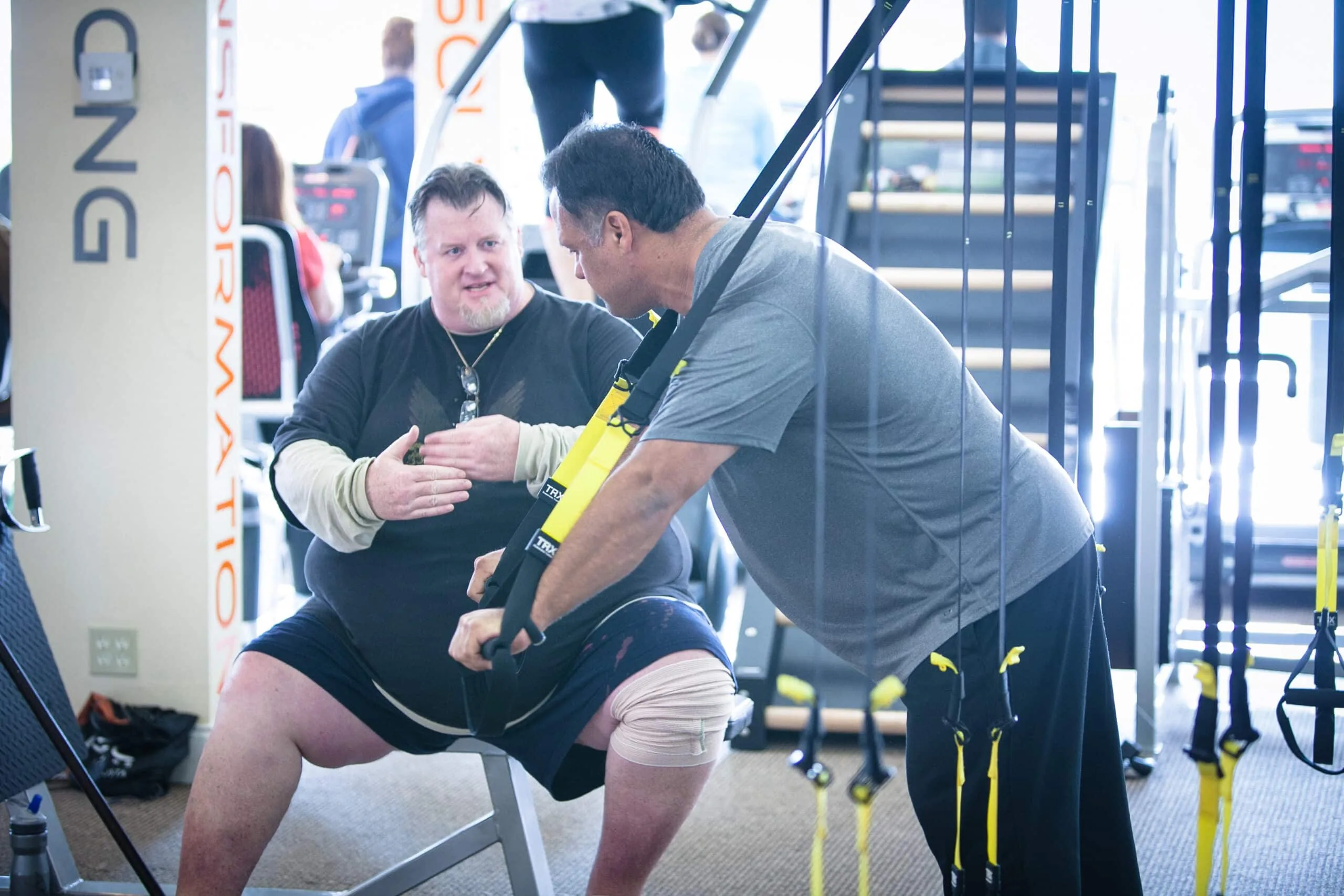
Fitness identity develops over time with consistent practice. The Think, Eat, Move structure speeds that process by removing decision friction and surrounding clients with expert guidance and peer accountability from day one.
Post-divorce progress rarely shows up in a single number. A 2026 study grouped subjective changes after physical activity into three validated domains: physical changes, emotional changes, and social relationship changes. Each domain is measurable and meaningful.
Objective indicators worth tracking include:
Subjective indicators carry equal weight:
A 2026 individual participant data meta-analysis using over 300,000 mood questionnaires from more than 8,000 participants found that physical activity was linked to feeling more energetic. Energy emerged as the most consistent affective indicator tied to movement. Tracking that shift, even informally, offers proof of progress when the scale changes slowly.
PFC tracks 17 data points weekly for every client, including weight, body fat percentage, blood pressure, cholesterol, glucose, mile time, plank hold, and push-up count. This breadth of measurement ensures that no meaningful win goes unnoticed.
Divorce is a loss, and losses need mourning. Diving into fitness to avoid grief delays emotional processing and can leave people emotionally stuck months later. Healthy recovery aims for integration, not substitution.
A 2026 framework in Mental Health and Physical Activity proposes that physical activity serves as an external tool that helps the brain harmonize processing of negative experiences. A single workout can redirect attention, support cognitive reappraisal, and activate reward circuits. It does not replace the deeper emotional work.
Exercise starts to function as avoidance when it becomes compulsive and overrides the body’s signals. This pattern can show up physically as exercising while injured or exhausted without rest, or feeling intense anxiety or guilt when a workout is skipped. The emotional side often includes using workouts to numb feelings instead of regulating and then processing them, or feeling panicky on planned rest days when the body needs recovery.
A regulated relationship with exercise uses movement to clear the head and then turns toward the underlying emotions. A flight-response relationship relies on repeated workouts to blunt feelings until almost nothing is felt.
Several practical strategies help maintain balance. Pair movement with stillness practices such as yoga or meditation. Take planned rest days without guilt. Work with a behavioral health professional when exercise feels compulsive instead of restorative. Christine Chae, LCSW, notes that exercise supports the therapeutic process but does not replace the relational, guided work that happens in a professional setting. PFC’s licensed psychologists are embedded in the program to provide that layer alongside physical training.
For many adults after divorce, the main barrier is not knowledge but environment. People often know what would help yet lack a setting that supports consistent action. An immersive program closes that gap by providing structure, community, expert guidance, and accountability in one place.
PFC operates at the Omni La Costa Resort and Spa in Carlsbad, California. The campus includes 450 acres of facilities and a year-round moderate climate. Clients access beach workouts, coastal hikes at Torrey Pines, and stand-up paddleboarding. The Southern California setting allows daily variety in movement that indoor-only programs cannot match. Luxury accommodations support the recovery and rest that emotional processing requires.

A case study with the University of California, San Diego evaluated participants who stayed four or more weeks and received DEXA scans at the start and end of their program. The findings showed that 94% of total weight loss was purely fat, compared with the 60/40 fat-to-muscle ratio typical of standard dieting programs, where nearly half of lost weight comes from muscle. Lean muscle mass was preserved or increased, bone volume was maintained, and resting metabolic rate was protected. These outcomes matter for post-divorce adults because they reflect sustainable change rather than a temporary result that quickly reverses.
Two anonymized client experiences highlight the social side of this change. One client in her mid-fifties arrived after a 22-year marriage ended and described her first week as the first time in months she had laughed with other people. By week three, she had exchanged contact information with four fellow participants and was joining optional evening group walks. A second client, a 48-year-old professional who had not exercised consistently in a decade, reported that the close trainer ratio, with 3–4 clients per trainer, meant he was never left to struggle alone. The daily structure of the program gave him something to look forward to for the first time since his separation.
PFC’s 50% alumni return rate and 1,200-plus reviews with a 90%-plus five-star rating reflect what many clients experience. They find a community that continues beyond the program itself. Trainers hold bachelor’s and master’s degrees and often stay for years, many since the program’s founding. Clients can email their trainers after leaving. Relationships formed during a stay are not transactional; they are built into the program’s design.
Timelines vary because loneliness after divorce depends on many factors, including personality, existing support networks, and marriage length. Research on group-based physical activity suggests that social benefits from consistent group participation begin to build within the first few weeks as familiarity with the same people grows. Structural benefits such as routine, predictability, and reduced anxiety can appear within days of following a consistent schedule. At PFC, clients often report meaningful shifts in mood and social connection within the first week. Deeper changes in confidence and identity tend to emerge over two to four weeks of immersive participation.
Yes. PFC works with clients who range from those who can walk only 250 feet to seasoned athletes who train four times a week. Every class is structured so each participant, regardless of fitness level, receives what they need. Trainers maintain a 3–4:1 ratio and provide modifications, progressions, and low-impact options for every exercise. A dedicated low-impact training track supports clients with health limitations such as joint pain or cardiovascular conditions. The program begins with a comprehensive health assessment that includes blood work, body composition, and a fitness test. Each client’s plan is built around their actual starting point rather than a generic template.
PFC’s intake process includes a full health assessment and review of medications and conditions before programming starts. Trainers and registered dietitians collaborate to adapt the program as needed. Clients on GLP-1 medications, managing Type 2 diabetes, or living with cardiovascular conditions have all participated successfully. The 3–4:1 trainer ratio allows continuous monitoring of individual needs during each session. Anyone with significant medical concerns should consult their physician before attending, and PFC’s team coordinates with that guidance to support safety and effectiveness.
The Think pillar of PFC’s “Think, Eat, Move” framework focuses on emotional support. Licensed psychologists and behavioral health coaches are on staff. They lead group workshops on emotional triggers, limiting beliefs, life transitions, and grief. One-on-one counseling sessions are available for deeper personal work, including divorce-specific processing. Meditation and inner connection sessions appear on the weekly schedule. The program treats emotional recovery as a parallel and equally important objective, not a side effect of physical training. Clients who arrive with grief, anger, or uncertainty about identity receive professional support along with their workouts.
A typical weekday begins with four to five hours of structured fitness training in the morning. Sessions include bootcamp, boxing, barre, TRX, beach workouts, and hikes at locations such as Torrey Pines or Double Peak Park. Nutrition education and behavioral health workshops appear throughout the week. Wellness chefs prepare meals with fresh, farm-to-fork ingredients designed by registered dietitians. Three spa treatments per week support recovery and mental restoration. Evenings are intentionally social. Shared dinners and optional group activities create repeated contact that builds genuine community. Weekly one-on-one report card reviews with a trainer track progress across 17 data points so every form of progress is recognized and celebrated.
Post-divorce loneliness is real, and willpower or a basic gym membership rarely resolves it. Evidence shows that structured, group-based movement inside a supportive community with professional guidance rebuilds routine, identity, and social contact after major life transitions. The process works best when physical training, behavioral support, and nutritional education work together, and when grief receives attention alongside fitness goals.
PFC sits at the intersection of these elements. The “Think, Eat, Move” framework, the 3–4:1 trainer ratio, the UCSD-validated case study showing 94% fat loss, the 17-point weekly tracking system, and the community of staff and fellow clients who become lasting connections all reflect deliberate design. These features are not slogans. They form the architecture of a program built to create lasting change for people who are ready to begin again.