 5-star Wellness Resort
 5-star Wellness Resort

Written by: Chris Butt, Certified Personal Trainer & Weight Loss Coach, Premier Fitness Camp
Muscle loss during GLP-1 use is a real concern, but the data show a more nuanced picture than many headlines. A 2026 real-world cohort study from a Vienna obesity clinic found that most of the weight loss on semaglutide was fat mass, with relative muscle mass preserved in the majority of participants. The researchers concluded that GLP-1-induced weight loss reflects favorable body composition changes rather than clinically relevant muscle wasting when fat-mass changes are accounted for.
The greater risk emerges at discontinuation. An Oxford University systematic review published in January 2026, tracking 9,341 adults across 37 studies, found that weight regain after stopping weight-management medications averaged 0.4 kg per month, nearly double the 0.3 kg per month rate observed after ending behavioral weight-loss programs alone. Without structured resistance training and high-protein nutrition in place, returning appetite accelerates fat regain while lean mass recovery lags behind. This gap increases metabolic vulnerability.
A 2026 Cleveland Clinic retrospective cohort study of nearly 8,000 adults found that 45% of obesity patients maintained or continued losing weight one year after stopping semaglutide or tirzepatide. That outcome highlights the impact of structured behavioral and lifestyle support during the transition period.
The window immediately after stopping Wegovy offers the strongest opportunity to protect your results. A structured retreat that combines progressive resistance training, high-protein fueling, and behavioral coaching can close the metabolic gap before regain takes hold.
Discuss your post-GLP-1 goals with Premier Fitness Camp’s multidisciplinary team in a free consultation.
Most wellness retreats are not built for the specific physiological demands of GLP-1 cessation. The five criteria below separate programs that deliver measurable muscle rebuilding from those that offer general fitness without the clinical depth this transition requires.
See how PFC meets these five criteria by scheduling a free program consultation.
Premier Fitness Camp (PFC) operates at the Omni La Costa Resort & Spa in Carlsbad, California, and structures every program around three integrated pillars: Think, Eat, Move. For GLP-1 graduates, each pillar addresses a specific gap left by medication-only weight loss.

Think brings licensed psychologists and behavioral health coaches into group workshops and individual sessions. Topics include emotional eating, rising food noise, and the mindset shifts required to sustain results independently.

Eat places registered dietitians and on-site wellness chefs at the center of every meal. The team delivers gourmet, calorie-controlled nutrition built to the 1.6–2.2 g/kg protein targets supported by current research. Cooking demonstrations show clients how to recreate these meals at home.

Move provides 4–5 hours of daily training Monday through Friday. Sessions include progressive resistance work, interval training, beach boot camps, hiking at Torrey Pines and Double Peak, and paddleboarding on the Pacific coast. The 3–4:1 client-to-trainer ratio and trainers with bachelor’s and master’s degrees support safe progression.
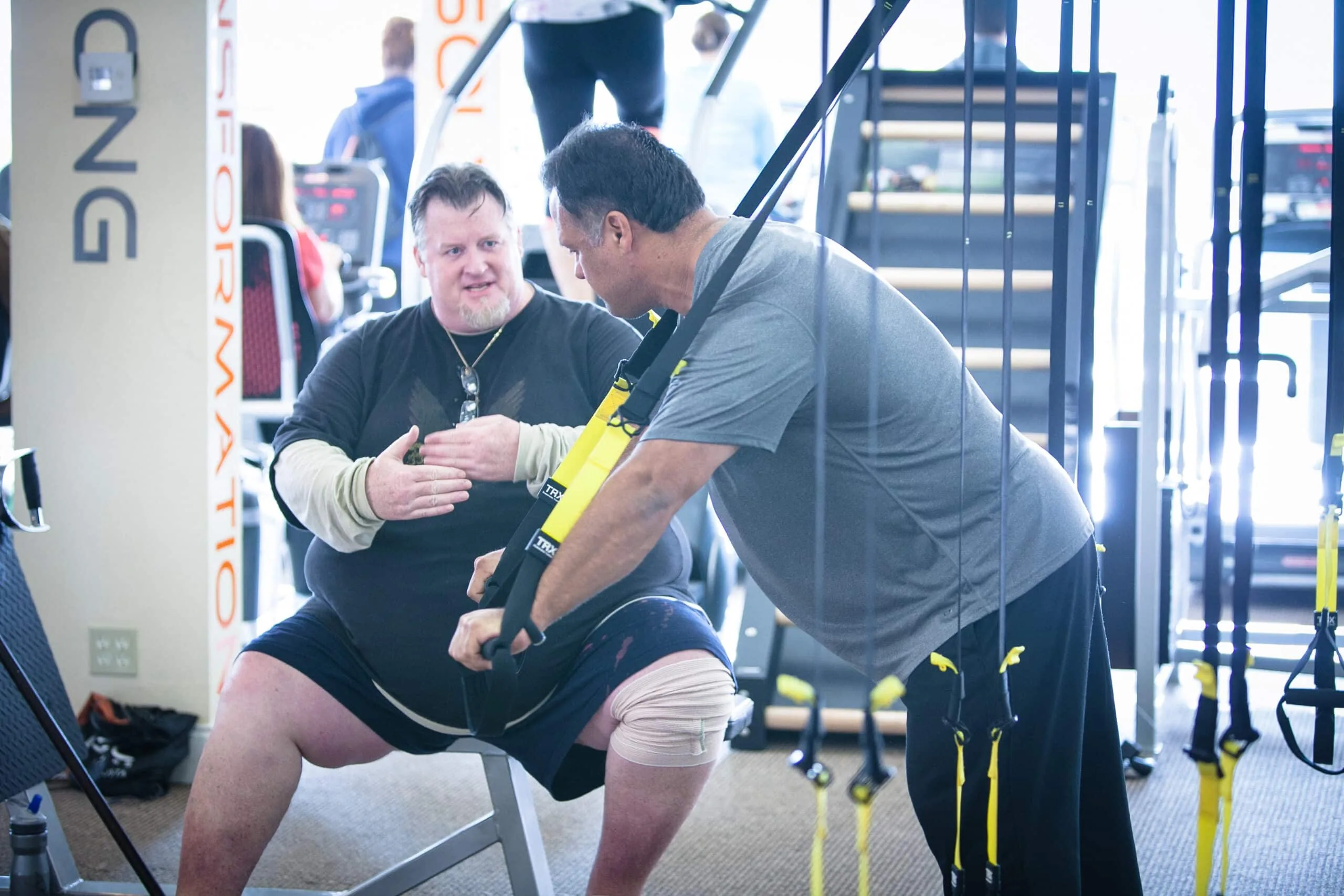
A UCSD case study evaluating PFC participants who stayed four or more weeks and received DEXA scans found that 94% of total weight loss was purely fat, compared to the 60/40 fat-to-muscle ratio typical of standard dieting programs. Most long-term participants preserved or increased lean muscle mass during their stay. Every client’s progress is tracked across 17 data points weekly, including weight, body-fat percentage, seven circumference measurements, blood pressure, four metabolic blood markers, mile time, plank hold, and push-up count. Optional DEXA scanning is available for gold-standard body-composition measurement.
One recent PFC client who transitioned off semaglutide shared: “I came in nervous about losing everything I had worked for on the medication. The team understood exactly where I was, with no judgment and a clear plan. I left stronger than I had been in years, and I finally understood why.”
Start building your personalized post-GLP-1 plan with PFC’s team in a free consultation.
A representative weekday at PFC for a GLP-1 graduate follows a structured sequence that supports muscle rebuilding and appetite regulation. The schedule front-loads resistance training during morning energy peaks and spaces protein-rich meals and coaching across the day.

The comparison below highlights how PFC differs from six retreats often considered by GLP-1 graduates. Pay particular attention to staff credentials, protein-focused nutrition, and the rigor of body-composition and outcomes tracking, since these factors most directly influence muscle rebuilding.
| Attribute | Premier Fitness Camp | Unite Fitness Retreat | Pritikin | Canyon Ranch | Hilton Head Health | Live In Fitness | Civana |
|---|---|---|---|---|---|---|---|
| Location & Climate | Carlsbad, CA, year-round moderate temperatures, low humidity, Pacific coast access | Downtown Salt Lake City, UT, cold winters, urban setting | Florida, high humidity year-round | Multiple locations, varies by property | Hilton Head Island, SC, high humidity, guests housed off-site and transported daily | Arizona, extreme heat for several months annually | Carefree, AZ, desert heat for several months annually |
| On-Site Facilities | All training, dining, education, and spa on 450-acre Omni La Costa Resort campus | Hotel-based, additional amenities accessed off-site | Central facility, longevity-focused programming | Full resort campus, wellness-retreat orientation | Central facility for activities, accommodations off-site | Residential home setting, gym facilities accessed by vehicle | Wellness resort, retreat-oriented rather than results-driven |
| Staff Credentials | Trainers hold bachelor’s and master’s degrees, registered dietitians, licensed psychologists, wellness chefs, all on-site with low turnover | Nutritionists, mental health professionals, and GLP-1-experienced practitioners listed as program criteria | Medical and nutrition staff, longevity-focused team | Wellness professionals, experience-focused rather than outcomes-focused | Data-driven testing and personalized nutrition staff for GLP-1 support program | Trainer staff, high turnover reported | Wellness practitioners, retreat-oriented staffing |
| Nutrition Approach | Registered dietitians design all meals, wellness chefs prepare on-site, protein targets at 1.6–2.2 g/kg, cooking education included | 1.2–1.6 g/kg protein targets, 25–38 g fiber daily, dietitian-guided | Structured nutrition program, longevity and cardiac focus | Nutritionist-guided, wellness-retreat orientation | Personalized nutrition for GLP-1 support, mindful movement integrated | Delivered meals, lower on-site preparation control | Wellness nutrition, not outcomes-benchmarked |
| Behavioral Support | Licensed psychologists on staff, group workshops, one-on-one counseling, emotional eating and food-noise management | Mental health professionals and behavioral coaching listed as program components | Behavioral support, slower-paced program | Wellness coaching, experience-focused | Mindful movement and lifestyle coaching included | Basic coaching, limited behavioral health depth | Mindfulness and retreat programming, not results-benchmarked |
| Data Tracking | Seventeen data points tracked weekly, optional DEXA scan, personalized report card reviewed with trainer, UCSD case study: 94% of weight loss from fat | Body-composition analysis and fitness screening at intake listed as program criteria | Medical testing, longevity markers tracked | Wellness assessments, outcomes not publicly benchmarked | Data-driven testing for GLP-1 metabolic health program | Basic metrics, scale-weight focus | Wellness assessments, not outcomes-benchmarked |
Compare PFC with your top choices in a free consultation and review how its outcomes align with your goals.
The work that begins at PFC continues after departure. The 8-week post-retreat period tests the habits built during immersion against real-world conditions, and structured support often determines whether results hold or slide.
PFC’s post-retreat support includes virtual coaching sessions for ongoing accountability and personalized high-protein meal plans calibrated to home cooking realities. The team provides progressive resistance programming that builds on the training foundation established during the stay. Continued 17-point tracking keeps changes in body composition, metabolic markers, and fitness benchmarks visible and actionable.
NASM advises clients discontinuing GLP-1 medications to recalculate maintenance calories using equations such as Mifflin St-Jeor, noting that a person who lost 40 pounds may need 200–400 fewer calories per day than before medication to sustain the lower body weight. PFC’s registered dietitians handle this recalibration directly. Clients can email their trainers at any point, and many stay in contact for months and years after their stay.
How long does it take to rebuild muscle after stopping Wegovy?
The timeline depends on how much lean mass was lost, training history, protein intake, and age. Most adults who complete structured resistance training three to four times per week at adequate protein intake begin to see measurable strength gains within four to six weeks. Many notice meaningful body-composition changes within eight to twelve weeks. Consistency drives these results, especially when resistance training, protein distribution, and recovery are managed together in an immersive environment.
What protein intake is recommended after stopping semaglutide?
The evidence-based target for adults rebuilding muscle after GLP-1 cessation is 1.6–2.2 grams of protein per kilogram of body weight per day. This intake should be distributed across meals at roughly 25–40 grams per sitting. The range supports muscle protein synthesis while helping manage the returning appetite that follows dose reduction. Prioritizing protein-dense, nutrient-rich sources such as chicken, fish, eggs, Greek yogurt, and legumes at every meal applies this target in daily life. A registered dietitian should set the exact target based on current body weight, activity level, and metabolic history.
Will I regain weight after stopping Wegovy without a structured program?
The data on unstructured cessation are consistent, and weight regain usually occurs without behavioral and nutritional support. The 0.4 kg monthly regain rate documented in the Oxford review translates to a return to starting weight within about 18 months for people who lack effective maintenance strategies. The Cleveland Clinic’s finding that 45% of patients maintained or continued losing weight points to the power of structured follow-up, lifestyle modification visits, and, when appropriate, transition to other treatments. Structured intervention meaningfully changes the outcome.
Is an immersive retreat more effective than outpatient support after stopping GLP-1 medication?
Immersive programs concentrate key inputs such as resistance training volume, protein-focused meals, behavioral coaching, circadian routine, and social accountability. Outpatient settings rarely match this intensity. Research on residential wellness retreats consistently documents improvements in cortisol, sleep, mood, and metabolic markers that persist at six-week follow-up, with structured circadian alignment identified as a core mechanism. For GLP-1 graduates in the highest-risk window for regain, the immersive environment removes daily friction. Food decisions, training consistency, and behavioral support are managed by an expert team so the client can focus on rebuilding.
Ready to build the foundation that keeps your GLP-1 results working for you long term? Schedule your free consultation with Premier Fitness Camp’s team today, or call (888) 488-8936 to speak with a program advisor. With 1,200+ reviews and a 90%+ five-star rating, PFC has guided thousands of adults through this transition, and 50% of PFC’s annual revenue comes from returning alumni.