 5-star Wellness Resort
 5-star Wellness Resort
Written by: Chris Butt, Certified Personal Trainer & Weight Loss Coach, Premier Fitness Camp
During menopause, your body’s relationship with protein changes in a fundamental way. Estrogen deficiency is associated with 20–30% higher basal rates of muscle protein synthesis compared to premenopausal women, yet muscle becomes harder to maintain. Your body needs more dietary protein to preserve the same amount of lean tissue.
To support muscle health in older adults, ESPEN guidelines recommend at least 1.0 g protein/kg body weight/day for older persons, with 1.0–1.2 g/kg for healthy older adults and 1.2–1.5 g/kg for those with acute or chronic illness. Higher-protein approaches help preserve lean mass during caloric restriction compared with lower protein intakes.
Spreading protein intake matters as much as the total amount. Distributing protein across multiple meals produces a stronger anabolic response than the same total eaten in one or two large servings. Practical sources include eggs, Greek yogurt, cottage cheese, tofu, tempeh, salmon, chicken, beans, and lentils, all featured in the 7-day meal plan below.
Our registered dietitians design every meal to hit these targets, and wellness chefs prepare each dish on-site using fresh, farm-to-fork ingredients, so protein goals are met without calorie counting or meal prep stress. Schedule a call with our nutrition team to see how we build a protein plan around your body weight and activity level.

Resting metabolic rate declines by approximately 50–100 kcal per day during menopause, primarily due to loss of lean mass. Separately, in women, adjusted resting energy expenditure declines by approximately 3.9 kcal per day per year of age. These compounding reductions mean that a calorie intake that produced weight loss at 35 may now maintain or increase weight at 50.
Given this narrowed metabolic margin, the evidence-based response uses a modest deficit of 500 kcal per day below total daily energy expenditure, yielding approximately 0.5 kg of loss per week, with a floor of 1,200 kcal per day to preserve lean mass and support sustainability. More aggressive restriction accelerates lean-tissue loss, depresses metabolic rate further, and sets the stage for rebound weight gain, a pattern many women have experienced repeatedly. The Women’s Health Initiative showed that aggressive low-fat restriction produced minimal long-term results in this population.
Our dietitians calibrate each client’s intake individually, accounting for current weight, activity level, and hormonal status, rather than relying on generic 1,200-calorie templates. Talk with our team to understand what a sustainable calorie target looks like for your body.
Basal cortisol levels appear similar between postmenopausal and premenopausal women. Some analyses of midlife women have found higher wake-to-nadir cortisol output in late perimenopausal and early postmenopausal participants compared with premenopausal women, and this pattern correlates with greater visceral adipose tissue.
The mechanism involves several layers of regulation. Studies show no consistent depot difference in 11β-HSD1 expression between visceral and subcutaneous adipose tissue, with several reporting similar levels or higher expression in subcutaneous fat. Sleep disruption compounds the problem. Between 40% and 60% of menopausal women report clinically significant insomnia, and women with self-reported sleep under seven hours had 22% increased odds of visceral obesity (defined by VFA) compared with those sleeping 7–9 hours.
These mechanisms point directly to behavioral interventions that lower cortisol and improve sleep. Behavioral strategies with documented cortisol-lowering effects include mindfulness-based stress reduction, where an 8-week MBSR program was associated with a 23% decrease in the cortisol awakening response among healthcare workers, and structured aerobic exercise, where regular activity can reduce visceral fat and help manage cortisol levels. Our Think pillar addresses this through licensed psychologists, group behavioral workshops, meditation sessions, and spa recovery, with three spa treatments per week included in every stay.

The most common reason for stalled progress is that the program being followed was not designed for the hormonal environment of perimenopause or postmenopause. At the onset of the menopausal transition, the rate of fat gain doubles while lean mass simultaneously declines, and a 2019 meta-analysis of 201 studies found increases in body fat percentage, waist circumference, and visceral fat from premenopause to postmenopause, changes driven primarily by estrogen deficiency rather than aging alone.
Traditional calorie-restriction diets accelerate lean-mass loss, which depresses resting metabolic rate and makes further weight loss progressively harder. Postmenopausal women face an approximately five-fold higher risk of developing abdominal obesity compared to premenopausal women, and a meta-analysis of observational studies reported a pooled prevalence of metabolic syndrome in postmenopausal women of 37.2%, corresponding to a 1.5- to 4-fold higher risk compared with premenopausal women. Insulin resistance further blunts the response to standard low-calorie approaches.
The solution requires three simultaneous interventions, each targeting a different mechanism of menopausal weight gain. Protein at every meal preserves the lean mass that calorie restriction would otherwise strip away. Progressive resistance training rebuilds that lean tissue and counters estrogen-driven muscle loss. Behavioral support manages the cortisol and sleep disruption that drive visceral fat accumulation, mechanisms that standard diets ignore. This is the exact structure of our Think, Eat, Move program.
This 7-day plan applies Mediterranean principles to menopause-specific protein and fiber needs. It is built around the Mediterranean dietary pattern, supported by a 2020 meta-analysis of 16 randomized controlled trials showing a mean reduction of 1.75 kg in body weight with the Mediterranean diet. Each meal targets 25–40 g of protein and includes anti-inflammatory, phytoestrogen-rich, or fiber-dense foods. Low-insulinemic and planetary-health dietary patterns, higher in nuts, legumes, fruits, vegetables, and whole grains and lower in red and processed meats, were associated with the largest reduction in annual weight gain during the menopausal transition in a prospective cohort of 38,283 women from the Nurses’ Health Study II. Use the table as a template, then swap in similar proteins, vegetables, and whole grains that fit your preferences.
| Day | Breakfast (~30 g protein) | Lunch (~35 g protein) | Dinner (~35 g protein) |
|---|---|---|---|
| Monday | 3-egg veggie omelet + ½ cup cottage cheese + berries | Grilled salmon (5 oz) over mixed greens, chickpeas, olive oil, lemon | Baked chicken breast (6 oz), roasted broccoli, quinoa, extra-virgin olive oil |
| Tuesday | Greek yogurt (1 cup, plain) + 2 tbsp ground flaxseed + walnuts + fruit | Lentil soup (2 cups) + whole-grain pita + side salad | Shrimp stir-fry (6 oz) with bok choy, edamame, brown rice, sesame oil |
| Wednesday | Protein smoothie: 1 scoop whey or pea protein, spinach, frozen berries, flaxseed, almond milk | Turkey and avocado wrap (whole-grain tortilla, 5 oz turkey, hummus, greens) | Baked cod (6 oz), roasted sweet potato, steamed asparagus, olive oil drizzle |
| Thursday | 2 eggs scrambled + smoked salmon (2 oz) + whole-grain toast + sliced tomato | Tofu grain bowl (5 oz firm tofu, farro, roasted vegetables, tahini dressing) | Grass-fed beef sirloin (5 oz), sautéed spinach with garlic, roasted cauliflower |
| Friday | Overnight oats (½ cup oats, 1 cup Greek yogurt, chia seeds, almond butter, berries) | Grilled chicken salad (5 oz) with white beans, cucumber, olives, feta, lemon vinaigrette | Baked salmon (6 oz), roasted Brussels sprouts, wild rice, lemon-herb sauce |
| Saturday | Veggie frittata (3 eggs + 2 whites, zucchini, peppers, feta) + side of fruit | Black bean and tempeh tacos (corn tortillas, salsa, avocado, shredded cabbage) | Herb-roasted chicken thighs (5 oz), roasted root vegetables, green salad, olive oil |
| Sunday | Cottage cheese bowl (1 cup) + sliced peaches + pumpkin seeds + cinnamon | Tuna Niçoise salad (5 oz tuna, green beans, egg, olives, potatoes, Dijon vinaigrette) | Grilled shrimp skewers (6 oz), tabbouleh, roasted eggplant, hummus |
Each day also includes a mid-morning snack such as a handful of almonds with an apple and an afternoon snack such as edamame or Greek yogurt to maintain protein distribution and stabilize blood glucose. Fiber targets of 25–30 g per day from vegetables, legumes, and whole grains support satiety and glycemic control; the Nurses’ Health Study linked each 10 g per day increase in fiber to a 3.7% lower risk of weight gain over 12 years in perimenopausal and postmenopausal women.
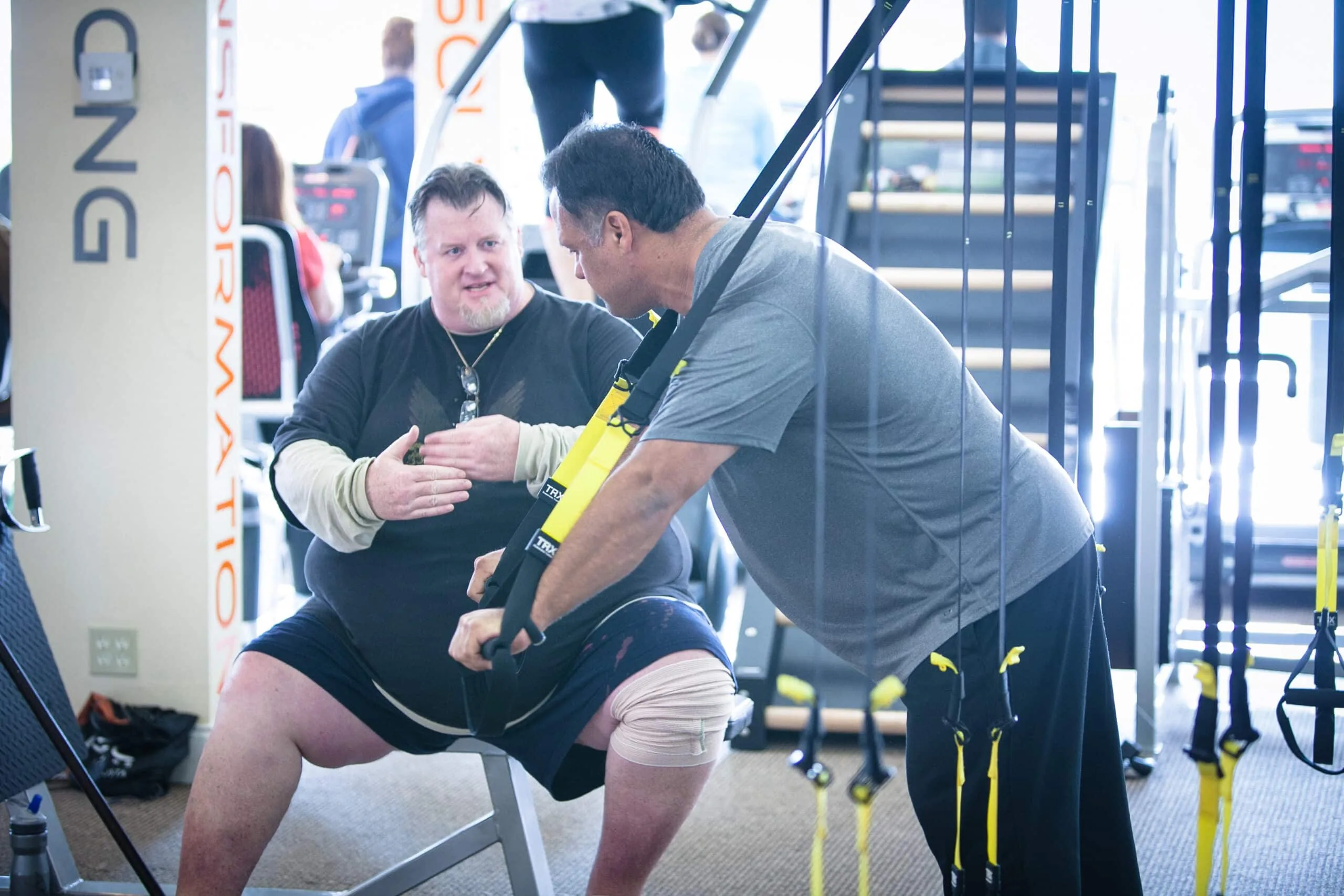
Connect with our dietitians to see how our chefs translate these principles into gourmet, calorie-controlled meals prepared fresh on-site every day.
At-home programs provide flexibility but cannot match the behavioral density, accountability, or multidisciplinary expertise of a residential setting. The table below quantifies this gap across key dimensions, from weekly fat loss and training volume to bone density support and long-term adherence, so you can see why residential immersion produces outcomes that at-home programs rarely achieve.
| Dimension | Typical At-Home Program | Our Residential Program |
|---|---|---|
| Weekly fat loss (women with 40–70 lbs to lose) | ~0.5 kg/week with a 500 kcal/day deficit | 3–4 lbs/week average (UCSD case study: 94% of total weight loss was purely fat, vs. a typical 60/40 fat-to-muscle ratio) |
| Daily training volume | 150+ min/week aerobic + 2–3 resistance sessions recommended, most adults achieve 3–4 hours/week total | 4–5 hours of structured training per day, Monday–Friday, plus half-day Saturday |
| Trainer access and ratio | 1:1 personal training (expensive, limited hours) or group classes with 1:20+ ratios | 3–4:1 client-to-trainer ratio in every session, with trainers holding bachelor’s or master’s degrees |
| Health data tracking | Scale weight, with some apps tracking steps or calories | 17 data points tracked weekly (weight, body fat, 7 body measurements, blood pressure, glucose, LDL, HDL, triglycerides, push-ups, plank time, mile time), plus optional DEXA scan |
| Behavioral and cortisol support | Self-directed, with apps or occasional coaching calls | Licensed psychologists, group behavioral workshops, meditation, and 3 spa treatments per week included |
| Bone density support | Dependent on self-directed resistance training compliance | The LIFTMOR trial showed high-intensity resistance training increased lumbar spine BMD by 2.9% vs. a 1.2% decline in controls, while femoral neck BMD changed by 0.3% vs. –1.9%, and our program applies progressive overload compound movements daily |
| GLP-1 / post-medication muscle rebuilding | No structured protocol, so muscle loss risk remains unaddressed | Resistance-training-first protocol with protein targets calibrated to rebuild lean mass lost during GLP-1 tapering |
| Long-term return rate | High dropout, with most programs seeing significant attrition within 3 months | 50% of annual revenue from returning alumni and 1,200+ reviews with 90%+ five-star rating |
These outcome differences are not just self-reported, they are validated by third-party research. The UCSD case study, conducted over approximately one year with our participants who stayed four or more weeks and received DEXA scans at the start and end of their program, found that 94% of total weight loss was purely fat. Most aggressive weight loss programs produce only a 60/40 fat-to-muscle ratio. Our clients preserved lean muscle mass, and many increased it, which protects resting metabolic rate and supports long-term maintenance.
A residential menopause weight loss program becomes the logical next step when at-home efforts have plateaued despite genuine effort, when behavioral patterns around food or stress remain stuck in a home environment, or when the hormonal complexity of perimenopause or postmenopause calls for multidisciplinary expertise that no app or weekly coaching call can match.
The SHAPE-2 trial found that inactive postmenopausal women performing supervised combined aerobic and resistance exercise for 12 months improved sleep quality scores by 2.1 points and reduced depressive symptoms compared to usual care, outcomes that depend on structured, expert-led programming rather than self-direction. For women who have tried Mediterranean diets, gym memberships, or app-based programs without lasting results, the immersive environment removes the friction that derails at-home efforts. Meals are prepared, workouts are scheduled, education is built in, and a community of peers and expert staff provides daily accountability.
Our 50% alumni return rate and more than 1,200 reviews with a 90%+ five-star rating reflect the sustained value clients find in returning. The Think, Eat, Move framework teaches sustainable habits that clients carry home and later return to refine. As client Irene Tchaikovsky noted, “What began as a simple one-week reboot has transformed into a complete lifestyle shift. Our program equips you with the knowledge, tools, and support to make meaningful and sustainable changes.”
Stays begin at one week, and many clients extend on-site after experiencing their first week’s results. The average stay is approximately 11 days. For GLP-1 Graduates concerned about muscle loss after medication tapering, our resistance-training-first protocol and protein-calibrated meal plans provide a structured exit ramp. Discuss your options with our team by calling (888) 488-8936 or visiting our consultation booking page to see whether a residential stay fits your goals.
Menopause-related weight gain does not reflect a willpower problem. It reflects a physiological shift driven by estrogen deficiency, lean-mass loss, elevated cortisol, and disrupted sleep, and it requires a program designed specifically for those mechanisms. The evidence points to four pillars of an effective menopause weight loss program: protein at 1.2–1.6 g/kg/day distributed across meals, progressive resistance training, a modest calorie deficit, and behavioral support for cortisol and sleep. When at-home efforts plateau, residential immersion provides the behavioral density, expert oversight, and community accountability that support lasting change.
The UCSD case study results discussed earlier, preserving lean mass while losing fat at rates standard programs cannot match, show what becomes possible when nutrition, training, and behavioral support operate together in a residential setting. With 17 weekly data points, a 3–4:1 trainer ratio, registered dietitians, licensed psychologists, and the luxury setting of the Omni La Costa Resort, our program delivers a comprehensive experience that 50% of clients return to year after year.
Start your transformation with a personalized consultation today. Call (888) 488-8936 or visit our consultation booking page to schedule your session.
During the menopausal transition, estrogen deficiency triggers a shift in body composition that standard calorie-restriction diets do not address. Fat distribution moves from the hips and thighs toward the abdomen, lean muscle mass begins to decline, insulin sensitivity decreases, and resting metabolic rate drops, partly because of lean-mass loss and partly because of age-related reductions in energy expenditure. When a woman cuts calories without preserving muscle through adequate protein and resistance training, she loses lean tissue along with fat. This further depresses resting metabolic rate and makes the next round of dieting even less effective. The result is the familiar cycle of short-term loss followed by full rebound. An effective menopause weight loss program addresses all four variables at once: protein intake, resistance training, calorie deficit calibration, and cortisol and sleep management.
Resistance training is the single most important exercise modality for menopausal women pursuing fat loss, because it directly counteracts lean-mass loss and metabolic rate decline. As noted earlier, estrogen deficiency alters how the body uses dietary protein to maintain and rebuild muscle, which makes resistance training essential to stimulate the muscle protein synthesis needed to preserve lean mass. Progressive resistance training that uses compound movements like squats, deadlifts, rows, and presses at sufficient intensity stimulates muscle protein synthesis, preserves resting metabolic rate, and supports bone mineral density. The LIFTMOR trial showed high-intensity resistance training increased lumbar spine BMD by 2.9% vs. a 1.2% decline in controls, while femoral neck BMD changed by 0.3% vs. –1.9%. At our program, resistance training is integrated into four to five hours of daily structured programming, with trainers holding bachelor’s and master’s degrees and maintaining a 3–4:1 client-to-trainer ratio to ensure proper form and progressive overload for every fitness level.
App-based and online programs provide convenience but cannot match the behavioral density, expert access, or accountability structures of a residential setting. Most adults who follow at-home programs accumulate three to four hours of exercise per week, while our clients train four to five hours per day. At-home programs rely on self-direction for meal preparation, stress management, and behavioral change, the exact areas where menopausal physiology creates the most friction. Our program removes that friction. Registered dietitians and wellness chefs prepare every meal on-site to precise protein and calorie targets, licensed psychologists lead behavioral workshops and one-on-one sessions, and a community of peers provides daily accountability in a luxury resort environment. The UCSD case study validating our 94% fat-loss outcome, compared to the 60/40 fat-to-muscle ratio typical of standard dieting, reflects what becomes possible when nutrition, training, and behavioral support operate together in an immersive setting rather than in isolation at home.
Most clients with 40–70 pounds to lose average three to four pounds of fat loss per week at our program, a rate validated by the UCSD case study showing 94% of total weight loss as pure fat. Beyond scale weight, clients typically notice improvements in energy, sleep quality, blood pressure, and body measurements within the first week. The 17 data points tracked weekly, including body fat percentage, seven body measurements, blood pressure, glucose, cholesterol markers, push-ups, plank time, and mile time, capture progress that the scale alone cannot reflect. One week provides a powerful kickstart. Two weeks build real momentum. Three weeks is where new habits begin to solidify, and four or more weeks deliver the depth of transformation documented in the UCSD case study. Many clients book one week and extend their stay on-site after experiencing their first week’s results. Post-camp virtual coaching, personalized meal plans, and ongoing communication with our staff support continued progress after returning home.