 5-star Wellness Resort
 5-star Wellness Resort
Written by: Chris Butt, Certified Personal Trainer & Weight Loss Coach, Premier Fitness Camp
Women in late perimenopause and early postmenopause can have higher cortisol output than premenopausal women. Several studies link higher cortisol output with greater visceral adipose tissue on CT imaging. Estrogen withdrawal and elevated cortisol act together to increase lipoprotein lipase (LPL) activity in abdominal fat cells. Estradiol normally inhibits LPL in omental fat, so its loss removes that protection and encourages central fat storage.
Visceral adipose tissue expresses higher levels of 11β-HSD1, the enzyme that converts inactive cortisone to active cortisol inside fat cells. This creates a feed-forward loop that amplifies local cortisol exposure even when blood levels look normal. Chronic, low-grade stress from ongoing work demands, caregiving responsibilities, or financial worry is most consistently linked to weight gain over time. The behavioral fallout compounds the hormonal effects through less time for cooking, stronger pull toward calorie-dense foods, lower physical activity, and sleep disruption that raises ghrelin and lowers leptin the next day.
Our Think, Eat, Move framework addresses each layer of this problem at the same time:
Many women can flatten a menopause belly, but typical tools rarely get them there. A 2024 systematic review and meta-analysis in Maturitas examined adiposity before and after menopause. Visceral fat can rise as a proportion of total body fat in postmenopause even when diet and exercise do not change. Longitudinal data show that visceral adipose tissue increases during the menopause transition, then slows but still continues afterward.
Scale weight alone cannot capture this shift. A woman can maintain the same body weight while fat distribution moves from hips and thighs to the abdomen. A bathroom scale cannot see that change, but body composition tracking can. For this reason we track 17 data points weekly, including body fat percentage, waist and umbilicus measurements, blood pressure, glucose, LDL, HDL, triglycerides, mile time, plank hold, and push-up count, along with scale weight.
A UCSD case study evaluated participants who stayed four or more weeks and received DEXA scans, the gold standard for body composition measurement. The analysis found that 94% of total weight loss was purely fat. Most aggressive weight-loss programs see a 50/50 split between fat and lean muscle loss. Standard dieting typically produces only a 60/40 fat-to-muscle ratio. Our 94% figure reflects a program architecture built to preserve muscle while targeting fat, which makes results more durable instead of temporary.
If the core problem is a hormonal feedback loop that drives fat accumulation while eroding muscle, the solution must interrupt cortisol elevation and protect lean tissue at the same time. A 2020 narrative review in Strength & Conditioning Journal examined substantial literature showing that body recomposition, or simultaneous fat loss and muscle gain, can occur in resistance-trained individuals when progressive resistance training is paired with evidence-based nutrition.
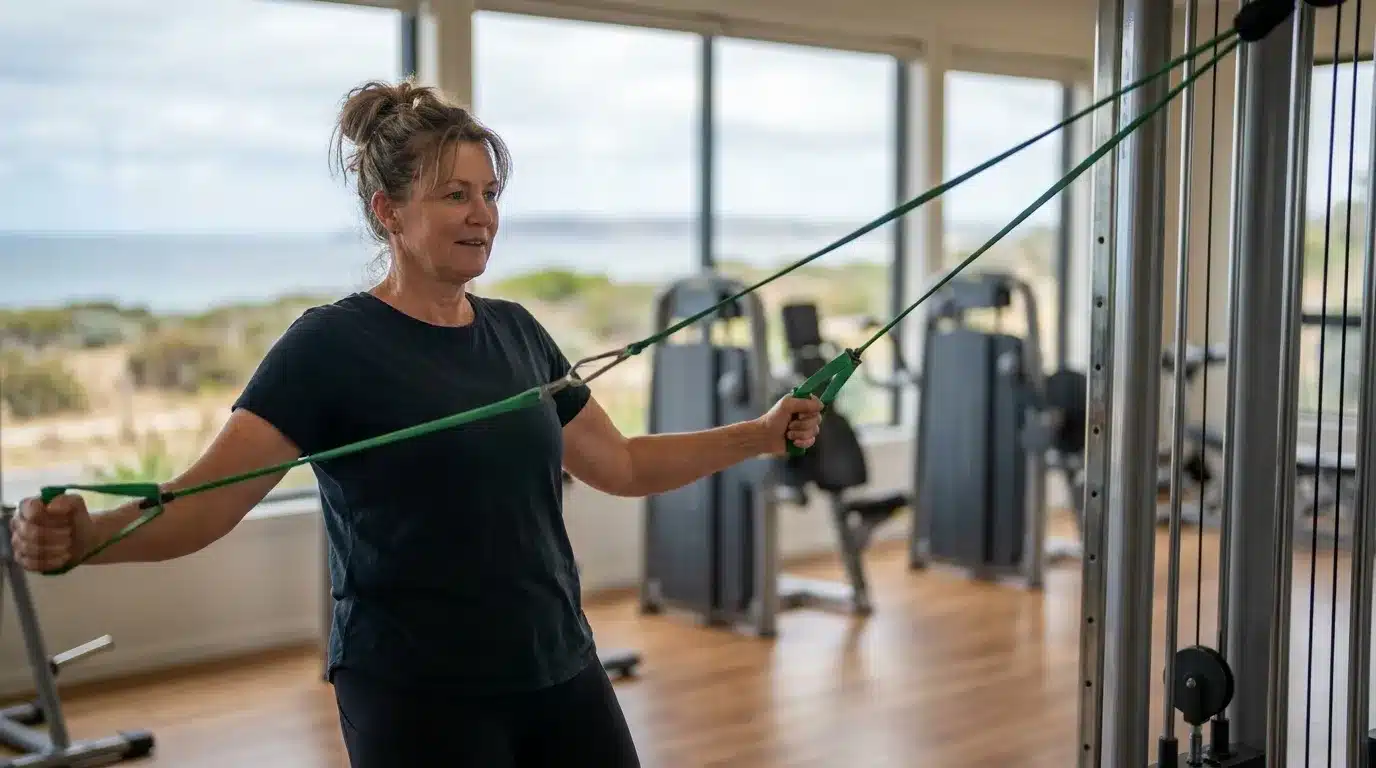
No randomized controlled trial published in Menopause or elsewhere has yet shown the specific outcome of 1.3 kg lean-mass gain and 1.1 kg fat-mass loss after 12 months of progressive resistance training three times weekly in postmenopausal women without hormone therapy. The nearest study used a 12-week intervention. Estrogen loss during menopause is associated with an average decrease in resting metabolic rate of about 100 calories per day. Strength training directly counters this decline by maintaining the lean muscle that drives resting metabolic rate.
A practical daily framework for interrupting the cortisol-fat cycle integrates all three pillars through five evidence-based practices:
Sleep acts as an active hormonal regulator, not a passive recovery variable. Progesterone, which declines sharply during perimenopause, has sedative properties. Its loss contributes directly to the sleep fragmentation many women notice. Elevated cortisol disrupts the normal sleep cycle, raises ghrelin, and lowers leptin. This shift increases appetite and food cravings the following day and reduces motivation for physical activity.
A 2010 study in Annals of Internal Medicine found that sleep restriction from 8.5 to 5.5 hours per night during a calorie deficit increased the proportion of weight lost as lean mass by 60 percent compared with adequate sleep. Poor sleep therefore actively undermines the muscle-preservation goal that sits at the center of sustainable fat loss. Fewer than 7 hours of sleep per night is linked to higher blood sugar responses the next day and increased likelihood of overeating.
Sleep hygiene functions as a metabolic intervention, not a lifestyle extra. Our Think pillar addresses psychological contributors to sleep disruption such as anxiety, rumination, and unresolved stress. The Move pillar's structured physical training improves sleep architecture through physical fatigue and the parasympathetic recovery that follows resistance exercise.

A randomized trial of 65 low-activity postmenopausal women found that supervised resistance training three days per week for 15 weeks produced significant reductions in deep visceral fat. High-intensity interval training performed 1–2 times per week for 20–30 minutes can help reduce abdominal fat. Excessive HIIT, however, can elevate cortisol and worsen menopause-related belly fat storage, a nuance that generic fitness advice rarely explains.

The habits with the strongest evidence base for menopausal belly fat reduction, organized by our three pillars, include the following:
The women who arrive at our program have usually tried several alternatives. A gym membership or personal trainer provides exercise but rarely includes nutrition education, behavioral health support, or an immersive environment that drives habit change. The average gym-goer trains 3–4 hours per week. Our clients train 4–5 hours per day, five days a week. That difference in volume and consistency helps new habits become automatic instead of effortful.
Apps and online programs offer convenience but lack the accountability structure, expert-to-client ratio, and community that research links to long-term adherence. A 2026 feasibility study of a 12-week online wellness program for midlife women found 88 percent completion and meaningful improvements in menopausal symptoms and sleep. These results are strong for a digital format, yet participants still needed significant self-direction.
Medication-only strategies, including GLP-1 receptor agonists, address appetite and weight but do not build the behavioral, nutritional, or physical skills needed for maintenance. Overly aggressive calorie restriction during menopause may contribute to muscle loss, fatigue, increased cravings, poor recovery, and unsustainable eating patterns. The CALERIE-2 randomized controlled trial found that substantial weight loss followed by regain attenuates or reverses caloric-restriction-induced benefits on insulin resistance markers and biological aging. Durability of the approach therefore matters as much as the initial result.
Generic wellness retreats and spa-focused programs offer relaxation and some fitness programming, yet they rarely center measurable fat loss, body-composition tracking, or behavioral change. Competitors such as Canyon Ranch and Civana focus on the retreat experience rather than structured, data-driven transformation. Programs in climates with extreme heat, cold, or humidity, including those in Arizona, Utah, and Florida, face environmental limits on year-round outdoor training.
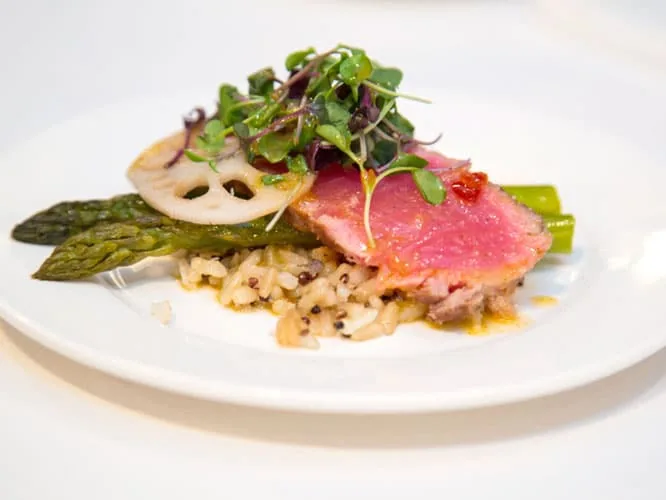
We operate at the Omni La Costa Resort in Carlsbad, California, where moderate temperatures and low humidity support daily beach workouts, coastal hikes at Torrey Pines and Double Peak, and water activities on the Pacific. These training modalities are not available to most competitors regardless of their program design. A residential immersive program also removes competing priorities. Meals are prepared by wellness chefs using fresh, farm-to-fork ingredients. Workouts are scheduled. Education is built into every day. The environment itself becomes the intervention, and the UCSD findings on muscle preservation reflect what becomes possible when nutrition, movement, behavioral health, sleep, and accountability operate together instead of in isolation.
Book a free consultation to speak with our team about how the program's structure compares to what you have tried before and what a personalized stay might look like for your goals.
Results vary by individual, yet our clients with 40–70 pounds to lose typically average 3–4 pounds of fat loss per week. One week provides a meaningful kickstart with improved energy, better sleep, and early body-composition changes. Two weeks build real momentum. Three weeks often mark the point where new habits begin to consolidate. Four or more weeks formed the basis of the UCSD case study data, which showed that 94 percent of weight lost was pure fat while lean muscle was preserved or increased. Many clients book one week and extend their stay on-site after experiencing the program firsthand. The average stay is about 11 days.
We begin every stay with a comprehensive health assessment that includes blood work, vital signs, body composition, BMI, measurements, and a fitness test. This baseline informs a personalized plan and allows trainers to adapt every session for individual health conditions, physical limitations, and fitness levels. The 3–4:1 client-to-trainer ratio means no one has to navigate a class alone. Low-impact alternatives are available for every exercise. The program has successfully supported clients ranging from those with Type 1 diabetes and obesity-related complications to those recovering from orthopedic injuries. Women with specific medical concerns can discuss them during the free consultation before booking.
Weight often returns after other programs because clients were never taught how to sustain change. Our Think, Eat, Move curriculum is designed to send clients home educated and empowered, not dependent on the program to maintain results. Post-camp support includes virtual coaching, personalized meal plans, fitness programming, and ongoing access to staff. Clients can email their trainers at any time. The 50 percent of annual revenue that comes from returning alumni reflects both the quality of the experience and the fact that many clients choose to return for annual resets. They come back because the program has become a meaningful part of their long-term health practice, not because they failed to maintain results.
Caloric restriction alone does not address the cortisol-estrogen feedback loop, the behavioral triggers that drive emotional eating, the sleep disruption that undermines fat loss, or the muscle preservation that determines whether weight stays off. Repeated caloric restriction can reduce resting metabolic rate beyond what body-weight changes predict, which makes sustained weight management progressively harder. Our approach combines resistance training to preserve and build lean muscle, protein-forward nutrition to support muscle protein synthesis, behavioral health support to address emotional eating and stress, and sleep support. All of this happens simultaneously in an immersive environment that removes the competing priorities that derail progress at home.
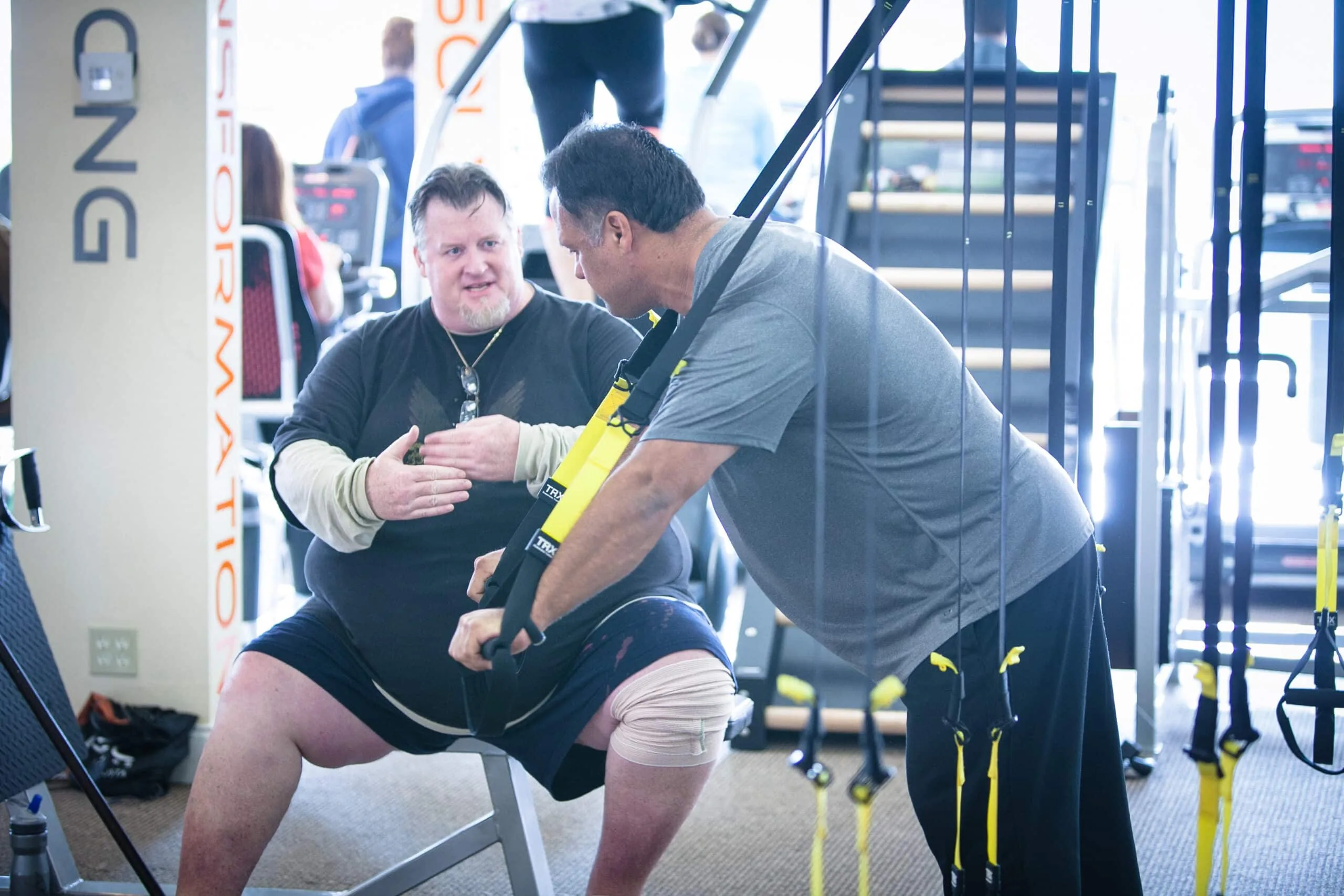
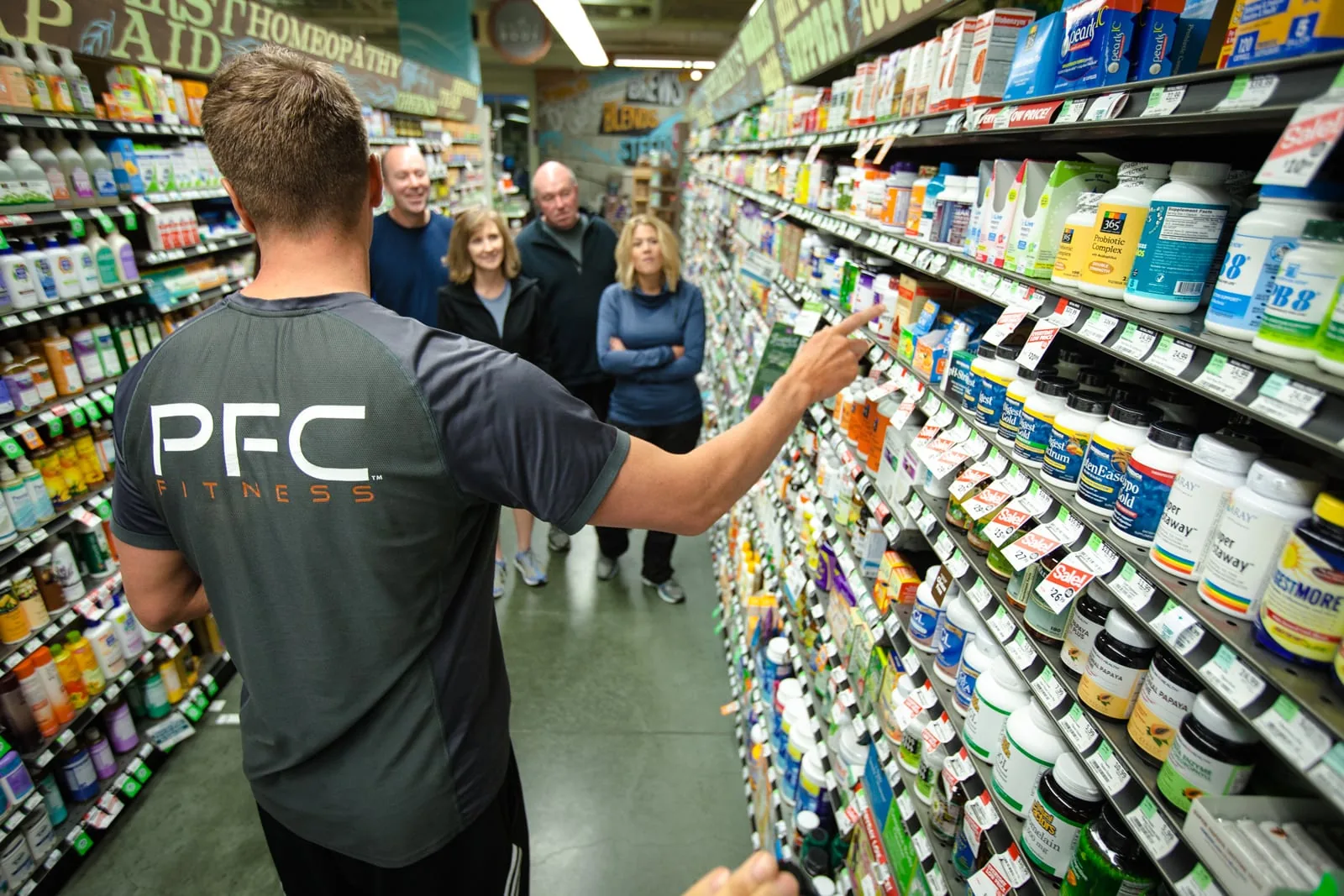
Mornings begin with 4–5 hours of structured training that rotates through bootcamp, boxing, TRX suspension, interval training, barre, Tabata, and outdoor activities such as beach workouts, hiking, kayaking, and stand-up paddleboarding. Afternoons include nutrition education sessions, cooking demonstrations led by wellness chefs, and behavioral health workshops facilitated by licensed psychologists. Evenings feature gourmet, calorie-controlled dinners prepared on-site with fresh ingredients. Three spa treatments per week support recovery and stress reduction. Weekly one-on-one report card reviews with a trainer track progress across all 17 data points. Specialty programs such as Golf Fit, Tennis Fit, Pickleball Fit, and Spa Fit are available for clients who want to integrate a specific activity into their afternoon schedule.
Menopause stress and weight gain do not reflect a character flaw or aging poorly. They arise from a measurable cortisol-estrogen feedback loop that standard diets, gym memberships, and short-term fixes rarely address. A Newson Health study of 5,744 women found that 68 percent reported body composition changes tied directly to the menopause transition, not lifestyle drift. Effective solutions must therefore match the biology involved.
The evidence points toward a consistent combination. Resistance training preserves lean muscle and metabolic rate. Protein-forward nutrition supports body recomposition. Stress-reduction practices lower cortisol. Sleep support restores hormonal balance. Behavioral guidance addresses the emotional patterns that undermine every other effort. Many women struggle to sustain this combination in daily life because they lack an environment where all of it happens at once, guided by experts, with accountability built in.
Our program provides that environment at the Omni La Costa Resort in Carlsbad, California, with more than 1,200 reviews and a 90 percent or higher five-star rating, the UCSD findings on muscle preservation, and 50 percent of annual revenue coming from clients who return year after year.
Book a free consultation with our team today. Call (888) 488-8936 or visit our consultation page to schedule your personalized, no-pressure conversation about your goals and what a stay at our program could look like for you.