 5-star Wellness Resort
 5-star Wellness Resort

Written by: Chris Butt, Certified Personal Trainer & Weight Loss Coach, Premier Fitness Camp
Find your ideal program length — book a free consultation
Longevity program duration maps to purpose. Each format serves a different role, from quick diagnostics to year-long memberships.
Executive physicals and biomarker panels compress a year of screening into a single visit with a same-day physician debrief. These visits focus on information gathering rather than behavior change. Human Longevity Inc. publicly describes a one-day Executive Health Assessment priced at $8,000 that includes whole-genome sequencing, full-body MRI, cardiac testing, 120+ blood biomarkers, DEXA, and physician review.
These are immersive wellness stays focused on reset and education, typically all-inclusive and residential. SHA Wellness Clinic’s Advanced Longevity program runs 7 to 14 nights, priced at €7,500 for 7 nights and €12,000 for 14 nights for the program alone, with accommodation billed separately.
These structured, multi-week programs combine medical oversight or expert coaching with daily fitness, nutrition education, and behavioral support. This is the category where residential, behavior-change-focused programs operate, and they are designed to produce lasting metabolic transformation rather than a temporary reset.
These memberships provide ongoing concierge longevity medicine with quarterly testing and continuous physician access. Full-stack executive physical programs in the US typically cost $8,000–$25,000 per year, while concierge internal-medicine longevity memberships run $3,000–$10,000 annually. The table below summarizes how each format maps to a typical length, setting, and goal so you can locate your own goal at a glance.
| Program Type | Typical Length | Format | Typical Goal |
|---|---|---|---|
| Diagnostic | 1–2 days | Outpatient, testing-focused | Baseline biomarkers and physician review |
| Retreat | 7–14 nights | Residential, education-focused | Reset and foundational habit learning |
| Clinical/Immersive | 4–12 weeks | Residential or hybrid, behavior-change-focused | Metabolic transformation and lasting habits |
| Membership | 12 months+ | Outpatient, concierge | Ongoing monitoring and optimization |
The most practical way to choose a longevity program duration is to work backward from the outcome you want. Each goal aligns with a different time frame.
This format works best for people who want baseline biomarkers and a physician’s review before committing to a longer program. The realistic result is a comprehensive health snapshot and a personalized plan. A responsible residential longevity reset should produce a usable plan rather than a promise of age reversal, and a diagnostic visit creates the starting point for that plan.
This window suits people who need to break a sedentary cycle and learn foundational nutrition and exercise habits. For a client with 40–70 pounds to lose, realistic results include initial fat loss of 3–4 pounds per week, improved energy, and the beginning of habit formation. A 7–14 night retreat can deliver this reset, yet the habits formed in this window still require deliberate effort every day.
This range fits people with significant weight to lose, metabolic concerns, or those transitioning off GLP-1 medications. Realistic results include meaningful fat loss with lean muscle preserved, improved metabolic markers, and the start of durable habit change. A systematic review and meta-analysis by Ben Singh and colleagues, published in Healthcare in December 2024, found that across studies directly reporting habit formation time, medians spanned 59 to 66 days, with individual ranges from 4 to 335 days. The 4–12 week window is where new health behaviors begin to feel less effortful and more automatic.
This duration works best for people who want continuous monitoring and concierge-level medical guidance after an initial transformation. Realistic results include longitudinal biomarker tracking, quarterly retesting, and protocol adjustments over time. A 2026 overview of systematic reviews published in Frontiers in Nutrition found that more favorable and sustained outcomes were most often reported in combined diet-and-physical-activity programs lasting at least 6–12 months that featured frequent structured contact and supervised, resistance-inclusive exercise.
Shorter programs carry lower time and financial commitment but may not build lasting habits. Longer programs require more of both and deliver deeper, more durable change. A meta-analysis by Baillot, Romain, and colleagues of 56 studies involving 4,178 adults with class II–III obesity found that multicomponent lifestyle programs produced mean weight loss of 8.9 kg, with larger weight loss in interventions lasting more than 12 months (−11.3 kg vs. −7.2 kg short term). For people with 40–70 pounds to lose or significant metabolic goals, the evidence consistently favors longer, more structured engagement over a series of short resets.
Book a free consultation to find your ideal longevity program duration.
The immersive multi-week residential format is the category most longevity guides skip. Premier Fitness Camp is the leading example of this format, and the week-by-week progression below reflects what clients actually experience there. For more on how to structure your stay, see How Long Should You Stay At A Weight Loss Retreat?
Every client begins with a comprehensive health assessment that includes blood work, body composition, fitness testing, and vital signs. This assessment establishes the baseline for 17 data points tracked weekly via a personalized Report Card. For a client with 40–70 pounds to lose, initial fat loss of 3–4 pounds per week is typical in this first week. The average client stays 11 days, close to two weeks, which reflects how quickly momentum builds once the structured environment takes hold.

Many first-time clients who booked a single week choose to extend their stay on-site after experiencing the program firsthand. The book-one-week-extend-on-site model offers a practical example of flexible longevity program length in action. As client Scott noted in a Google review: “I signed up for two weeks and stayed for eight. The facilities and staff are top notch.” The second week is where initial habits begin to compound and energy levels stabilize.
Lally and colleagues’ 2010 study in the European Journal of Social Psychology found that automaticity rises along a gradual asymptotic curve, reaching its plateau after a median of about 66 days, with an individual range of roughly 18 to 254 days. The three-week mark is where new behaviors begin to feel meaningfully less effortful. Habits still need attention, yet they no longer demand the same level of conscious decision-making as day one.
A case study conducted in partnership with the University of California, San Diego (UCSD) evaluated participants who stayed four or more weeks and received DEXA scans at the start and end of their program. The finding: 94% of total weight loss was purely fat. Most aggressive weight-loss programs see a 50/50 split between fat and lean muscle loss, and standard dieting typically produces only a 60/40 fat-to-muscle ratio. The 94% fat-loss rate reflects the program’s emphasis on resistance-inclusive training combined with nutritionist-designed meals, the combination that the 2026 Frontiers in Nutrition overview identified as the most effective for preserving lean mass while driving fat loss.
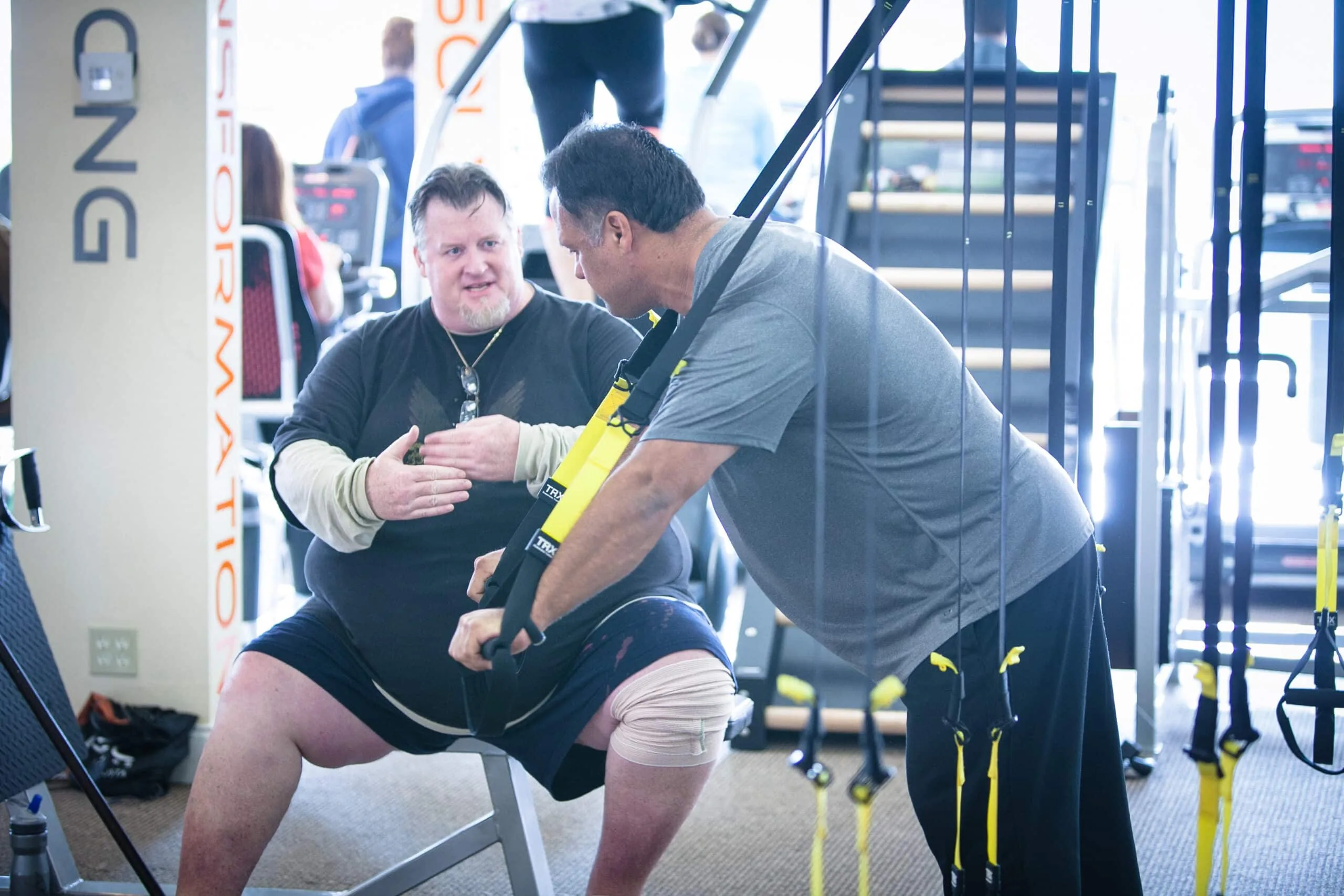
Premier Fitness Camp continues the same weekly tracking of 17 data points, including body composition, key blood markers, fitness tests, and body measurements. This cadence gives clients clear evidence of progress and replaces guesswork about when results will appear.
Book a free consultation to learn how weekly tracking works.
Cost scales with length and intensity across every format. Diagnostic-led longevity programs typically charge $500–$3,000 per testing cycle. Week-long residential programs at leading facilities range from approximately $5,000 to $12,000 per week. Annual concierge longevity memberships in the US range from $8,000 to $150,000 per year, depending on diagnostic depth and physician access.
PFC runs approximately $6,000 per week, with 0% financing available for up to six months and multi-week discounts available for longer stays. Because the program may qualify as a tax-deductible medical expense, it is worth consulting a tax professional for your specific situation. Even so, the most useful way to evaluate cost is to frame the investment against the cumulative expense of failed diets, unused gym memberships, and the long-term medical costs associated with unaddressed metabolic conditions. For a full breakdown of enrollment options, see How To Sign Up For A Longevity Program: Cost & Enrollment.
When comparing a longevity retreat vs. a longevity clinic, most guides present only two options: a 14-night retreat or a 12-month membership. The immersive multi-week residential camp sits between these two formats and rarely appears in the longevity program conversation.
This format typically runs from one week to several months and is fully live-in, with daily fitness training of 4–5 hours, nutrition education, behavioral health support, and luxury accommodations in one location. It differs from a longevity clinic, which is outpatient and testing-focused, and from a wellness resort, which is relaxation-focused and less structured around measurable outcomes.
Premier Fitness Camp is the leading example of this category. Located at the Omni La Costa Resort & Spa in Carlsbad, California, it offers stays starting at one week and extending up to six months. The 450-acre resort provides dedicated facilities, farm-to-fork meals prepared by wellness chefs, and outdoor training options such as beach boot camps, hikes at Torrey Pines and Double Peak, and stand-up paddleboarding that no urban competitor can replicate. With over 1,200 reviews, a 90%+ five-star rating, and 50% of annual revenue coming from returning alumni, the results speak clearly. For a deeper look at how residential programs compare to other formats, see Residential Programs For Sustainable Weight Management.
Book a free consultation to explore the immersive longevity program.
Many programs allow flexible length adjustments, and PFC is built around this model. Clients can book one week and extend on-site after experiencing the program, without advance commitment to a longer stay. Before booking any program, ask about extension policies and prorated costs, because the answers determine how much flexibility you will have if your goals change mid-stream. Then consider whether your goal truly requires the full duration you initially planned, or whether a shorter stay with a structured at-home follow-up plan would serve you better.
For clients who do extend, PFC’s post-camp support, including virtual coaching, personalized meal plans, fitness programming, and ongoing communication with PFC staff, helps the habits built on-site continue to develop after departure. For more on duration decisions specific to fitness programs, see How Long Do Fitness Boot Camps Last? Sessions & Programs.
Stanford University’s Lifestyle Medicine programme defines the seven pillars of longevity as physical activity and fitness, healthy nutrition, restorative sleep, stress management, social engagement, purpose and meaning, and cognitive engagement, and each pillar corresponds to a specific biological aging pathway. Longer programs exist because addressing all seven pillars at once takes time. A one-day diagnostic can assess biomarkers. A two-week retreat can introduce nutrition and movement habits. Shifting sleep quality, stress regulation, social connection, and cognitive engagement requires sustained, structured attention.

Premier Fitness Camp’s “Think, Eat, Move” philosophy is rooted in three pillars of health, behavioral science (Think), nutrition (Eat), and fitness (Move), and the program maps those pillars onto the seven longevity domains. Licensed psychologists and behavioral health coaches address stress and purpose, while registered dietitians and wellness chefs handle nutrition. Daily training covers movement and fitness, the community of fellow clients and long-tenured staff provides social connection, and the structured educational curriculum builds cognitive engagement. For a science-backed look at how these pillars interact, see A Science-Based Longevity Program: What The Evidence Shows.

Book a free consultation to see how all 7 pillars are addressed.
Programs range from 1–2 day diagnostics to 12-month-plus memberships. The most common formats are 7–14 night retreats and 4–12 week clinical or immersive protocols. The right length depends on the goal, whether information gathering, habit reset, metabolic transformation, or ongoing optimization. At PFC, the average client stays 11 days, with many extending on-site after experiencing the program.
A 1–2 day diagnostic can provide a valuable baseline that includes comprehensive biomarkers, physician review, and a personalized plan. Behavior change, however, requires more time. Research on habit formation shows that automaticity plateaus at a median of 59–66 days, with individual ranges from 4 to 335 days. A 1–2 week stay can initiate meaningful change, yet the habits formed in that window still need continued practice and structure to stick.
For the same 40–70 pound range described earlier, initial fat loss typically begins in week one of an immersive program. Measurable improvements in blood pressure, cholesterol, glucose, and related metabolic markers can appear within the first two weeks of an immersive program, though results vary and should not be presented as a predictable weekly progression. Habit change becomes meaningfully more established around the three-week mark, according to PFC’s program guidance. True metabolic transformation typically requires structured programming sustained for at least 12 weeks, and clinically meaningful improvements such as greater than 5% weight loss often require a year or more of frequent interventions.
Costs scale with length and intensity. One- to two-day diagnostics may cost a few hundred to several thousand dollars depending on the depth of testing and whether physician review is included. Seven- to fourteen-night retreats range widely by location and format. Four- to twelve-week immersive programs are a significant investment, and PFC runs approximately $6,000 per week, with 0% financing for up to six months and multi-week discounts available. Twelve-month concierge memberships are typically the most expensive format, ranging from $8,000 to $150,000 annually in the US depending on diagnostic depth and physician access.
Many programs allow flexible length adjustments. Clients can book one week and extend on-site after experiencing the program, without advance commitment to a longer stay. Before booking any program, ask about extension policies and prorated costs. Premier Fitness Camp offers stays from one week up to six months, and the on-site extension model means clients can make that decision based on their own experience and progress rather than a pre-trip estimate.
The right length depends on the goal. A diagnostic check may only need 1–2 days. A habit reset may need 1–2 weeks. Metabolic transformation, particularly for clients with significant weight to lose or those transitioning off GLP-1 medications, typically requires 4–12 weeks. Ongoing optimization is a 12-month commitment. The key is choosing the length that matches the depth of change you need rather than simply picking the longest or shortest option.
Longevity clinics are outpatient and testing-focused. They measure, interpret, and recommend, and the behavior change happens on your own time in your own environment. Immersive residential camps are live-in and behavior-change-focused. Daily fitness training, nutrition education, behavioral health support, and structured accountability are all built into the program. For people who have tried diets and gym memberships without lasting results, the immersive format removes the friction that causes most programs to fail. Competing priorities disappear, meals are planned for you, and workouts are built into the daily schedule.
The seven pillars of longevity, as defined by Stanford University’s Lifestyle Medicine programme, are physical activity and fitness, healthy nutrition, restorative sleep, stress management, social engagement, purpose and meaning, and cognitive engagement. Different sources count anywhere from three to nine pillars depending on how they group behaviors, but these seven represent the domains with the strongest evidence base for extending healthy lifespan.
Longevity program length should be chosen backward from your goal. A diagnostic check takes one to two days. A habit reset takes one to two weeks. Metabolic transformation takes four to twelve weeks. Ongoing optimization is a twelve-month commitment. For lasting, immersive transformation that addresses all seven pillars simultaneously in a structured, accountable environment, the multi-week residential camp category fills the gap between short retreats and long memberships.
Premier Fitness Camp bridges the gap between short retreats and long memberships. Stays start at one week and extend up to six months, 17 data points are tracked weekly via a personalized Report Card, and the 94% fat-loss result mentioned earlier highlights the program’s focus on preserving lean mass. For more on building a sustainable longevity approach, see The Complete Guide To Building A Longevity Program and Metabolic Health & Longevity: The 5 Pillars To Know.
Ready to find the right program length for your goal? Call (888) 488-8936 or book a free consultation below. The consultation is free, personalized, and low-pressure. It is a conversation about your goals, not a sales call.
Book a free consultation today.