 5-star Wellness Resort
 5-star Wellness Resort

Written by: Chris Butt, Certified Personal Trainer & Weight Loss Coach, Premier Fitness Camp
These five principles separate programs that create durable change from those that deliver only short-term results.
The current landscape includes four primary program categories, and each comes with clear strengths and limits.
Digital apps and standalone platforms (Noom, WW, and similar tools) offer accessibility and low cost. A meta-analysis of randomized controlled trials found that standalone digital lifestyle interventions produced additional weight loss versus controls, though the certainty of evidence was rated moderate and no data on two-year maintenance were available. The NoHoW trial found that digital behavior-change toolkits did not produce significantly different weight outcomes compared with an active control.
Outpatient behavioral programs add human support and clinical oversight. A randomized trial of 532 participants found that CBT-based counseling combined with a digital health behavior change support system achieved an average weight change of 4.1% at 12 months and 3.4% at 24 months. These programs improve on apps but remain limited by the hours-per-week constraint of outpatient scheduling.
Wellness resorts and spas provide a premium environment and some fitness programming. Most lack the structured, results-driven curriculum and clinical rigor needed for meaningful body-composition change.
Immersive residential programs remove participants from the environments and routines that reinforce existing habits. They replace those patterns with structured daily programming, expert-led education, and community accountability. Implementation intentions embedded in consistent daily routines can produce higher adherence rates than simple goal intentions, which gives immersive programs a structural advantage.

Three factors most reliably predict whether a program will produce lasting change for adults in the 40–60 age range.
Intensity and duration. The average gym member trains three to four hours per week. Our clients train four to five hours per day, five days per week. That volume difference determines whether the program crosses the threshold required for habit formation and meaningful body-composition change.

Personalization versus group standardization. Volume alone does not work if the plan ignores individual physiology. Programs that personalize energy targets and exercise prescriptions based on body composition can support sustained quality-of-life improvements. A one-size-fits-all curriculum cannot match this level of alignment.
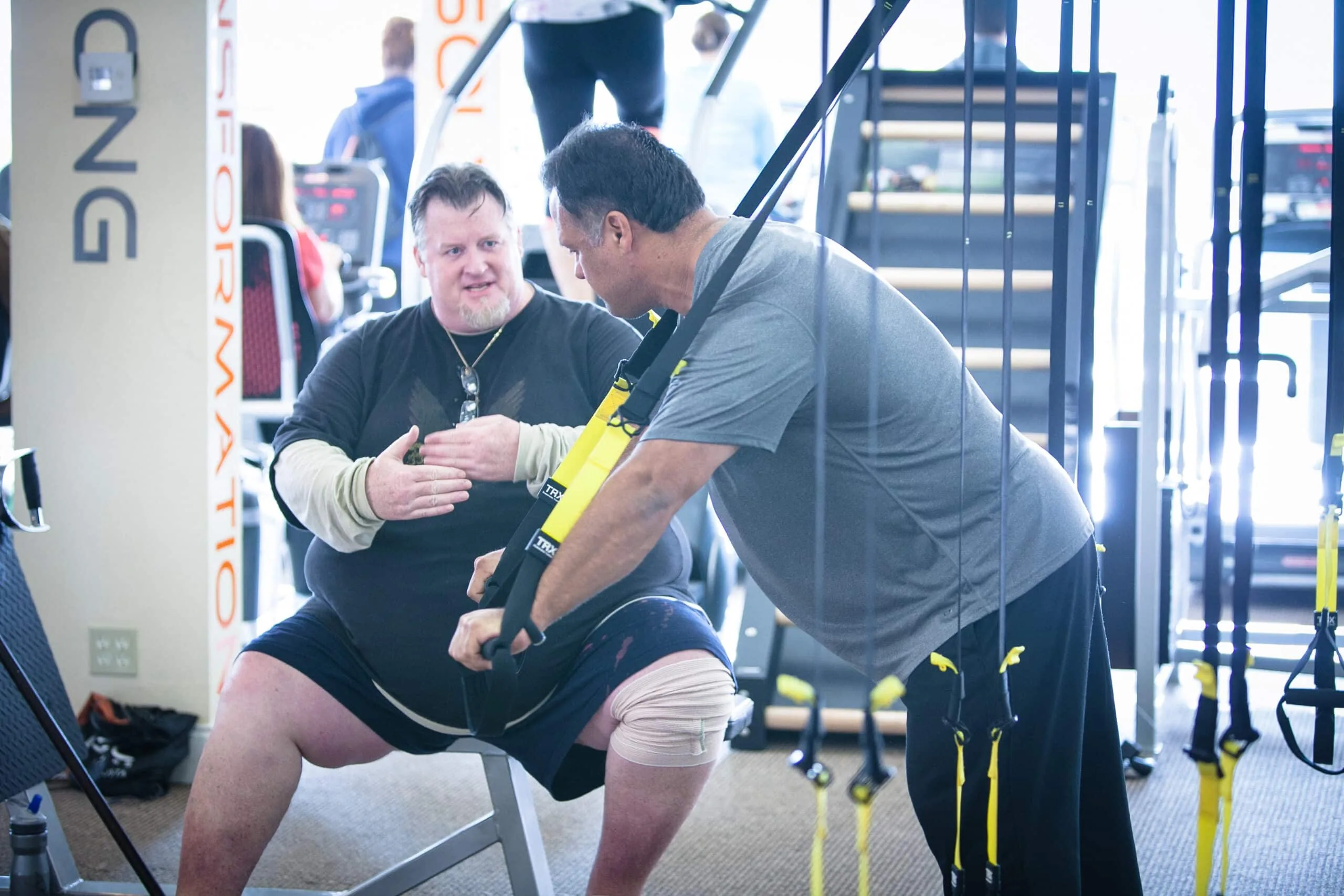
Time investment and environment. Stepping away from a high-stress, high-distraction environment functions as a clinical variable, not a luxury. Structured wellness programs build in consistent routines and checkpoints so progress can be celebrated and course corrections can occur before small slips become full dropouts. Immersive settings make this structure easier to maintain.
The table below evaluates four program categories across dimensions that predict long-term outcomes. Our specific figures come from internal program data and a case study conducted in partnership with the University of California, San Diego (UCSD).
| Dimension | Digital Apps | Outpatient Programs | Our Program |
|---|---|---|---|
| Staff credentials | Algorithm-driven, human coaches vary widely | Licensed clinicians, trainer quality varies by provider | All trainers hold minimum bachelor's degrees, licensed psychologists and registered dietitians on staff, low staff turnover |
| Body-composition tracking | Self-reported weight, some integrate wearables | Periodic clinical assessments, frequency varies | 17 data points tracked weekly via personalized report card, optional DEXA scan (gold standard for body composition) |
| Nutrition education | Meal logging and general guidance | Dietitian consultations, frequency varies | Registered dietitians design all meals, wellness chefs prepare food on-site, cooking demonstrations and nutrition workshops included |
| Long-term outcomes | The NoHoW trial showed no significant intervention effects on weight outcomes | 3.4% average weight reduction maintained at 24 months with CBT plus digital support | UCSD case study: 94% of total weight loss was purely fat (vs. 60/40 fat-to-muscle ratio typical of standard dieting), lean muscle preserved or increased, substantial annual revenue from returning alumni |
The comparison highlights three practical differences. Immersive residential programs provide deeper expertise and higher training volume, which protects lean muscle during weight loss. They also track body composition and health markers far more frequently, so clients can adjust quickly instead of guessing. Over time, these structural advantages translate into higher fat loss, better muscle preservation, and stronger alumni engagement.
Talk with our team about program length and fit or call (888) 488-8936 to discuss your goals.
For clients considering or transitioning off GLP-1 medications, the muscle-preservation advantage documented in the UCSD case study becomes especially important. Our team has built specific protocols to address the metabolic vulnerabilities that drive post-medication weight regain.
GLP-1 medications such as semaglutide and tirzepatide produce meaningful short-term weight loss, but the physiological consequences of discontinuation are well documented. The SURMOUNT-4 trial showed that patients who discontinued tirzepatide after 36 weeks regained roughly two-thirds of lost weight within a year. Weight loss on GLP-1 medications often includes loss of lean muscle tissue, which primarily burns calories, slowing metabolic rate and setting the stage for weight regain once the medication is stopped.
The clinical countermeasures are specific. Adequate protein intake combined with resistance training can help support maintained weight loss and muscle preservation after stopping GLP-1 medications. Our program is structured to deliver exactly this protocol.

The UCSD case study confirmed this muscle-preservation advantage, showing that most long-term clients preserved or increased lean muscle mass during weight loss. For individuals transitioning off GLP-1 medications, this combination of resistance training, protein-optimized nutrition, and behavioral coaching offers an evidence-aligned path to sustained results.
Schedule a consultation to plan your GLP-1 transition and learn how our muscle-preservation protocol can protect your progress.
Three patterns account for most long-term failures in weight management programs.
Prioritizing speed over sustainability. Aggressive calorie restriction produces measurable metabolic damage within years, not decades. Programs that promise rapid results through severe restriction often accelerate the very conditions that cause weight regain.
Neglecting aftercare. The transition from a structured program back to daily life is the highest-risk period for relapse. We provide virtual coaching, personalized meal plans, fitness programming, and ongoing staff communication after departure. Clients can email their trainers at any time, which creates continuity that most programs do not offer.
Staff turnover and inconsistency. The quality of the therapeutic alliance between participant and coach is among the strongest predictors of long-term behavior change. Our low staff turnover, with many trainers present since the program’s founding, means returning alumni reconnect with the same people year after year. That continuity functions as a clinical asset, not merely a hospitality feature.
Digital apps provide guidance and tracking tools, yet they operate within the same environment and routine that produced the original problem. An immersive residential program removes participants from those conditions and replaces them with structured daily programming, expert-led education, and a community of peers. Our clients train at the intensive volume described earlier, often completing more work in a morning than most people complete in a week. That training load, combined with behavioral health support from licensed psychologists and nutrition education from registered dietitians, produces multi-system change that apps cannot match. We also track 17 health data points weekly, including body fat, blood pressure, cholesterol, glucose, and fitness metrics, so participants see progress far beyond scale weight.
The average client with 40–70 pounds to lose typically sees several pounds of fat loss per week during the immersive phase. Earlier UCSD data showed that this loss comes primarily from fat rather than muscle, which protects long-term metabolic health. Most clients notice measurable improvements in energy, blood pressure, and fitness metrics within the first week. Habit formation research places the median threshold for automaticity at 66 days, so stays of three weeks or longer tend to create more durable behavioral change. Many clients book one week and extend their stay on-site after experiencing the program firsthand.
Our program is priced at approximately $6,000 per week and is fully all-inclusive: luxury accommodations at the Omni La Costa Resort, all meals prepared by on-site wellness chefs, all fitness classes and educational workshops, health assessments, weekly report card tracking, three spa treatments per week, and post-camp support. Zero-percent financing for up to six months with no down payment is available, and the program may qualify as a tax-deductible medical expense. The meaningful comparison is not the weekly rate alone, but the cumulative cost of years of failed diets, unused gym memberships, and medical expenses linked to unmanaged metabolic health. We deliver a structured, evidence-aligned program with over 1,200 reviews and a 90%+ five-star rating.
Yes. We work with clients who are currently on GLP-1 medication or transitioning off it. The program adjusts the protocol to emphasize resistance training, prioritize protein intake, and build sustainable habits that shape outcomes after medication is reduced or stopped. For GLP-1 graduates specifically, our muscle-preservation focus, validated by the UCSD case study showing lean muscle preserved or increased during weight loss, directly addresses the metabolic vulnerability that drives most post-medication weight regain.
We provide structured post-camp support that includes virtual coaching, personalized meal plans for home, individualized fitness programming, and ongoing communication with our staff. Clients can email their trainers at any time after departure. Multi-visit tracking captures long-term health trends across years of engagement for returning alumni. This aftercare structure reflects clinical evidence that ongoing contact helps prevent regain, and it contributes to the substantial portion of our annual revenue that comes from returning alumni.
Sustainable lifestyle change rarely comes from a single intervention. It requires behavioral coaching that addresses the psychological roots of eating patterns, nutrition education that builds lasting competency rather than short-term compliance, physical training that preserves and builds lean muscle, and aftercare that maintains accountability through the high-risk transition back to daily life. Evidence consistently shows that immersive, multidisciplinary, residential programs are best positioned to deliver all four components at once.
We have supported more than 3,000 clients through this process, with UCSD-validated outcomes, a 3–4:1 trainer-to-client ratio, 17 weekly data points tracked per client, and high alumni retention that reflects genuine, lasting satisfaction. As alumni Irene Tchaikovsky wrote, “What began as a simple one-week reboot has transformed into a complete lifestyle shift.” Our program equips you with the knowledge, tools, and support to make meaningful and sustainable changes.
Ready to start your transformation? Arrange a one-on-one consultation with our team to discuss your goals, your history, and the program length that fits your life. Call (888) 488-8936 or schedule your personalized consultation online at our consultation booking page.