 5-star Wellness Resort
 5-star Wellness Resort
Written by: Chris Butt, Certified Personal Trainer & Weight Loss Coach, Premier Fitness Camp | Last updated: June 24, 2026
Premier Fitness Camp costs approximately $6,000 per week. That figure is all-inclusive: luxury accommodations at the Omni La Costa Resort & Spa in Carlsbad, California, all meals (breakfast, lunch, dinner, snacks, and nutrition shakes prepared by on-site wellness chefs), all fitness classes and training sessions, educational workshops covering nutrition and behavioral health, comprehensive health assessments, weekly report card tracking across 17 data points, three spa treatments per week, and post-camp support including virtual coaching and personalized meal plans.
For context, the average American spends between $1,500 and $3,000 per year on gym memberships and personal training that deliver, at most, three to four hours of exercise per week. PFC delivers four to five hours of expert-led training per day, five and a half days per week, alongside nutrition education and behavioral health counseling that most standalone programs do not offer at any price.
PFC offers 0% financing for up to six months with no down payment, and multi-week discounts are available for longer stays. The program may also qualify as a tax-deductible medical expense, and participants should consult a tax professional for guidance specific to their situation.
Beyond the financial mechanisms that make the program accessible, the most direct evidence of value comes from client behavior after they have experienced the program. Fifty percent of PFC’s annual revenue comes from returning alumni. Clients who have already paid, experienced the program, and had time to evaluate their results at home choose to return, which provides a signal that marketing claims alone cannot match.
Connect with a PFC advisor to discuss stay length, financing options, and which program fits your goals. Call (888) 488-8936 to speak with a PFC advisor today.
A standard weekday at Premier Fitness Camp includes four to five hours of structured physical training, Monday through Friday, with a half day on Saturday. The schedule is intensive without being punishing, and every session is structured so participants at every fitness level, from a 400-pound beginner who can walk only 250 feet to a seasoned athlete who trains four times per week, can participate and progress.
A representative weekday follows a structured rhythm designed to balance physical training with education and recovery. Morning fitness sessions begin after breakfast and run through mid-morning, incorporating activities such as bootcamp, boxing, barre, TRX suspension training, Tabata, Zumba, interval training, and resistance work. These indoor sessions are complemented by outdoor activities integrated throughout the week, including beach workouts on the Pacific coast, hikes through Torrey Pines or Batiquitos Lagoon, stand-up paddleboarding, and kayaking that take advantage of Carlsbad’s coastal location.
Between physical training blocks, nutrition education workshops, cooking demonstrations led by wellness chefs, and behavioral health sessions with licensed psychologists address the “Think” and “Eat” components of PFC’s philosophy. Dinner is served at 5:00 PM, and evenings are unstructured to allow for rest and personal time.
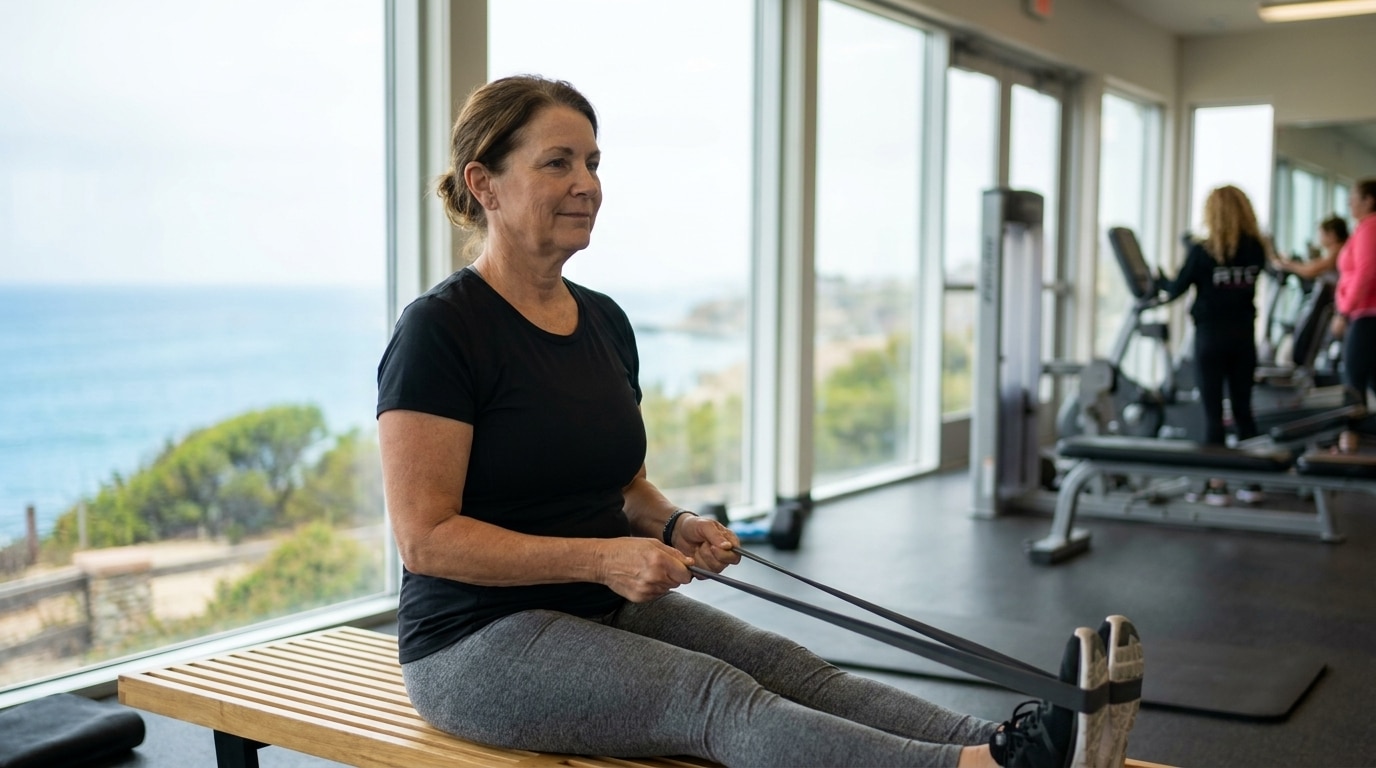
All fitness sessions maintain a 3–4:1 client-to-trainer ratio. Every trainer holds a minimum bachelor’s degree, and several hold master’s degrees. Low-impact modifications are available for every exercise, and participants with physical limitations, such as bad knees, back injuries, or cardiovascular conditions, receive individualized adaptations.
The following metrics summarize PFC’s core performance indicators and help contextualize the program’s intensity and outcomes:
| Metric | Premier Fitness Camp |
|---|---|
| Average fat loss per week | 3–4 lbs (for clients with 40–70 lbs to lose) |
| Daily training hours (Mon–Fri) | 4–5 hours |
| Client-to-trainer ratio | 3–4:1 |
| Weekly health data points tracked | 17 |
| % of weight loss from fat (UCSD case study) | 94% |
Reset Seekers (40–60): Executives and parents who have tried multiple diets without lasting results represent PFC’s primary participant profile. They arrive motivated but skeptical. The structured environment, personalized health assessments, and behavioral health support address the root causes, such as emotional eating, poor nutritional habits, and sedentary patterns, that previous programs ignored. Irene Tchaikovsky, a PFC participant, described the experience: “What began as a simple one-week reboot has transformed into a complete lifestyle shift. PFC equips you with the knowledge, tools, and support to make meaningful — and sustainable — changes.”
GLP-1 Graduates: Participants who have used medications like Ozempic or Wegovy and experienced muscle loss or metabolic slowdown find PFC’s resistance training emphasis and protein-focused nutrition protocols directly address their specific needs. PFC does not discourage GLP-1 use. It provides the educational and physical foundation that helps those medications remain effective long-term.
Repeat Alumni: Lin Vela, a three-time PFC participant, noted: “Their trainers are knowledgeable, inspiring and make hard work fun. The food is amazing!” Alumni return for annual resets, life transitions, or simply because the community and environment are meaningful to them. The 50% repeat revenue figure reflects this pattern.
Concerned Beginners: Julie Robinson, who attended for a one-week reset, observed: “The trainers, the staff, the Chefs! All amazing and work with all levels.” Participants who arrive with significant physical limitations or no prior exercise history consistently report that the 3–4:1 trainer ratio and individualized modifications made the program accessible from day one.
At the opposite end of the fitness spectrum, participants who arrive already training regularly also find the program challenging and valuable. Active Optimizers: Jake Younger, who came in already active, reported: “PFC Fitness Camp exceeded all my expectations. I not only lost weight but gained confidence, strength, and a healthier lifestyle.” The volume of daily training, four to five hours, challenges even participants who already exercise regularly.
The participants who struggle most are those who arrive expecting a passive experience or who are unwilling to engage with the behavioral health and nutrition education components. The program requires active participation across all three pillars of the “Think, Eat, Move” philosophy.
Post-camp maintenance is the point at which most weight loss programs fail their participants. PFC addresses this directly through a structured post-camp support system that includes virtual coaching for ongoing accountability, personalized meal plans designed for home preparation, fitness guidance and exercise programming, and open communication with PFC trainers via email.
The UCSD case study finding that metabolic capability was preserved, because lean muscle was maintained or increased, is directly relevant here. Participants who leave PFC with their resting metabolic rate intact are physiologically better positioned to maintain their results than participants who leave other programs having lost significant muscle mass alongside fat.
Alex, a PFC participant who lost 97 pounds, described the long-term impact: “PFC has given me the tools I’ve needed to lose over 100 pounds and cope with emotions in a healthy way rather than binge eating. I keep coming back!” Paula L., who lost 30 pounds, added: “I am now off of my anti-depressants and have a whole new outlook on life physically, mentally and spiritually.”
The average PFC client stays 11 days. Many book one week and extend on-site after experiencing early results. Stays of three weeks or longer are where behavioral research suggests new habits become durable, and PFC’s extended stay options, up to several months, are designed to accommodate that timeline.
To see what post-camp life could look like for your situation, talk with a PFC advisor at (888) 488-8936.
To help you understand how Premier Fitness Camp compares to other established programs in the adult weight loss camp market, the following table presents five direct competitors across four objective metrics: location and setting, weekly cost, program focus, and facility structure. These five programs, Live In Fitness, Canyon Ranch, Unite Fitness Retreat, Pritikin, and Hilton Head Health, represent a range of approaches and price points in the immersive weight loss category. Qualitative differences in program philosophy, climate advantages, and operational models are discussed in detail after the table.
| Program | Setting / Location | Approx. Weekly Cost | Primary Program Focus | On-Site Facilities |
|---|---|---|---|---|
| Premier Fitness Camp | Omni La Costa Resort, Carlsbad, CA (450 acres, year-round moderate climate) | ~$6,000 | Fitness + nutrition education + behavioral health (“Think, Eat, Move”) | All facilities on-site; meals prepared by own wellness chefs |
| Live In Fitness | Residential home, Arizona (extreme heat half the year) | Lower price point | Exercise and calorie restriction | Off-site gym access; food delivered externally |
| Canyon Ranch | Multiple locations | Premium | Wellness retreat experience | On-site, resort-style |
| Unite Fitness Retreat | Downtown hotel, Salt Lake City, UT (cold half the year) | Mid-range | Fitness-focused | Off-site gym; urban environment |
| Pritikin | Florida (high humidity) | Premium | Longevity and cardiovascular health | On-site; slower pace, older demographic focus |
| Hilton Head Health | South Carolina (high humidity); central facility, off-site accommodations | Mid-range | Weight loss and wellness | Central facility; guests transported daily from external lodging |
Live In Fitness positions itself on affordability, but that lower price point comes with structural trade-offs. Participants stay in a residential home setting rather than a resort, receive externally delivered food instead of meals from on-site wellness chefs, and experience frequent trainer turnover that contrasts with PFC’s tenured staff. Moving up the price spectrum, Canyon Ranch and Civana Wellness Resort & Spa occupy the premium wellness retreat category, but their orientation toward relaxation and general wellbeing means neither delivers the structured, results-driven fitness and weight loss program that defines PFC’s approach.
Unite Fitness Retreat operates from a downtown Salt Lake City hotel, where participants drive to access gym facilities and face outdoor limitations from an urban, cold-weather environment. Pritikin and Hilton Head Health both serve older demographics with a slower pace and longevity focus. Hilton Head Health requires participants to be transported daily from off-site accommodations to the central facility, which adds logistical friction that PFC’s fully integrated resort model avoids.
PFC’s climate advantage is structural. Carlsbad, California offers year-round moderate temperatures and low humidity, which enables outdoor beach workouts, coastal hikes, and water activities 52 weeks per year. Competitors in Arizona, Utah, Florida, and South Carolina cannot consistently offer this range of outdoor training conditions.
Value depends on what the participant uses as a comparison point. Against a lifetime of failed diets, unused gym memberships, and the compounding medical costs of obesity-related conditions, a structured immersive program with documented outcomes presents a different value calculation than a simple weekly price comparison.
The UCSD case study finding mentioned earlier, that participants lost fat while retaining muscle, is a measurable outcome that distinguishes PFC from programs that produce rapid scale-weight loss through muscle and water depletion. Participants who lose fat while retaining muscle leave with a higher resting metabolic rate, which forms the physiological foundation of long-term weight maintenance.
Over 1,200 reviews with a 90%+ five-star rating, and 50% of annual revenue generated by returning alumni, provide market-level validation that participants find the program worth repeating. Scott, a PFC participant, summarized the experience: “PFC is a life-changing experience. I signed up for two weeks and stayed for eight. The facilities and staff are top notch.”
Lauren M. lost 140 pounds at PFC, a result featured on The Today Show. Crissy lost 109 pounds, a story covered by The Doctors. These are not outliers manufactured for marketing. They are documented outcomes from a program with over 3,000 clients served.
To explore whether Premier Fitness Camp is the right fit for your specific goals, health history, and timeline, start a conversation with the PFC team or call (888) 488-8936.
Luxury immersive adult fitness and weight loss camps vary widely in price depending on location, program design, and inclusions. Premier Fitness Camp costs approximately $6,000 per week, an all-inclusive rate detailed in the Cost Reality section above. Mid-range programs typically run $2,000–$4,000 per week but often exclude meals, accommodations, or educational components, which makes direct price comparisons misleading. PFC offers 0% financing for up to six months with no down payment, and multi-week stays include discounts. The program may qualify as a tax-deductible medical expense depending on individual circumstances.
For participants who have tried self-directed diets, gym memberships, and short-term programs without lasting results, an immersive camp that addresses nutrition, behavioral health, and physical training simultaneously offers a structurally different approach. Program quality remains the key variable. A camp that focuses only on exercise and calorie restriction without education or behavioral support tends to produce temporary results, because participants leave without the knowledge or habits needed to maintain their progress. PFC’s “Think, Eat, Move” philosophy is designed specifically to address this gap. The UCSD case study finding that 94% of weight loss at PFC was pure fat, compared to the 60/40 fat-to-muscle ratio typical of standard dieting, indicates that the program produces the kind of body composition change that supports long-term maintenance rather than rapid regain.
Sustainability depends on two factors: what the participant learned during the program and what support exists after they leave. PFC addresses both. During the program, registered dietitians teach nutrition principles, wellness chefs conduct cooking demonstrations, and licensed psychologists help participants identify and address the behavioral patterns, such as emotional eating, stress responses, and sedentary habits, that contributed to weight gain in the first place.
After leaving, PFC provides virtual coaching, personalized meal plans for home preparation, fitness programming, and ongoing access to trainers via email. The UCSD case study finding that metabolic capability was preserved, because lean muscle was maintained or increased, means participants leave with a resting metabolic rate that supports continued fat loss or maintenance rather than the metabolic slowdown that follows muscle-depleting programs.
PFC works with participants ranging from 400-pound beginners who can walk only 250 feet to seasoned athletes who train four times per week. Every fitness session is structured so that every participant, regardless of starting fitness level, can participate and progress. The 3–4:1 client-to-trainer ratio means trainers can provide individualized modifications, progressions, and low-impact alternatives within every class. Participants with physical limitations, including back injuries, knee problems, or cardiovascular conditions, receive adapted programming. The comprehensive health assessment conducted on day one establishes each participant’s baseline and informs their personalized plan. No prior fitness experience is required, and no participant is expected to keep up with a standard that does not account for their individual starting point.
Premier Fitness Camp is a premium, all-inclusive, immersive fitness and weight loss program for adults. It costs approximately $6,000 per week. It delivers four to five hours of expert-led training per day with the individualized attention described earlier, nutrition education from registered dietitians, behavioral health support from licensed psychologists, and luxury accommodations at the Omni La Costa Resort in Carlsbad, California. A UCSD case study found that 94% of weight loss at PFC was purely fat, with lean muscle preserved or increased. Over 1,200 reviews reflect a 90%+ five-star rating, and the repeat-client rate discussed earlier demonstrates sustained satisfaction beyond initial results.
PFC is not the right choice for someone looking for a passive retreat experience, a short-term scale-weight solution, or a program that does not require active engagement with nutrition and behavioral health education. It is the right choice for someone who has tried other approaches without lasting results, who is ready to invest in a structured, expert-led environment, and who wants to leave not just lighter but educated and equipped to maintain their transformation at home.
To find out whether PFC is the right fit for your goals, health history, and schedule, schedule a free consultation with the PFC team. The consultation is free, personalized, and low-pressure. Call (888) 488-8936 or visit the PFC consultation page to schedule your conversation today.