 5-star Wellness Resort
 5-star Wellness Resort
Written by: Chris Butt, Certified Personal Trainer & Weight Loss Coach, Premier Fitness Camp | Last updated: August 6, 2026
Nutrition knowledge alone does not produce lasting change. SNEB’s core competency framework identifies behavior-change theory, including models, mediators, and adult learning principles, as a foundational requirement for effective nutrition education. Without addressing the psychological triggers that drive eating behavior, even the best meal plan tends to collapse when stress or grief resurfaces at home. PFC turns this science into practice through its Think pillar.
Licensed psychologists and behavioral health coaches lead group workshops on emotional eating triggers, life-work balance, and limiting beliefs. One-on-one counseling is available for deeper issues including grief, trauma, and anxiety. Meditation and inner-connection sessions complete the mental health curriculum. The 2026 Noom randomized controlled trial reinforces why this matters: participants continued losing weight for a full year after the program ended, while those who received only dietary information did not.

Alumni consistently report that the mindset work is the most unexpected and transformative part of their stay. One client, Alex, shared, “I’ve been able to find the root of my binge eating disorder and progress towards recovery through healthy cooking. PFC has given me the tools I’ve needed to lose over 100 pounds and cope with emotions in a healthy way rather than binge eating.”
The Eat pillar turns nutrition education into everyday skills. PFC’s registered dietitians design every meal and lead structured workshops covering macronutrients, portion control, healthy grocery shopping, and label reading, which are competencies SNEB identifies as essential for food literacy and long-term dietary adherence.
On-site wellness chefs prepare all meals from fresh, farm-to-fork ingredients at the Omni La Costa Resort. Cooking demonstrations show clients how to recreate gourmet, calorie-controlled meals at home. A 2026 randomized controlled trial of a culinary medicine program found that this kind of instruction produced significantly greater cooking self-efficacy and greater weight loss at 12 months compared to the control group.
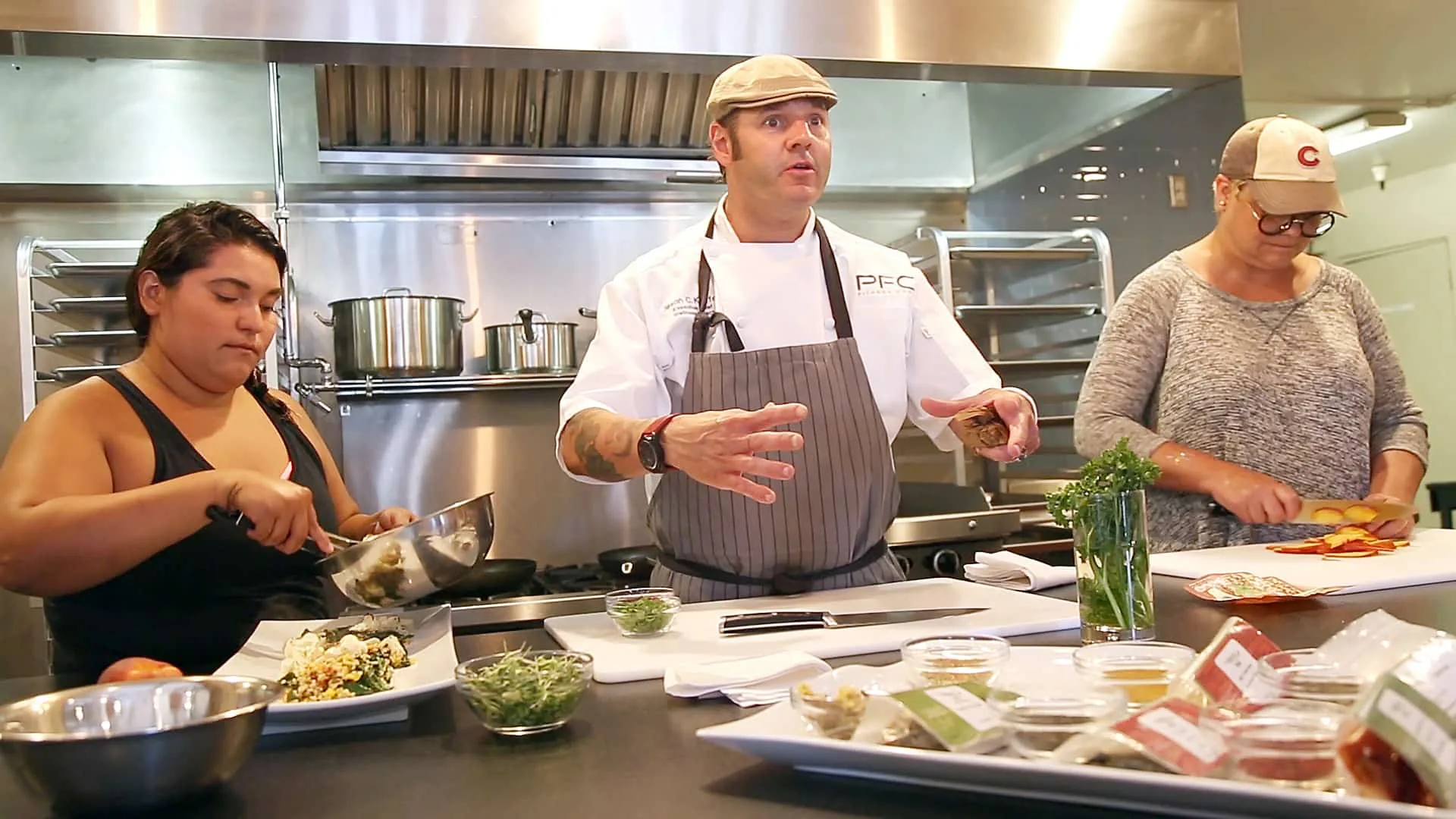
That self-efficacy starts with experiencing what good nutrition actually tastes like. Meals at PFC are gourmet and satisfying, including breakfast, lunch, dinner, snacks, and nutrition shakes, with no “diet food” framing. The goal is to show that nutritious eating can feel pleasurable, repeatable, and sustainable once clients return home.

Physical activity and nutrition work best when they are taught together. SNEB’s Physical Activity competency highlights how nutrition and movement interact to drive health outcomes. At PFC, the Move pillar brings this interaction to life.
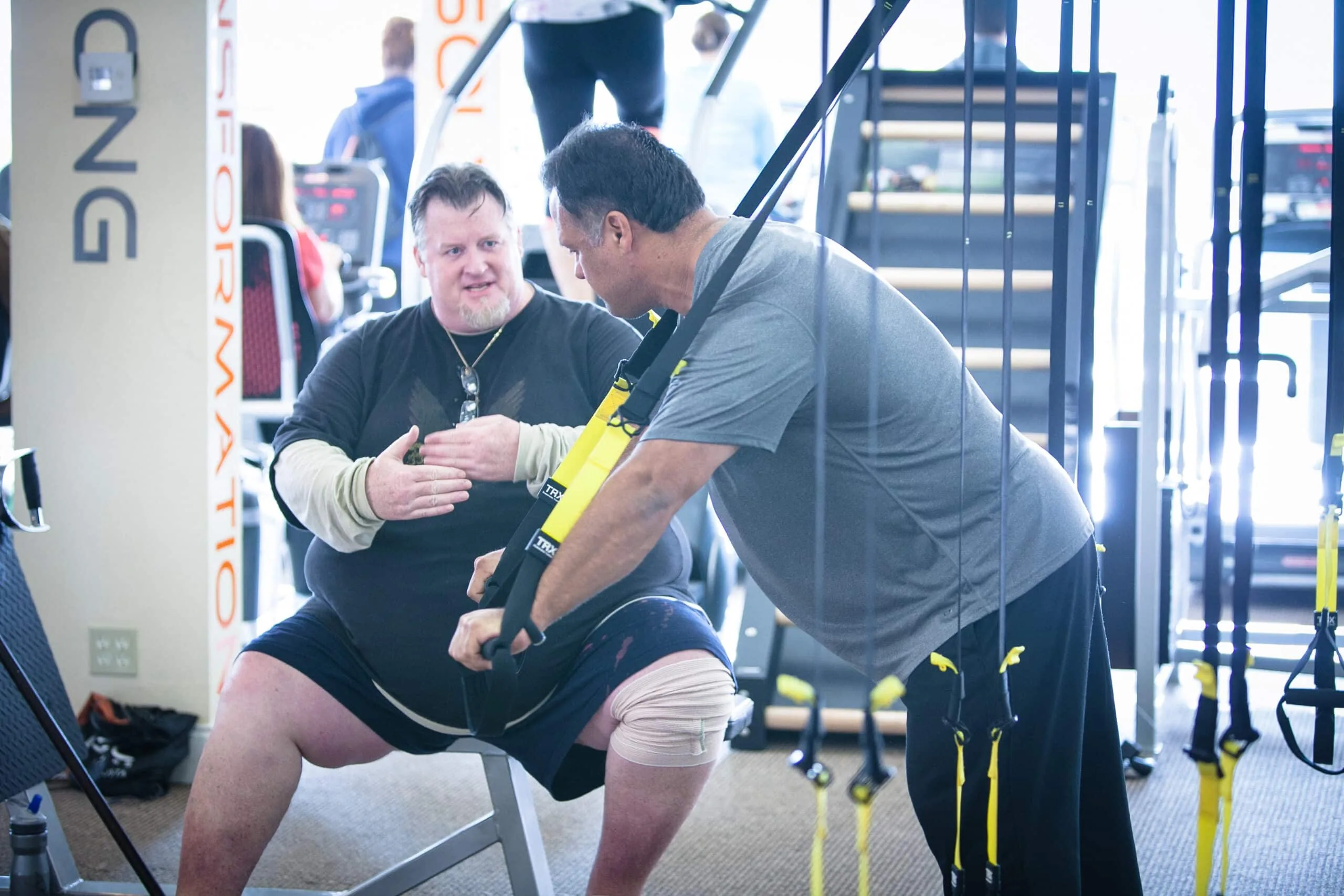
Clients train four to five hours per day, Monday through Friday, with a half day on Saturday. All trainers hold at least a bachelor’s degree, and many hold master’s degrees and have been with PFC for years. The 3–4:1 client-to-trainer ratio ensures every participant, from a 400-pound beginner to a seasoned athlete, receives individualized attention and safe modifications.

Training sessions connect directly to nutrition lessons. Clients feel how adequate protein supports recovery, how balanced macros affect energy during workouts, and how hydration influences performance. This lived experience turns abstract nutrition concepts into concrete habits.
Progress is tracked across 17 data points weekly via a personalized report card, including weight, body fat percentage, neck, waist, umbilicus, upper arm, chest, hip, and quad measurements, blood pressure (systolic and diastolic), mile time, plank hold time, push-up count, and LDL, HDL, triglycerides, and glucose levels. This comprehensive weekly tracking does more than document change. Structured reassessment at regular intervals turns objective data into client motivation and supports long-term adherence, and PFC’s 17-point report card delivers exactly that accountability.
PFC is priced at approximately $6,000 per week, all-inclusive. That rate covers luxury accommodations at the Omni La Costa Resort, all meals prepared by wellness chefs, every fitness class and training session, nutrition and behavioral health workshops, cooking demonstrations, comprehensive health assessments, weekly 17-point report card tracking, three spa treatments per week, and post-camp virtual coaching and personalized meal planning.
For context, premium online coaching packages combining training and nutrition typically run $299–$399 per month, without the immersive environment, registered dietitian oversight, behavioral health support, or luxury setting that support lasting change. PFC offers 0% financing for up to six months with no down payment, and multi-week discounts are available. The program may qualify as a tax-deductible medical expense.
The more meaningful comparison is against a lifetime of failed programs, unused gym memberships, and medical expenses tied to unmanaged weight and metabolic health. PFC’s education-first model is designed so clients do not need to return out of dependency. About 50% of annual revenue comes from alumni who choose to return because they value the experience.
Program value depends on what you learn and keep using, not just what happens during your stay. A UCSD case study evaluating PFC participants who stayed four or more weeks and received DEXA scans at the start and end of their program found that 94% of total weight loss was purely fat. Most aggressive weight-loss programs produce only a 60/40 fat-to-muscle ratio, and standard dieting typically yields no better than that split. PFC’s 94% fat-loss rate is a landmark outcome.
Lean muscle mass was preserved or increased in most long-term PFC clients. Bone volume and metabolic capability were maintained, which is critical for adults over 40, where muscle loss and metabolic slowdown often drive weight regain after other programs. Because clients retain and build lean muscle, their resting metabolic rate stays higher, which forms the physiological foundation of sustainable weight maintenance.
PFC also has over 1,200 reviews with a 90%-plus five-star rating, and about half of annual revenue comes from returning alumni. These independent signals reinforce the outcome data.
Talk to a PFC specialist about your goals to see how this curriculum can support your specific situation. You can also reach the team directly at (888) 488-8936.
Use this checklist when evaluating any adult fitness or weight-loss program. Together, these questions create a complete framework for judging safety, quality, and long-term support.
GLP-1 medications such as Ozempic and Wegovy can produce meaningful initial weight loss, but they do not address the behavioral, nutritional, or muscular foundations of long-term health. Many users experience muscle loss alongside fat loss, which becomes a metabolic liability that accelerates weight regain if the medication is reduced or discontinued. In 2026, lifestyle medicine increasingly positions education-based, multidisciplinary programs as the essential complement to pharmacological weight-loss interventions.
PFC’s approach for GLP-1 users centers on resistance training to preserve and rebuild lean muscle, elevated protein intake calibrated by registered dietitians, and the full Think, Eat, Move curriculum to build the habits that make medication-assisted weight loss durable. There is no judgment about medication use. The goal is to ensure that whatever tools a client uses are supported by the education and behavioral infrastructure needed to sustain results independently.
Pritikin is a longevity center with decades of history, located in Florida where high humidity can be uncomfortable for many participants. Its pace is slower and its demographic skews older, with fewer diverse activity options. PFC’s daily variety, including boxing, beach boot camps, hiking at Torrey Pines, paddleboarding, tennis, pickleball, and barre, serves a broader range of fitness interests and energy levels.
Canyon Ranch offers a premium retreat experience with some fitness programming, but its orientation focuses on relaxation and general wellness rather than structured, results-driven transformation. PFC’s Think, Eat, Move curriculum, 17-point weekly tracking, and UCSD-validated outcomes reflect a more intensive, outcome-focused philosophy.
Unite Fitness Retreat operates from a hotel in downtown Salt Lake City, Utah, a cold-weather environment for half the year, surrounded by urban infrastructure rather than dedicated resort facilities. Clients often travel off-site for additional amenities. PFC’s 450-acre Omni La Costa campus places every facility, meal, class, spa treatment, and outdoor activity on one property in a year-round Southern California climate.
Hilton Head Health is weight-loss focused and shares some structural similarities with PFC, but guests must be transported daily to a central facility from off-site accommodations, which disrupts the immersive environment. Florida’s humidity is also a consistent comfort concern. PFC’s on-site luxury accommodations, dedicated facilities, and Pacific coast outdoor programming create a seamless, distraction-free experience.
Live In Fitness promotes lower price points, but clients stay in a residential home, drive to basic gym facilities, and receive food delivered from off-site. Trainer turnover is high, and the program is located in Arizona, where summer heat limits outdoor training for months at a time. PFC’s integrated resort setting, stable staff, and comprehensive curriculum provide a different level of overall experience and client satisfaction.
Evaluating a fitness camp with a strong nutrition education program comes down to seven non-negotiable components: registered dietitians, hands-on cooking instruction, personalized meal planning, licensed behavioral health support, macro and food-science education, comprehensive progress tracking, and validated outcome data. Programs that deliver all seven in an immersive, luxury environment with low trainer-to-client ratios and real post-camp support are positioned to produce fat loss, muscle preservation, and habit change that last.
PFC’s Think, Eat, Move curriculum was designed to deliver every one of these components. The landmark fat-loss outcomes documented in the UCSD case study, the 17-point weekly report card, the 1,200-plus reviews with a 90%-plus five-star rating, and the 50% alumni return rate provide measurable evidence that this design works in practice.
Ready to start your transformation? Schedule your free consultation online with the PFC team to discuss your goals and learn how the program can be personalized to your starting point, timeline, and health history. Call (888) 488-8936 to speak with a specialist today.
Registered Dietitians (RDs) or Registered Dietitian Nutritionists (RDNs) are the gold standard for nutrition staff at any serious adult fitness program. They complete graduate-level education, accredited supervised practice, a national examination, and ongoing continuing education. General nutrition coaches or certified nutrition specialists do not carry the same clinical training or legal scope of practice. At PFC, registered dietitians design every meal, lead macro and meal-planning workshops, and provide individualized guidance as a core part of the program architecture.
Meaningful fat loss and measurable fitness improvements are typically visible within the first one to two weeks of an immersive program. Habit formation, which determines whether results persist after the program ends, generally requires a minimum of three weeks of consistent practice. PFC therefore recommends at least a three-week stay for clients seeking permanent lifestyle change.
The UCSD case study evaluated participants who stayed four or more weeks and found that 94% of their total weight loss was pure fat, with lean muscle preserved or increased. Post-camp support, including virtual coaching, personalized meal plans, and ongoing trainer communication, extends the behavior-change window and reduces the risk of regression. The 2026 Noom randomized controlled trial found that participants continued losing weight for a full year after the program ended, which underscores that the quality of education during the program, not just its duration, shapes long-term outcomes.
Women in the 40–60 age range face hormonal shifts that affect metabolism and body composition, a higher risk of bone density loss, and often decades of accumulated diet-culture misinformation. A strong nutrition education program for this demographic should include registered dietitians who understand life-stage nutritional needs, resistance training integrated with nutrition to preserve lean muscle and bone density, behavioral health support to address emotional eating patterns, and macro education that moves beyond calorie restriction toward satisfying, sustainable eating.
PFC’s Think, Eat, Move curriculum addresses all of these dimensions at once. The UCSD case study’s finding that bone volume and metabolic capability were maintained in long-term PFC clients is particularly relevant for this age group, because muscle and bone preservation are prerequisites for sustained weight management after 40.
Adults with significant weight to lose or physical limitations can participate safely when a program is structured correctly. PFC works with clients ranging from individuals who can only walk 250 feet at the start of their program to seasoned athletes who train four times per week. Every fitness class is structured so that all participants, regardless of starting fitness level, can engage safely and productively.
Trainers maintain a 3–4:1 client-to-trainer ratio and provide modifications, progressions, and low-impact alternatives for every exercise. A dedicated low-impact training track is available for clients with health limitations such as joint issues, back problems, or cardiovascular conditions. The comprehensive health assessment conducted on day one, including blood work, vital signs, body composition, and a fitness test, ensures that every client’s program is personalized to their actual starting point rather than a generic template.
Sustainable results require support structures that extend beyond the program itself. PFC provides virtual coaching for ongoing accountability, personalized meal plans designed for home preparation, fitness guidance and exercise programming, and open communication with PFC staff, including email access to trainers after departure.
The cooking demonstrations and nutrition workshops during the stay are designed to build home-replication skills, so clients leave with the practical ability to prepare the same quality of meals in their own kitchens. For clients who want to deepen their results or reconnect with the community, extended stays and return visits are available. About 50% of PFC’s annual revenue comes from alumni who choose to come back, which reflects both strong outcomes and durable relationships built during the stay.